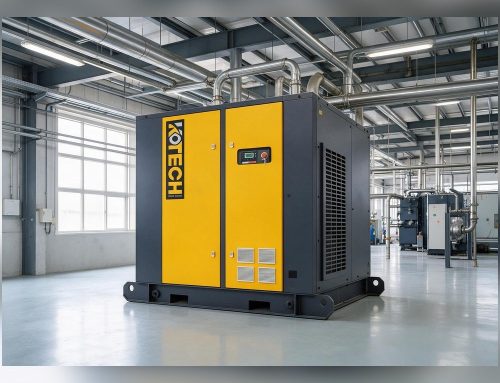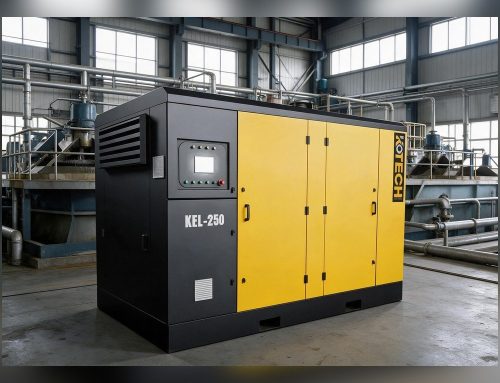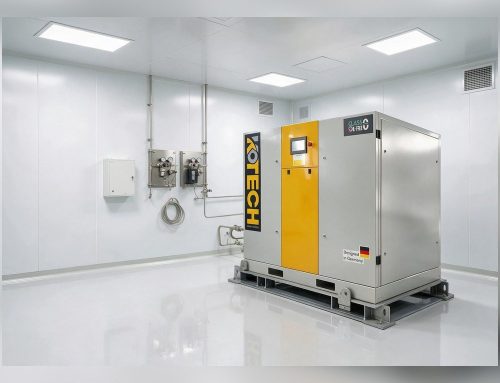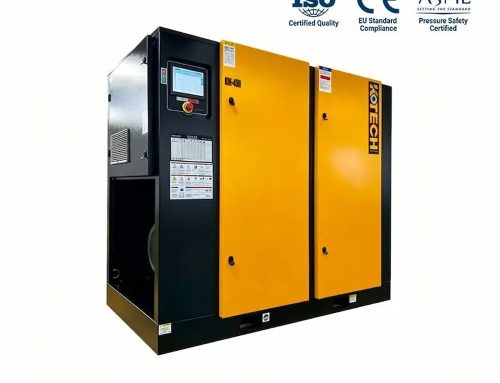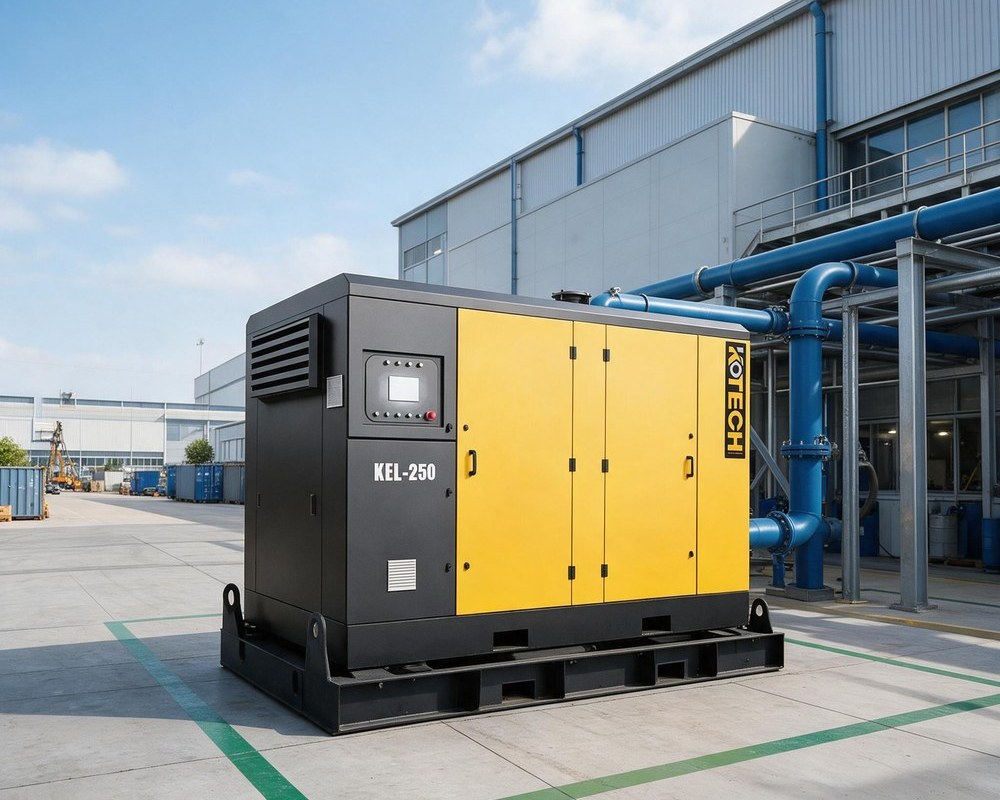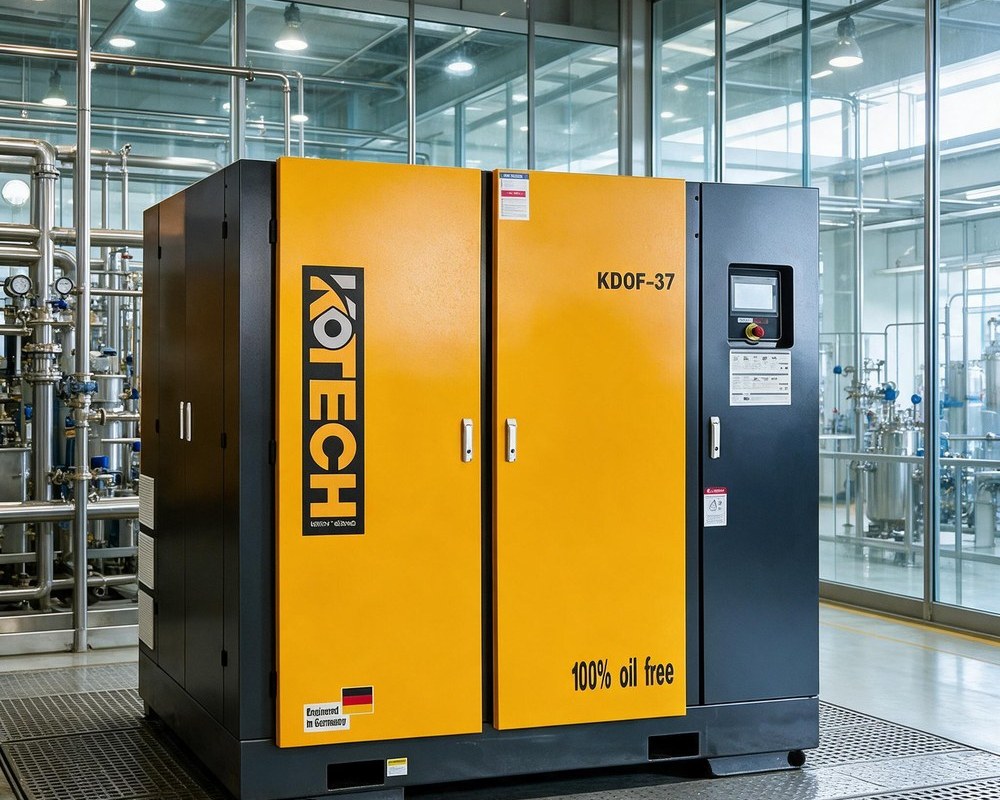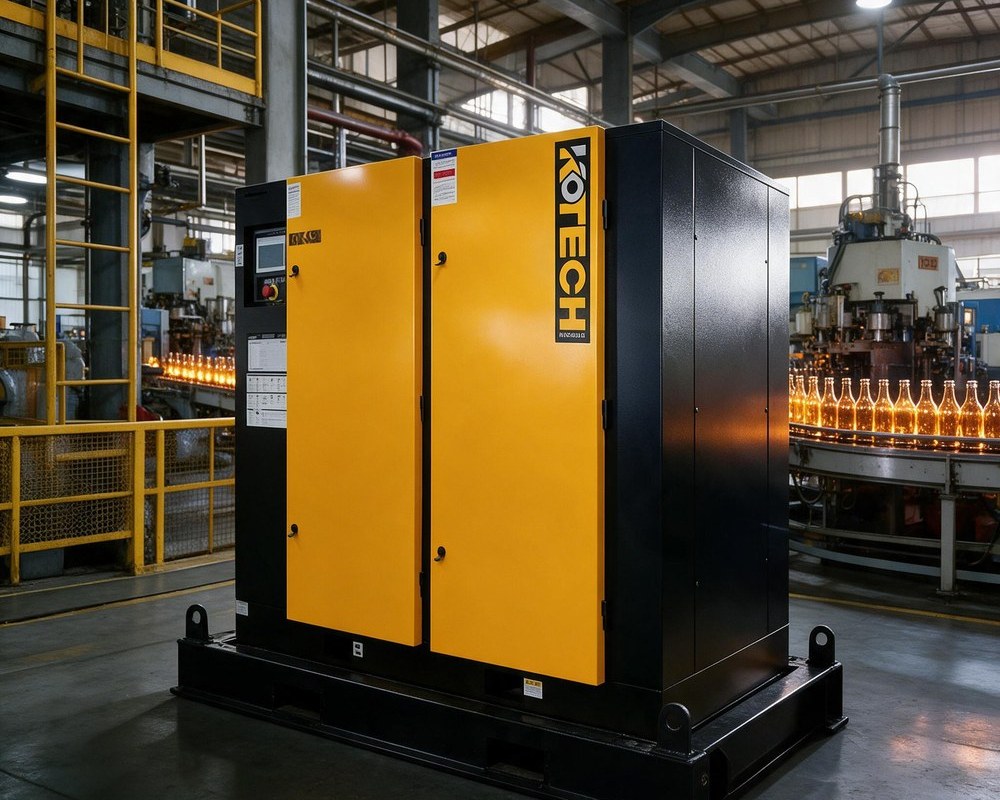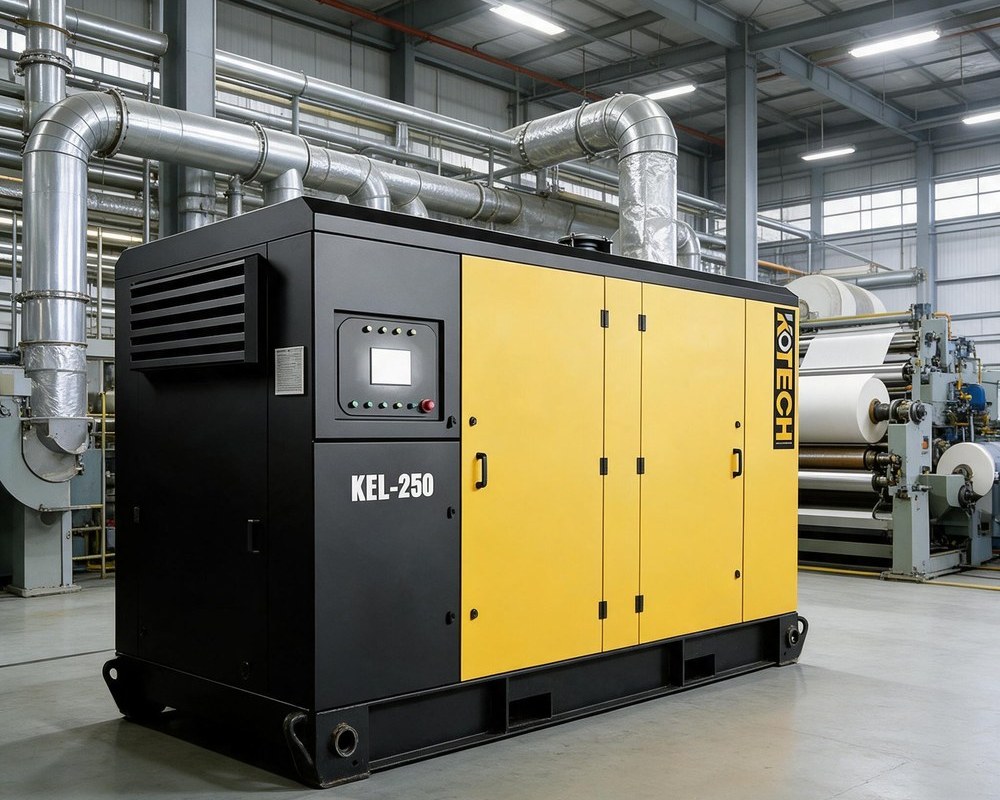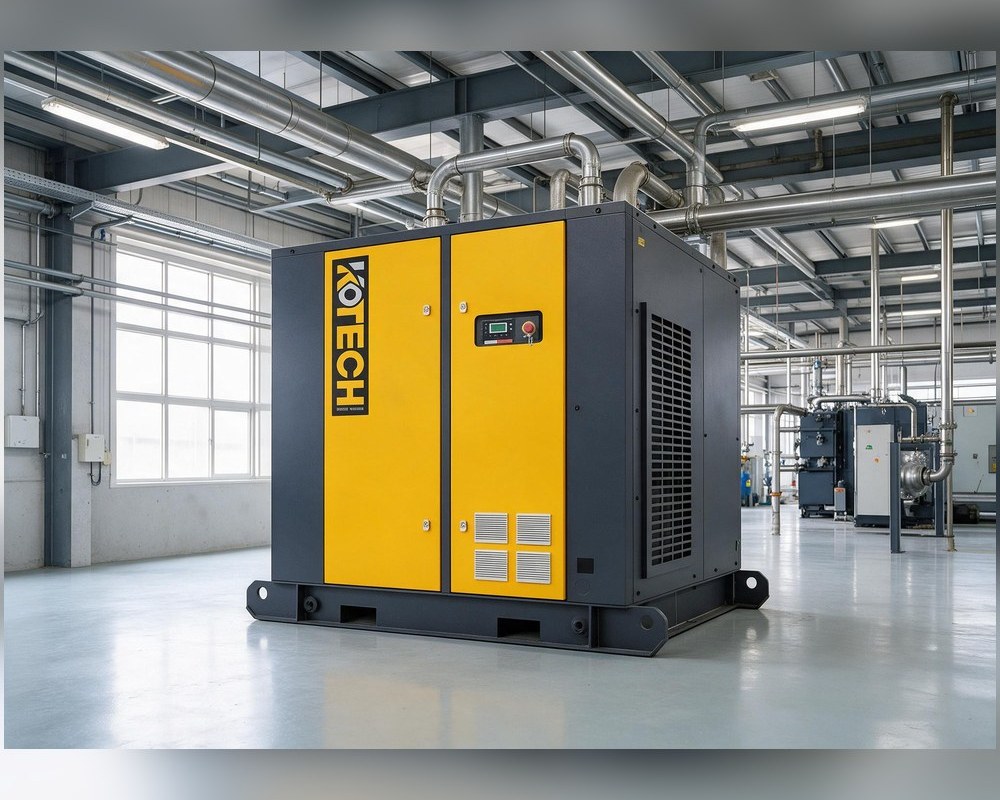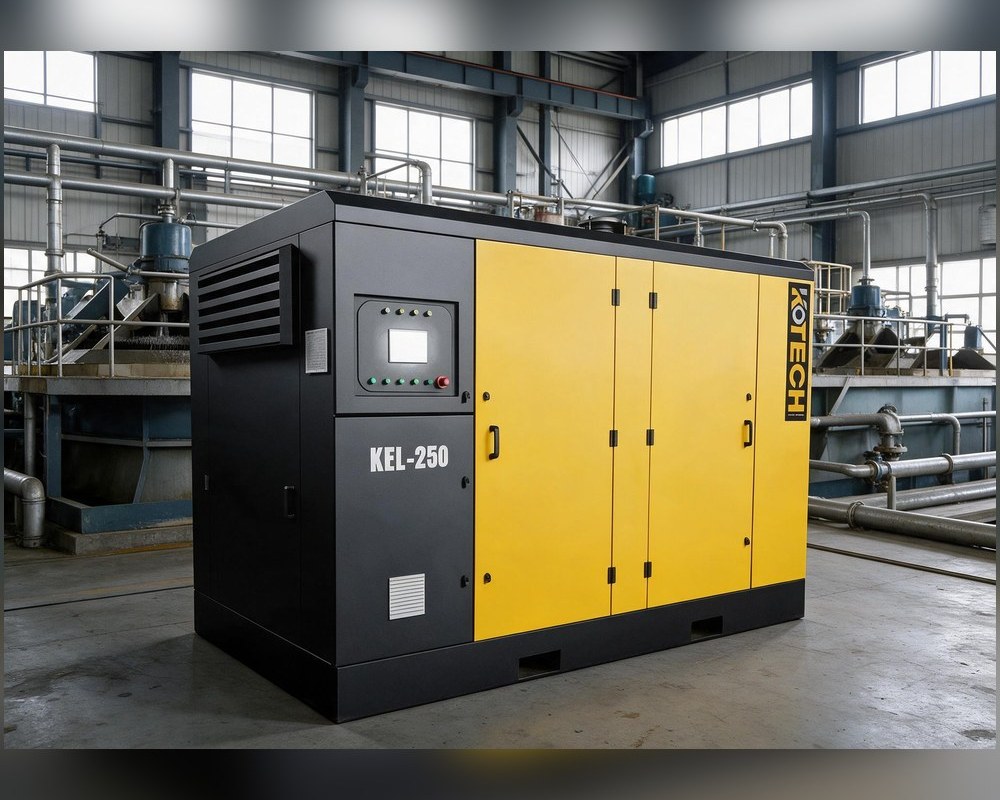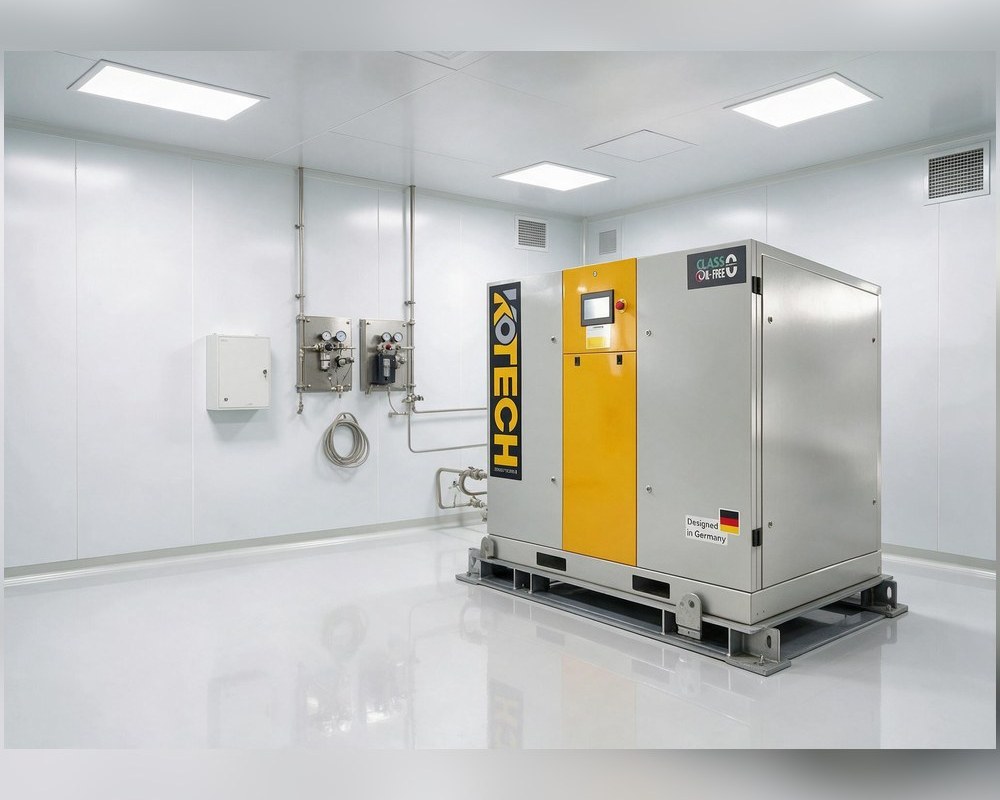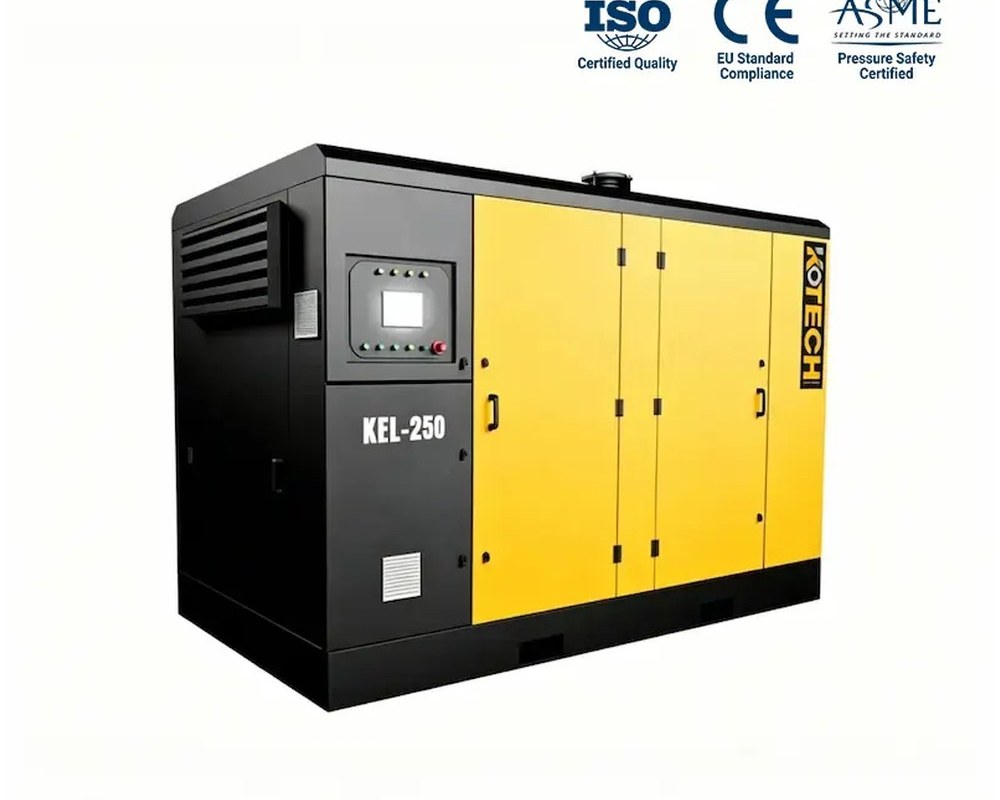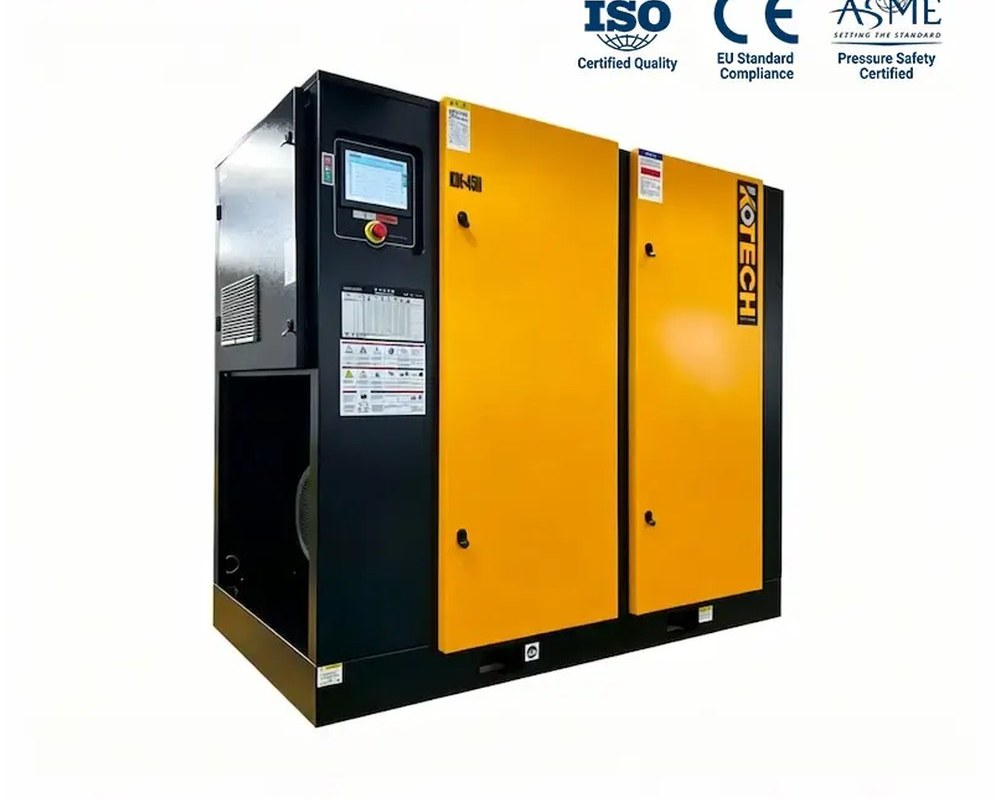




An industrial laundry is one of the best places in manufacturing to recover energy from a compressor, because it consumes both of the things a compressor produces: compressed air and heat. Tunnel washers, ironer lines and dryers need steady air for valves and actuation, and the plant simultaneously heats vast quantities of water. In a conventional installation that heat is blown out through the cooler and lost, while a boiler burns fuel to heat the water separately. Two-stage screw compression is inherently more efficient than single-stage at the laundry’s duty point, a variable-speed drive matches the batchy demand of washing lines, and a heat-recovery package redirects the waste heat into wash or pre-heat water. This guide explains how the economics work and how to size the machine using real KOE-II data.

Why a laundry is a natural heat-recovery site
Virtually all of the electrical energy driving an air compressor is converted into heat – in the compressed air, the oil circuit and the cooling air. Most plants discharge that heat to atmosphere. A laundry is unusual in having a year-round, 24-hour use for it: every wash cycle needs hot feed water, the boiler room pre-heats make-up water, and space heating in receiving and finishing areas is welcome in cooler months. Capturing heat from the compressor oil and compressed-air circuits and moving it into a water loop turns a utility cost center into a pre-heater.
The compressed-air load itself is real and characteristic. Tunnel washers and washer-extractors open and close dozens of air-driven valves and doors, membrane presses use air to squeeze linen, feeders and ironers use air for actuation and folding, and packaging at the clean end uses more. Demand follows the wash schedule – surges as a tunnel transfers, quieter periods between batches – which is a classic profile for variable-speed control rather than fixed-speed loading and unloading.
- Year-round heat sink: wash water, boiler make-up pre-heat and, seasonally, space heating.
- Batchy air demand from washers, presses, ironers and packaging suits VSD control.
- Long operating hours mean efficiency gains and recovered heat compound across the year.
Why two-stage compression at the laundry duty point
Splitting compression into two stages with intercooling between them reduces the work needed to reach a given pressure, because cooling the air partway through compression keeps the process closer to the efficient ideal path. At the 7-8 bar pressures most laundries run, a well-designed two-stage screw package can use meaningfully less energy per cubic metre than a single-stage machine, with the largest advantage at high utilisation. For a plant running two or three shifts, six or seven days a week, that percentage is paid in electricity every single day.
The second benefit is thermal. Two-stage packages concentrate a lot of recoverable heat in stable oil and air circuits, which suits a heat-recovery exchanger tied into the plant’s water system. Add a VSD and the package holds the plant at a steady pressure through transfer surges instead of cycling, simultaneously improving process stability for the ironer line and cutting unloaded running.
KOTECH KOE-II two-stage VSD screw compressors at 8 bar: published ratings
Variable-speed two-stage packages used for central laundry air stations. CFM is the published turndown range at 8 bar.
The ranges show minimum-to-maximum output of each VSD package at 8 bar. A laundry that adds a second tunnel washer later should plan header capacity for the next frame size rather than running the first machine at its limit with no redundancy.
Connecting recovered heat to the wash water system
The common retrofit is a heat-exchanger skid on the compressor oil (and sometimes compressed-air) circuit, circulating water that is then blended into the hot-well or pre-heat feed to the boiler. The achievable water temperature depends on compressor load and circuit design, so proposals should be based on the supplier’s measured recovery figures rather than an optimistic single number; the engineering value is in pre-heating large volumes of water reliably, not in claiming the compressor replaces the boiler outright. Controls must protect both systems – the compressor still needs adequate cooling in summer when heat demand is low, typically by diverting back to the standard cooler.
Practical design points: run the recovery loop with its own pump and controls so neither system can disable the other, insulate the hot-water pipework, size the exchanger and storage for the wash schedule rather than the instantaneous peak, and meter both the air energy and the water temperature rise so the saving is verified, not assumed. Laundries with older steam systems can often feed recovered heat into boiler make-up water, where even a modest temperature rise cuts fuel use continuously.
- Recover into pre-heat and hot-well water; size storage for the wash schedule.
- Keep the standard cooler as a summer bypass so the compressor always has cooling.
- Independent pumps and controls protect both the compressor and water systems.
- Meter recovered heat; the saving should be measured in fuel not used by the boiler.
Putting the business case together
A laundry’s case has three stacked components: the efficiency of two-stage compression at high utilisation, the electricity saved by VSD control of a batchy load, and the fuel displaced by heat recovery. Multiply each by the plant’s genuinely long running hours and the investment often compares well against replacing like with like. Because the heat sink exists all year, laundries avoid the seasonal weakness that makes heat recovery marginal in some other industries. A two-week data-logging exercise on the existing compressor and hot-water consumption is the standard way to convert the concept into a guaranteed-style proposal before committing capital.
Specifying a laundry compressor package
- Audit every washer, press, ironer and packaging machine and size from simultaneous demand.
- Add 20-30 percent for leaks and growth; verify pressure at the furthest machine.
- Prefer two-stage for high-utilisation plants and VSD for the batchy wash schedule.
- Require measured heat-recovery figures and a summer cooling bypass.
- Size the exchanger and hot-water storage around the wash schedule, not peak instant demand.
- Log air use and hot-water consumption for two weeks before approving the project.
Frequently asked questions
Can a compressor really heat water for an industrial laundry?
Why choose a two-stage compressor for a laundry rather than a standard single-stage?
Is variable speed worth it if the wash line runs continuously?
What happens to heat recovery in summer when less hot water is needed?
How big a compressor does a typical laundry need?
If your laundry runs two or three shifts and heats water every day, a two-stage VSD compressor with heat recovery stacks three savings at once. Send your equipment list, running hours and hot-water consumption for a sized KOE-II proposal.