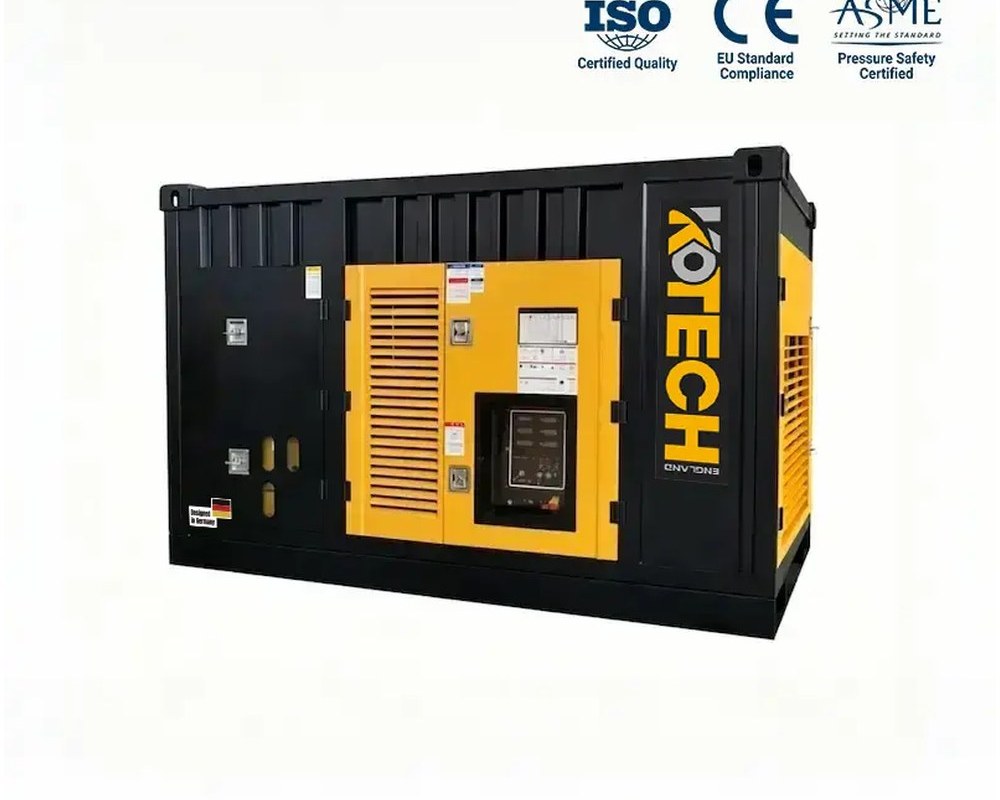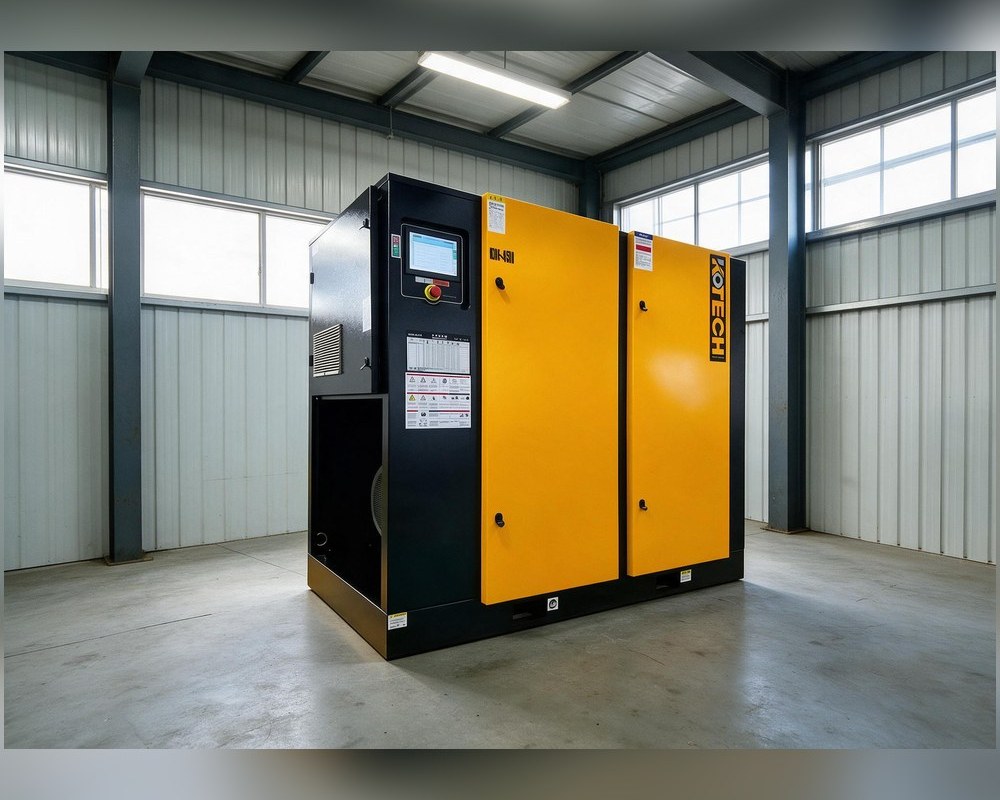




In a plant that runs three shifts, seven days a week, the purchase price of a compressor is small and the energy bill is everything. Over the life of a continuous-duty machine, electricity dominates the total cost, so even a few points of efficiency compound into serious money. That is the case for two-stage screw compression: by splitting the pressure rise across two airends with cooling between them, it produces the same air with less energy. This guide explains where that advantage is real and how to read the KOTECH KOE-II line.
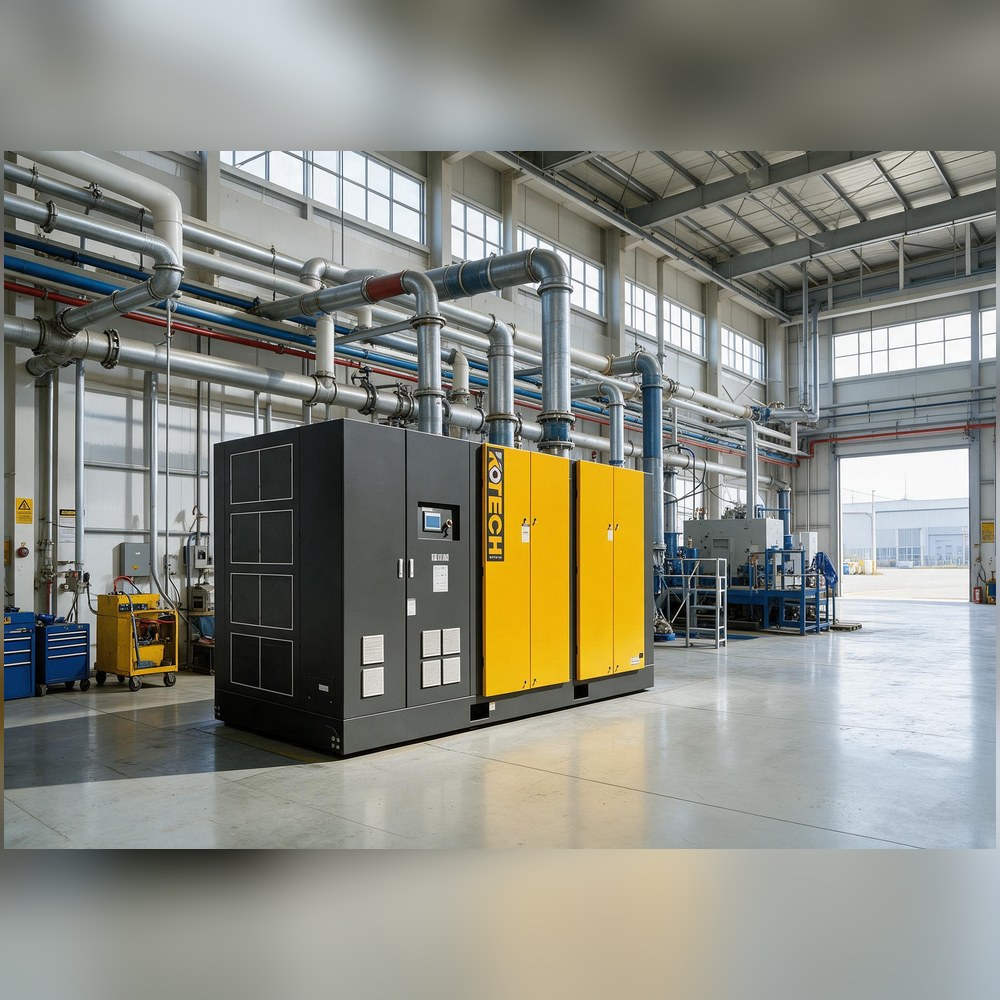
How two-stage compression reduces the work
A single-stage screw compressor takes air from intake to final pressure in one compression step. A two-stage machine splits the rise: a first airend compresses partway, the air is cooled in an intercooler, and a second airend takes it to the final pressure.
Cooling the air between stages is what creates the saving. Compressing cool air takes less work than compressing air already heated by the first stage. Splitting the pressure ratio also keeps each airend operating in an efficient, lower-stress region. Together these reduce the energy needed for each cubic metre of delivered air compared with a single-stage machine at the same pressure.
The gain is not free; the package is larger and more complex and has a higher purchase price. The economics therefore depend on how hard the machine runs, which is why the argument is strongest in continuous-duty plants rather than occasional use.
Why the advantage grows with running hours
Compressed air is expensive precisely because it is energy-intensive, and in a plant that never stops the compressor runs near load for thousands of hours a year. A single-digit percentage improvement in specific power, the energy per unit of air, multiplied over those hours, becomes a large annual figure.
Run the same comparison on a machine used intermittently and the result flips: the efficiency premium may not clear the extra purchase cost within a sensible payback period. The decision should be driven by the duty profile, not by treating two-stage as universally better. Continuous, high-load operation is exactly where it pays.
Continuous-duty plants also benefit from the gentler operating conditions per stage. Lower discharge temperatures and reduced stress on each airend can support long service intervals when the machine is maintained correctly, improving the availability that such plants depend on.
Reading the KOTECH KOE-II two-stage range
The KOTECH KOE-II line packages two-stage screw compression across a wide power span, typically at pressures around 12.5 bar, which suits demanding plant air and process tools. Models are identified by their rated motor power, with flow rising as power increases.
At the entry to the range, the KOE-55II delivers about 11.26 m³/min with a 55 kW motor, and the KOE-75II reaches around 11.9 m³/min at 75 kW. Moving up, the KOE-90II delivers roughly 14.97 m³/min, the KOE-110II around 19 m³/min, and the KOE-132II about 21 m³/min. For the largest continuous loads, the KOE-160II provides around 24 m³/min and the KOE-185II roughly 26.9 m³/min.
Select the model from the plant’s true design flow and pressure at its ambient conditions, and consider variable-speed versions where demand does move, since two-stage efficiency and speed control can be combined. In a multi-compressor house, two-stage units often carry the steady baseload while a variable machine trims the swings.
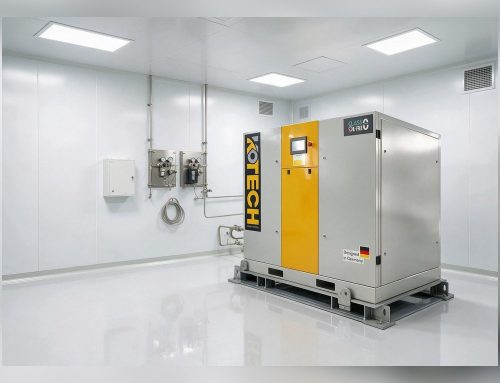
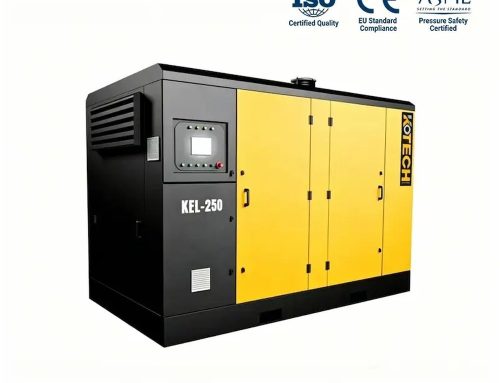
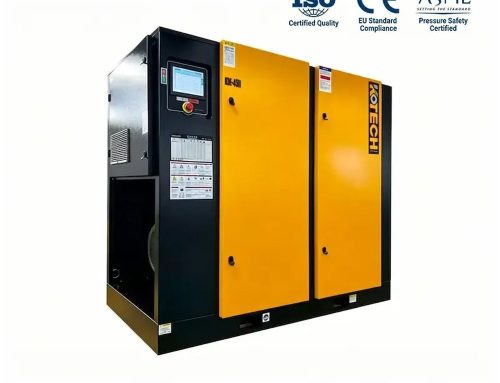
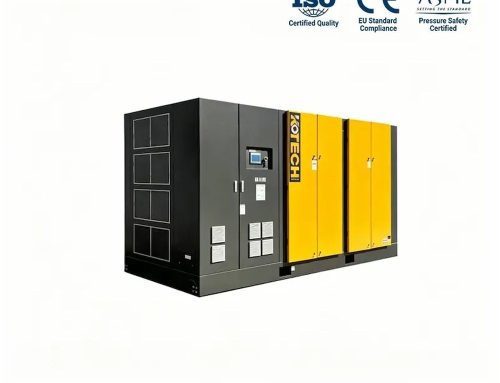
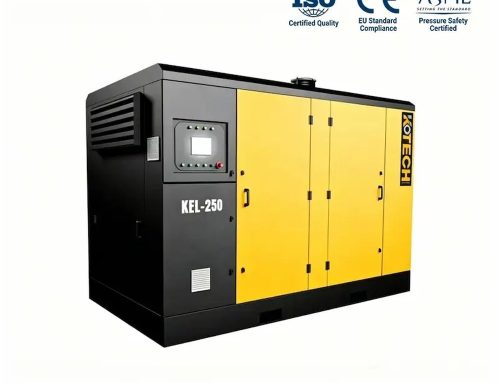
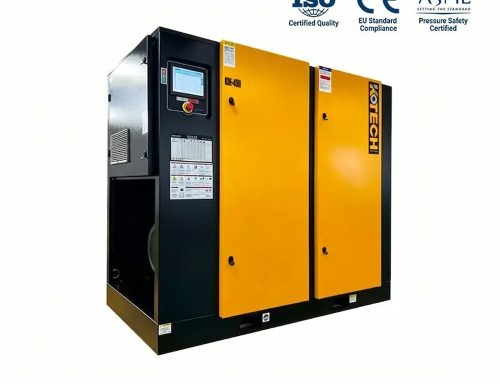
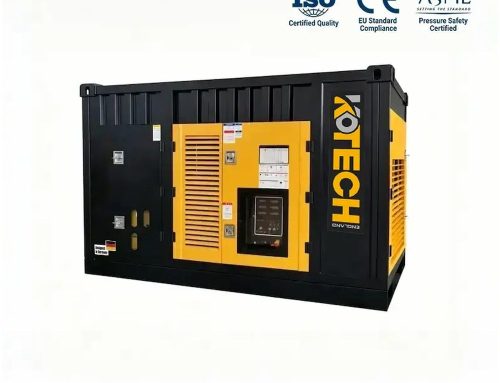
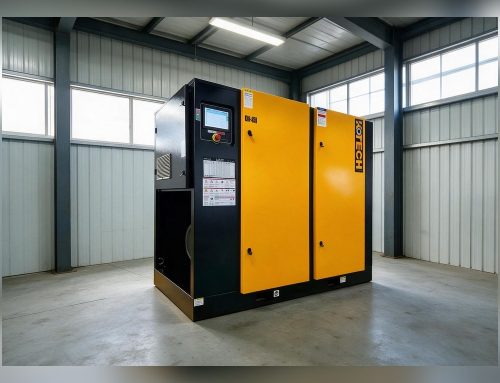
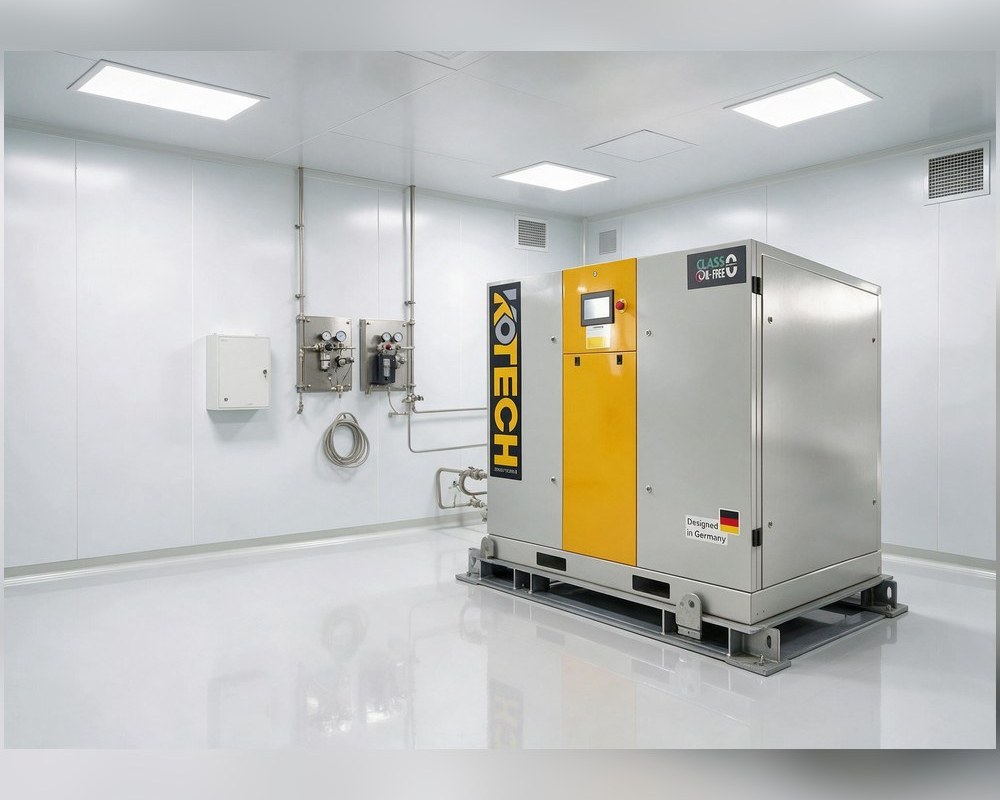
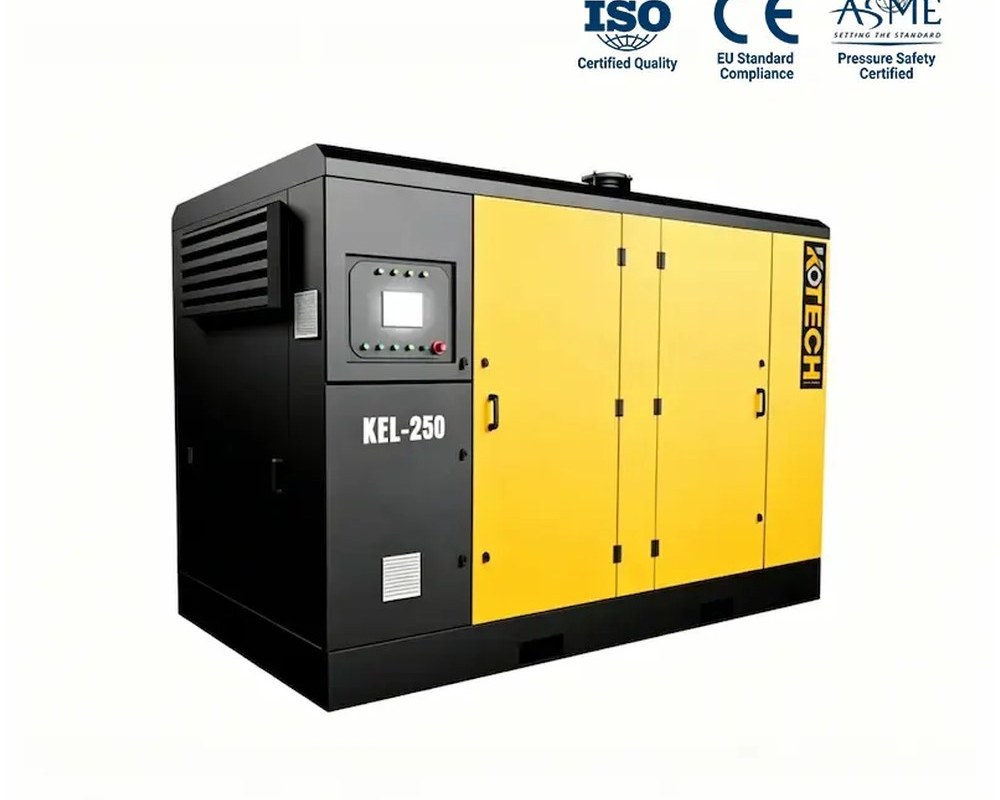
Real KOTECH KOE-II two-stage compressors
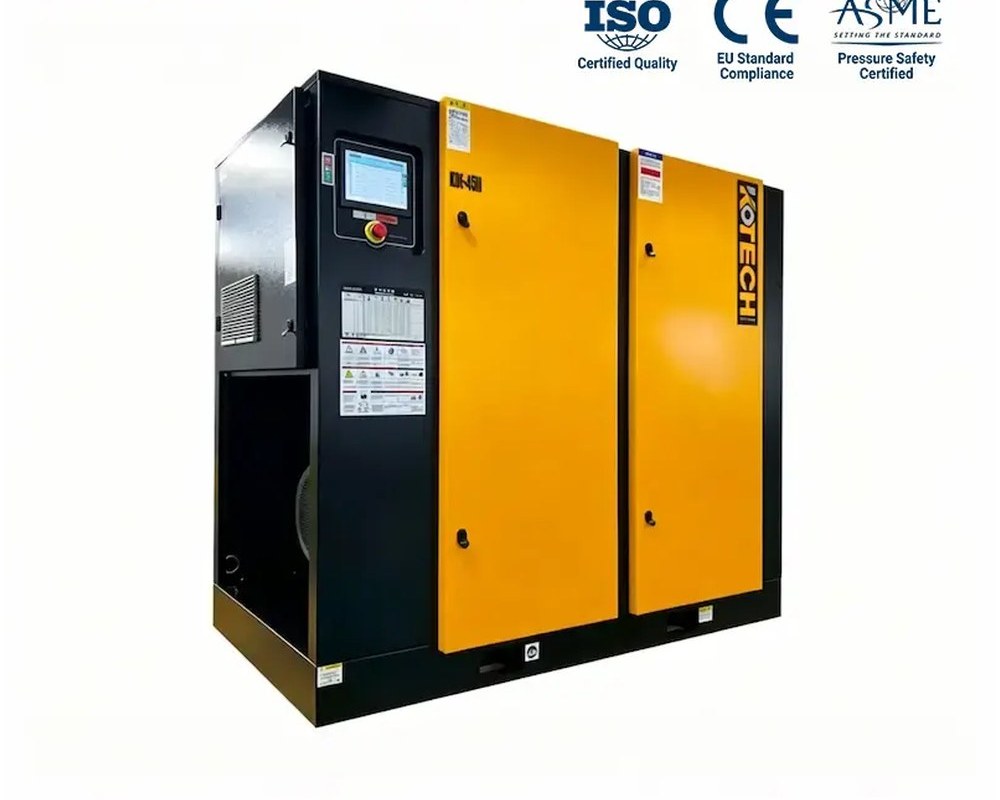
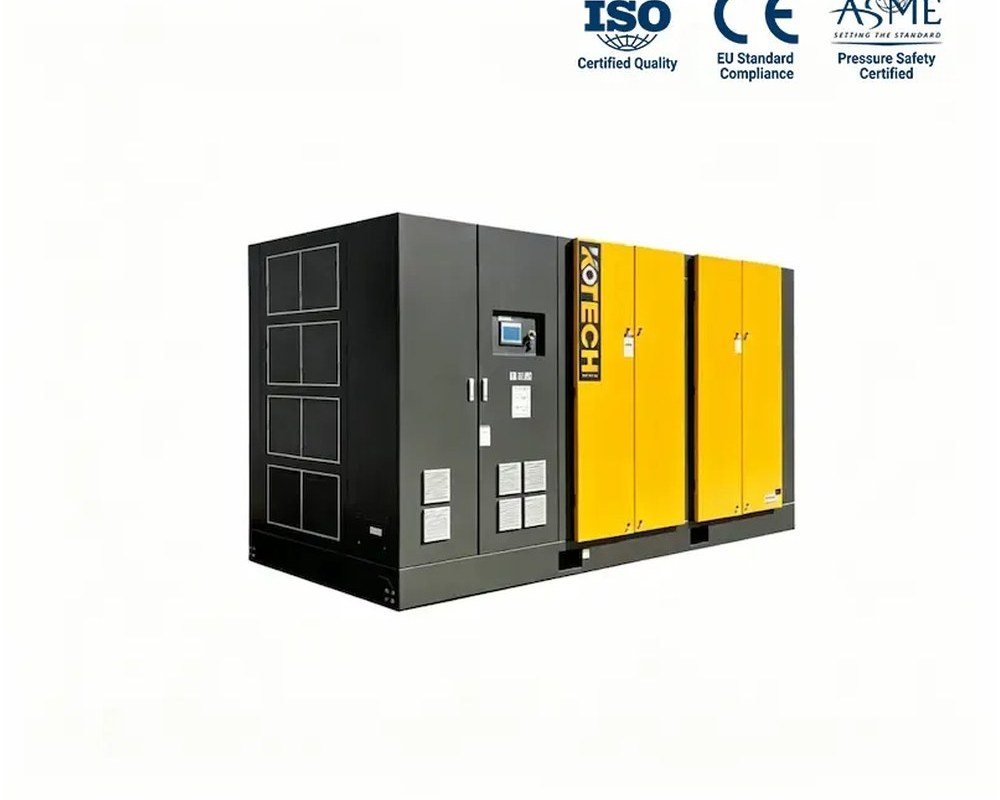
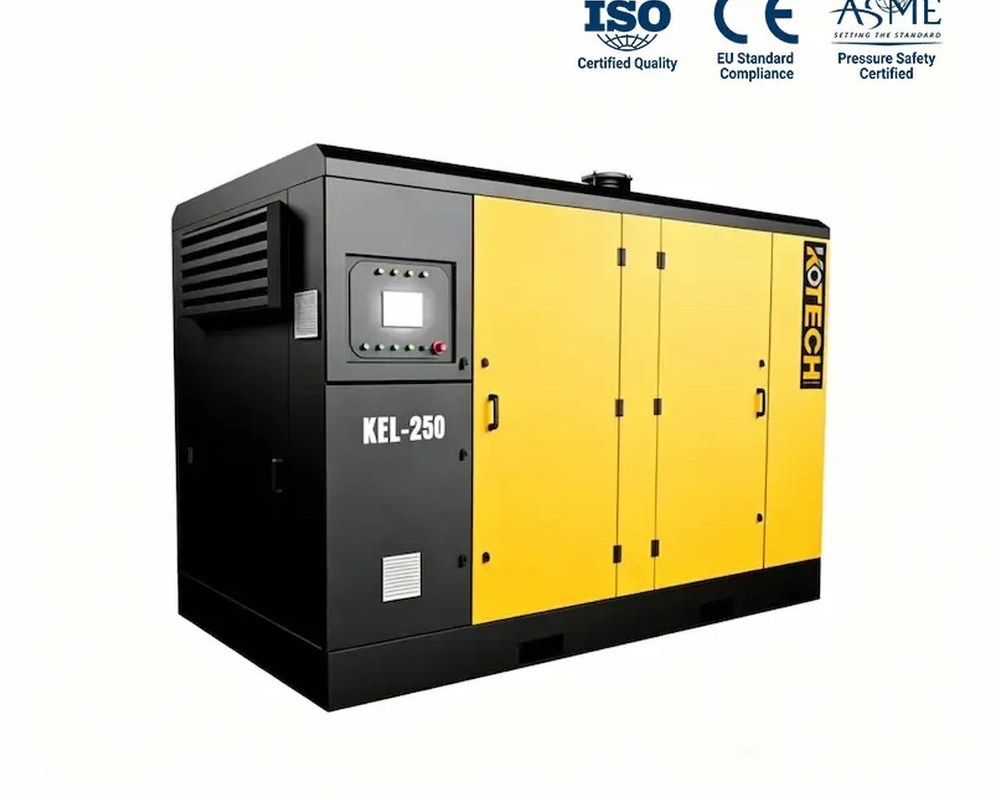
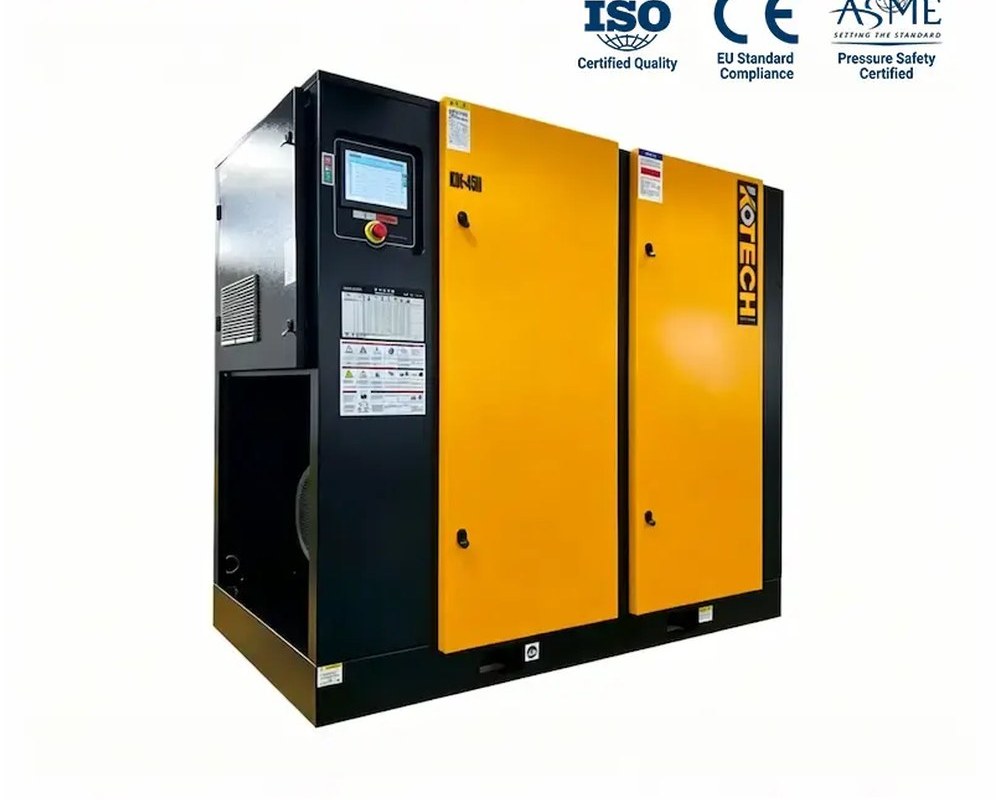
Selected KOTECH KOE-II two-stage screw compressors, with free air delivery, pressure, motor power and weight from the current product-page specification table.
Flow, pressure and motor power below come from the current KOE-II product data; the line is concentrated around 12.5 bar, a common pressure for demanding plant air. Comparing a KOE-II model with a single-stage machine at the same flow shows the lower energy per cubic metre that justifies the higher purchase price in long-running service.
Choose the row that covers your required flow at the working pressure, then run the payback using your actual annual running hours and electricity cost; the more hours the compressor runs near load, the faster the two-stage premium is recovered.
Buying tips
- Base the decision on annual running hours; two-stage pays off most in near-continuous, high-load duty.
- Compare specific power, energy per cubic metre, against a single-stage machine at the same flow.
- Use the real electricity tariff and planned service life when calculating payback.
- Confirm the working pressure matches the process; the efficiency case is built around the rated point.
- Consider variable-speed KOE-II versions if even the baseload moves through the week.
- Plan cooling and ventilation so intercooler performance, and therefore the saving, is preserved.
Frequently asked questions
How does a two-stage screw compressor save energy?
Is a two-stage compressor worth it for a small workshop?
How much energy can two-stage compression actually save?
Does two-stage compression also extend compressor life?
At what pressure does two-stage compression make the most sense?
Should a continuous plant run fixed-speed or variable-speed two-stage units?
If your plant runs around the clock and compressed air is a major energy cost, KOTECH can compare a KOE-II two-stage package against your current machine using your flow, pressure, hours and tariff, so you can see the payback before you buy. Send KOTECH your operating details for a clear proposal.