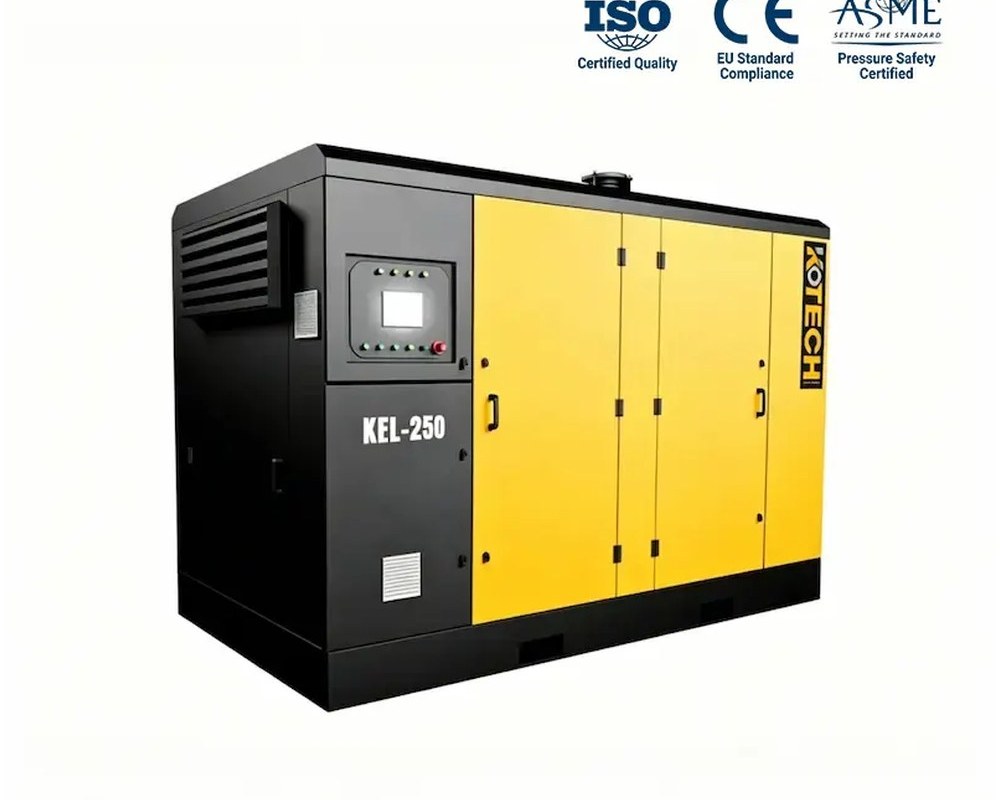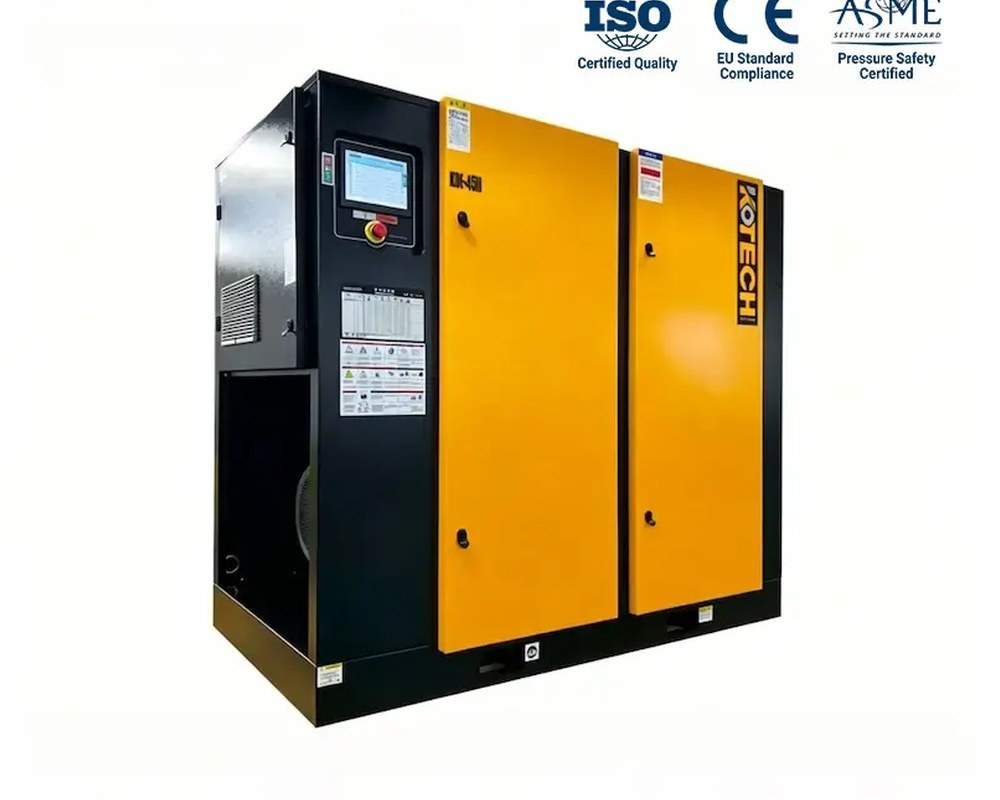




In a glass container plant the forming machine (the IS machine) never really rests: gobs of molten glass arrive continuously, moulds open and close around the clock, and hundreds of pneumatic motions per minute shape every bottle and jar. The compressed air driving those motions is both a process medium and a utility, and any pressure dip or moisture carryover shows up immediately as defects, jammed sections or lost production in one of the hottest, least forgiving environments in manufacturing. Supplying this air efficiently across highly variable demand has led glass plants to two-stage variable-speed screw compressors, which combine the energy savings of two-stage compression with the pressure stability of speed control. This guide explains what an IS machine hall actually requires and how the KOTECH KOE-II two-stage VSD range is sized for it.

How an IS plant consumes compressed air
Container forming is organised in sections, each running a set of moulds in a continuous cycle: the gob is delivered and deflected, blank and blow moulds close, plungers and baffles operate, the parison is transferred, final blowing shapes the container, and take-out tongs place it on the conveyor. Almost every movement is pneumatic — cylinders, valves, deflectors, timing and cooling functions — so a modern IS machine with many sections and double-gob operation draws a large, rapidly fluctuating airflow. In addition to forming air, the plant uses air for mould and machine cooling, conveyor and lehr handling, batch-house and batch-charging equipment, packaging and palletising, and general instrumentation.
Two characteristics define the duty. First, it is genuinely continuous: the furnace cannot be stopped and restarted to suit the air system, so forming air must be available every hour of every day. Second, demand swings constantly as sections cycle, machine counts change, and job changes alter the gob and bottle weight. Against that profile, pressure stability is a quality parameter rather than a comfort: if header pressure sags during a simultaneous multi-section event, mould timing slips and containers emerge with defects, cracks or stuck ware, and sustained low pressure trips sections offline. The compressor station therefore has to combine redundancy, fast response and tight pressure band control.
- Forming air: large, rapidly pulsing flow for hundreds of pneumatic motions per IS machine per minute.
- Supporting loads: mould cooling, conveyors, lehrs, batch house, packaging and instrumentation.
- Continuous duty: the furnace runs without interruption, so air supply is effectively mission-critical.
- Quality link: header pressure dips translate directly into container defects and section trips.
Why two-stage compression and VSD fit the glass duty
Two-stage screw compression splits the pressure ratio between two airends with intercooling between them, which reduces the work needed to reach plant pressure and removes heat at the most effective point. On a duty that runs thousands of hours a year at hundreds of kilowatts, the efficiency gain over single-stage machines — commonly quoted in the range of 10 to 15 percent on well-integrated packages — compounds into a major operating-cost reduction, and the lower discharge temperatures also protect lubricant life and downstream dryer performance in a hot plant.
Variable speed then matches the compressor to the pulsing IS load. A fixed-speed machine loaded and unloaded against a receiver produces a sawtooth header pressure and wastes energy during unload; a VSD package varies displacement continuously, holding the header within a narrow band and delivering only the air the forming hall actually needs. Because glass demand varies not just second to second but also across job changes and production levels, a base-plus-trim station — fixed-speed machines carrying the steady core, one two-stage VSD unit trimming the swings — is the usual energy-optimal configuration, with the added benefit that the trim machine also provides redundancy.
Heat recovery deserves mention in this industry. The two-stage packages reject large quantities of cooling heat that glass plants can put to work heating process or facility water, tempering combustion air support areas, or warehouse heating in winter, improving the overall energy balance beyond the compressor room.
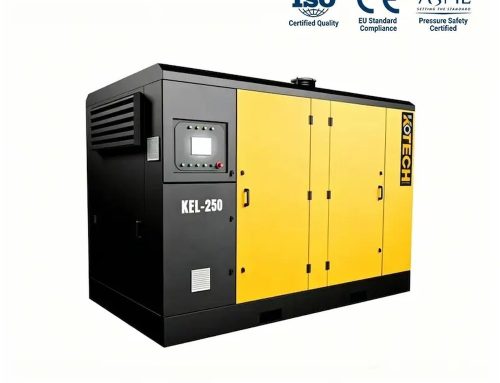
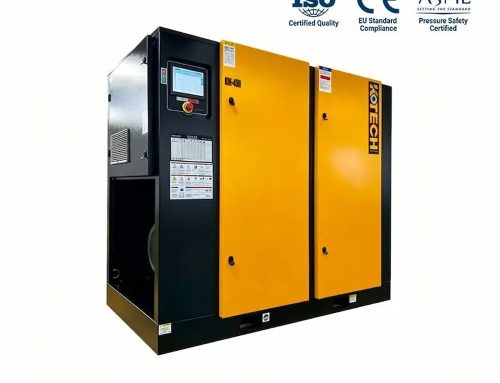
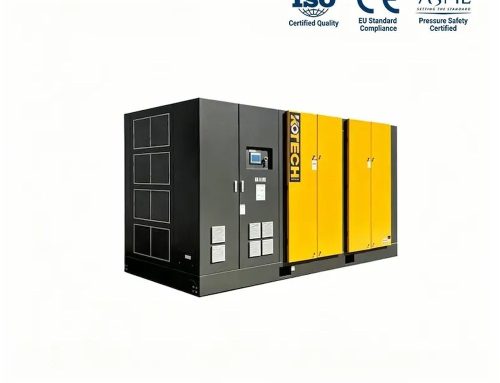
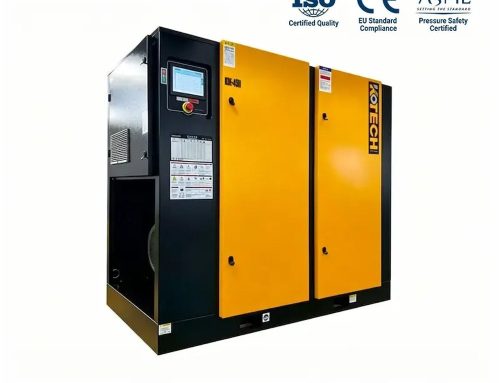
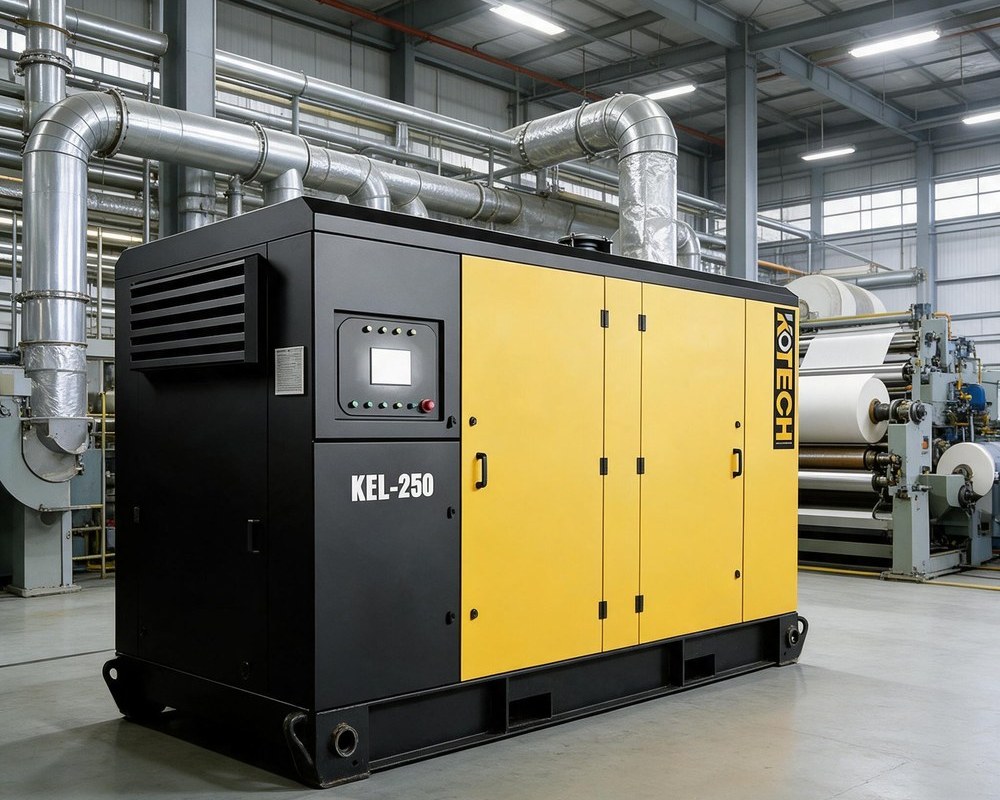
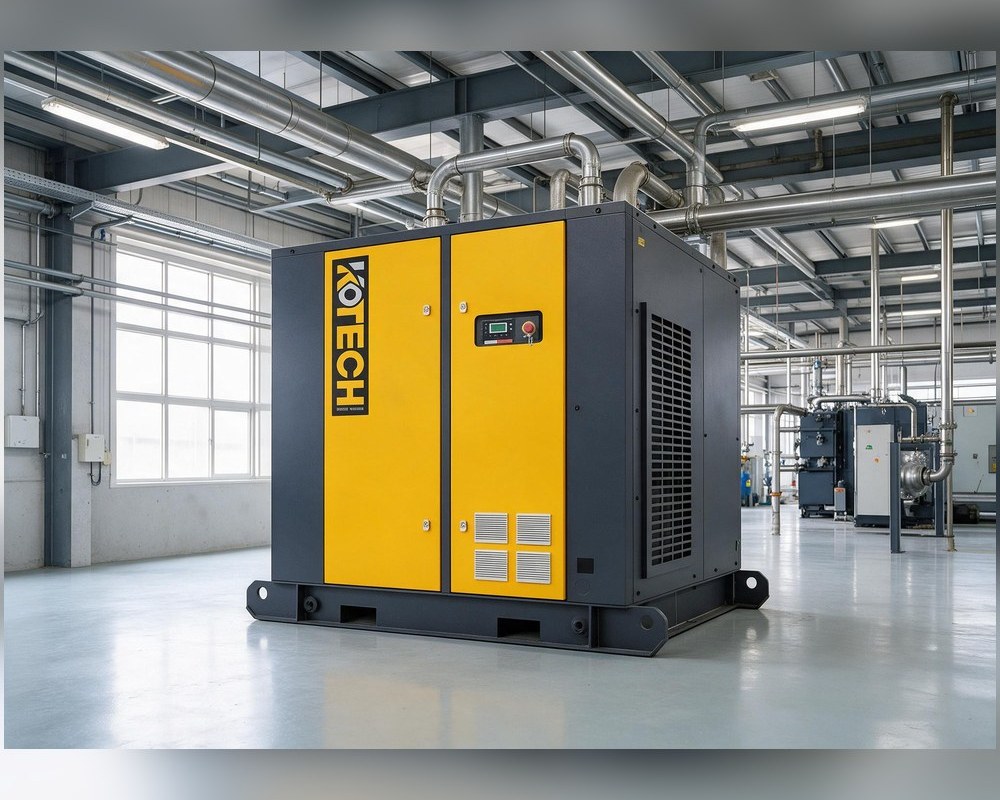
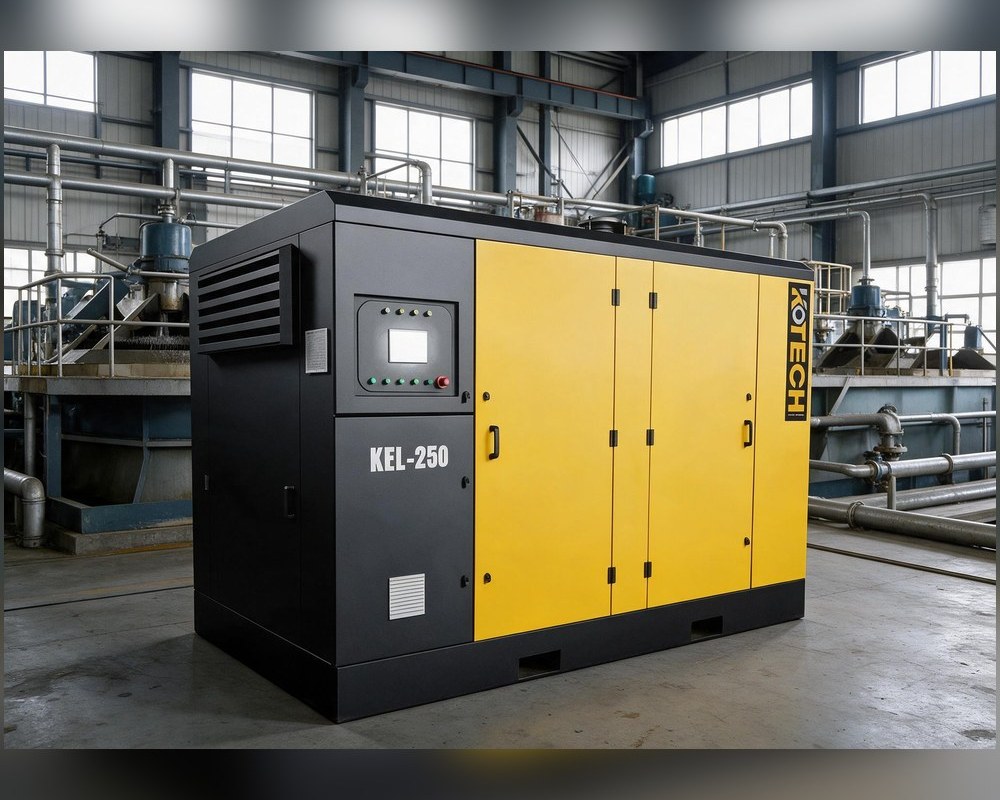
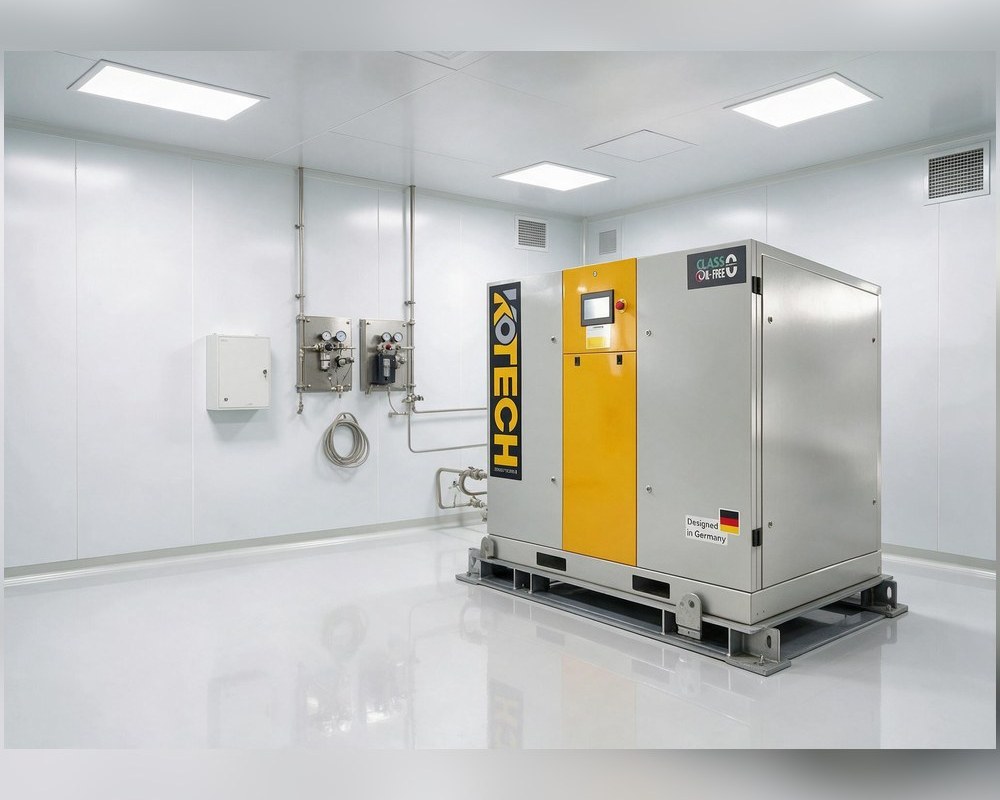
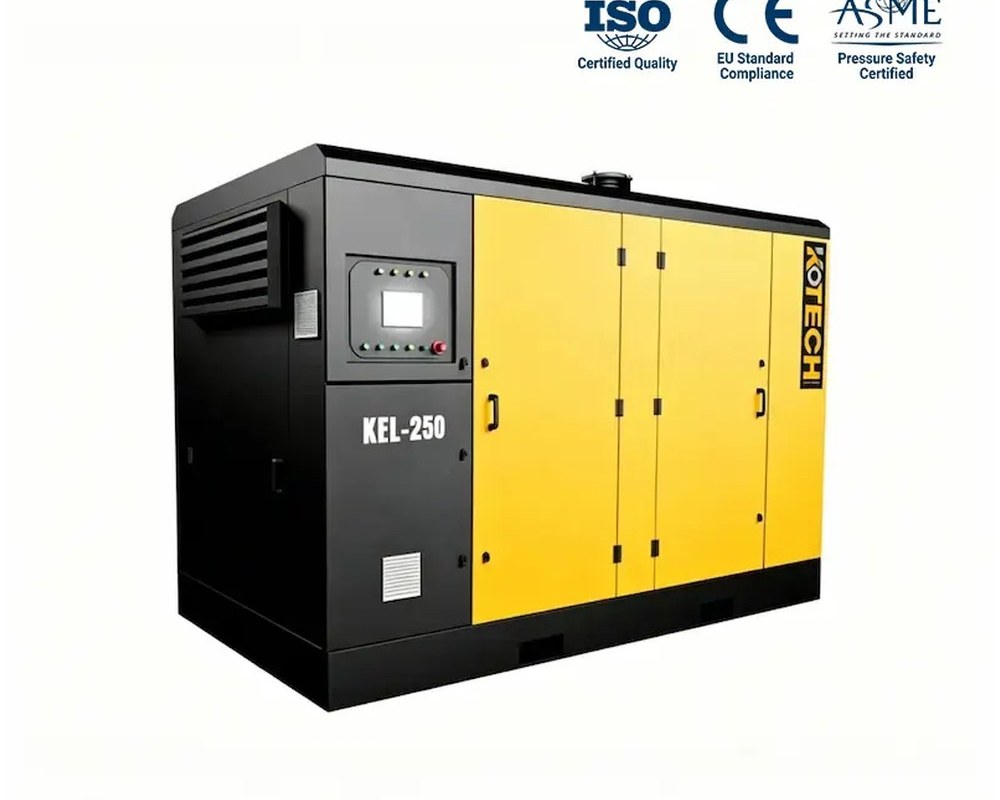
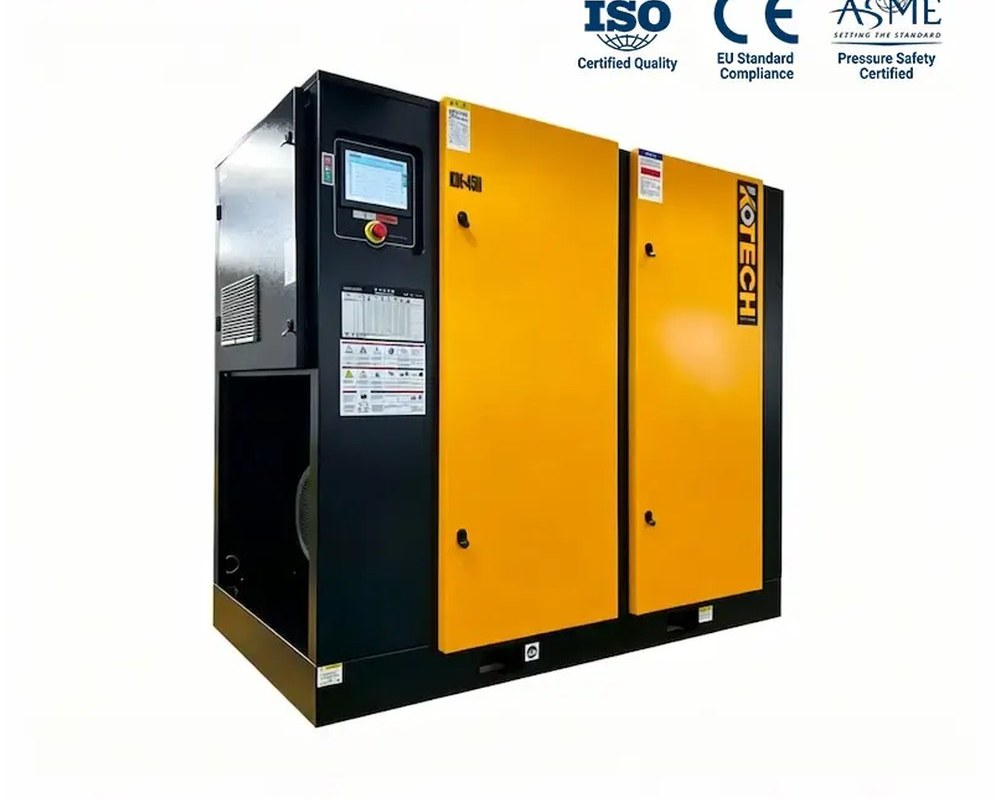
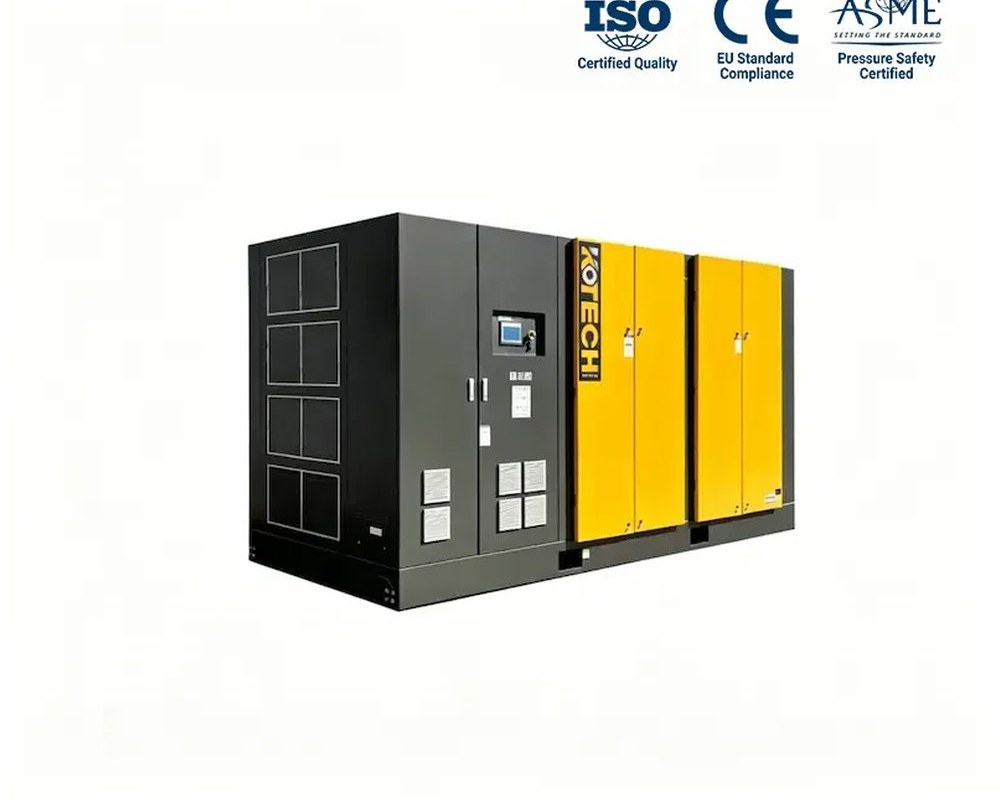
Real KOTECH KOE-II two-stage VSD screw compressor specifications
Current factory figures at 8 bar from the KOTECH product page; FAD spans the variable-speed range and the line is also published at higher pressure points.
Select the VSD frame so that normal production demand sits inside its turndown band rather than at either extreme, and build the station as base plus one trim machine so the variable unit does most of the modulating while fixed-speed frames run loaded efficiently.
Air quality and the hot, dusty plant environment
IS machines demand air that is reliably dry and clean: moisture in timing valves and cylinders causes corrosion and inconsistent timing, and particulates score valve seats in abrasive glass-house dust. The standard arrangement is high-quality after-cooling, refrigerated or desiccant drying sized for the hot ambient, and adequate filtration with attention to differential pressure so the dryers do not become an energy penalty. Intake placement matters in a container plant — the compressor room should draw clean, coolest available outdoor air rather than furnace-side hot air, because every degree of intake temperature directly reduces mass flow and raises energy use.
Pressure design should protect the forming hall from the rest of the plant. A dedicated forming-air header, adequately sized receivers near the IS machines to absorb the fast pulse demand, and pressure zoning that prevent batch-house or packaging surges from dragging down the forming pressure are standard good practice. Monitoring header pressure at the machine — not only at the compressor — reveals whether the network and storage are correctly sized, because a perfectly controlled compressor cannot compensate for an undersized pipe or missing local receiver.
- Specify dry, filtered instrument-quality air and size drying for the hot plant ambient.
- Draw intake air from the coolest clean source; every intake degree costs mass flow and energy.
- Provide local receivers at the IS machines to absorb rapid pulse demand.
- Zone the forming header so other plant loads cannot pull forming pressure down.
Redundancy and station design for a furnace that never stops
Because the furnace and forming lines run continuously, the compressor station must be maintainable without interrupting forming air. N+1 capacity, staggered service intervals, independent controls with automatic sequencing and run-hour equalisation, and electrical supply arrangements that tolerate a single machine failure are the design baseline. The base-plus-trim layout supports this naturally: with one machine in service, the remaining units including the VSD trim frame carry production at reduced or full capacity depending on the design margin. Modern controllers sequence the station against a single pressure signal, starting fixed machines in efficiency order and using the VSD unit to fill the gap, which protects both pressure and energy across the full demand range.
Buying tips
- Design the station as fixed-speed base plus one two-stage VSD trim machine, sized so normal demand sits inside the trim unit’s turndown band.
- Require N+1 capacity and automatic sequencing so forming air survives any single compressor service or failure.
- Specify drying and filtration for the hot, dusty plant and place intakes on the coolest clean air source available.
- Add local receivers at the IS machines and a dedicated forming-air header to absorb pulse demand without pressure dips.
- Evaluate heat recovery from the two-stage packages into process or facility heating when calculating total energy savings.
Frequently asked questions
What air pressure do IS forming machines need?
Why choose two-stage compressors for a glass plant?
How does variable speed help with IS machine demand?
Which KOE-II frame does a typical IS hall need?
Does forming air need special drying?
How is forming air protected during compressor maintenance?
Send us your IS machine count, sections and gob configuration, current header pressure and a demand profile, and our engineers will design a KOTECH KOE-II base-plus-trim two-stage VSD station with redundancy, drying and heat recovery sized to your forming hall.