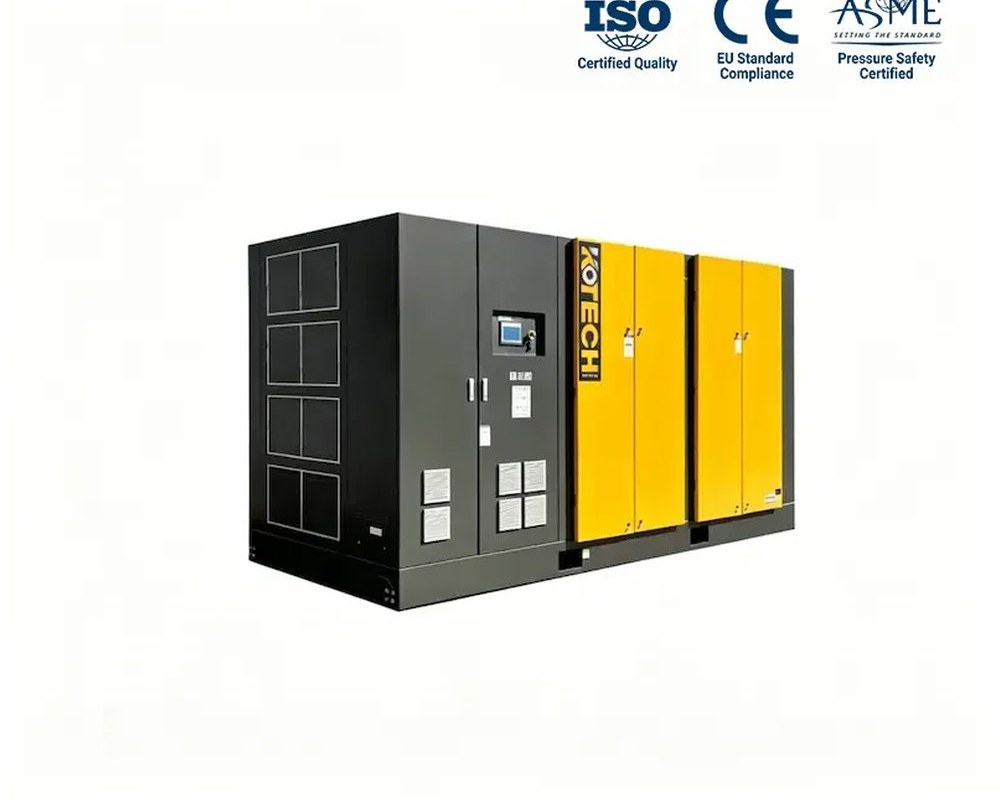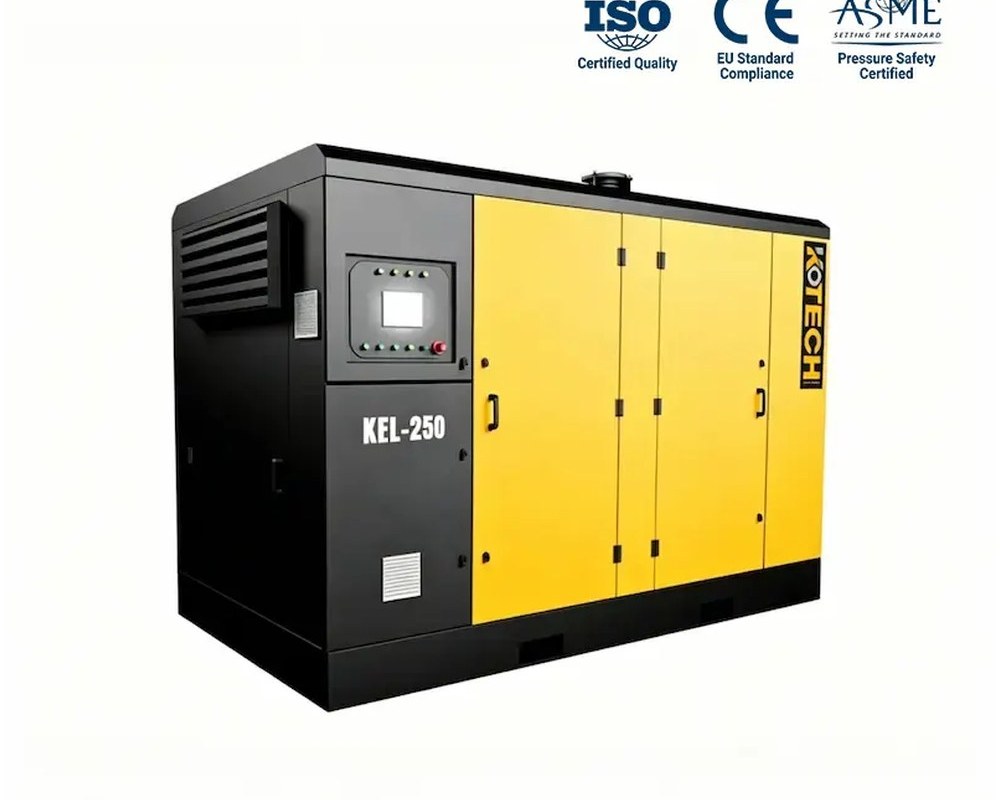




In a chemical or petrochemical plant, instrument air is a safety system wearing a utility’s clothes. Thousands of control valves, emergency shutdown valves and positioners depend on it; when it fails or carries moisture or oil, processes do not merely slow down — valves stick, interlocks act unpredictably and plants move toward unplanned, sometimes hazardous shutdown. Unlike general plant air, instrument air has a defined quality class, mandatory drying and redundancy, and in hydrocarbon service the case for removing oil at the compressor rather than filtering it out downstream is especially strong. Dry oil-free screw compressors, which never introduce lubricant into the compression chamber, are the established heart of these systems. This guide explains how a petrochemical instrument-air station is specified and where the KOTECH KDOF dry oil-free screw range fits.

What instrument air really means in a process plant
Instrument air is the compressed air dedicated to pneumatic controllers, valve positioners, actuators and emergency shutdown devices. It differs from ordinary plant air in three enforced ways: quality, continuity and documentation. Quality is usually defined against ISO 8573 with a conservative particulate class, a pressure dew point low enough to prevent condensation at the lowest expected ambient — commonly minus 40 °C or drier — and, increasingly, an oil-content target at or near Class 0 so no hydrocarbon aerosol or vapour reaches the instruments. Continuity is required because valve air is safety-related: the system is designed with redundant compressors, dryers, filtration and receivers so that no single failure removes air from the safety instrumented functions.
Documentation matters as much as hardware. Instrument-air systems are identified during hazard and risk studies, inspected against the project’s piping and instrumentation standards, and maintained under controlled procedures with quality records. In a refinery or ethylene, fertilizer or specialty chemical plant, a contaminated or wet instrument-air system can be a reportable process-safety event rather than a maintenance ticket. These requirements drive a station architecture whose core is deliberately conservative: oil-free compression, twin-tower desiccant drying with changeover, progressive filtration, generous receiver volume and automatic sequencing.
- Powers control valves, positioners and emergency shutdown devices — a safety-related utility.
- Defined quality: controlled particulates, low pressure dew point (often -40 °C or drier), minimal oil content.
- Mandatory continuity: redundant compressors, dryers, filtration and receivers by design.
- Fully documented under process-safety and inspection regimes.
Why dry oil-free rather than oil-injected with filters
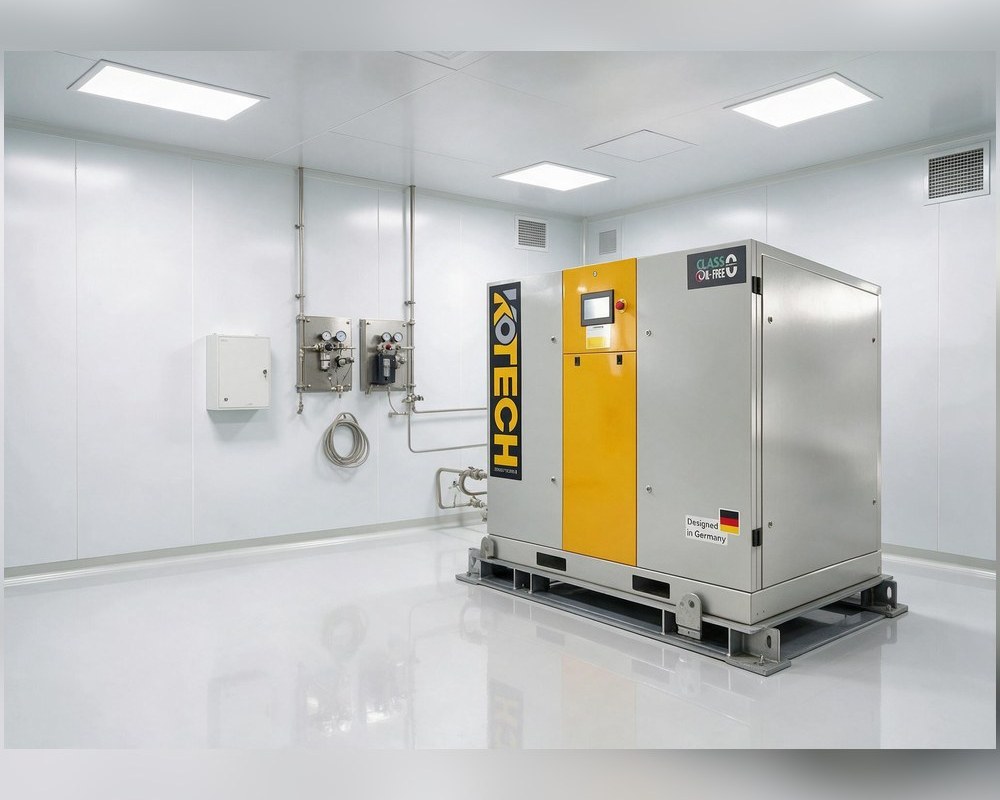
An oil-injected compressor followed by coalescing filtration can nominally reach a low oil figure on a good day, but the safety case in hydrocarbon service does not rest on filters whose performance depends on maintenance, correct draining and timely element changes. Every coalescing element has a loading curve, a saturation point and an installation-quality risk; a single bypassed seal or delayed service can pass oil into a header that feeds safety valves. Dry oil-free screw compression removes the lubricant from the compression chamber entirely — the rotors are kept in timing-gear relationship without contacting, and no oil is present to be carried over — so there is no oil source for downstream equipment to manage. This is the fail-safe direction for instrument air.
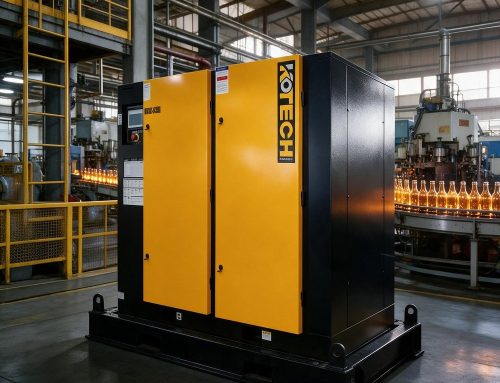
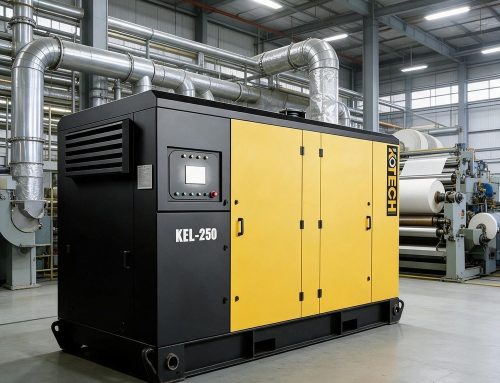
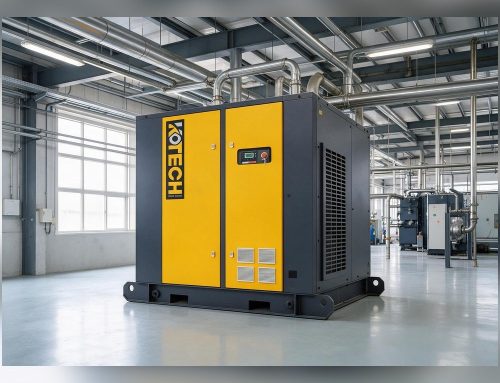
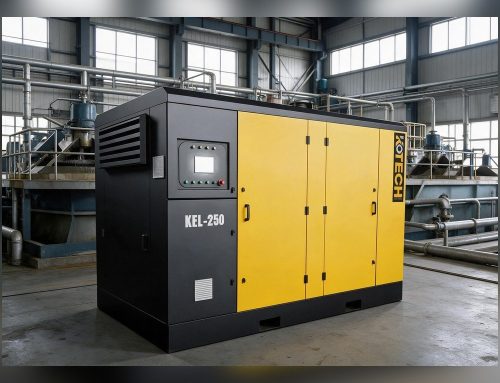
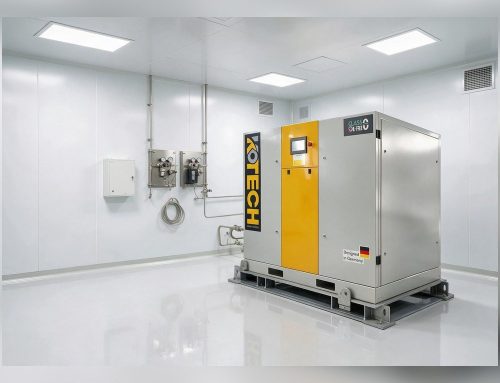
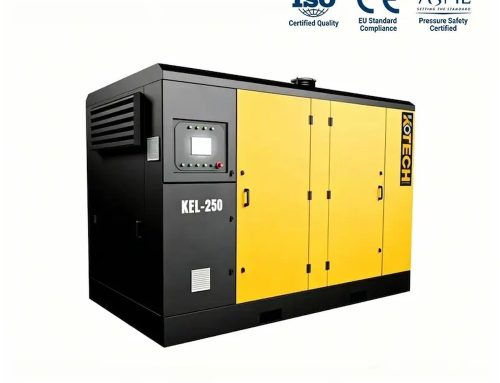
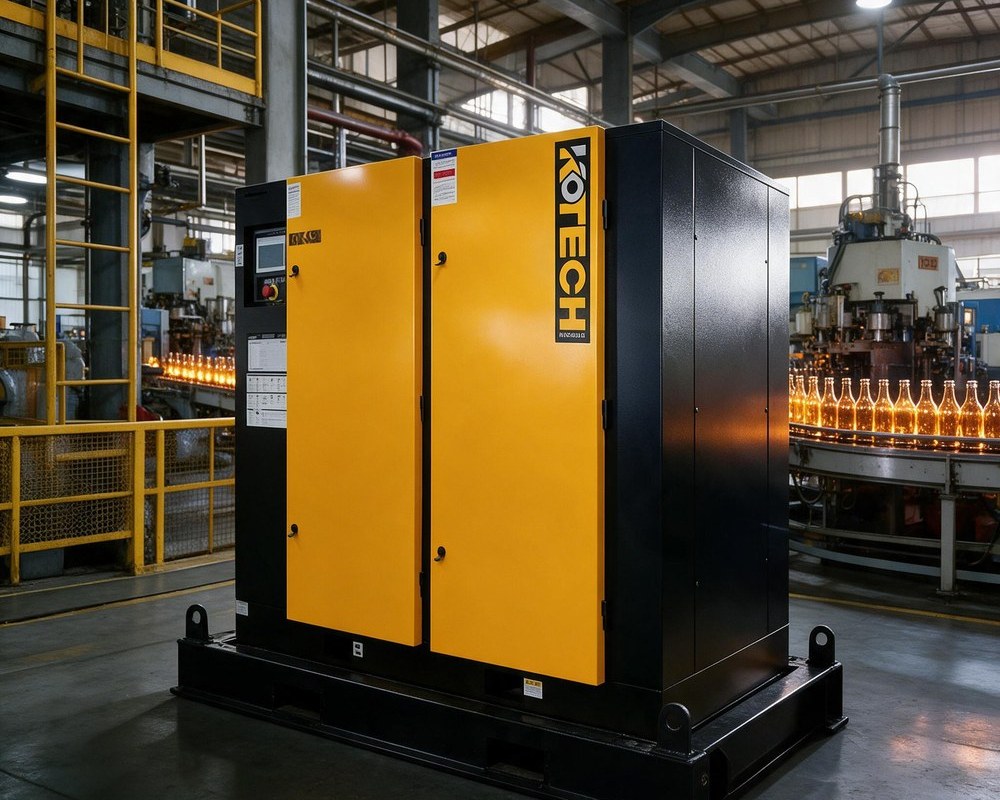
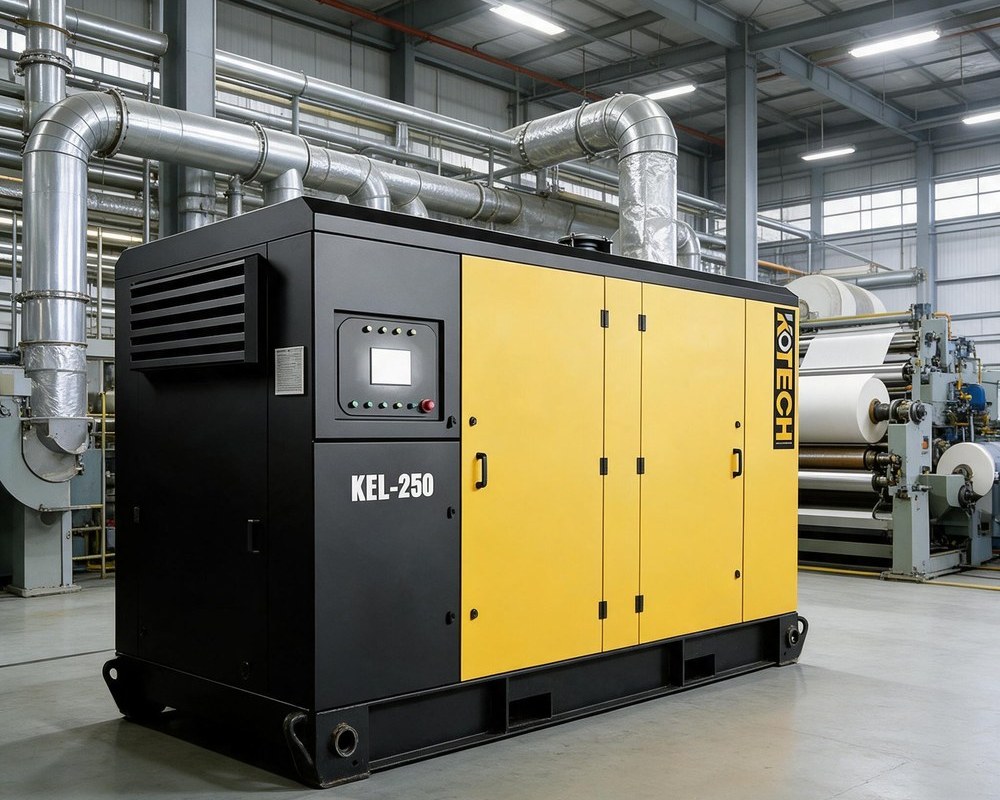
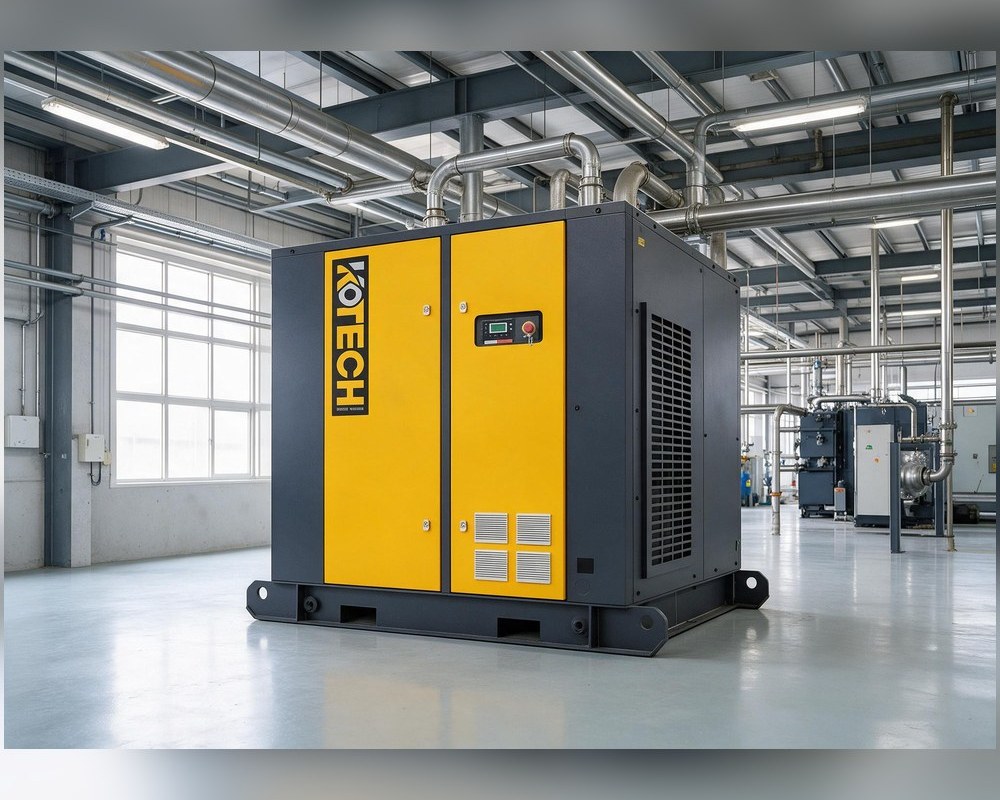
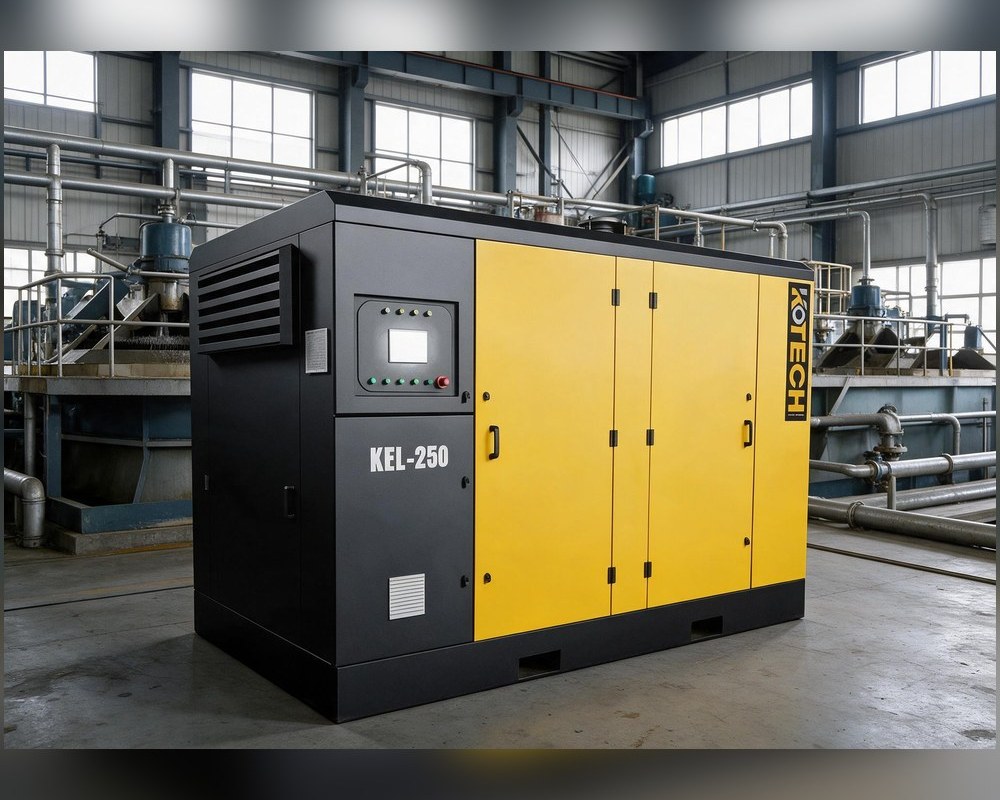
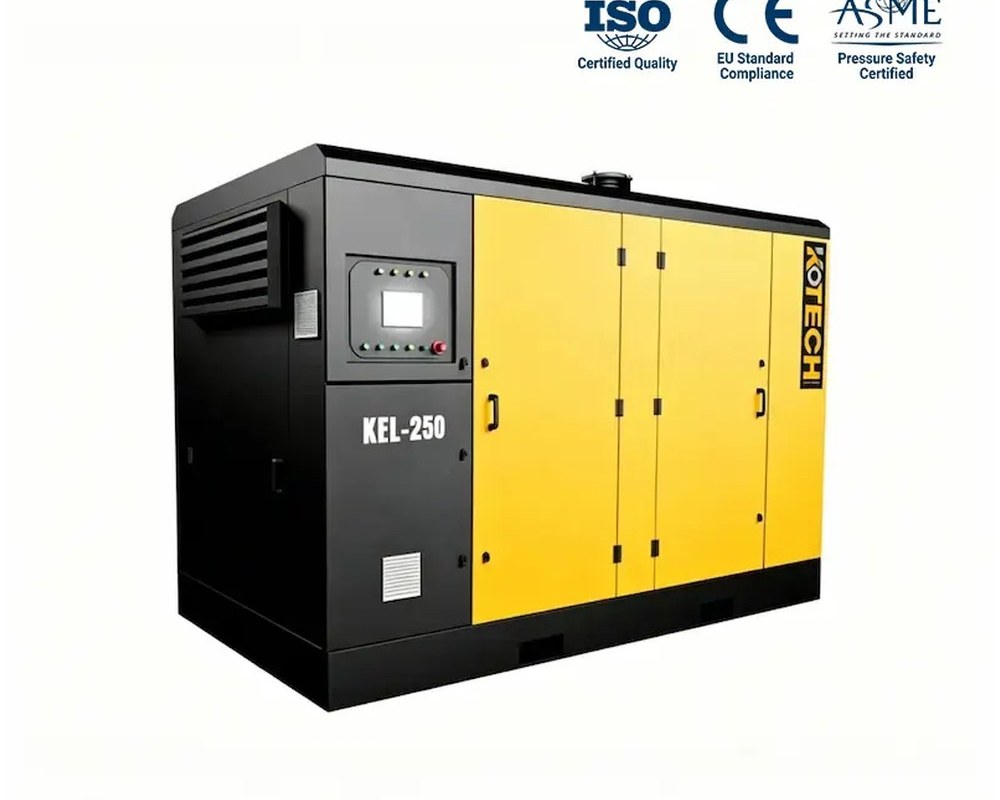
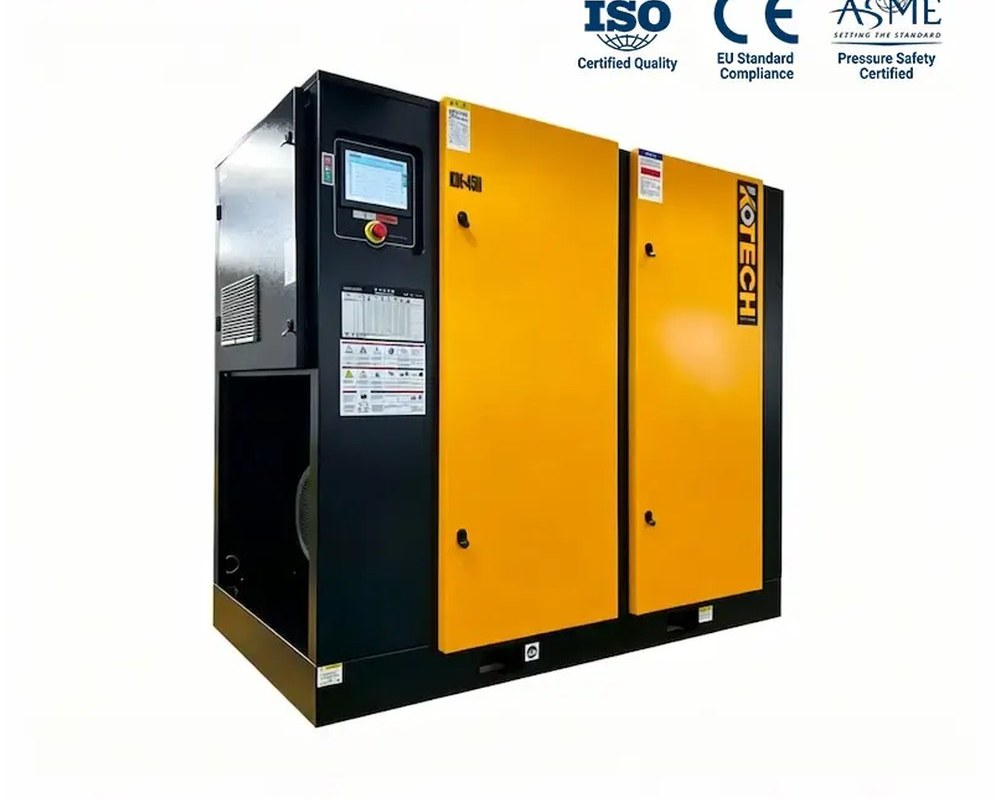
There are practical benefits beyond the safety argument. Oil-free air does not coat desiccant beads, so dryer performance and service life are protected rather than slowly degraded by hydrocarbon loading; condensate is not oil-laden, simplifying its handling and disposal in a regulated plant; and the air quality does not depend on the day-to-day discipline of filter draining. Water-lubricated oil-free machines are an alternative in some industries, but in petrochemical duty the dry type is preferred where very low dew points, high ambient temperatures and compatibility with desiccant dryers are the norm. The KOTECH KDOF line is built on exactly this principle: a two-stage dry oil-free screw with water cooling for continuous process-plant duty.
Real KOTECH KDOF dry oil-free screw specifications
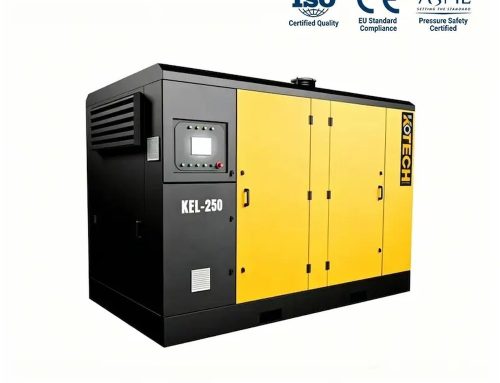
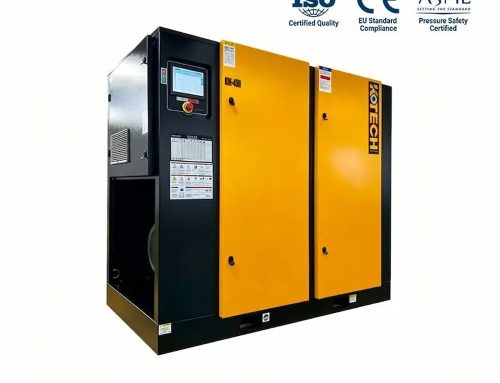
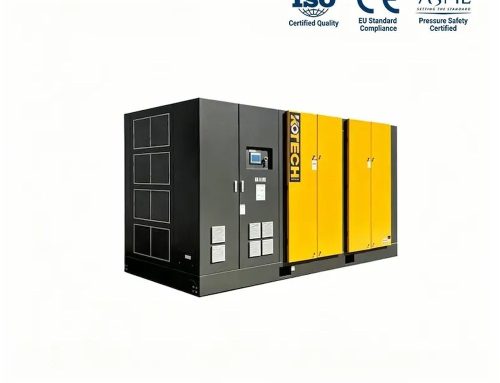
Current factory figures from the KOTECH product page; KDOF is a two-stage dry oil-free water-cooled line covering 37 to 355 kW at 7.5 to 10.5 bar.
The three FAD figures on each row correspond to 7.5, 8.5 and 10.5 bar respectively; read the column the network will actually run. Add desiccant-dryer purge air (typically around 10 to 20 percent of delivered flow depending on dryer type) when sizing the compressors.
Designing the instrument-air package
Sizing starts from a valve count and consumption study, not rule of thumb: list control valves, on-off valves and ESD devices by consumption per switch and per steady state, estimate actuation frequency and simultaneous-event peaks (startups, shutdowns and emergency sequences drive the largest flows), and add the purge demand of the dryers plus leakage and growth allowance. The receiver is sized to ride through compressor changeover and to buffer peak valve events while holding pressure within the instruments’ allowable band, which is why process plants use noticeably larger air receivers than general factories.
Treatment follows the compressor in a standard sequence: after-cooler and moisture separator, wet receiver, pre-filter, twin-tower desiccant dryer to the specified dew point, after-filter and dry receiver, with oil-vapour adsorbers where the specification demands total oil assurance. Dryers and critical filtration are themselves redundant or arranged so a unit can be serviced without losing the air supply. In classified areas, electrical classification of the compressor and dryer package must match the zone; where the compressor sits in a safe-area utility building, ducting and pressurisation keep the room environment acceptable. Continuous monitoring of dew point, pressure and, where specified, oil content with alarms into the control room turns the air system from an assumption into an observed safety barrier.
Reliability engineering for these stations concentrates on redundancy and maintainability: N+1 machines at minimum (two-by-100 percent on small systems, larger stations with one spare across multiple units), automatic lead/lag sequencing with run-hour equalisation, independent power feeds where feasible, and staged startup after a total trip so dryers and receivers come online in the right order. Water-cooled KDOF frames suit this duty well because they hold stable temperatures in hot climates and avoid recirculation problems in enclosed utility rooms.
- Size from valve consumption plus event peaks, dryer purge, leakage and growth — not a single CFM rule.
- Provide a receiver large enough to buffer emergency-valve sequences and compressor changeover.
- Use redundant twin-tower desiccant drying and progressive filtration to the specified dew point and oil class.
- Match electrical classification to the area, and monitor dew point, pressure and oil content with alarms.
Operating and documenting the system
Once commissioned, the value of an oil-free instrument-air station is preserved through disciplined operation: trend dew point and differential pressures across dryers and filters, log compressor and dryer run hours, sample air quality on the defined schedule, and keep oil-free certification and maintenance records available for process-safety audits. Because the KDOF compression chamber contains no oil, routine work concentrates on intake filtration, timing-gear and drive service, cooling-water treatment and controls — and there is no oil-contaminated condensate stream from the compression path. Testing the station under simulated load and verifying the automatic changeover of both compressors and dryers before plant startup closes the loop between design intent and a safety system the operations team can rely on.
Buying tips
- Specify dry oil-free compression for instrument air; do not base safety-critical air quality on maintained oil-injected machines plus filters.
- Size from a valve-by-valve consumption study including emergency-event peaks, dryer purge, leakage and growth.
- Require N+1 machines, redundant desiccant drying and automatic changeover proven before plant startup.
- Set dew point for the lowest credible ambient and monitor it continuously with alarms to the control room.
- Verify electrical area classification, cooling-water treatment and condensate handling for the specific site.
Frequently asked questions
What quality must instrument air be in a petrochemical plant?
Why use dry oil-free compressors instead of oil-injected machines with good filters?
Which KOTECH KDOF frame fits an instrument-air station?
How is instrument air dried to such a low dew point?
How much redundancy does an instrument-air system need?
Can a KDOF compressor be installed in a hazardous-area location?
Share your valve count, required ISO 8573 classes, dew point, redundancy standard and electrical area classification, and our engineers will design a KOTECH KDOF dry oil-free instrument-air station with drying, receivers and sequencing for your chemical or petrochemical plant.