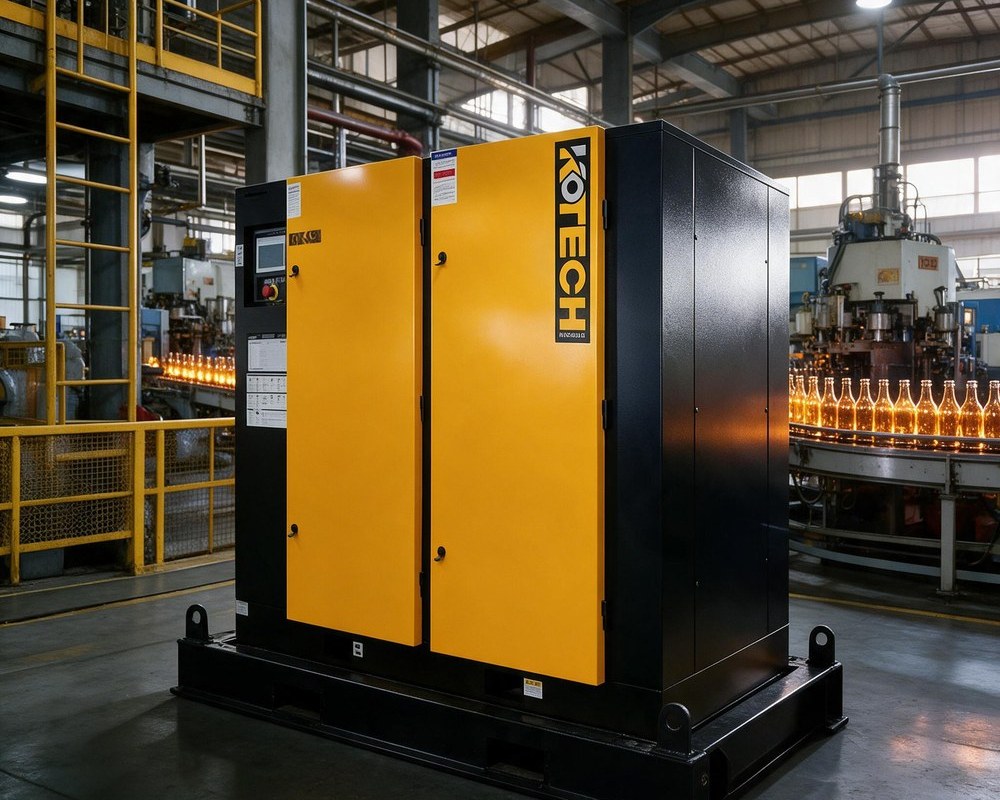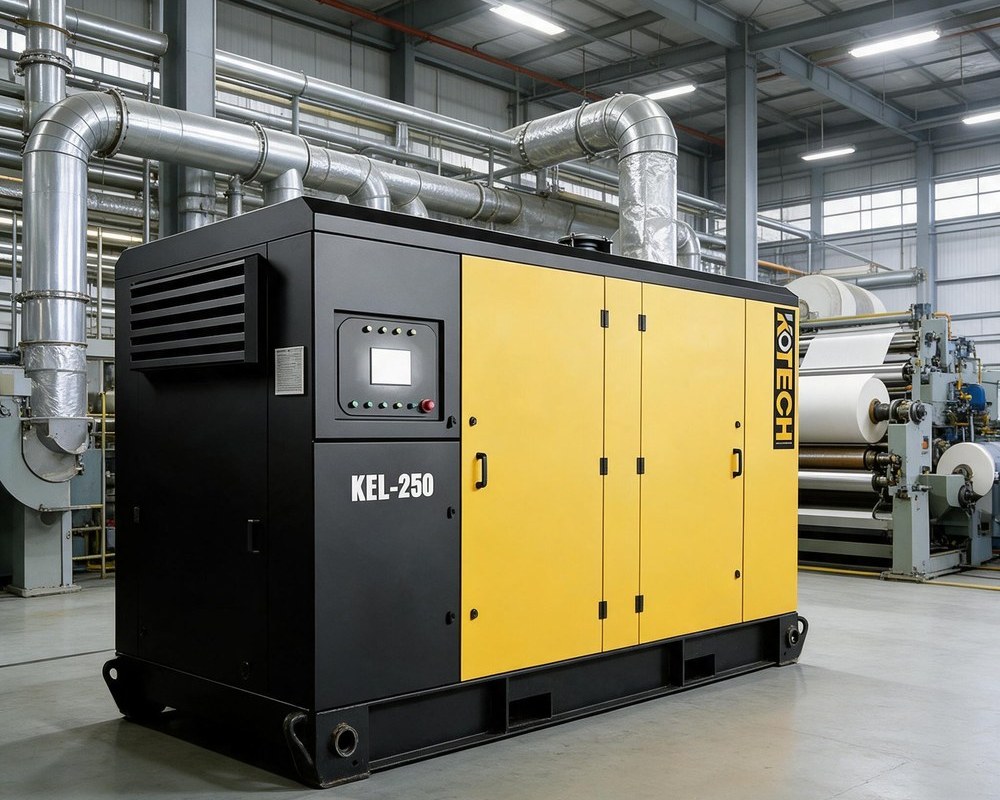




In a dental clinic or analytical laboratory, compressed air powers handpieces, syringe air, cleaning and test instruments, yet the machine producing it has to live inside the same building as patients and precision work. That rules out noisy, oil-lubricated plant: the air must be clean and dry to protect patients and instruments, and the compressor must run quietly enough not to disturb treatment rooms. A quiet oil free scroll compressor meets both requirements, and sizing it as a small central station rather than a collection of per-room units improves reliability and makes maintenance predictable. The decision hinges on air quality class, total simultaneous demand, duty cycle and the real noise level of the installed machine.

Why dental and laboratory air must be oil-free and dry
Dental compressed air comes into close proximity with patients through handpieces, air-water syringes and surgical equipment, so contamination is not an abstract quality issue. Oil carry-over from a lubricated compressor can reach instruments as an aerosol, leaving residues that affect both hygiene and the behaviour of high-speed handpieces. Moisture is equally problematic: it promotes corrosion in fine instrument mechanisms, supports microbial growth in the pipework and can spoil analytical results in a laboratory. An oil-free scroll compressor removes the lubricant from the compression chamber entirely, so there is no oil aerosol to remove downstream in the first place.
Scroll compression is particularly well matched to clinical environments. Two interleaved spiral elements compress air smoothly with very few moving parts and no metal-to-metal contact in the compression zone, which produces low vibration and a characteristically quiet sound signature. The KUW range records noise levels from roughly 51 dB on the smallest frame to about 62 dB on the larger cabinet models, low enough to install in a utility room adjacent to treatment areas without intrusive noise. Combined with proper drying and filtration, an oil-free scroll station can reliably deliver the clean, dry air that clinical and analytical work expects.
- No oil in the compression chamber eliminates oil aerosol at the source
- Dry air protects fine instruments, prevents corrosion and supports lab accuracy
- Scroll technology runs with low vibration and roughly 51 to 62 dB sound levels
- A central station simplifies filtration, drying and compliance monitoring
Sizing the central compressor to real simultaneous demand
The common sizing mistake is to add the nameplate consumption of every instrument and buy a compressor for that total, even though most never run together. The correct approach counts only the tools that genuinely operate simultaneously — several dental units during a busy morning session, an autoclave’s air demand, lab cleaning guns and any central suction support — and applies each instrument’s duty cycle. A receiver then covers short peaks, allowing the compressor itself to be sized for average demand with a sensible margin rather than for the theoretical maximum.
Duty cycle is the next consideration. A clinic that runs treatment through a full day needs a machine designed for repeated cycling and sustained use, not an intermittent hobby-grade unit. The KUW line scales from small single-phase cabinets such as the KUW-1.5-8 at 1.5 kW and 140 L/min through the 2.2 kW KUW-2.2-8 at 240 L/min and the 3.7 kW KUW-3.7-8 at 410 L/min, up to the larger three-phase KUW7.5-8A at 7.5 kW and 820 L/min and KUW15-8A at 15 kW and 1640 L/min for multi-chair clinics and larger laboratories. All deliver at 8 bar, which comfortably covers the 5 to 7 bar that most dental and laboratory instruments require after regulator and line losses.
Because these are compact cabinet machines, the available electrical supply often decides the upper frame: the smallest units accept 220 V or 380 V single/three-phase arrangements, while the larger A-frame models use 380 V three-phase. Matching the compressor to the existing supply avoids an electrical upgrade and keeps installation simple.
- Count only instruments that run simultaneously and apply realistic duty cycles
- Use a receiver to absorb short peaks instead of oversizing the compressor
- Choose a frame rated for repeated cycling across a full treatment day
- Check single- or three-phase supply before selecting the larger cabinet frames
Real KOTECH KUW oil-free scroll compressor models
Live product-page data; small cabinets suit single-chair practices while the A-frame models serve multi-chair clinics and laboratories.
Live product-page data for the KUW cabinet range. Free air delivery rises with motor size while the 8 bar working pressure stays constant, so frame selection is driven mainly by total simultaneous demand and available power.
Installation, treatment and noise control
Even a quiet compressor should be installed thoughtfully. A dedicated utility or plant room with adequate ventilation keeps intake air cool and clean, and mounting the cabinet on a level surface with space around it allows heat to dissipate and service access to remain clear. If the machine must sit close to treatment rooms, additional acoustic treatment of the plant room and flexible connections to the pipework further reduce structure-borne noise, although the scroll design’s low vibration already minimizes this.
Air treatment completes the clinical specification. An oil-free scroll still needs a dryer to control dew point and particulate filtration to protect instruments, with condensate management that drains moisture without wasting compressed air. The pipe network should use smooth, corrosion-resistant materials with a slight fall toward drain points, and regulators at each treatment room let staff set local pressure without changing the central machine. A well-designed central station therefore delivers consistent air quality at every chair while keeping the compressor itself out of sight and out of earshot.
- Install in a ventilated utility room with space for cooling and service
- Add a dryer, particulate filtration and proper condensate drainage
- Use smooth corrosion-resistant piping with local regulators per room
- Apply flexible connections and acoustic treatment where rooms are adjacent
Maintenance for continuous clinical operation
Dental and laboratory operations cannot tolerate an air outage during a treatment day, so maintenance should be planned rather than reactive. Scroll compressors have relatively few wearing parts and no oil changes in the compression chamber, which keeps routine work simple: intake filter inspection, condensate drain checks, dryer and filter servicing, and periodic belt or drive and controller checks according to the manual. Keeping the intake filter clean matters because a blocked filter both reduces delivered flow and makes the machine work harder.
A central station makes this routine easy to schedule because all components — compressor, receiver, dryer and filters — live in one place. Logging running hours and pressure behaviour reveals slow degradation early, and specifying a modest redundancy arrangement, such as a receiver sized to carry short servicing windows or a backup unit in larger clinics, removes the risk of a single point of failure. For a healthcare or analytical environment, predictable clean air with minimal maintenance is precisely the value a scroll compressor is chosen to deliver.
- No compression-chamber oil changes; focus on filters, drains and the dryer
- Service the central station on running hours rather than waiting for a fault
- Size the receiver or add backup capacity to cover servicing without downtime
Buying tips
- Define the required air quality and dew point first, then select oil-free scroll compression plus matching drying and filtration.
- Size from simultaneous instrument demand and duty cycle with a receiver for peaks, not the sum of every nameplate rating.
- Check the published noise level and available single- or three-phase supply before choosing the frame.
- Plan a ventilated utility room, corrosion-resistant piping and local regulators for each treatment area.
- Prefer a central station with logged maintenance and receiver or backup capacity to avoid mid-day outages.
Frequently asked questions
Why do dental clinics need an oil-free air compressor?
How quiet is a scroll compressor for a clinic?
What size compressor does a dental clinic need?
Can a scroll compressor run all day in a laboratory?
Does an oil-free compressor still need a dryer and filters?
If you are planning clean, quiet central air for a dental clinic or laboratory, share your number of treatment rooms, simultaneous instruments and available power so a KUW scroll configuration can be sized for the duty.