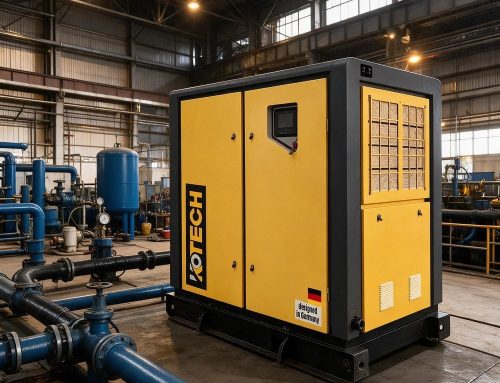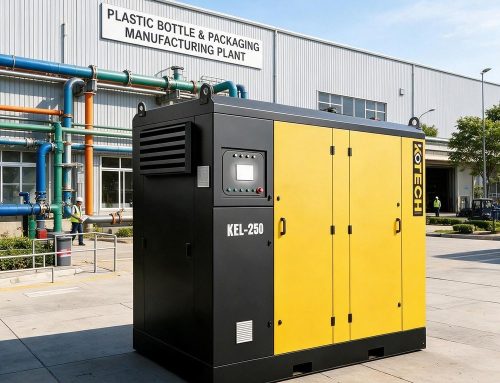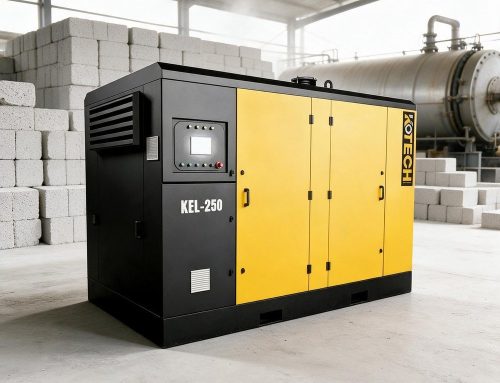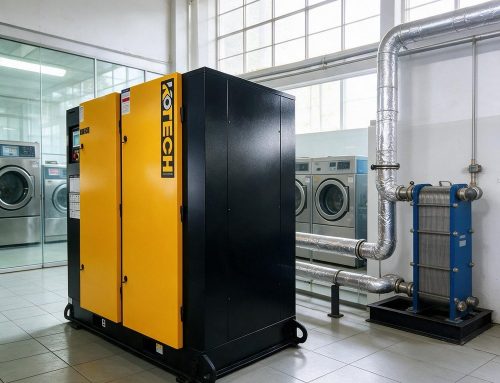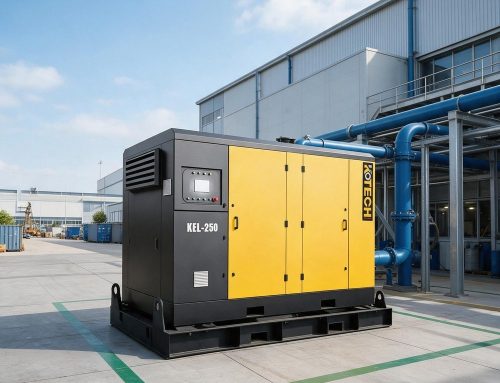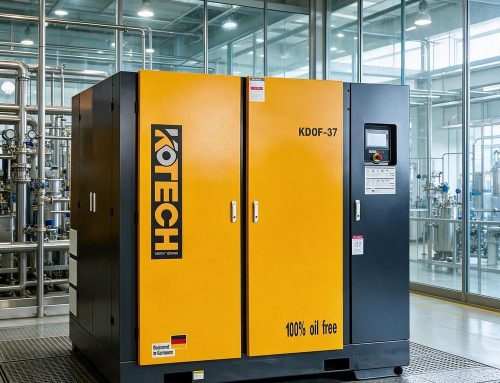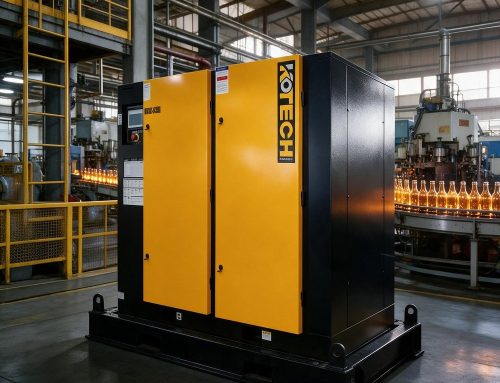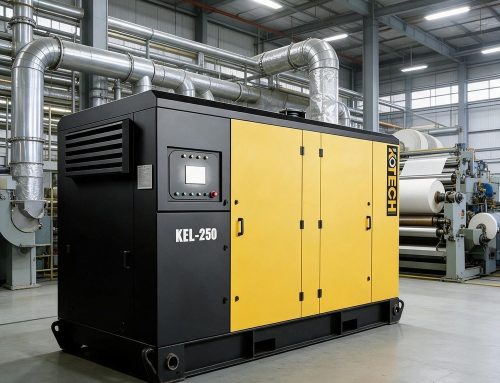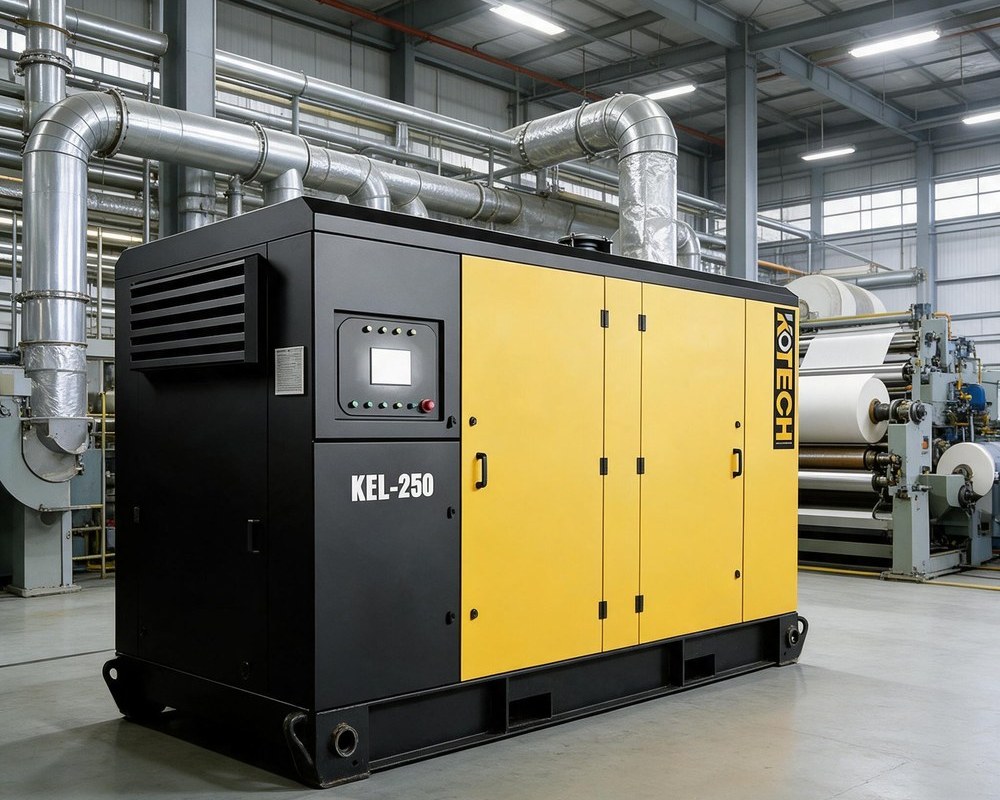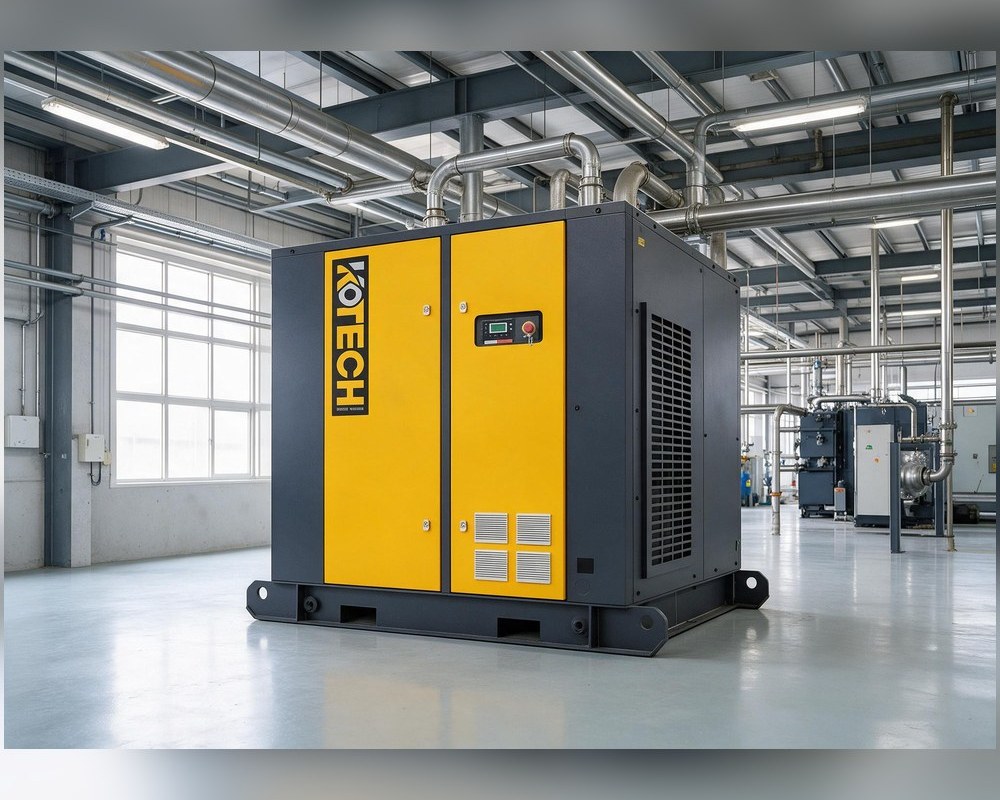




In factories where the compressors run two or three shifts, the original purchase price is a small fraction of lifetime cost; electricity dominates, often reaching 70 percent or more of total ownership expense. Many such plants still operate ageing fixed-speed screw machines that load and unload against a band, wasting energy whenever demand falls below full output. Retrofitting these with a two stage VSD screw compressor attacks both drivers of that waste at once: variable speed matches output to real demand, and two-stage compression with intercooling reduces the energy needed to produce each cubic metre. The result is a project that frequently pays back through measured electricity savings rather than assumptions.

Where the energy is actually lost
A fixed-speed compressor runs at a single motor speed and regulates by loading and unloading. When plant demand is below its capacity, it still cycles, consumes a substantial portion of full-load power while unloaded, and repeatedly vents air through the blow-off. Across a factory with shifting production, weekends and partial lines, the average load can sit well below nameplate, so a large share of the kilowatt-hours bought produces no useful compressed air.
The second loss sits in the compression process itself. Single-stage compression raises pressure in one step, generating high heat that raises the work required. Two-stage compression splits the rise across two air ends with intercooling between them, which lowers the average temperature and the specific energy, especially at the 7.5 to 12.5 bar pressures common in industry. Combining this inherently more efficient process with a variable-speed drive that trims output to demand addresses both waste streams together, which is why the retrofit saves more than either change alone.
- Fixed-speed load/unload control wastes power during partial and no demand
- Unloaded running and blow-off losses can consume a large share of full-load power
- Two-stage compression with intercooling lowers specific energy at typical plant pressures
- Variable speed keeps the machine near its efficient point across the demand curve
Building the payback case on measured data
A credible retrofit decision starts with logging the existing machines rather than relying on nameplates. Record discharge pressure, load and unload hours, motor power and actual production patterns for at least a representative week, ideally longer if the plant has seasonal variation. From this data you can establish the current specific energy in kilowatt-hours per cubic metre and the proportion of runtime spent unloaded, which quantifies the recoverable waste.
The projected saving then has two components. The variable-speed drive eliminates most unloaded running and trims output during partial load, while the two-stage air end reduces the energy of every cubic metre produced even at full load. Add the value of lower discharge pressure if the network can be regulated down, because each bar removed brings additional savings. Compare the total annual kilowatt-hour saving at the plant’s real tariff against the installed cost of the new compressor, installation, controls and any dryer or pipework changes to derive a simple payback, then stress-test it against lower utilization and tariff scenarios.
- Log pressure, load/unload hours and power over at least one representative week
- Quantify unloaded runtime and current specific energy before sizing the replacement
- Combine VSD partial-load savings with two-stage full-load efficiency gains
- Stress-test payback against lower utilization and lower tariff assumptions
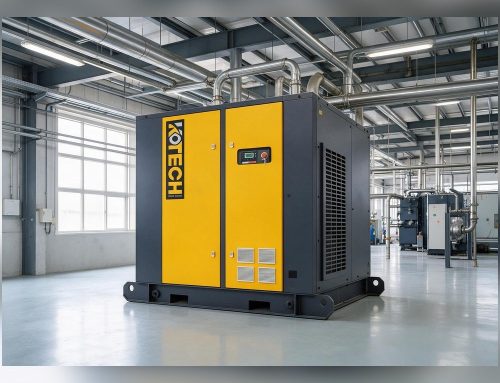
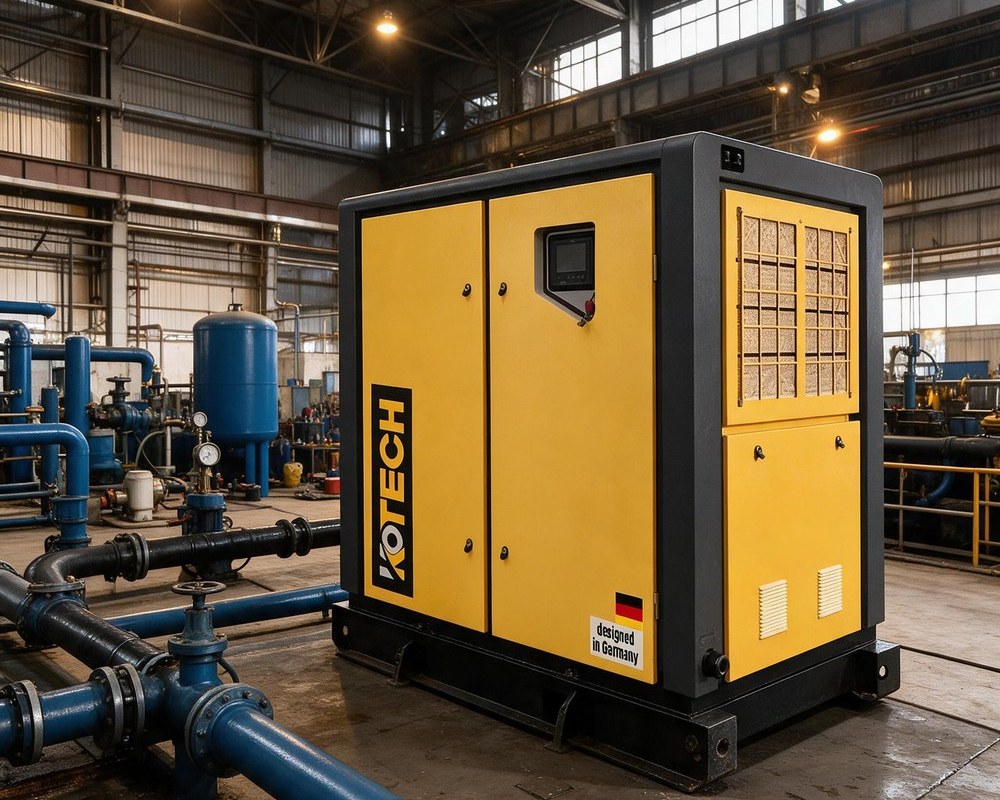
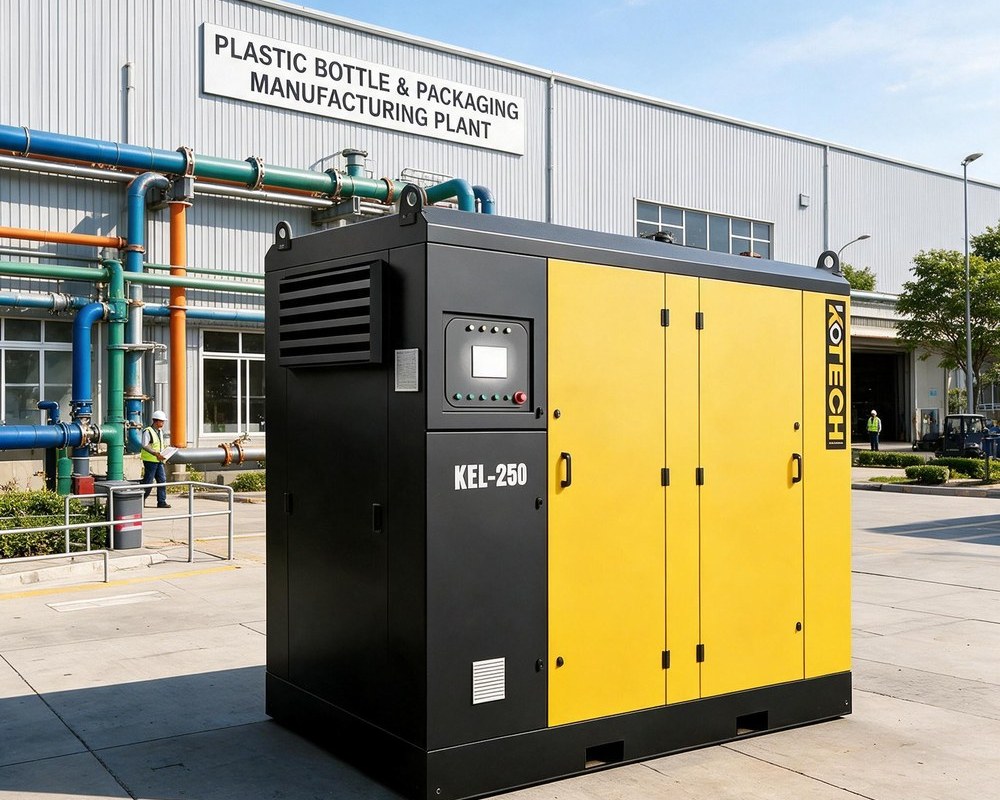
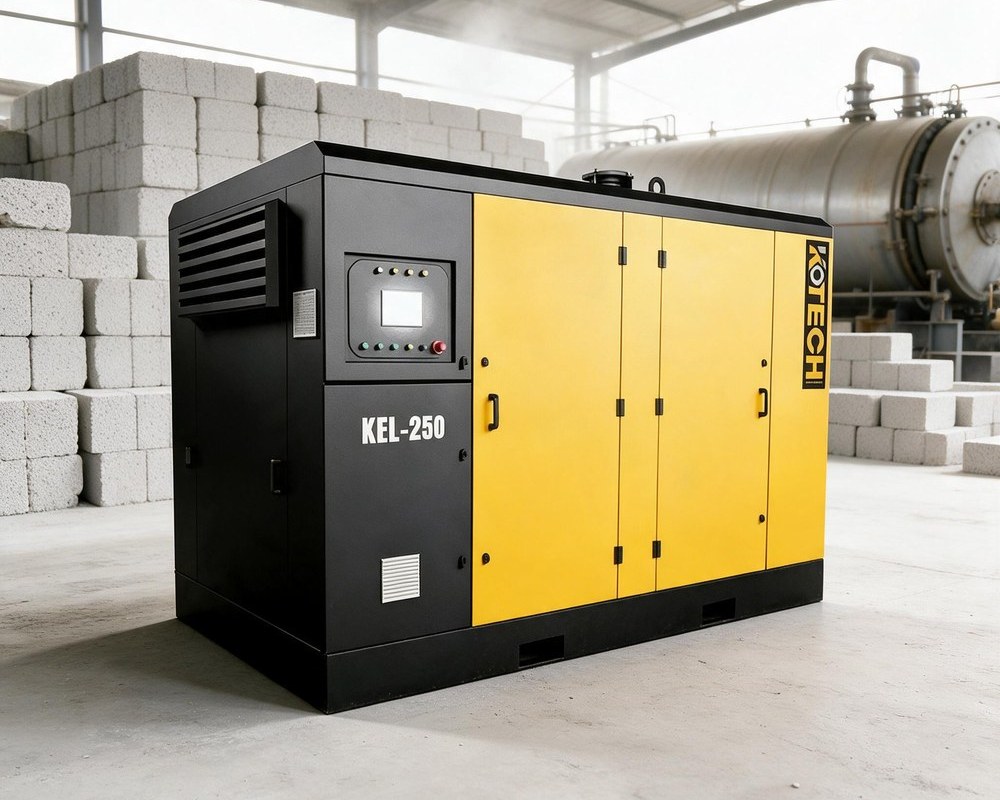
Real KOTECH KOE-II two-stage VSD screw compressor frames
Live product-page data; the FAD range reflects the variable-speed envelope each frame maintains across fluctuating demand.
The table shows current product-page data for representative two-stage VSD frames; the free-air-delivery figures are the variable range the drive can hold, which is exactly the flexibility that lets one machine track a fluctuating factory load instead of cycling on and off.
Sizing and sequencing the retrofit
A common mistake is replacing an oversized fixed-speed machine with an equally oversized variable one, which forces the VSD unit to run at very low frequency where its advantage fades. Better practice rightsizes the variable machine to the base and varying load, and where multiple compressors exist, configures one VSD unit as the trim machine that follows demand while fixed-speed or two-stage base-load units run flat and efficient. A modern controller sequences them so the variable machine absorbs the fluctuation without frequent starts.
Installation should also address the network, because even the best compressor cannot compensate for leaks and excessive pressure. Repairing leaks, lowering the header pressure to the minimum the process tolerates, and fitting adequate receiver capacity amplify the retrofit saving and often shorten payback by months. Phasing the changeover, keeping the old machine briefly as standby, and validating performance with post-installation metering ensure the promised savings are real and bankable rather than theoretical.
- Rightsize the VSD machine; avoid running it permanently at very low frequency
- Use one VSD as trim with efficient base-load units in multi-compressor rooms
- Repair leaks and lower header pressure to amplify the energy saving
- Validate with post-installation metering and keep the old unit briefly as standby
Beyond electricity: reliability and air-quality gains
The retrofit usually brings benefits that do not appear directly on the power bill. New two-stage VSD machines carry modern controllers with remote monitoring, trending and alarm management, which shifts maintenance from reactive to planned and reduces unplanned stops. Smoother variable-speed running lowers mechanical and thermal stress compared with repeated load/unload cycling, extending the life of bearings, belts and the air end.
Stable discharge pressure also improves downstream quality and process consistency, because tools and actuators receive a steady supply rather than a fluctuating band. When the replacement is paired with correctly sized drying and filtration, the plant gains tighter control of dew point and contamination, which matters in food, pharmaceutical, electronics and precision metalwork. Presenting the full case, energy plus reliability plus quality, usually makes the retrofit easier to approve on capital-rationed sites than an energy-only argument.
- Modern controllers enable remote monitoring and planned, predictive maintenance
- Smoother running reduces mechanical and thermal stress versus load/unload cycling
- Stable pressure improves consistency for tools, actuators and processes
- Pair with drying and filtration to tighten dew point and contamination control
Buying tips
- Log the existing machines before sizing; the retrofit case must rest on measured load and unloaded runtime.
- Count both VSD partial-load savings and two-stage full-load efficiency, not just one.
- Rightsize the variable machine and use it as trim alongside efficient base-load units in larger rooms.
- Fix leaks and reduce header pressure as part of the project to shorten payback.
- Require post-installation metering so the achieved saving can be verified against the proposal.
Frequently asked questions
How much energy can a two stage VSD screw compressor save?
Is two-stage compression or variable speed the more important upgrade?
How do I calculate retrofit payback?
Should I replace all compressors with VSD units?
What else should the retrofit include to maximize savings?
If your factory runs ageing fixed-speed compressors across long shifts, share a week of logged runtime and pressure data so a two-stage VSD retrofit and its measured payback can be proposed for your actual load profile.