



A fiber laser cuts only as well as its assist gas allows. When the head needs high-pressure air or nitrogen to eject molten metal cleanly, a dip in gas pressure shows up immediately as burr, dross or lost edge quality, especially on thicker stainless and aluminium. Yet producing that pressure by running the entire factory compressor at 30 bar is enormously wasteful and hard on equipment designed for normal plant pressure. The efficient solution is a dedicated high pressure booster compressor that takes ordinary plant air and raises only the assist-gas stream to the 20 to 40 bar the cutting head requires. Sizing it correctly means matching booster flow to the machine’s nozzle duty while keeping the primary low-pressure system running in its efficient range.

Why a booster beats raising whole-system pressure
Compressed-air energy rises steeply with discharge pressure, so forcing the main plant compressors to deliver 30 bar simply to satisfy one laser would mean every actuator, blow gun and cylinder in the factory is fed over-pressure air that regulators then throw away. It also pushes standard compressors and piping well beyond their comfortable design range, increasing leakage, wear and heat. A booster separates the two duties: the primary station continues producing efficient 7 to 10 bar plant air, and a small reciprocating booster draws from that header and compresses a side stream to the high pressure the laser head needs.
The configuration brings practical benefits beyond energy. The high-pressure circuit is confined to a small, clearly identified loop — booster, receiver, dryer and filtration rated for the full pressure — so the rest of the plant stays on conventional, lower-cost components. The main header also acts as a stable, buffered supply for the booster, smoothing its inlet conditions. When assist gas is generated from compressed air rather than delivered nitrogen, this arrangement lets a shop produce high-pressure air on demand, reducing dependence on gas cylinders or bulk nitrogen deliveries for jobs where air assist is acceptable.
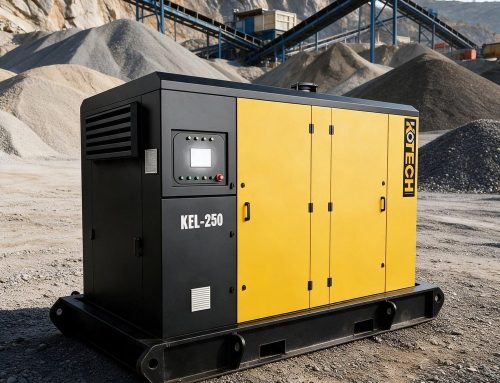
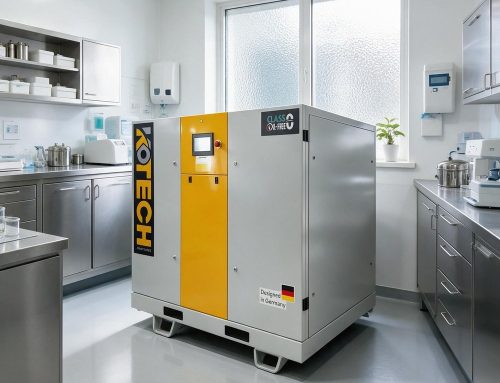
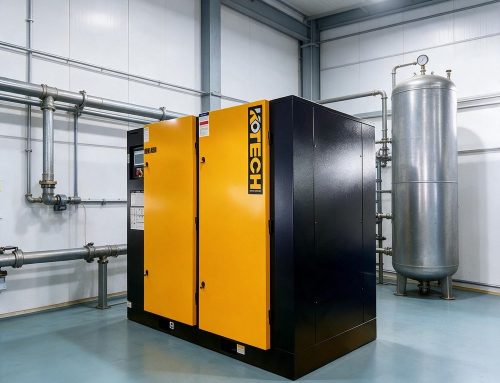
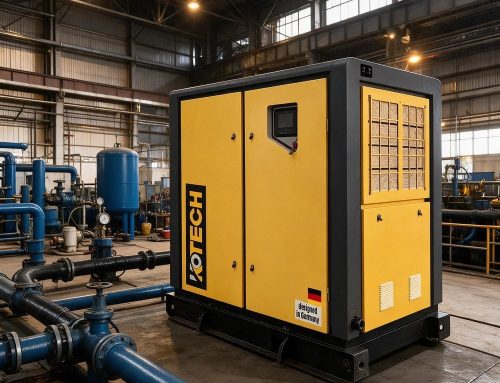
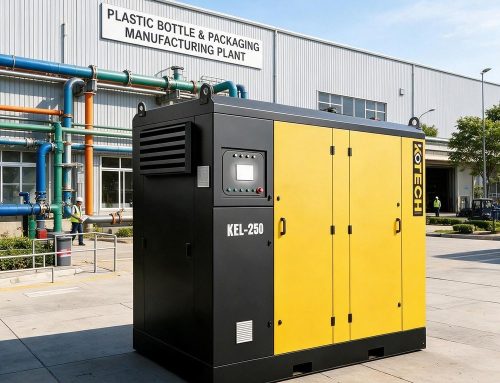
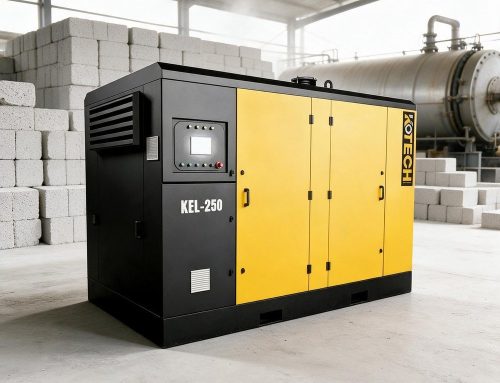
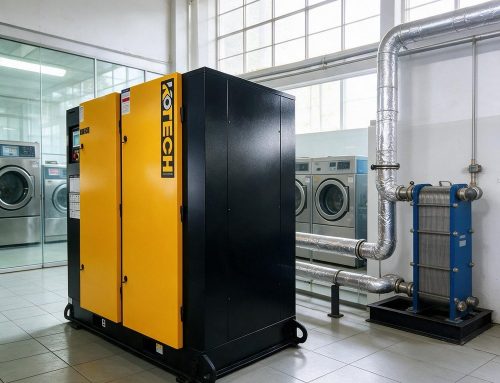
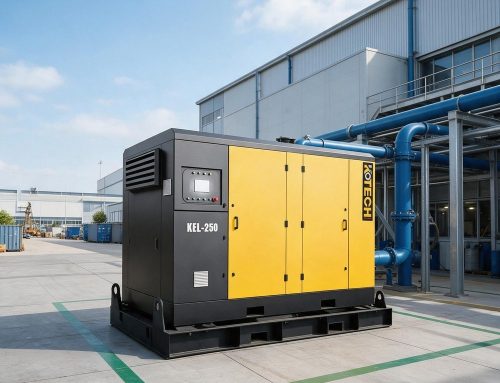
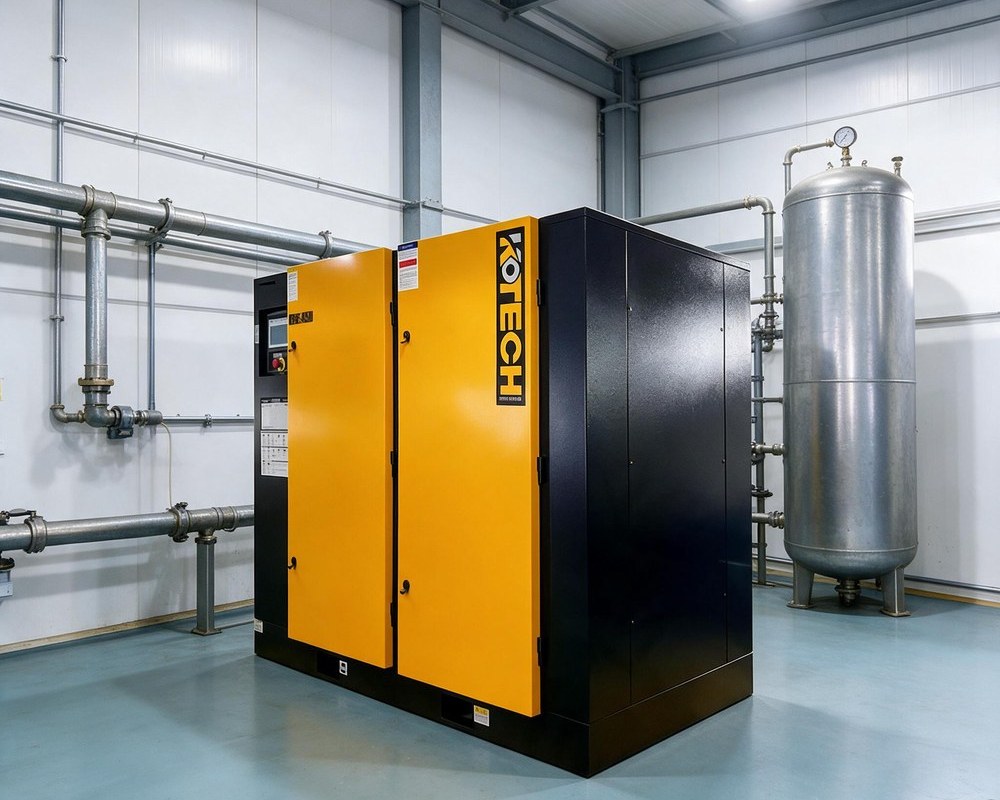
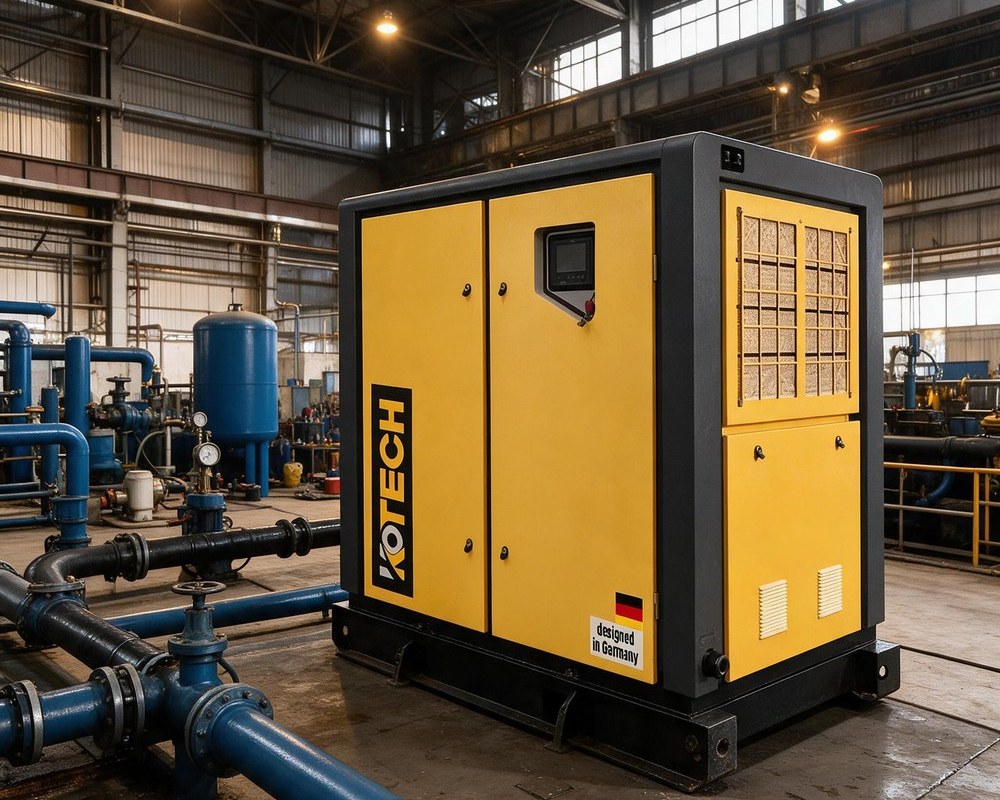
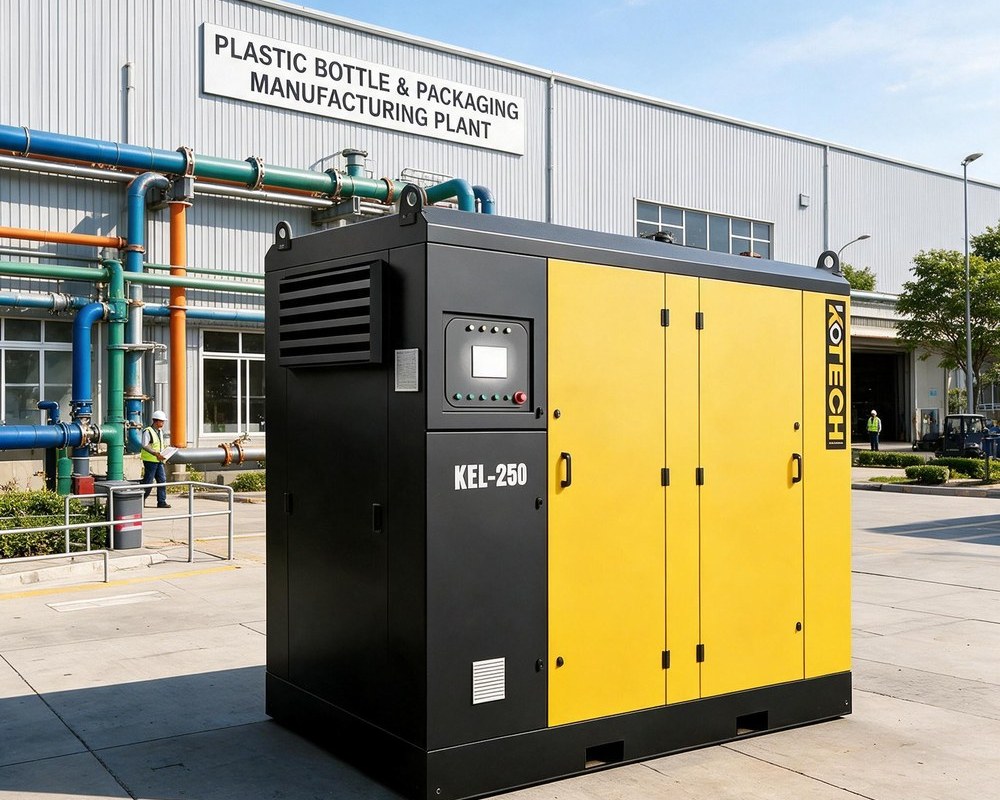
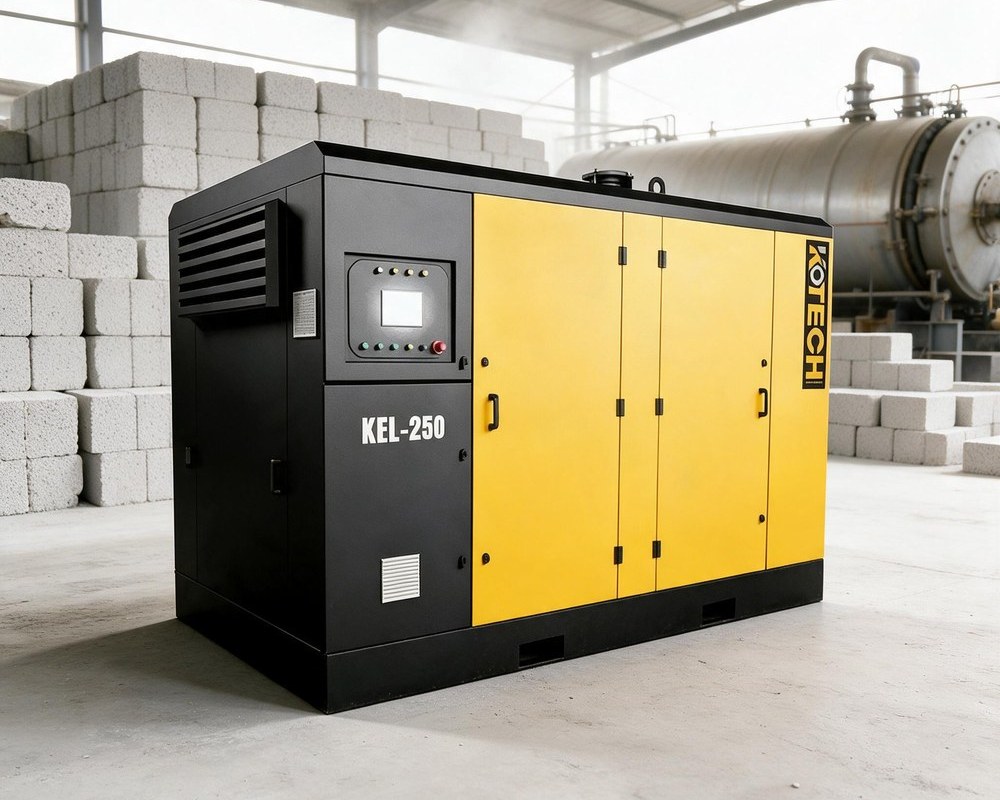
The KOTECH HIGH booster range is purpose-built for this role, taking inlet air at roughly 3 to 6 bar and delivering discharge pressures around 30 to 34 bar in compact skid packages driven by motors from 45 to 110 kW.
- Keep the main plant at efficient 7 to 10 bar and boost only the assist-gas stream
- Confine high-pressure components to a small, dedicated, correctly rated circuit
- Use the stable plant header as a buffered booster inlet
- Reduce reliance on delivered nitrogen where air assist is technically acceptable
Sizing the booster to the laser’s assist-gas duty
Assist-gas demand depends on the cutting head, nozzle diameter, material and pressure profile. Modern fiber machines consume a defined gas flow that rises with nozzle size and pressure, and the duty is pulsed: gas flows heavily while a sheet is cut and falls during loading and positioning. Sizing therefore follows two numbers — the average flow across a production shift and the peak instantaneous flow during cutting — with a high-pressure receiver carrying the peaks so the booster itself is sized for sustainable average output rather than the worst instant.
Inlet pressure is a critical selection variable because a booster’s job is to add a pressure ratio on top of its supply. A frame fed at higher inlet pressure reaches its discharge target with less work per cubic metre, which is why the HIGH range includes frames tuned for different inlet conditions. The KVM-1.4/3-31 takes a 3 bar inlet to 31 bar discharge at 1.4 m³/min with a 45 kW motor, the KVW-1.2/6-33 accepts a 6 bar inlet and reaches 33 bar, also at 45 kW, while the larger KVW-2.4/3-30 delivers 2.4 m³/min at 30 bar from a 55 kW motor and the KVW-3/5-34 reaches 3 m³/min and 34 bar with a 110 kW drive for the highest-duty cutting cells.
Selection should always be confirmed against the laser maker’s assist-gas specification, including required pressure stability, because an under-sized booster forces the operator to slow the machine or accept edge defects, while a grossly over-sized unit cycles frequently and wastes energy. Where several lasers share one booster station, combining their staggered duty cycles often allows a smaller total installed capacity than one booster per machine.
- Size from average shift flow, and use a high-pressure receiver for cutting peaks
- Match the booster’s rated inlet pressure to the actual plant header
- Confirm pressure stability against the laser manufacturer’s specification
- Combine staggered duties of several lasers to right-size a shared booster station
Real KOTECH HIGH booster compressor models
Live product-page data; inlet and discharge pressures define the boost ratio each frame is built for.
Live product-page data. The model notation encodes flow, inlet and outlet pressure — for example the KVW-3/5-34 delivers 3 m³/min, accepts a 5 bar inlet and reaches 34 bar discharge — so the right frame follows directly from the header pressure and assist-gas target.
Gas quality, drying and high-pressure safety
Laser assist gas must be clean and dry, because moisture, oil or particulates reaching the focusing optics or nozzle cause lens contamination, inconsistent cuts and expensive downtime. A booster station therefore sits behind careful treatment: the primary air is dried and filtered before the booster, and high-pressure-rated filtration and condensate handling follow it, with every component — receiver, valves, piping and hoses — specified for the full discharge pressure rather than ordinary plant pressure. Where oil-free assist gas is required, the treatment train and compressor type must be chosen to guarantee the required purity class end to end.
Safety is inherent to high-pressure design. The receiver and booster package are pressure vessels subject to proper certification, relief-valve protection and periodic inspection, and the installation must provide clear isolation, venting and pressure indication so maintenance can be performed on a de-pressurized circuit. Ventilation and cooling around a reciprocating booster matter because the machine rejects substantial heat, and clean, cool intake air from the main header supports reliable valve life. Treating the booster as a mini high-pressure utility station, rather than as a generic compressor, is what makes laser assist-gas both safe and consistent.
Monitoring closes the loop. Tracking inlet and outlet pressure, inter-stage temperatures and running hours reveals valve wear or fouling early, while pressure logging at the laser helps correlate cut-quality issues with gas supply rather than machine settings, speeding diagnosis on the shop floor.
- Dry and filter before and after the booster to protect optics and nozzles
- Specify every receiver, valve and pipe for the full high-pressure rating
- Provide certified pressure-vessel protection, relief valves and safe venting
- Monitor inlet/outlet pressure and inter-stage temperature for early fault warning
Layout and operating cost considerations
Locating the booster close to the laser or the shared high-pressure manifold minimizes the run of expensive high-pressure pipework and limits pressure drop, while keeping the machine in a ventilated, accessible area supports cooling and maintenance. Because reciprocating boosters have wearing valves and seals, easy service access and room to remove components shorten scheduled stops. A well-planned shop often groups the booster, high-pressure receiver and treatment on one skid or in one compact utility corner, keeping the high-pressure footprint small and clearly marked.
On operating cost, the booster approach wins twice: the main compressors stay at their efficient low-pressure set point, and only the relatively small assist-gas flow is compressed the second time. Compared with cylinder nitrogen, on-site high-pressure air can cut consumable cost substantially on materials and thicknesses where air assist produces acceptable edge quality, while shops cutting high-grade stainless can retain nitrogen for those specific jobs. Evaluating total cost across electricity, gas deliveries, cylinder rental and scrap from poor cuts normally confirms that a correctly sized booster station pays back quickly in a busy laser shop.
- Place the booster near the laser to shorten high-pressure pipe runs
- Allow service access and ventilation for reciprocating maintenance and cooling
- Keep main compressors at low pressure and re-compress only the assist-gas flow
- Weigh on-site air assist against cylinder nitrogen by material and edge requirement
Buying tips
- Keep the main plant at normal pressure and use a dedicated booster for the 20 to 40 bar assist-gas stream.
- Size from average cutting flow with a high-pressure receiver for peaks, and verify pressure stability against the laser specification.
- Choose a frame whose rated inlet pressure matches the real plant header, not just the target discharge pressure.
- Specify full high-pressure-rated drying, filtration, receiver, relief valves and certified piping as one treated circuit.
- Plan ventilation, service access and pressure/temperature monitoring, and compare on-site air assist against delivered nitrogen by job.
Frequently asked questions
What pressure does laser cutting assist gas need?
Why not just run the main compressor at 30 bar?
How is a laser-cutting booster sized?
Does the inlet pressure matter when choosing a booster?
What treatment and safety equipment does a booster station need?
If your laser cutting shop needs a reliable high-pressure assist-gas supply, share your machine model, nozzle duty, target pressure and available plant header pressure so a HIGH booster configuration can be proposed.