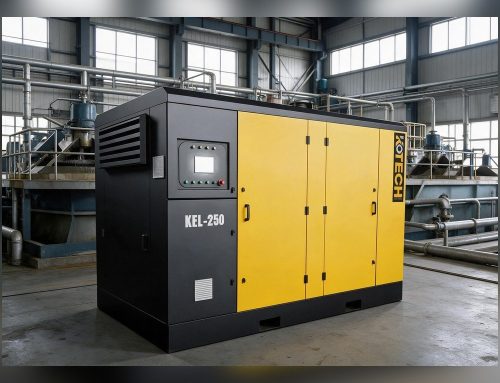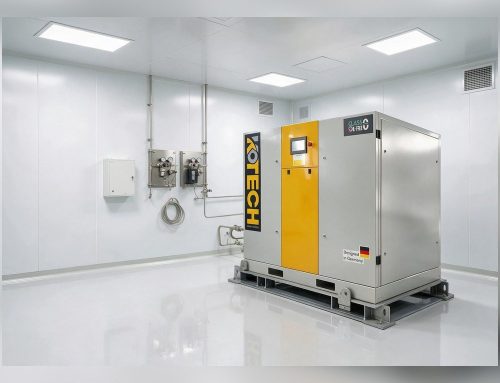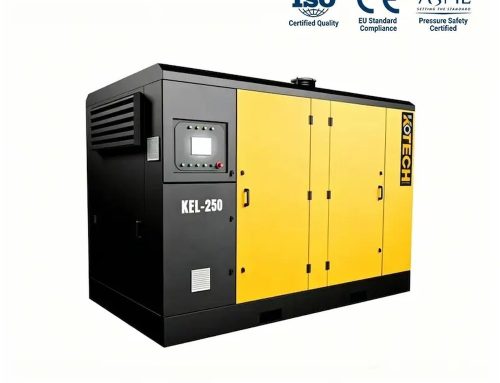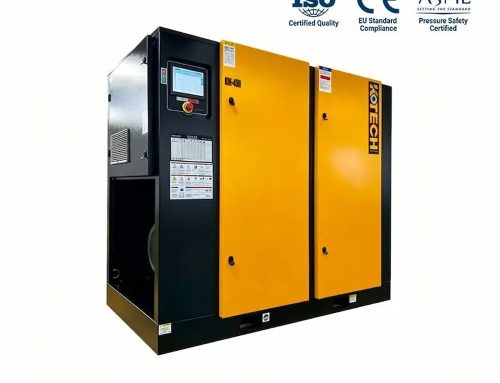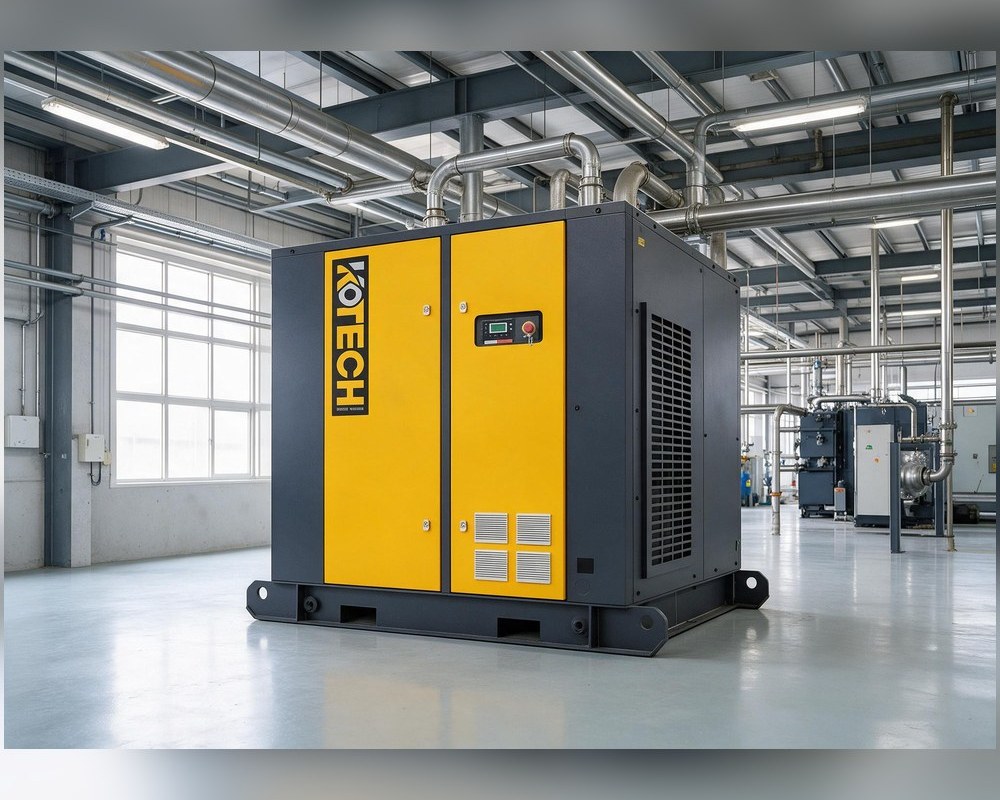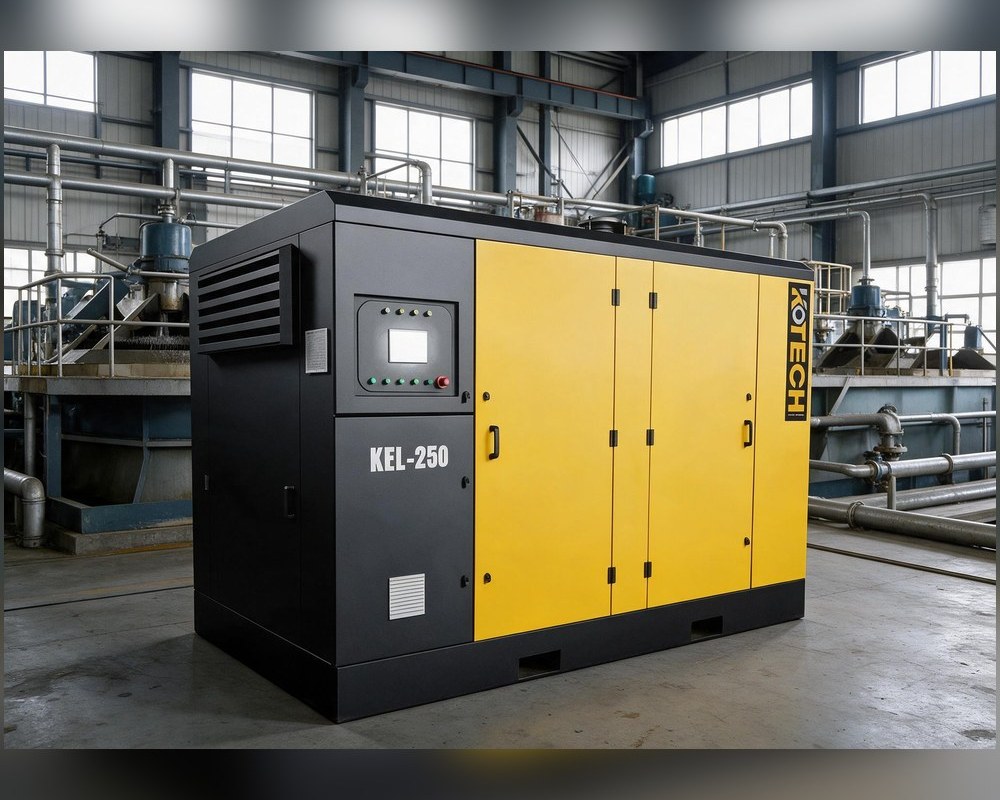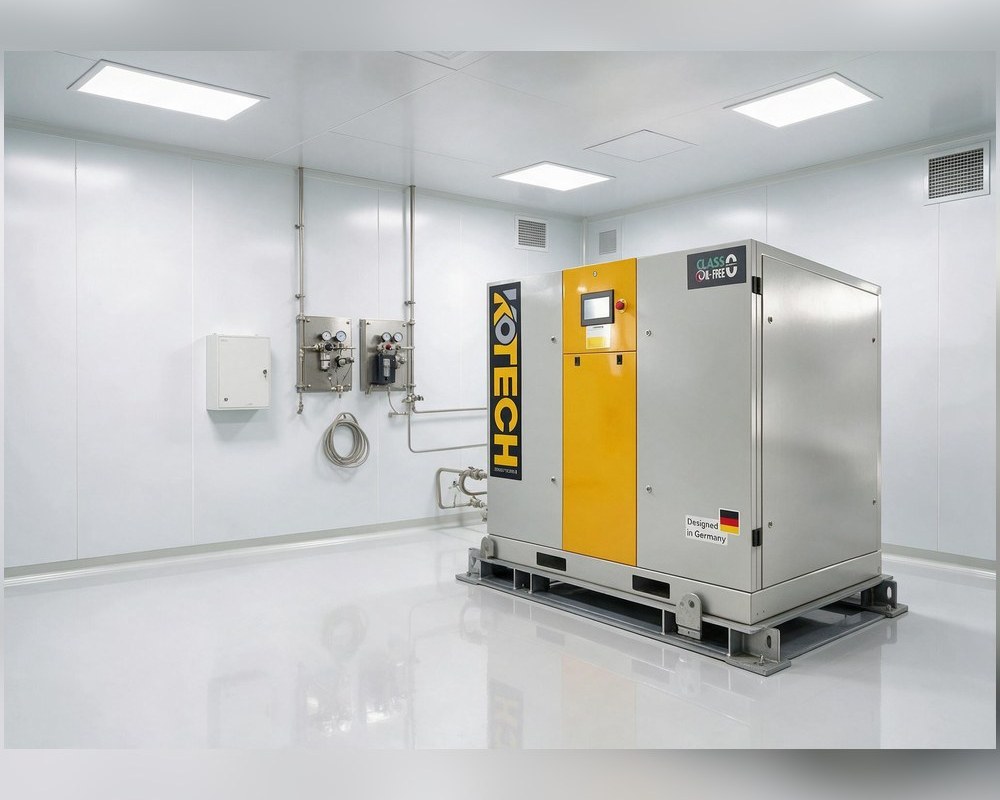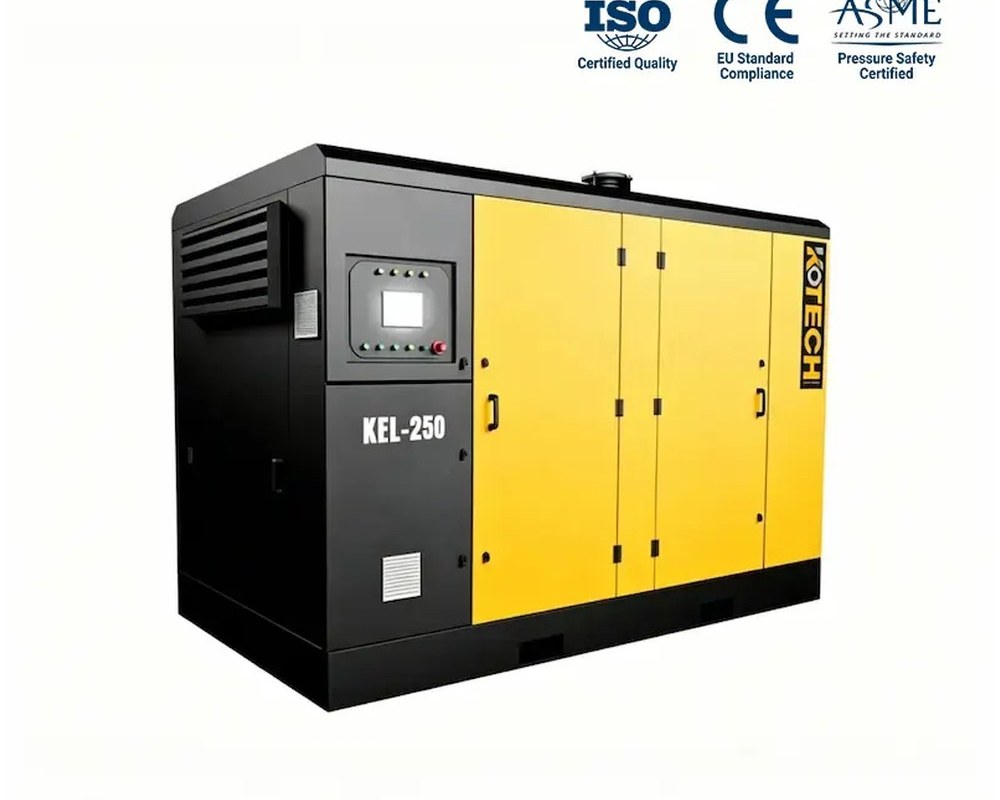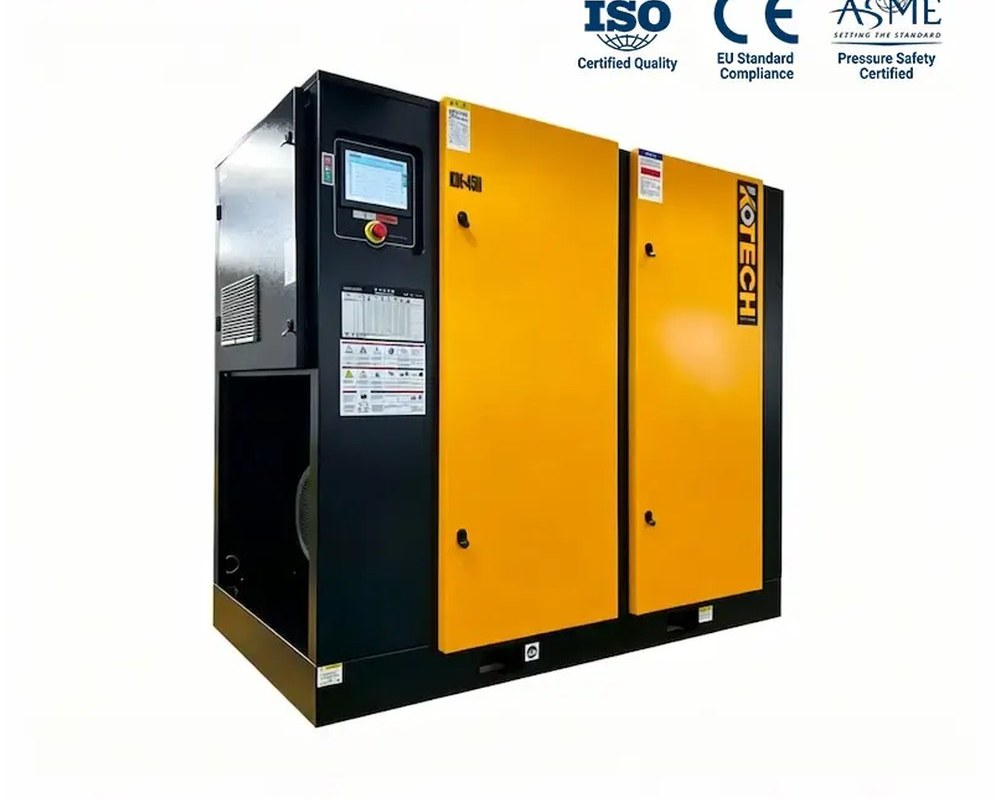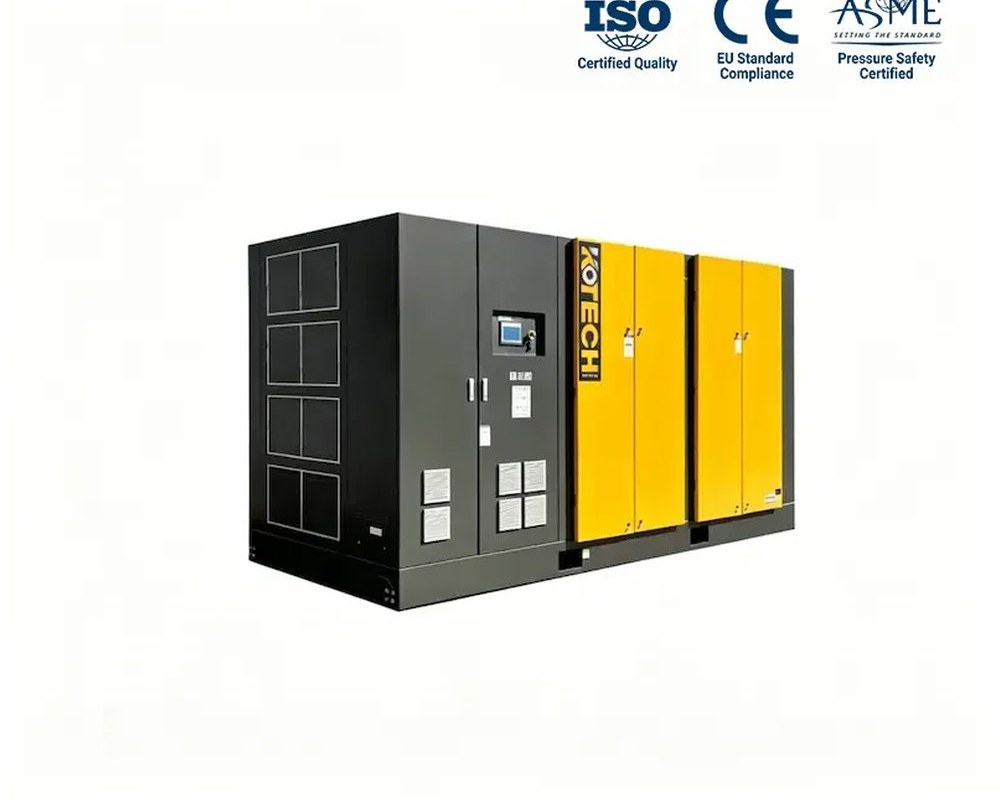




A lot of process air never needs 7 bar. Aeration tanks, dilute-phase conveying, fluidisation, agitation, combustion air and cooling air all do their work at 2-4 bar, yet a surprising number of plants still produce this air on a standard 7-8 bar compressor and throw the surplus pressure away through a regulator. Every unnecessary bar costs real electricity, and in a plant that runs thousands of hours a year that single sizing error is often the biggest energy waste in the utility room. Low-pressure screw compressors built for the 3-4 bar band – such as the KOTECH KEL range – deliver the same airflow with substantially less power, especially when matched with variable-speed control. This guide explains where the savings come from and how to size correctly.

Why pressure is energy you can save
Compressed air is expensive because roughly all of the electrical energy put into a compressor leaves again as heat, and the higher the discharge pressure, the harder the screw element has to work on each cubic metre. A widely used engineering rule of thumb is that every 1 bar of unnecessary discharge pressure adds about 6-8 percent to the energy bill. A load that genuinely needs 3 bar, fed from an 8 bar machine through a pressure-reducing valve, is therefore paying a large and continuous premium for pressure it will only throw away.
The regulator itself is the tell-tale sign. It does not recover energy; it converts surplus pressure into heat and noise. Once a plant shows several loads consistently regulated down to 2-4 bar, those loads are candidates for a dedicated low-pressure air station rather than a tap on the high-pressure header.
- Every extra 1 bar of discharge pressure commonly costs roughly 6-8 percent more energy.
- Pressure-reducing valves waste the surplus as heat; they do not recover it.
- Multiple loads regulated below 4 bar signal a case for a dedicated low-pressure compressor.
Which plant loads genuinely live at 3-4 bar
Low-pressure process air is far more common than procurement lists suggest. In wastewater and effluent treatment, blowers and low-pressure compressors feed aeration basins and digesters at well under 1 bar of differential in many cases, with thicker aeration and gas mixing duties extending toward 2-3 bar. In materials handling, dilute-phase pneumatic conveying of powders, granules and fly ash typically runs at 1-3 bar, while fluidisation pads on silos and truck-loading spouts need only a soft, steady flow. Process industries use 2-4 bar air for agitation, tank blanketing padding, instrument booster duty, combustion air, air knives and product cooling.
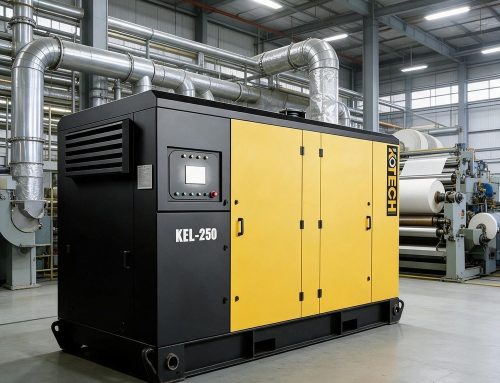
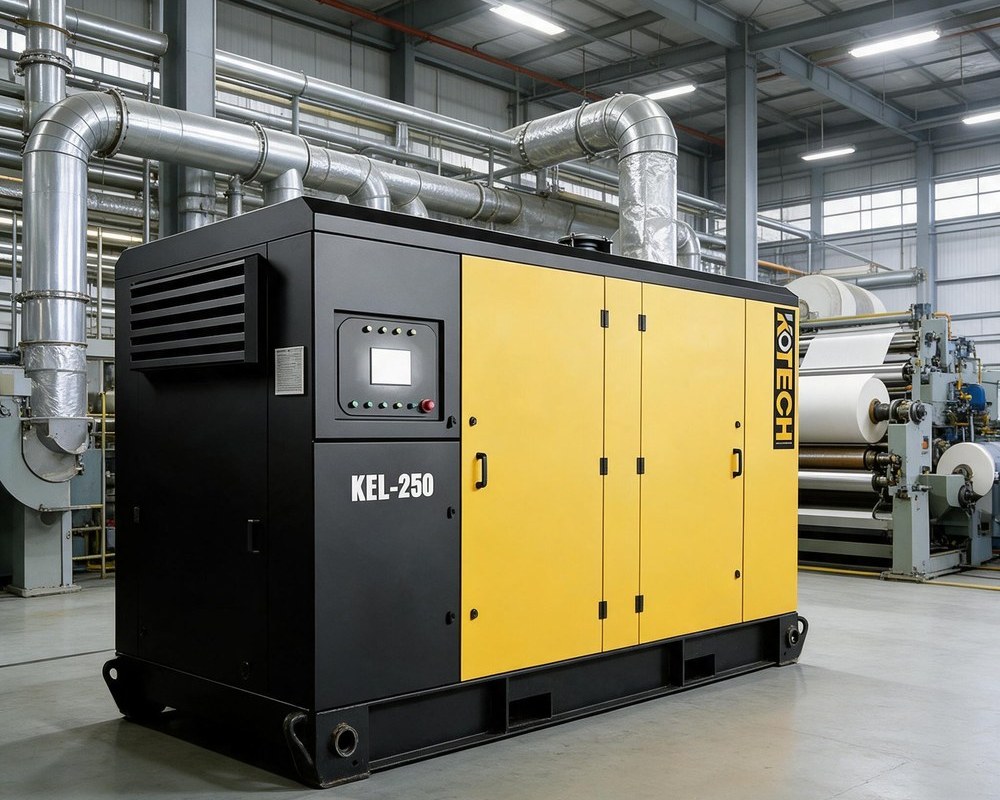
The unifying characteristic is volume: these loads ask for a lot of air at modest pressure, which is exactly the regime where a standard 7 bar compressor is least efficient per cubic metre. The KEL single-stage low-pressure screw range is built for this envelope, rated from about 1.5 to 5 bar rather than adapted from a general-purpose machine.
KOTECH KEL low-pressure screw compressors: published VSD ratings
Variable-speed ratings for the 3 and 4 bar process-air models. Air delivery is the published turndown range of each VSD machine.
Read the ranges as minimum-to-maximum output of the VSD machines at the stated pressure. Notice how the same motor delivers less volume at 4 bar than at 3 bar – selecting on the 3 bar figure for a 4 bar load is the common sizing error in this range.
Designing a mixed-pressure air station
Few plants are entirely low-pressure. The cleanest design separates the headers: a low-pressure station of one or more KEL units serves the 3-4 bar process loads, while the existing 7-8 bar compressors continue to feed tools, cylinders and instruments that genuinely need the higher pressure. Running the two systems independently means each machine operates near its design point, instead of forcing one compressor to satisfy the highest pressure on site while everyone else regulates down.
Within the low-pressure station, a common arrangement pairs a VSD trimmer with fixed-speed base units on larger sites: the base machines run flat at their efficient point while the VSD unit follows demand. Pipework must be sized for the higher volumetric flow that low-pressure air implies – velocities and pressure drop matter more here than on a high-pressure header – so a retrofit should always re-check main diameters, filters and dryer pressure drop rather than reusing old narrow pipe.
- Split high- and low-pressure headers instead of regulating everything from 7-8 bar.
- Use fixed-speed base load plus a VSD trimmer on stations large enough to justify it.
- Re-size mains and treatment for the larger volumetric flow at low pressure.
- Measure pressure at the furthest load, not only at the compressor outlet.
Counting the return
The business case is built from three numbers: the hours the low-pressure loads run, the pressure surplus today and the part-load profile. Plants running 6,000-8,000 hours a year often recover the cost premium of a dedicated low-pressure VSD machine quickly, simply from the bars removed and the unloaded running eliminated. Add the quieter operation of modern canopies, the steadier process pressure that improves conveying and aeration control, and the lower heat load in the utility room, and the choice usually stops being about purchase price. An energy logger on the existing compressor for a representative week is the fastest way to turn the argument from theory into a measured proposal.
Before you buy a low-pressure compressor
- Log the real minimum pressure at each load; anything consistently under 4 bar is a candidate.
- Size from volumetric demand at the actual pressure – flow falls as pressure rises.
- Choose VSD where demand swings or runs in batches; reserve fixed speed for steady base load.
- Design the low-pressure header as a separate system with correctly sized mains.
- Include dryer and filter pressure drop in the calculation, not just the machine.
- Measure the existing compressor for a week to quantify bars wasted and unloaded hours.
Frequently asked questions
How much energy does lowering compressor pressure save?
What can a 3-4 bar compressor actually run in a factory?
Is a low-pressure compressor just a standard compressor set differently?
Do I need a variable-speed model?
Can I keep one compressor and regulate pressure down?
If several loads in your plant are regulated below 4 bar or run in batches, a dedicated low-pressure VSD station will usually pay for itself. Share your airflow and pressure data for a KEL-based low-pressure proposal and energy estimate.