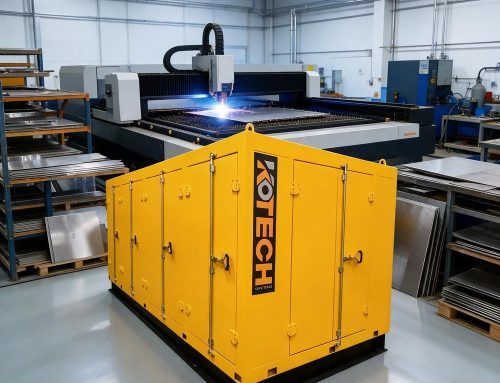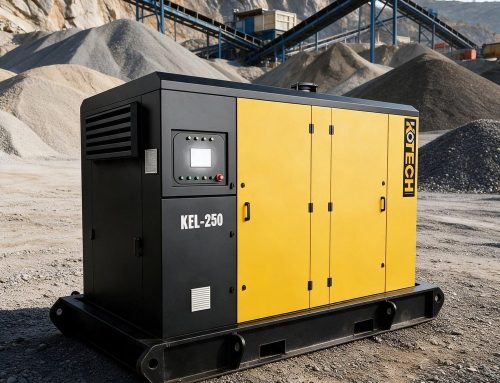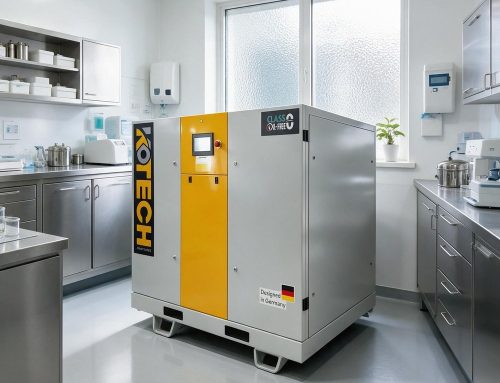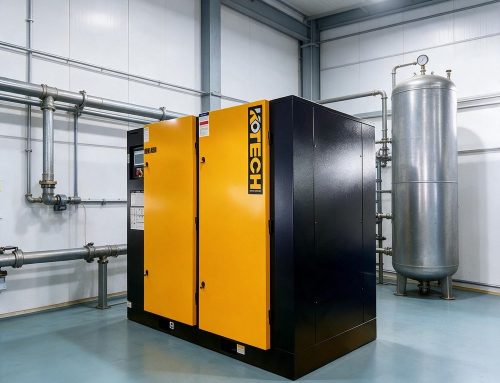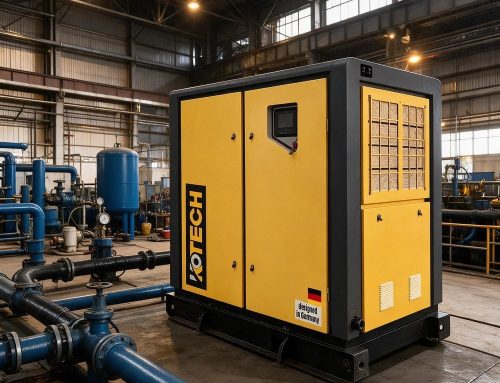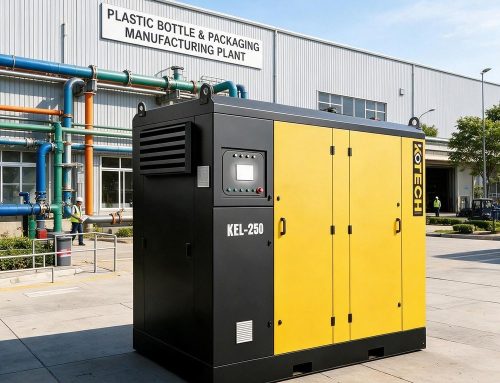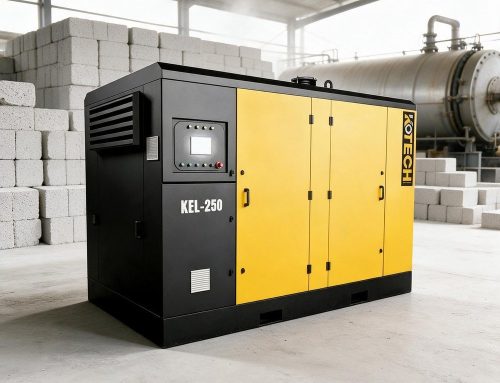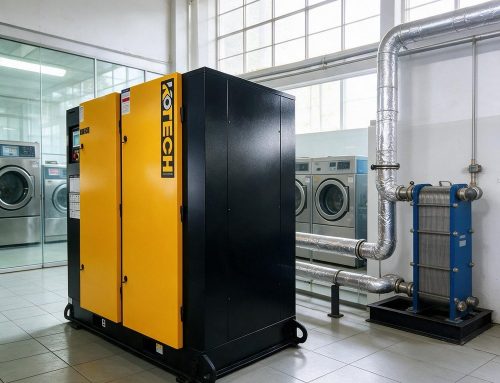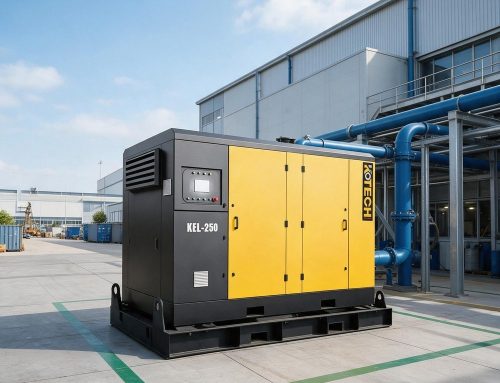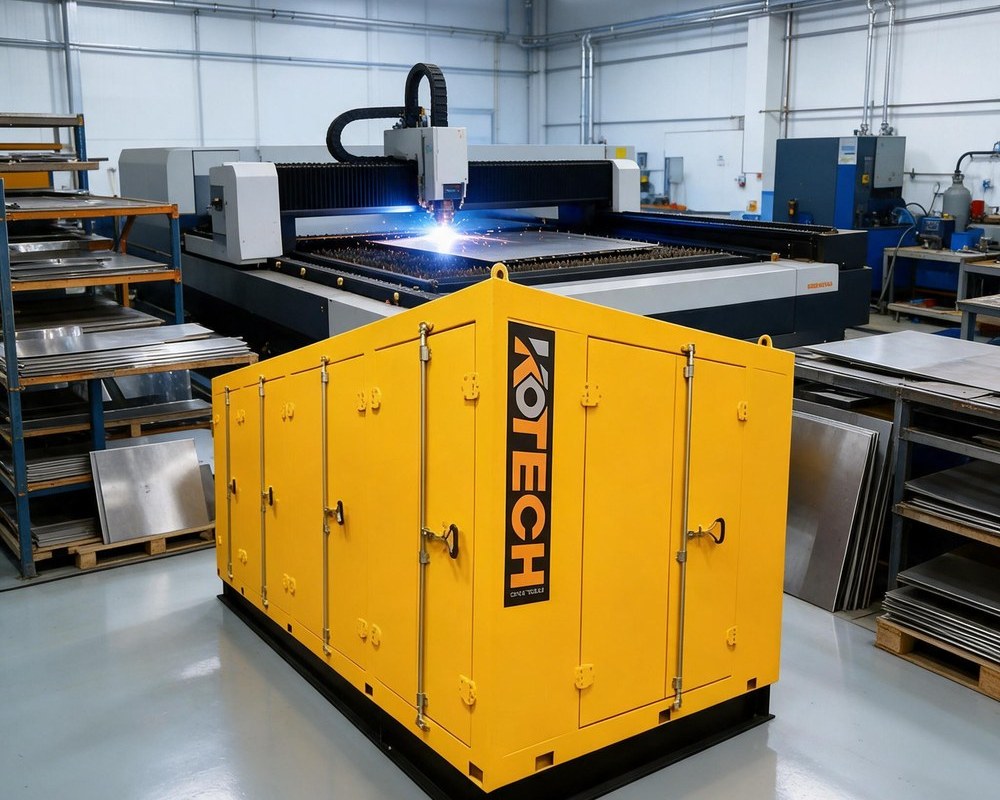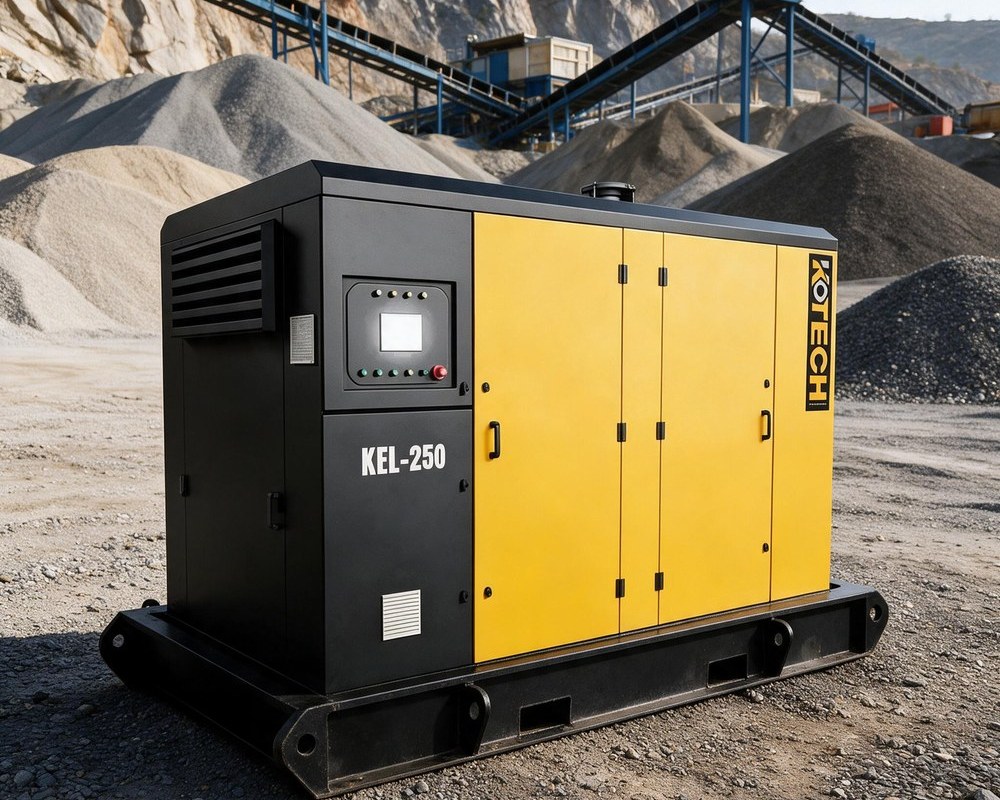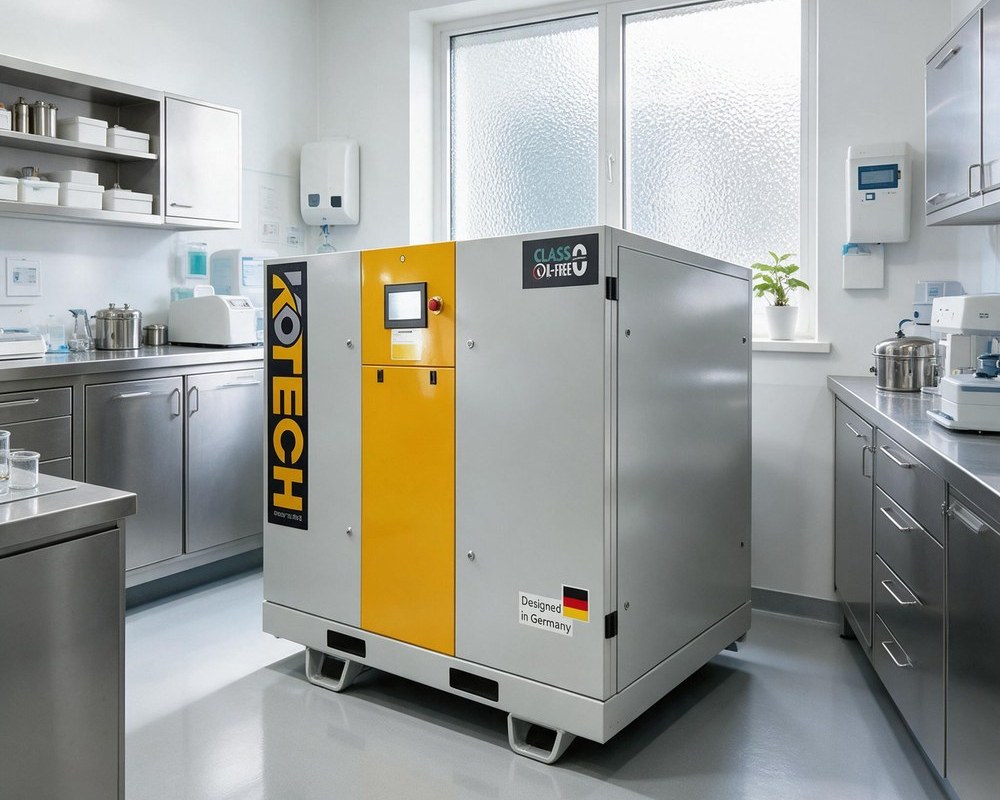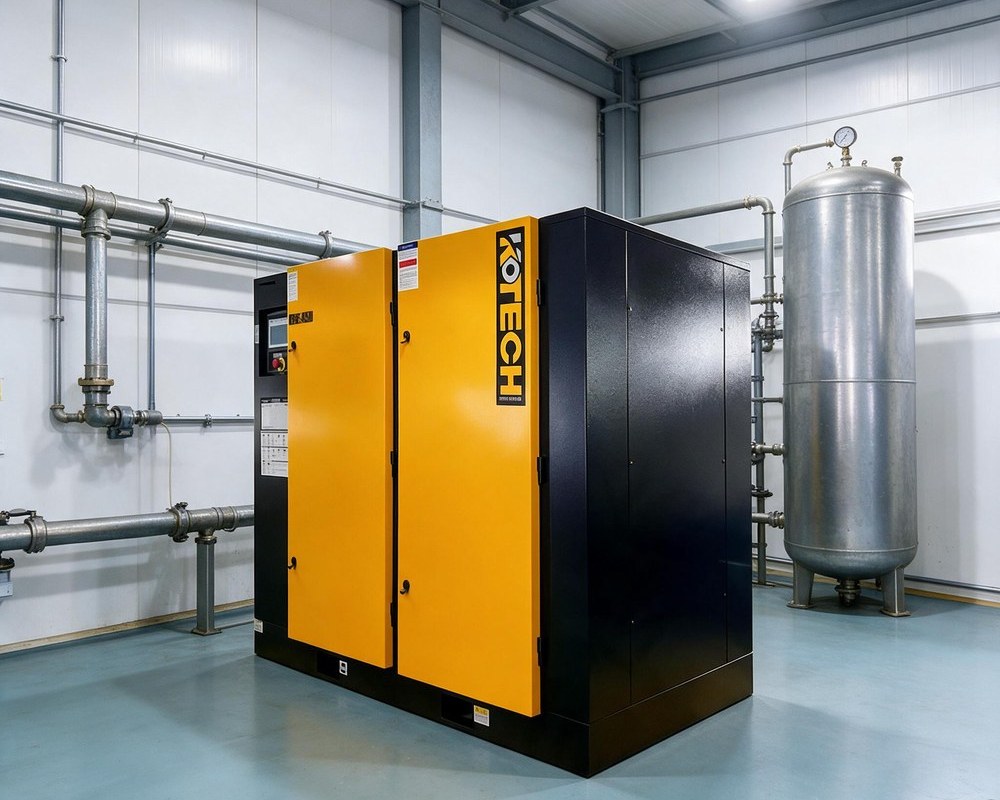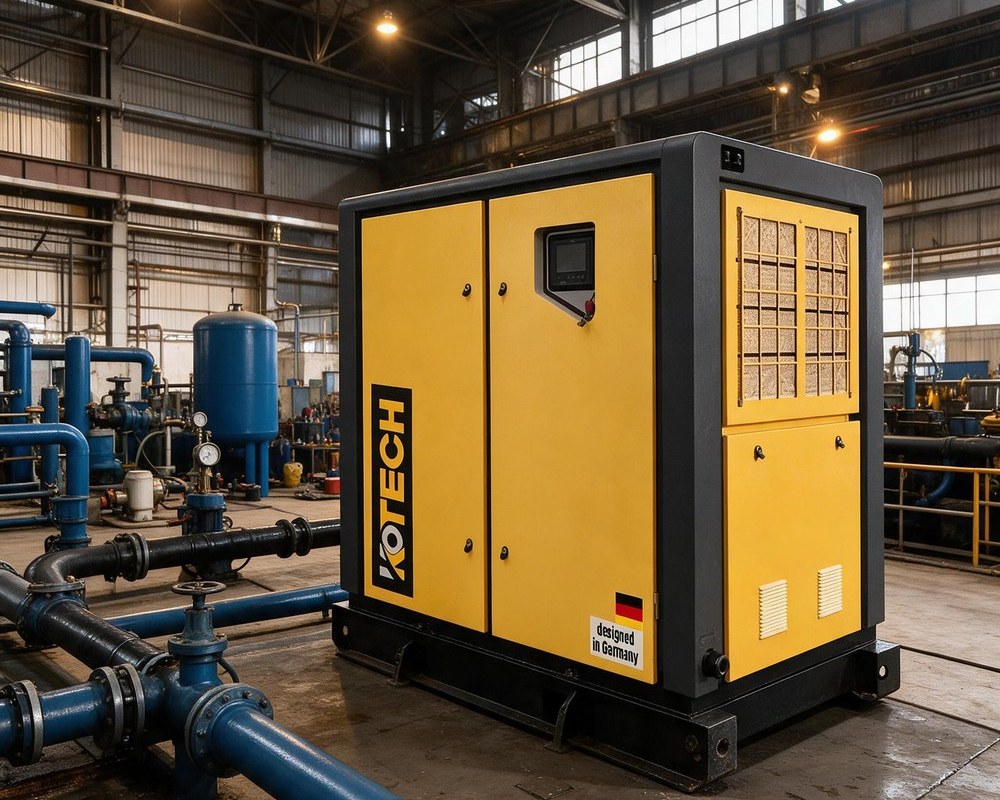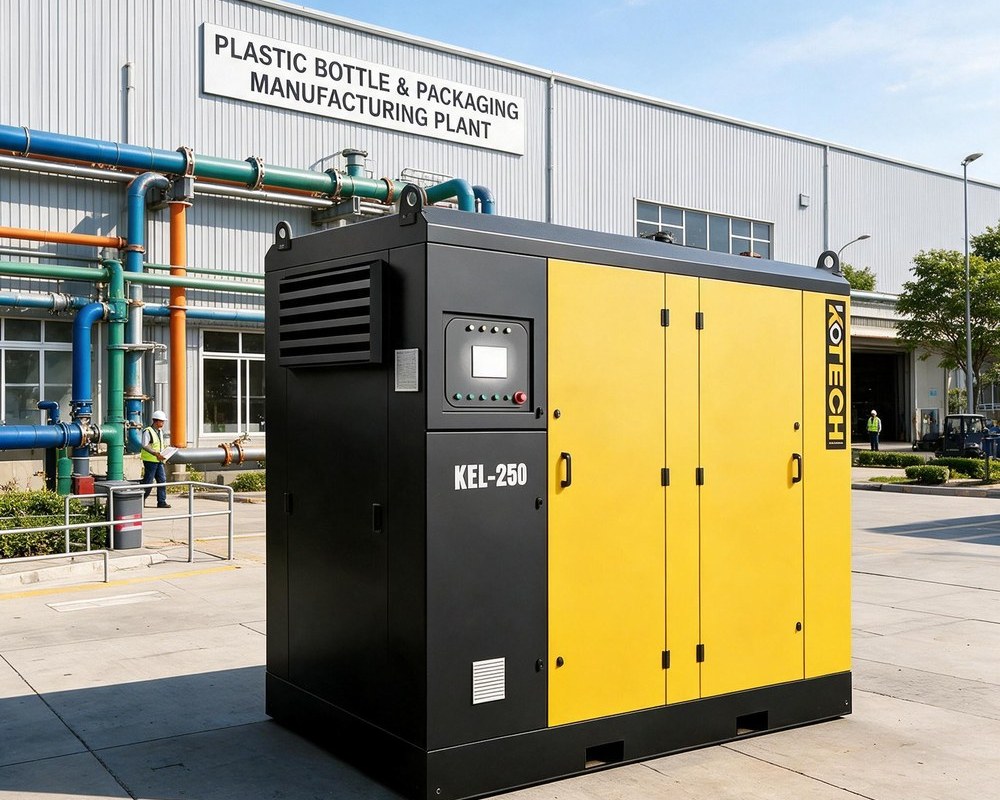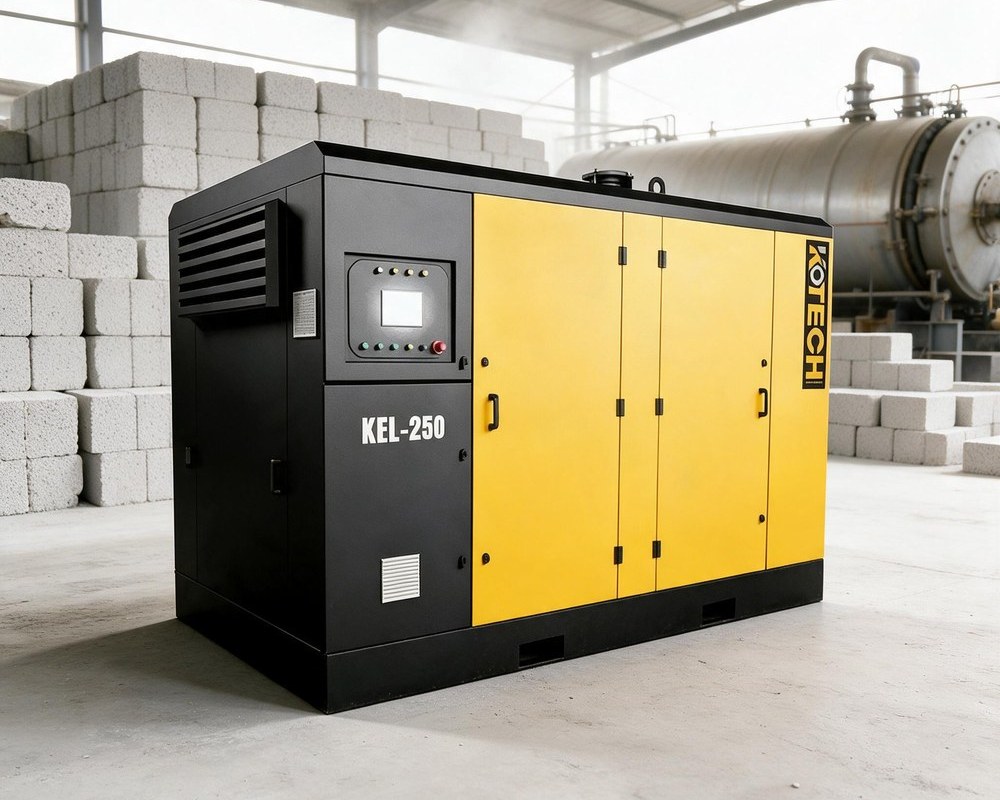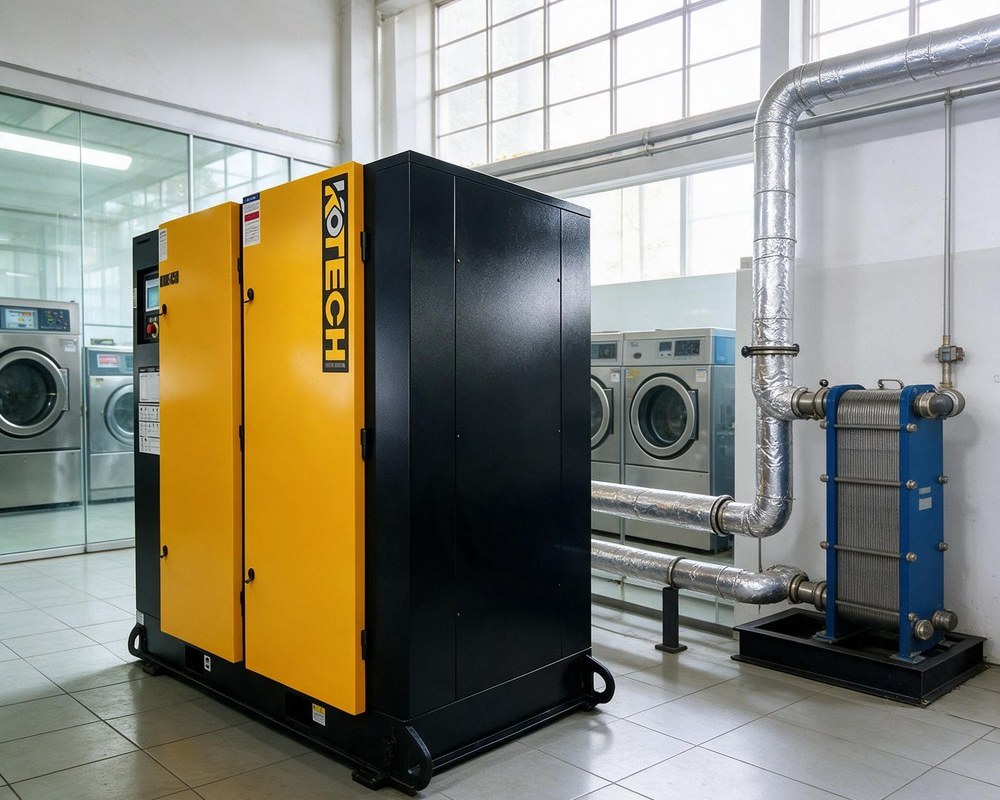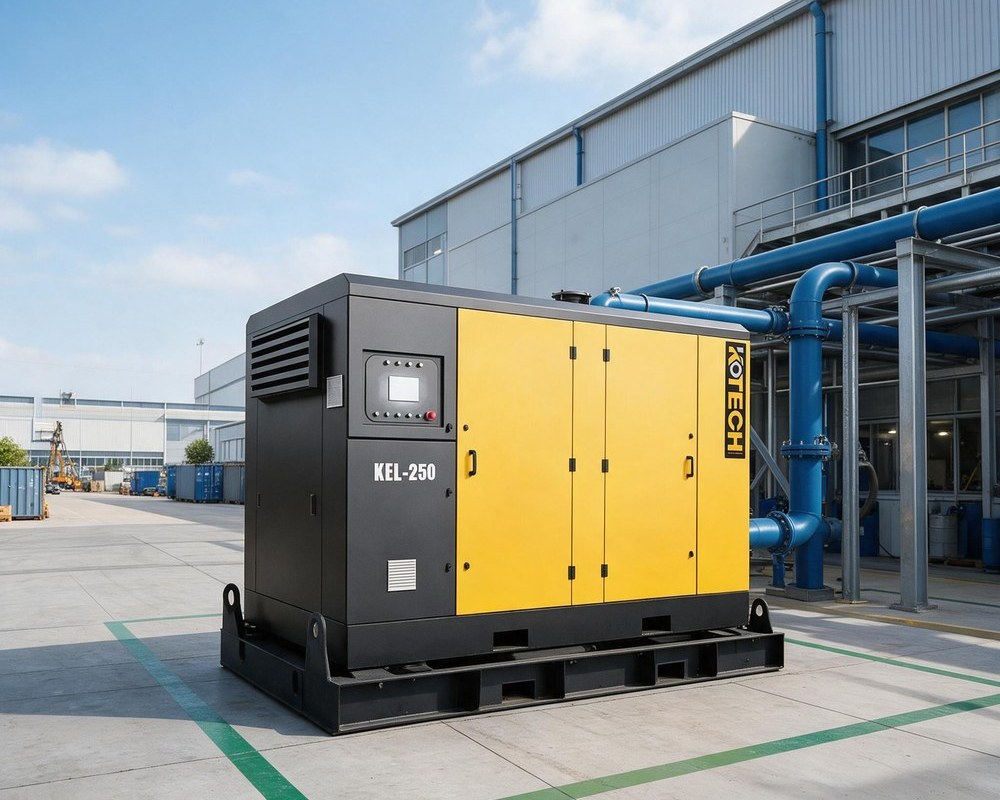




Home appliance plants run a dense, continuous mix of pneumatic demand: robotic handling and pick-and-place on refrigerator and washing-machine lines, pneumatic screwdrivers and torque tools, foam and forming stations, air knives for drying and packaging, and leak-testing that will not tolerate pressure dips. A permanent-magnet variable-speed screw compressor such as the KOTECH KOE series matches its output to that fluctuating load instead of loading and unloading at full power, holding a steady pressure while trimming electricity use. When heat recovery is added, the same machine also supplies warm water for cleaning and process use, turning the compressor room from a cost centre into an energy source.

Why Appliance Assembly Lines Reward Variable-Speed Air
The load profile of a home appliance line is anything but flat. Demand peaks when several stations cycle together at line speed, falls during changeovers and breaks, and changes again between refrigerator and washing-machine models with different tooling. A fixed-speed compressor responds by loading and unloading, running the motor at full speed and then venting air while still drawing substantial power. A permanent-magnet VSD machine instead slows the air-end and motor to match real demand, which removes most of the unloaded running and the energy it wastes.
Stable pressure is just as valuable as the energy saving. Tightening tools, robotic grippers and leak-test stations all rely on a consistent set-point, and a pressure dip can create torque errors or false rejects. The KOE VSD drive holds the line pressure within a narrow band as demand moves, improving process repeatability across long shifts and reducing the scrap and rework that come from pneumatic tools operating below their design pressure.
- Speed follows real demand, cutting the energy lost in load/unload cycling.
- Narrow pressure band protects torque tools, robots and leak-test accuracy.
- Permanent-magnet motor stays efficient even at part load and low speed.
- Soft starting reduces electrical and mechanical stress on the plant supply.
Sizing a PM VSD Compressor for the Assembly Plant
Correct sizing starts from an air-demand study rather than a nameplate estimate. Log pressure and flow over a representative production week, including break and changeover periods, to reveal the true average and peak demand. VSD economics are strongest where demand varies a lot; the variable machine should be sized to spend most of its time in the efficient middle of its speed range, with any fixed-speed machines in a multi-compressor room acting as base-load trim units.
Match the KOE frame to both the continuous average and the short peak, and consider the plant’s growth rather than buying only for today. In a single-compressor installation, choose a frame whose adjustable flow comfortably brackets the measured swing. Where multiple lines share a compressor room, a master controller sequencing VSD and fixed units keeps every machine in its efficient zone. The specification table shows real KOE models with motor power, free air delivery at the standard pressure point, noise and weight to support frame selection.
Real KOTECH KOE PM VSD Screw Compressor Models
Published specifications from the KOTECH KOE product page. Motor power is the frame rating; free air delivery is shown at the standard 7.5 bar point.
The KOE range steps through motor sizes that cover small dedicated line-side units up to larger plant compressors. Because VSD value comes from running across the speed range rather than at one extreme, pick a frame whose rated flow sits above the measured average with room for peaks. Confirm noise against the compressor-room location and weight against the floor and lift arrangement, particularly for rooftop or mezzanine installations common in appliance factories.
Heat Recovery: Turning Compressor Waste into Useful Warmth
A screw compressor converts almost all the electrical energy it consumes into heat, most of it normally rejected through the oil cooler. The KOE platform supports heat recovery that captures a large share of that energy as warm water, which an appliance plant can put to real work: cleaning parts and cabinets before final assembly, CIP and wash-down water, space heating in winter, and pre-heating water for any on-site surface treatment or testing baths.
The economics are straightforward where warm water is needed year-round. Recovered heat displaces boiler or electric water-heating load, and the payback shortens in cooler months or where process cleaning runs continuously. Heat recovery also reduces the cooling burden on the compressor room, which itself helps reliability. The key is to design the recovery loop around a genuine heat demand and storage, so the compressor is not forced to run just to make hot water; a well-designed system uses heat that would otherwise be vented whenever the line is producing.
- Recovered heat feeds parts washing, CIP, wash-down and space-heating loads.
- Displaces boiler or electric water heating to shorten energy payback.
- Lowers compressor-room cooling load and supports stable running temperatures.
- Pair with a storage tank so heat is stored rather than forcing extra run hours.
Air Quality and Uptime on a High-Volume Line
Appliance assembly needs clean, dry, stable air because moisture and oil carry-over contaminate painted or plastic surfaces and can spoil foam and sealing operations. Specify drying and filtration appropriate to the most sensitive station, and size the treatment for the peak flow so pressure drop across filters stays low. A receiver tank buffers short high-frequency demands from clusters of tools and reduces cycling, while proper condensate management protects both product quality and the distribution system.
Uptime is protected through straightforward discipline: schedule oil and filter changes to production stops, monitor differential pressure across treatment, and use the VSD controller’s running data to spot leaks and demand drift. Leakage is a silent energy drain in any large factory, and a variable-speed compressor makes leaks visible as elevated baseline flow, giving maintenance a clear target for leak-repair programmes.
Buying tips
- Run an air-demand audit across a full production week before sizing, including breaks and changeovers.
- Size the VSD frame to run mainly in its efficient mid-speed range rather than at either extreme.
- Use master sequencing in a multi-machine room so fixed-speed units carry base load and the VSD trims.
- Match drying and filtration to the most sensitive station, usually leak-test, foam or surface finishing.
- Add a receiver sized for the clusters of high-frequency tool demand on the line.
- Design heat recovery around a real warm-water load with storage to avoid forcing compressor run hours.
Frequently asked questions
Why is a PM VSD compressor better for appliance assembly than a fixed-speed machine?
How much energy can heat recovery realistically capture?
How do I choose the right KOE frame size for my assembly plant?
Does variable-speed operation affect air quality on the line?
What air treatment do home appliance assembly lines need?
Can the recovered compressor heat replace our boiler entirely?
Send KOTECH your assembly-line air-demand profile and warm-water requirements. We will size a KOE PM VSD compressor with heat recovery for your home appliance plant and prepare a full proposal.