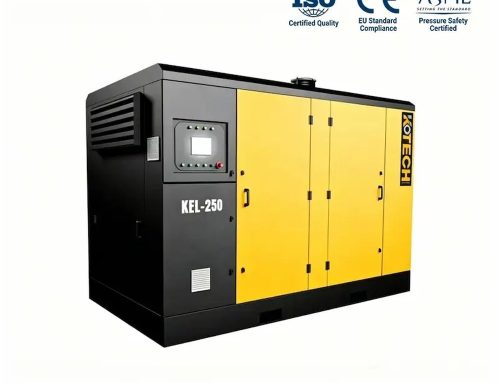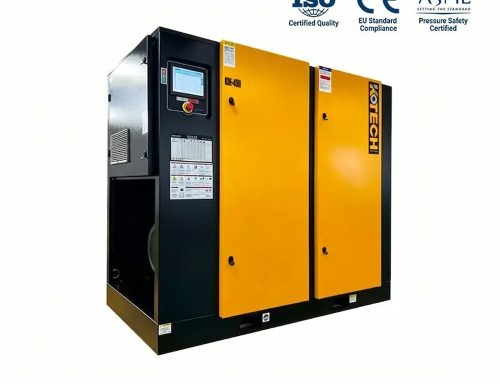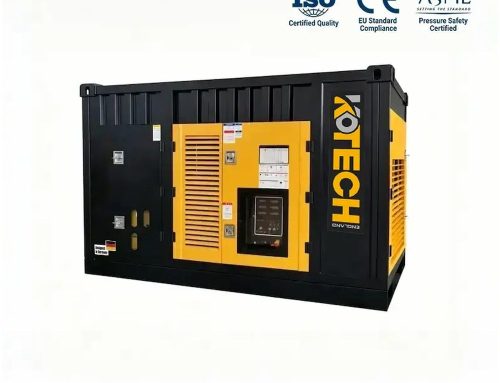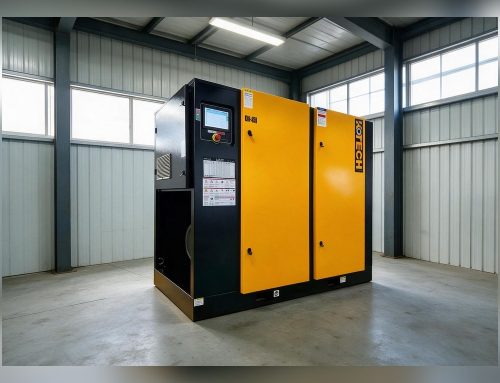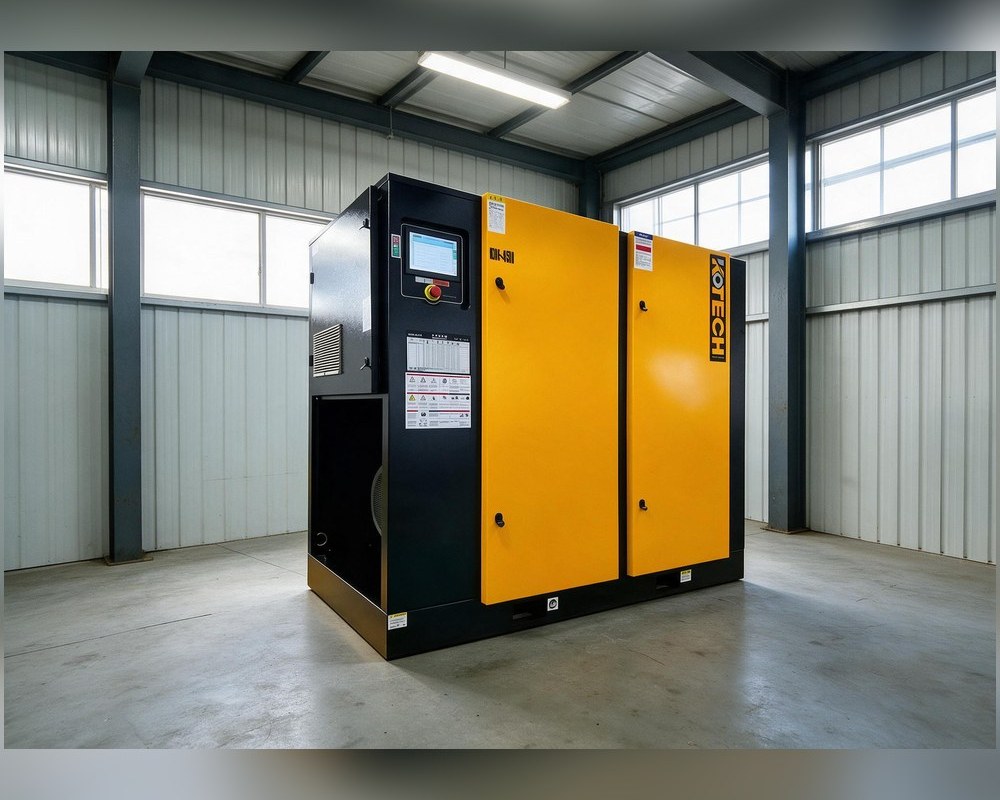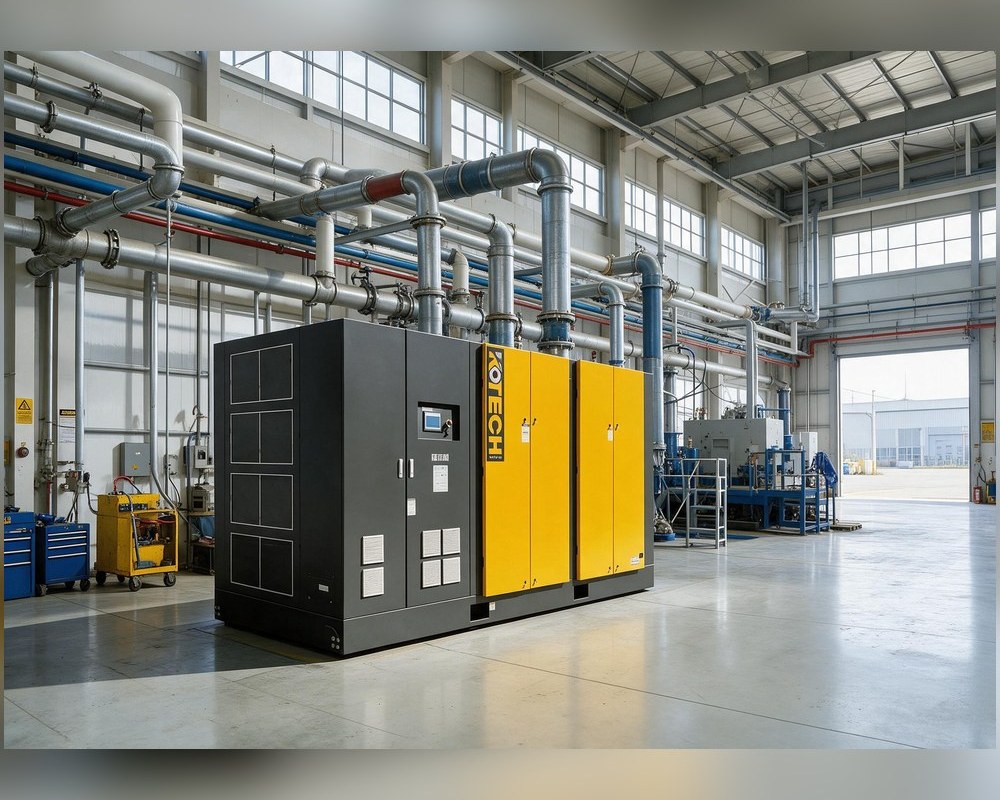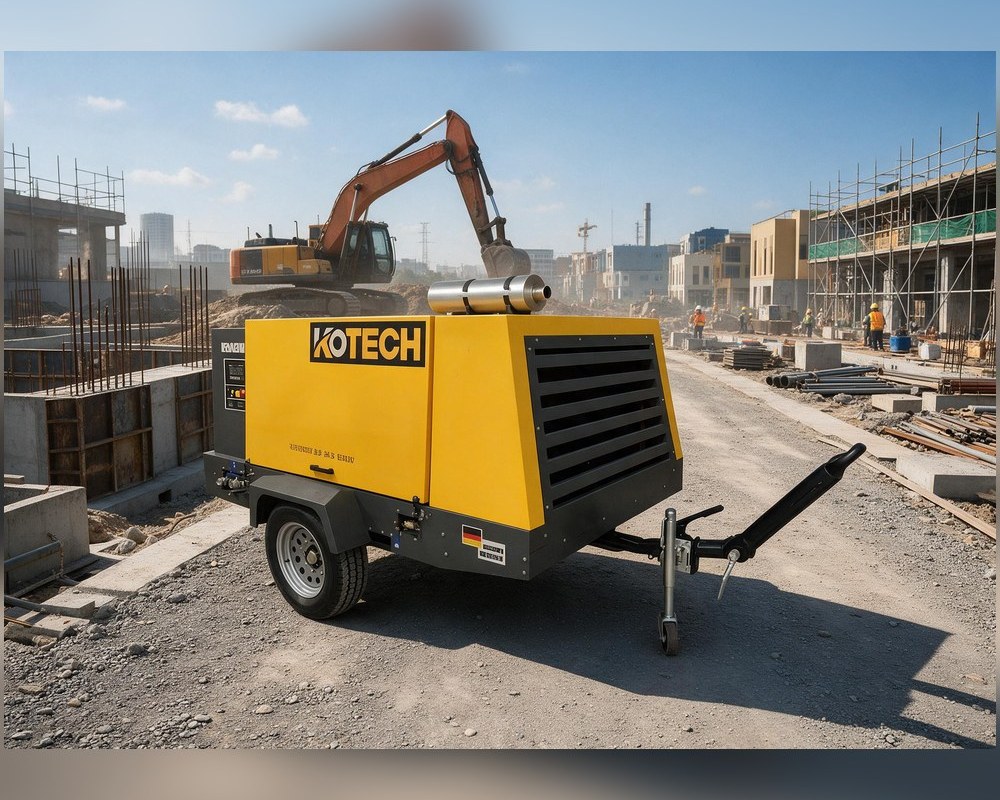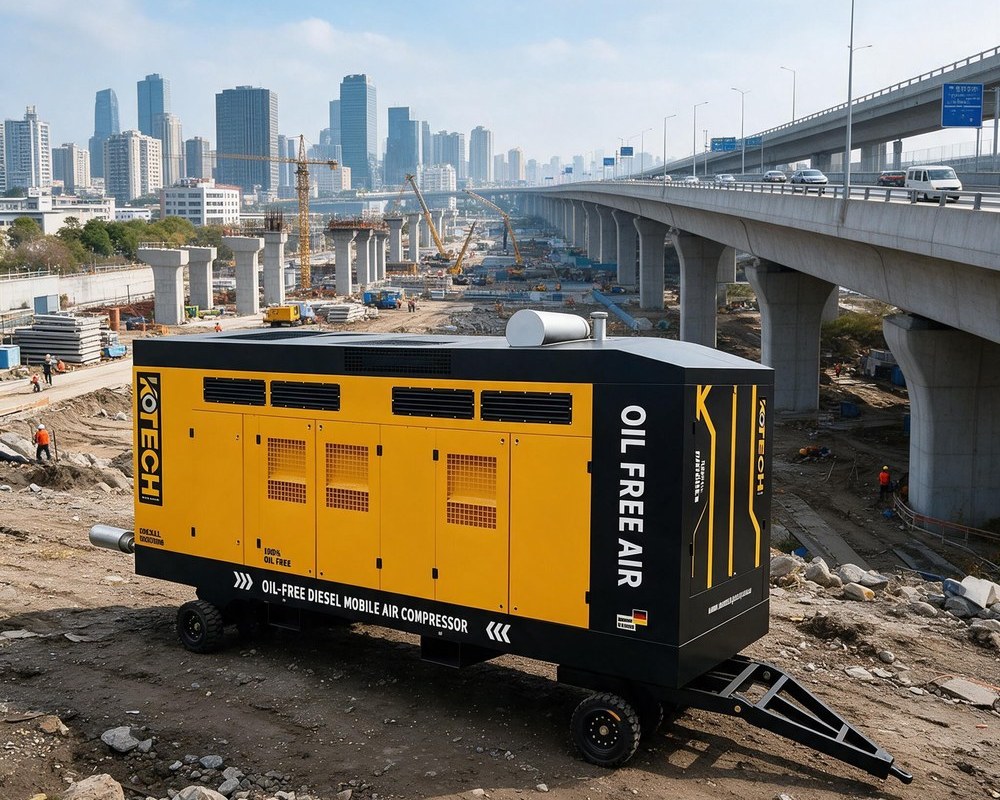




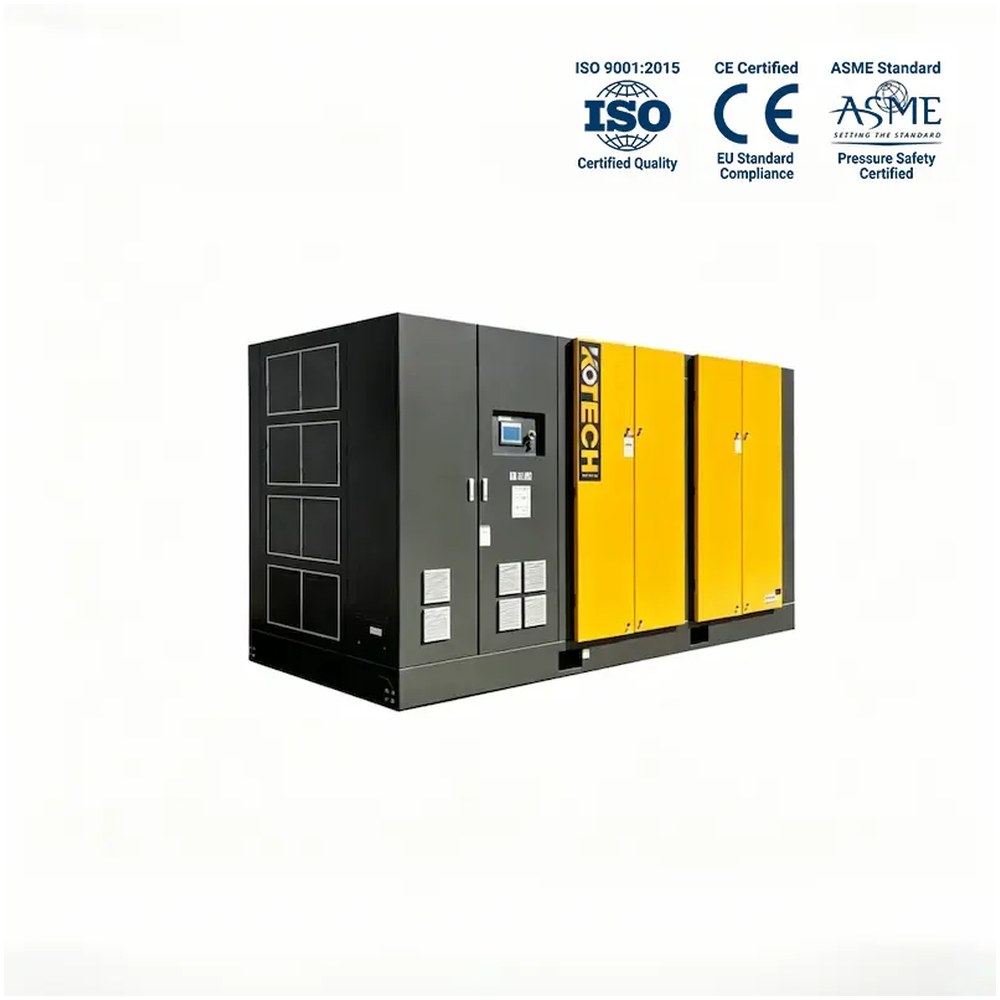
A cement plant rarely gives its compressed-air system a rest. Pneumatic conveying of raw meal and finished cement, fluidising air in homogenising silos, cooler and burner service, and cleaning all run through long, overlapping shifts. In that duty a few percentage points of efficiency and a great deal of reliability decide the running cost. A two-stage screw compressor sized for continuous operation addresses both: the inter-cooled compression lowers energy use and discharge temperature, which helps a machine that may run for the better part of every day. This guide walks through cement air loads and maps them to real KOTECH KOE-II frames.
Why compressed air in a cement plant is a continuous load
Cement manufacture handles enormous tonnages of powder, and much of that powder moves on air. Raw meal is fluidised and conveyed between mills, blending silos and the preheater; finished cement is fluidised in silos and conveyed to bulk loading and packing. Instrument air keeps dampers, diverter valves and actuators responsive, while cleaning air keeps surfaces and coolers clear. These duties overlap around the clock, so the compressor station is a process utility, not a workshop convenience.
That continuity changes the economics. Where a machine only runs a single shift, purchase price dominates the decision. In a cement plant the compressor can absorb a large share of a facility’s electricity, so efficiency, part-load behaviour and heat management over thousands of hours matter more than the initial invoice.
Where two-stage compression earns its keep
In a single-stage screw the entire pressure rise happens in one air end and the discharge air runs hot. A two-stage machine splits the compression between two air ends with inter-cooling in between. Compressing in cooler, smaller steps needs less total work, which is why two-stage frames show a clear efficiency advantage at the pressures plants actually use, and the lower discharge temperature eases the load on the oil cooler and extends oil and bearing life during long runs.
For a continuous-duty cement station those benefits compound every hour. Lower energy per cubic metre directly trims the power bill, and cooler running with fewer thermal cycles improves availability, which is what a process plant values most: an air station that does not trip the kiln or a conveying line.
- Inter-cooled two-stage compression cuts the work needed to reach plant pressure and lowers discharge temperature.
- High utilisation magnifies every efficiency point: savings repeat across thousands of running hours.
- Cooler, steadier running supports long oil and component life in 24/7 cement service.
- Pair the compressor with dry, clean air treatment so conveying and instrument lines stay free of moisture and cement dust.
Real KOTECH KOE-II two-stage specifications
Current factory figures at 12.5 bar from the KOTECH product page. Variable-speed VSD versions of each frame are also available for trim duty.
In a central station the usual practice is to size base-load machines to run efficiently at steady output and add a variable-speed unit to follow the swing. Fixed-speed frames carry the floor of the load at their best efficiency; a VSD machine such as the matching KOE-II VSD model handles the moving top, so nothing cycles on and off.
Sizing method for a cement air station
Start from an air balance rather than a nameplate habit. List every consumer, group conveying and fluidising loads by their duty factor, and separate them from the smaller but critical instrument-air demand. Conveying and fluidising often run at modest pressure but high flow for short or cycling periods; instrument air needs clean, dry supply with very high availability. Add leakage, which in older plants can be a surprising share of total flow, and a realistic growth margin without grossly oversizing.
Because dust is everywhere, intake quality and filtration deserve as much attention as the compressor itself. A clean, cool intake and well-maintained pre-filtration protect the air end; cement dust carried into the compressor room shortens every component downstream. Plan the station with spare capacity on a separate frame so one machine can be serviced without stopping the process.
Building in reliability and heat options
Continuous-duty stations are specified as systems, not isolated boxes. Redundancy, automatic changeover, compressed-air treatment sized for the moisture load, and a maintenance contract aligned to running hours all protect the kiln and conveying circuits from a single point of failure. Remote monitoring of pressure, temperature and running hours lets the team service machines on condition rather than calendar guesswork.
The heat a two-stage station removes through its oil coolers is also recoverable. In cooler climates it can warm warehouse or workshop spaces; where there is a nearby process or hot-water load, heat recovery can raise the overall energy return of the compressed-air station. Your KOTECH contact can model whether heat recovery fits the specific plant.
Buying tips
- Build an air balance for conveying, fluidising, cooling and instrument air before selecting kilowatt rating.
- Use fixed-speed KOE-II frames for the steady base load and a VSD frame to follow demand swings.
- Specify clean, cool intake air and strong filtration; cement dust is the main enemy of a long air-end life.
- Add a redundant frame on automatic changeover so servicing never stops the kiln or conveying circuits.
- Evaluate heat recovery for space or process heating to lift overall station efficiency.
Frequently asked questions
Why choose a two-stage screw compressor for a cement plant?
What pressure and flow do cement plant air tasks need?
Should the whole station be variable speed?
Which KOE-II model suits a cement packing and dispatch area?
How do I protect a compressor from cement dust?
Can a two-stage compressor station recover useful heat?
Send KOTECH your cement plant air balance, running hours and conveying pressures so we can size a reliable two-stage KOE-II station with appropriate redundancy.