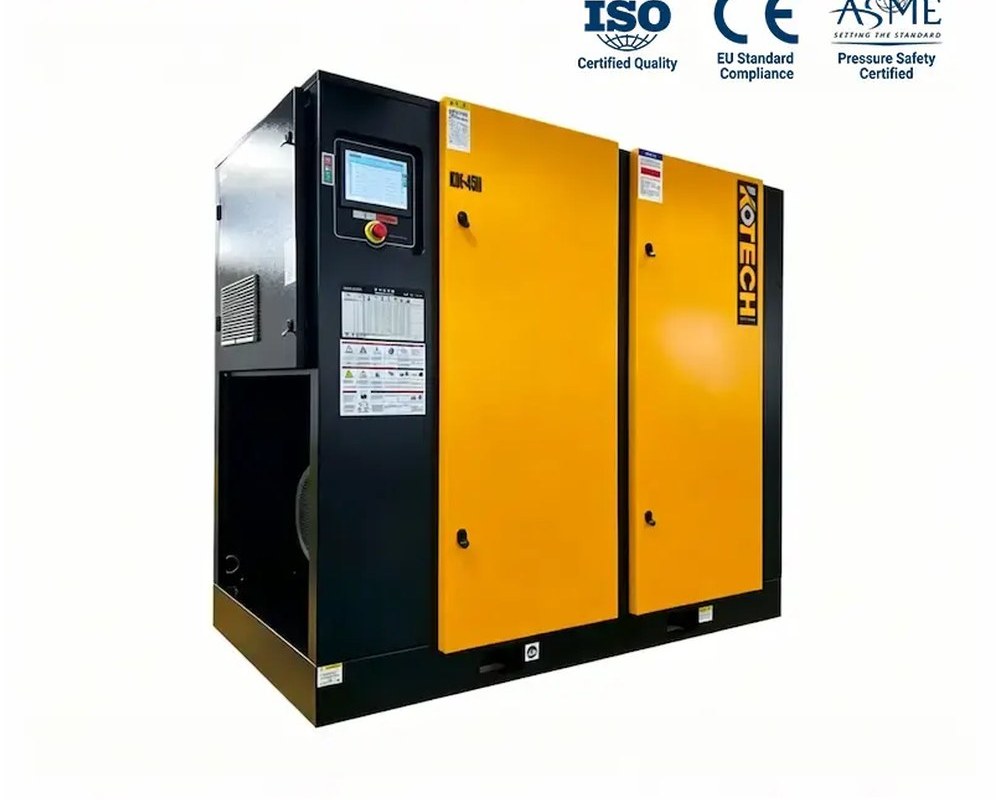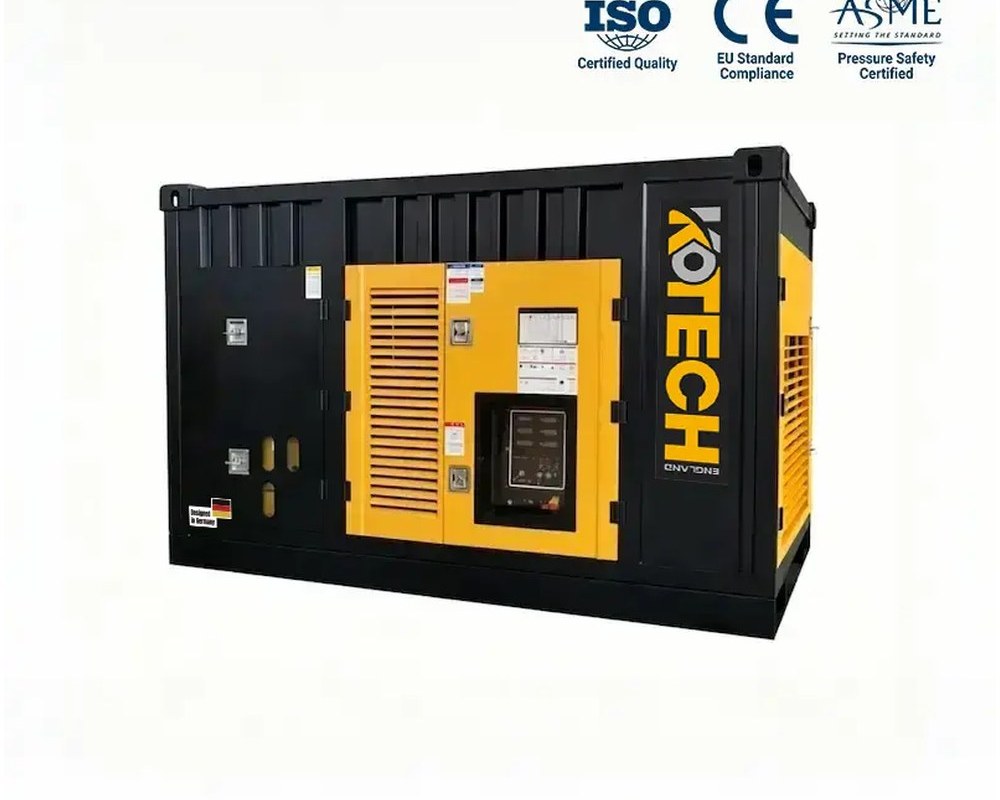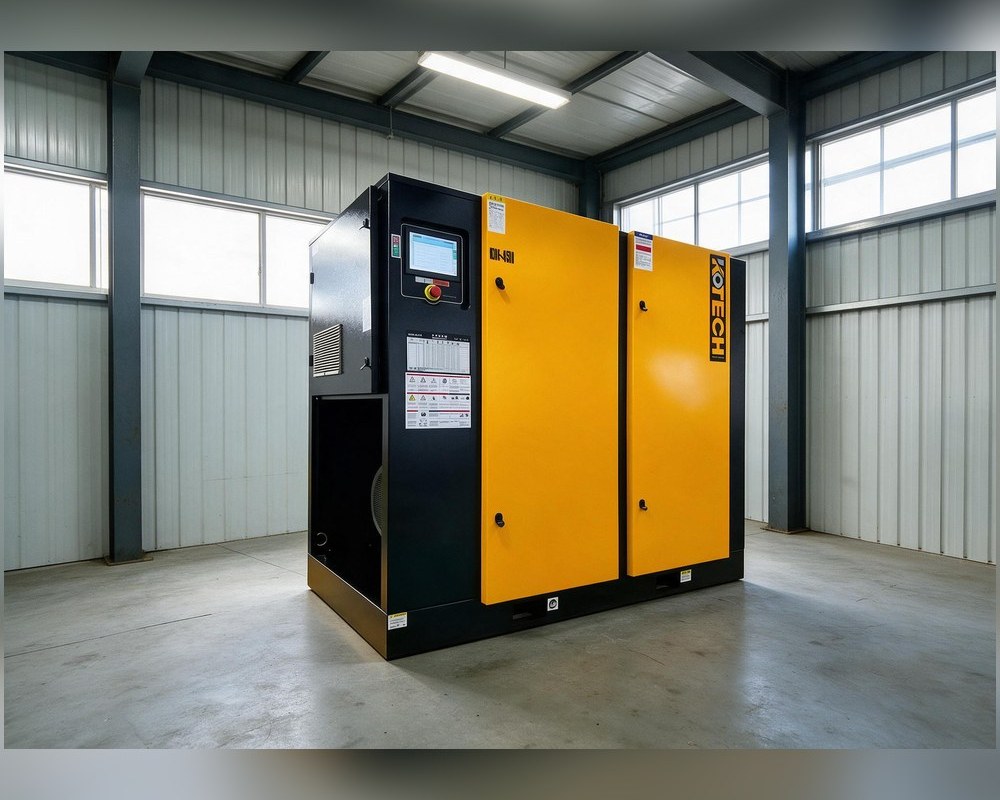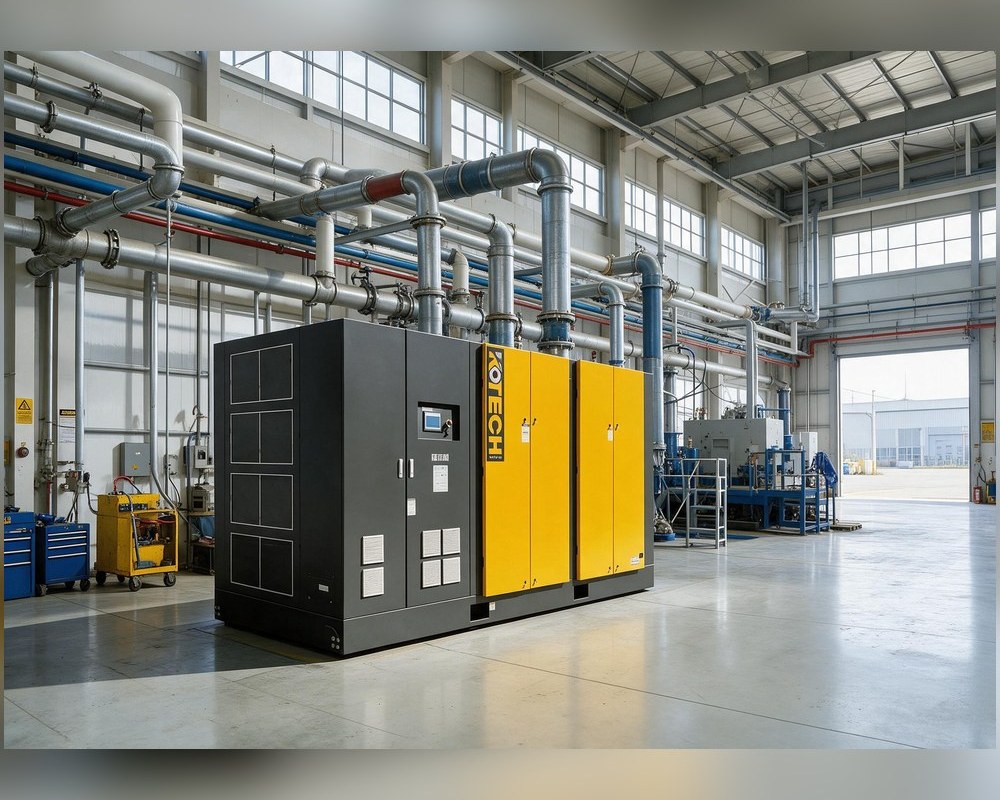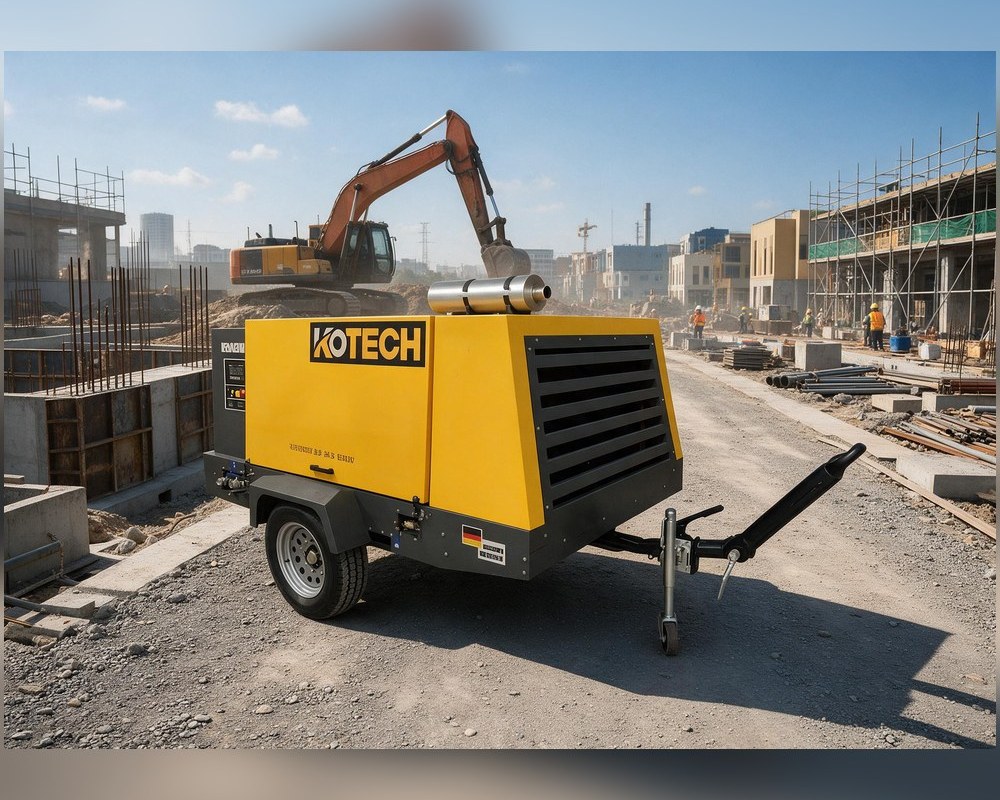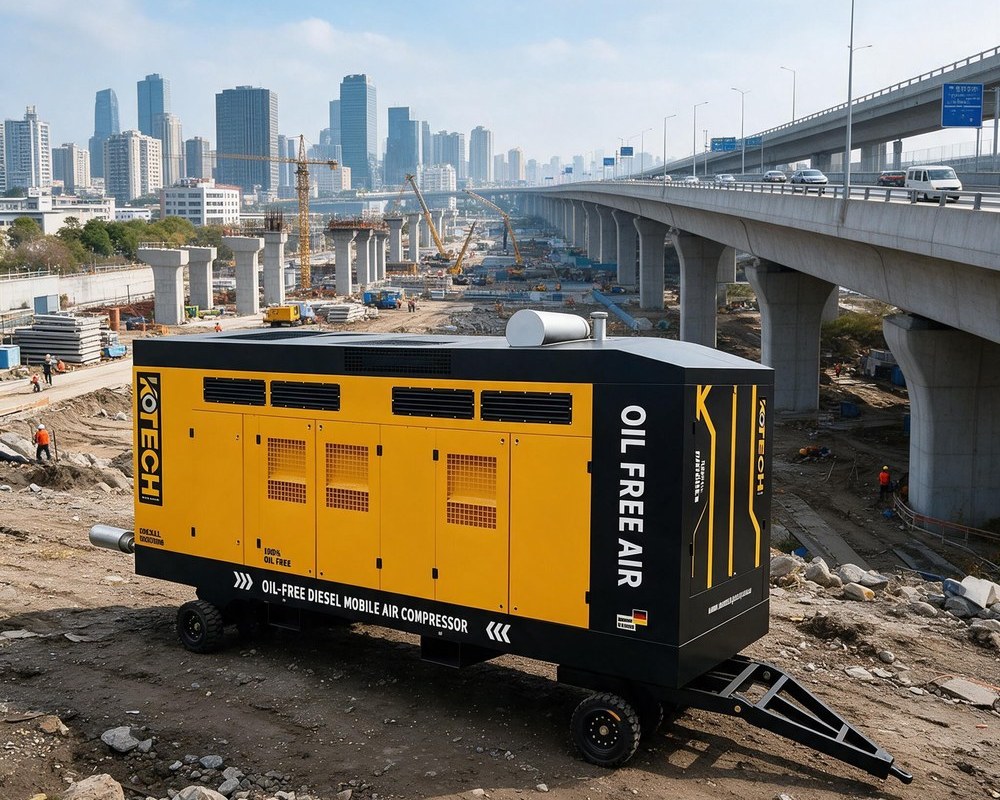




Moving grain, flour, animal feed, pellets and other free-flowing bulk materials through a pipe does not need the seven or eight bar produced by a general-purpose compressor. Dilute-phase pneumatic conveying suspends the material in a fast airstream at only a few bar of pressure, and driving it with a standard high-pressure machine wastes energy, heats the product and can damage fragile granules. A purpose-built low-pressure screw compressor matched to the conveying line moves more tonnes per kilowatt-hour. This guide explains how dilute-phase air is sized and maps the duty to real KOTECH KEL frames rated for 3 to 5 bar.
Why conveying air is a low-pressure, high-flow load
Pneumatic conveying comes in two broad regimes. In dilute-phase conveying the air velocity is high enough to keep particles suspended, and the material behaves almost like a fluid travelling through the pipe. The pressure needed to push that mixture along is modest, commonly under one bar of line pressure for short grain runs and only a few bar for longer or more loaded lines. What is high is the volume of air: the blower or compressor must deliver a large, steady flow to keep the material moving.
That combination, high flow at low pressure, is exactly where a standard 7 to 13 bar factory compressor is mismatched. Compressing to 8 bar when the line needs 2 or 3 bar throws away energy and produces hot air that can warm grain or fat-bearing materials. A dedicated low-pressure screw machine compresses only to the pressure the system requires, which cuts specific energy and keeps discharge temperature under control.
Dilute-phase versus dense-phase: getting the regime right
The first sizing question is not the compressor model but the conveying regime. Dilute-phase uses high velocity and low pressure with material suspended throughout; it suits grain, pellets and many non-abrasive, reasonably durable bulk goods over moderate distances. Dense-phase moves material in slugs at lower velocity but higher pressure and is chosen for fragile or abrasive products. Specifying a low-pressure screw compressor assumes the line is genuinely dilute-phase; dense-phase may need higher pressure and a different machine.
Within dilute-phase work the air volume is set by the pipe diameter and the minimum conveying or saltation velocity, the speed below which particles drop out and block the line. The pressure is set by the total resistance: acceleration of the material, lift for vertical sections, bends, filters and the length of the run. Oversizing velocity wastes energy and wears elbows and pipe; undersizing causes plugging, so the balance matters.
- Confirm the line is dilute-phase: high velocity, low pressure, material fully suspended.
- Size air volume from pipe diameter and the material’s minimum conveying velocity.
- Size pressure from line length, vertical lift, bends and filters, not from habit or the factory header.
- Keep discharge air cool and clean to protect grain, flour and feed quality.
Real KOTECH KEL low-pressure specifications
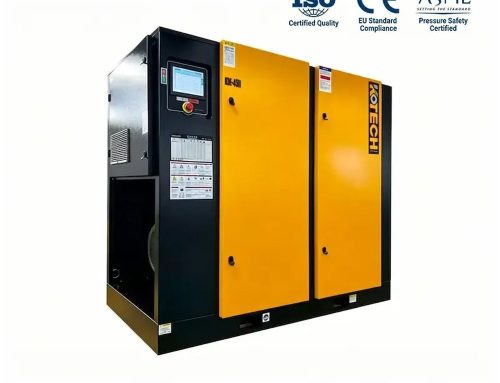
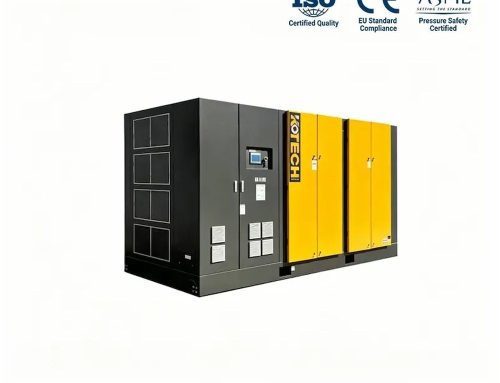
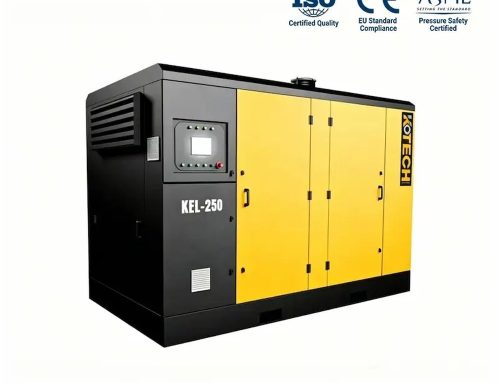
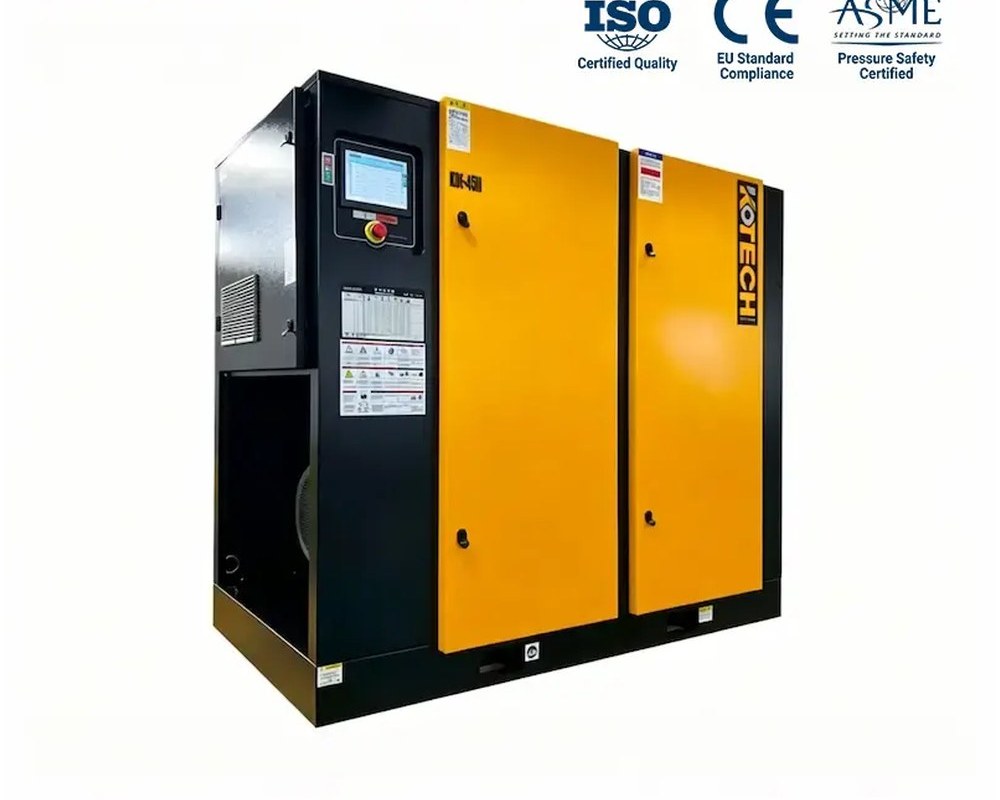
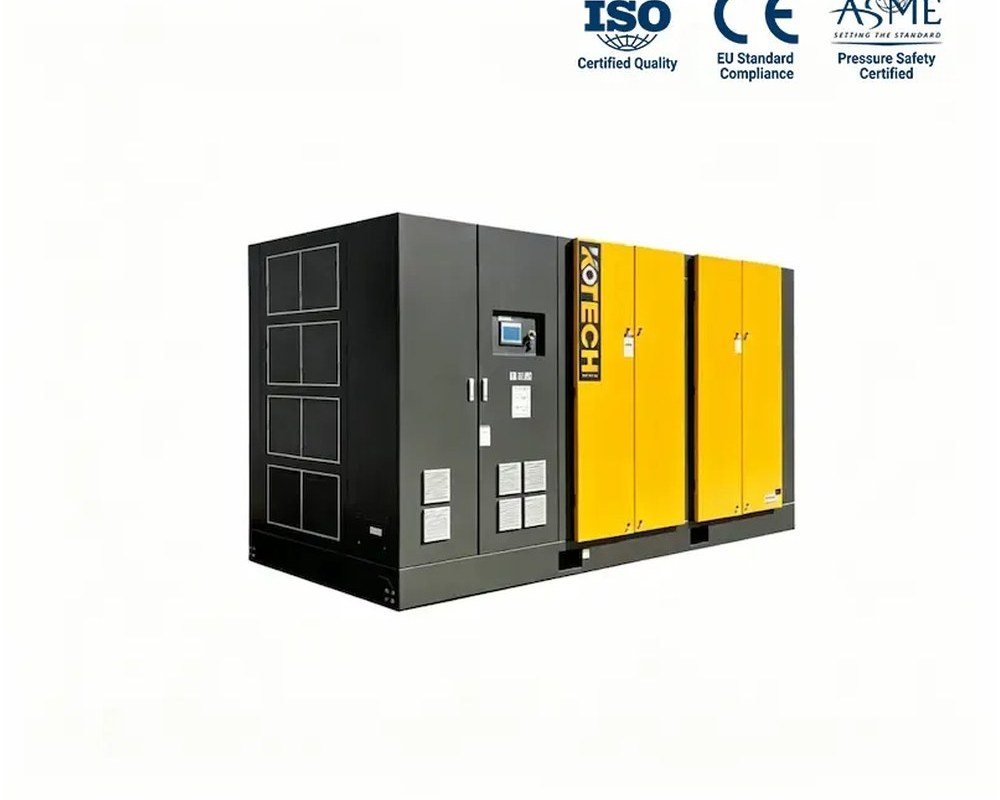
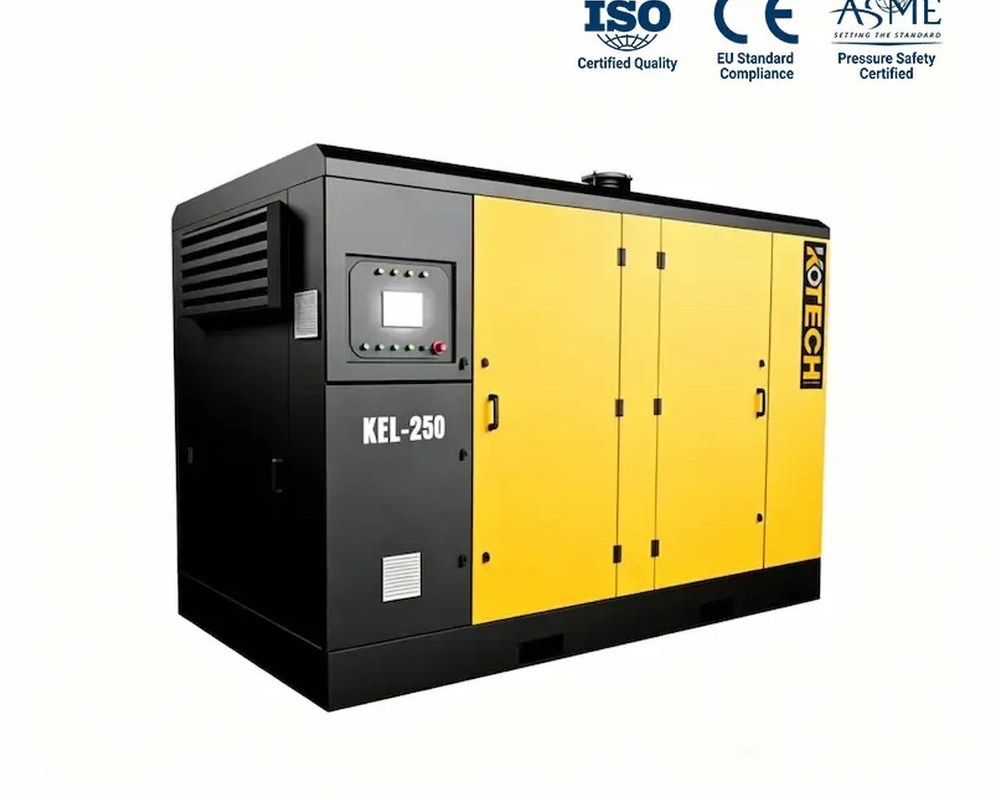
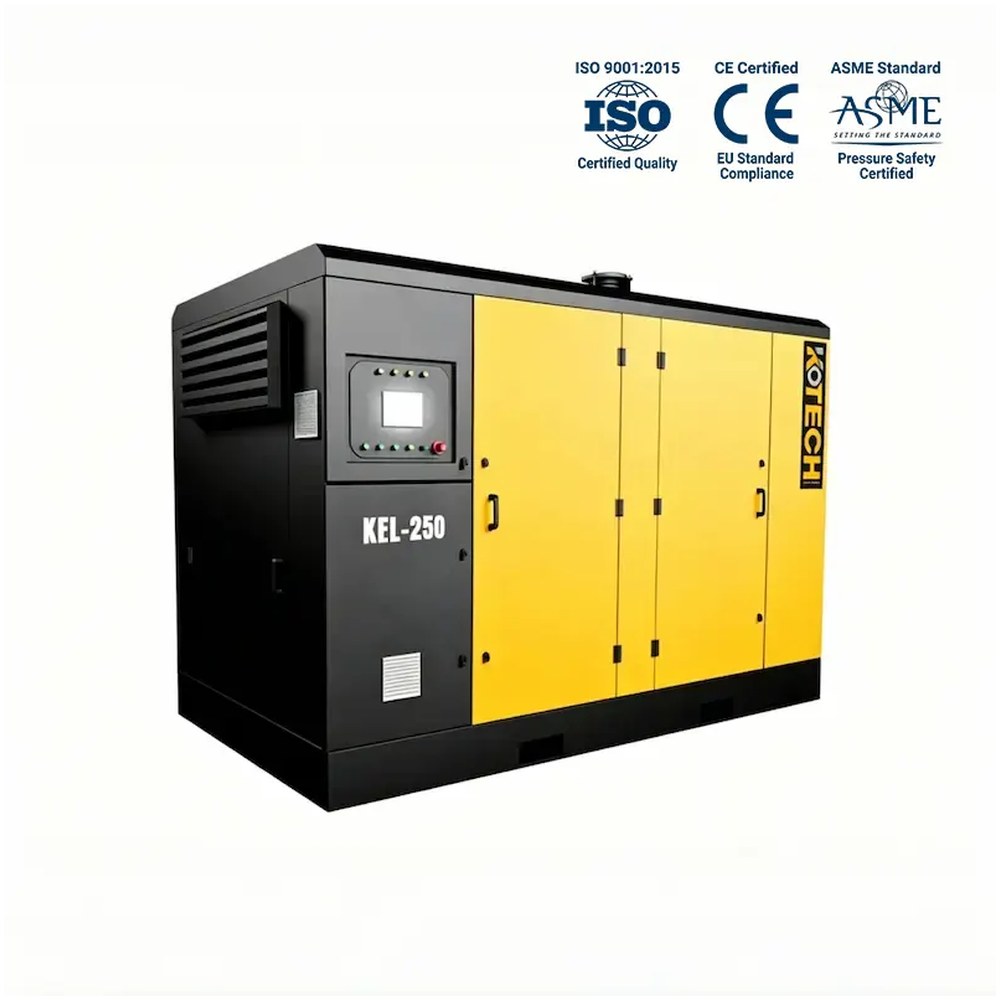
Current factory figures at 5 bar from the KOTECH product page. KEL is a 3 to 5 bar low-pressure screw line; VSD and two-stage variants are available.
Because KEL models are low-pressure machines, their advantage is specific energy at 3 to 5 bar rather than maximum pressure. A KEL-75 delivering 18.5 m³/min at 5 bar is purpose-built for a conveying load that a general 8 bar compressor would serve inefficiently.
Sizing the airflow and pressure for a grain line
Start with the bulk characteristics: particle size and density, whether the grain is whole, milled or pelleted, and the target conveying rate in tonnes per hour. From the pipe layout calculate the airflow needed to hold the design velocity, then add the pressure losses across pickup, horizontal and vertical pipe, bends, the receiver/separator and filtration. For food and grain duty the air should pass through suitable intake filtration and, where product contact or flour dust demands it, appropriate downstream treatment.
Cooling and moisture deserve attention in grain and flour plants. Compression raises air temperature and, after cooling, can release moisture; a properly configured after-cooler or dryer prevents damp air from caking flour or spoiling grain in long lines. Variable-speed KEL VSD frames are useful where conveying rate changes between trucks, rail cars and silos, because they track airflow demand instead of loading and unloading.
Station design for terminals and multi-silo plants
Large grain terminals rarely run one pipe at a constant rate. Multiple receiving pits, ship unloaders and silo distribution lines create a variable total load. A central low-pressure station with several KEL frames, one of them variable speed, lets the plant bring machines online to match the active conveying routes while keeping each running frame near its efficient point. Sequencing also provides redundancy, so a single machine undergoing service does not stop a ship being unloaded.
Layout and filtration protect the investment. Intakes should draw clean, cool air away from dust, the compressor room needs adequate ventilation, and receivers and pulse filters must be sized for the peak material rate. A well-designed low-pressure station is quieter and cooler than running high-pressure machines at reduced output, and it is markedly cheaper to operate across a busy harvest and export season.
Buying tips
- Confirm a genuine dilute-phase load before specifying a low-pressure screw machine; dense-phase may need higher pressure.
- Calculate airflow from pipe size and minimum conveying velocity, and pressure from the full line resistance.
- Choose the KEL frame on airflow first; large port and multi-silo stations may need the KEL-110 to KEL-160.
- Add after-cooling or drying to stop condensation caking flour or dampening grain on long runs.
- Use one VSD frame in a multi-machine station to follow variable conveying routes and add redundancy.
Frequently asked questions
Can I just use a normal 8 bar compressor for pneumatic conveying?
What pressure does dilute-phase grain conveying need?
How do I calculate the airflow for a conveying line?
Which KEL model suits a grain silo or feed mill transfer line?
Does conveying flour or grain need dry air?
When should I choose a variable-speed KEL?
Send KOTECH your conveying rate, pipe layout, material data and line length so we can size the right low-pressure KEL compressor for your grain or bulk handling operation.