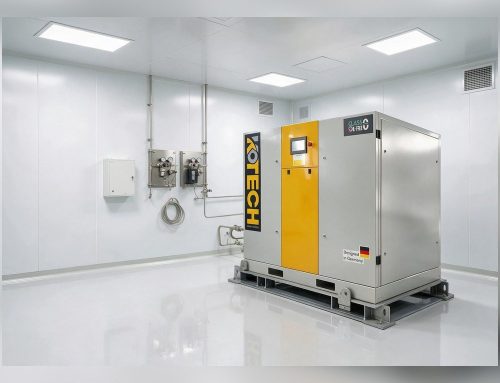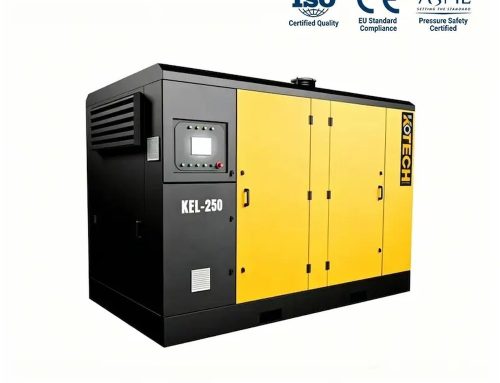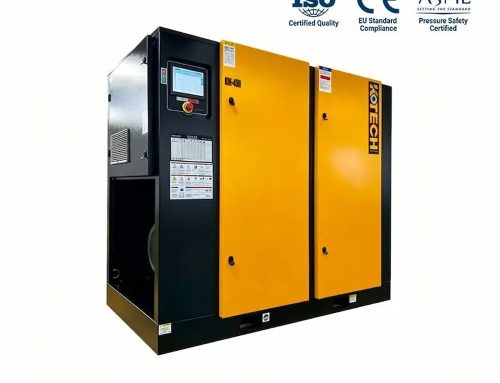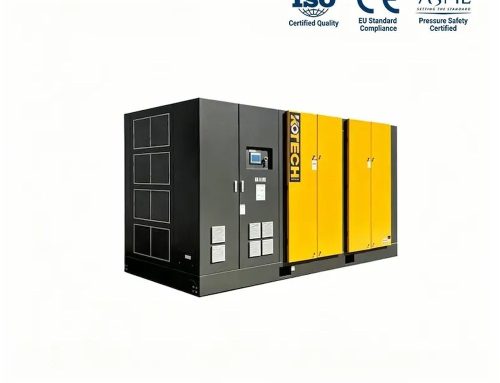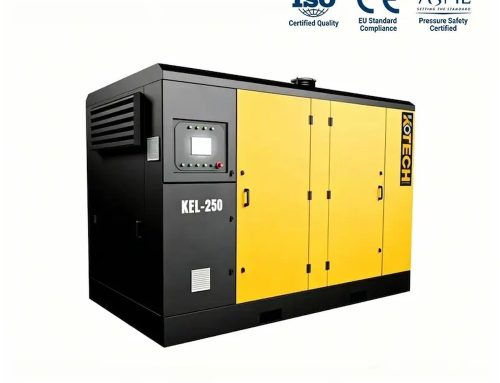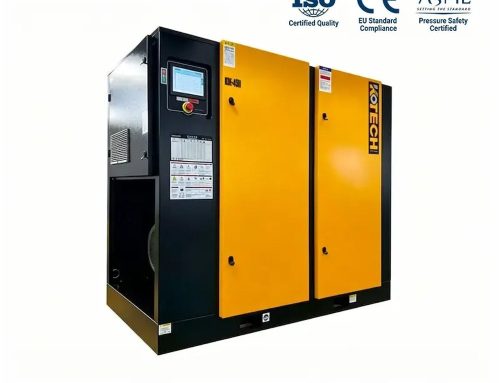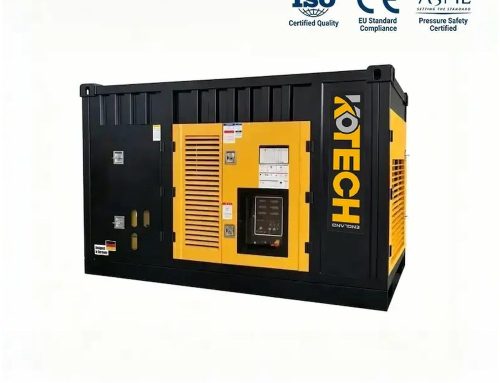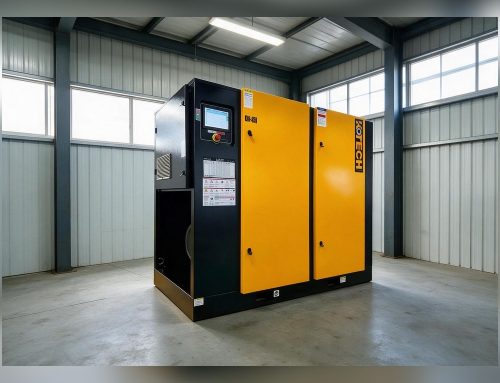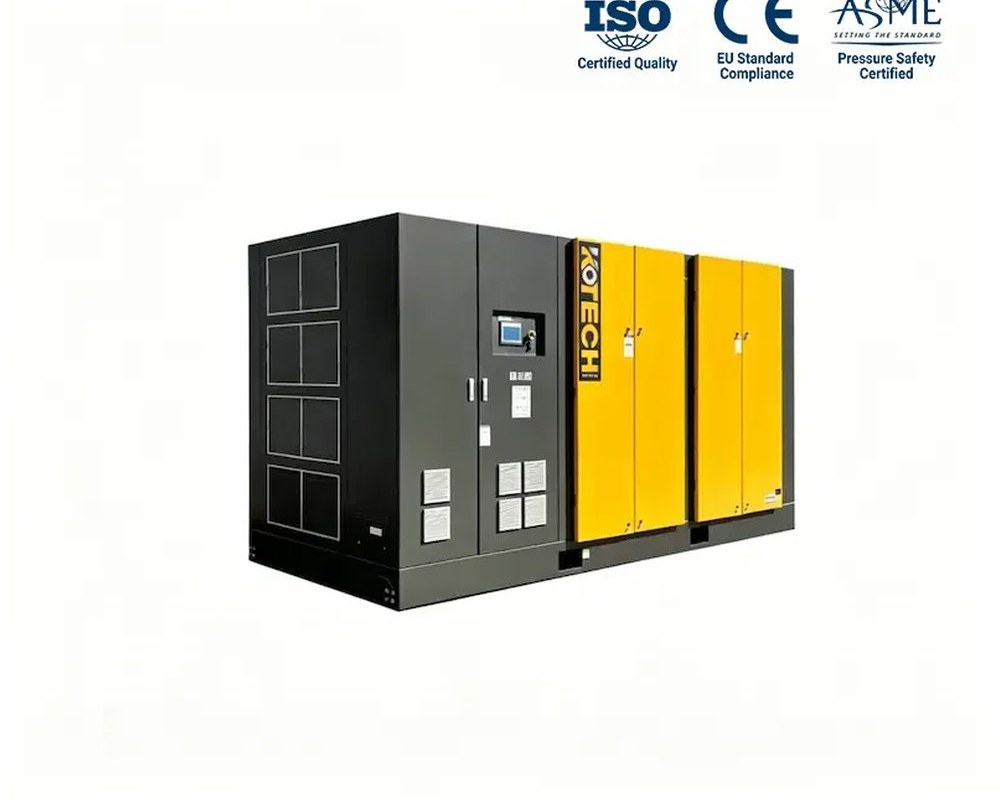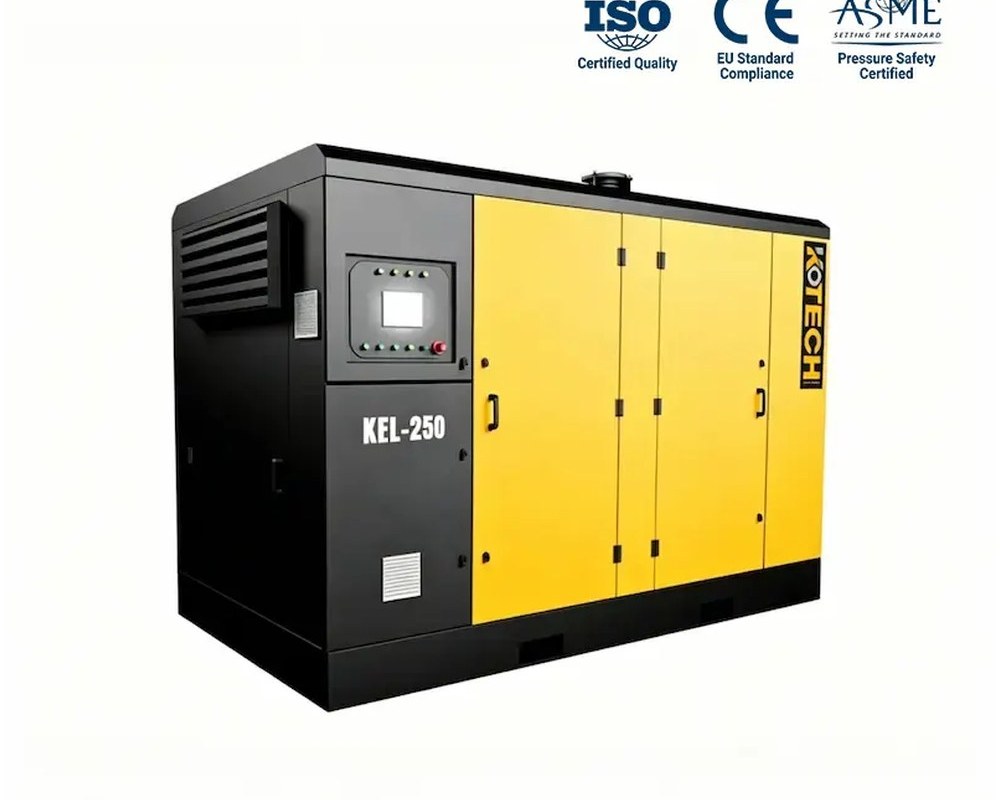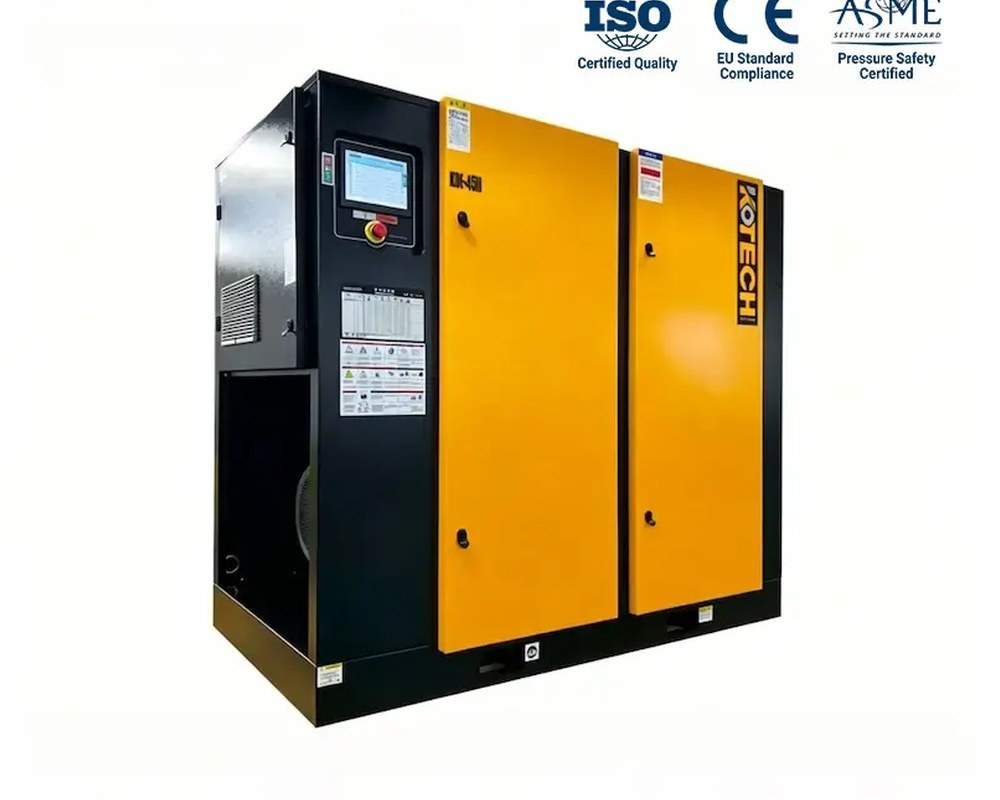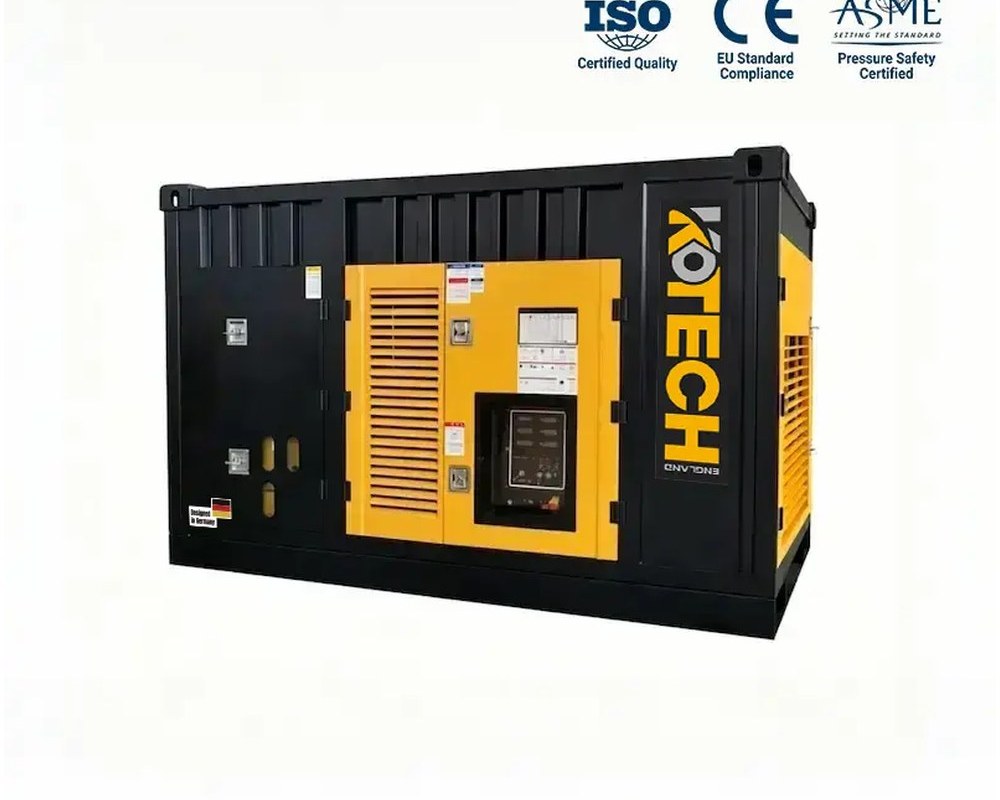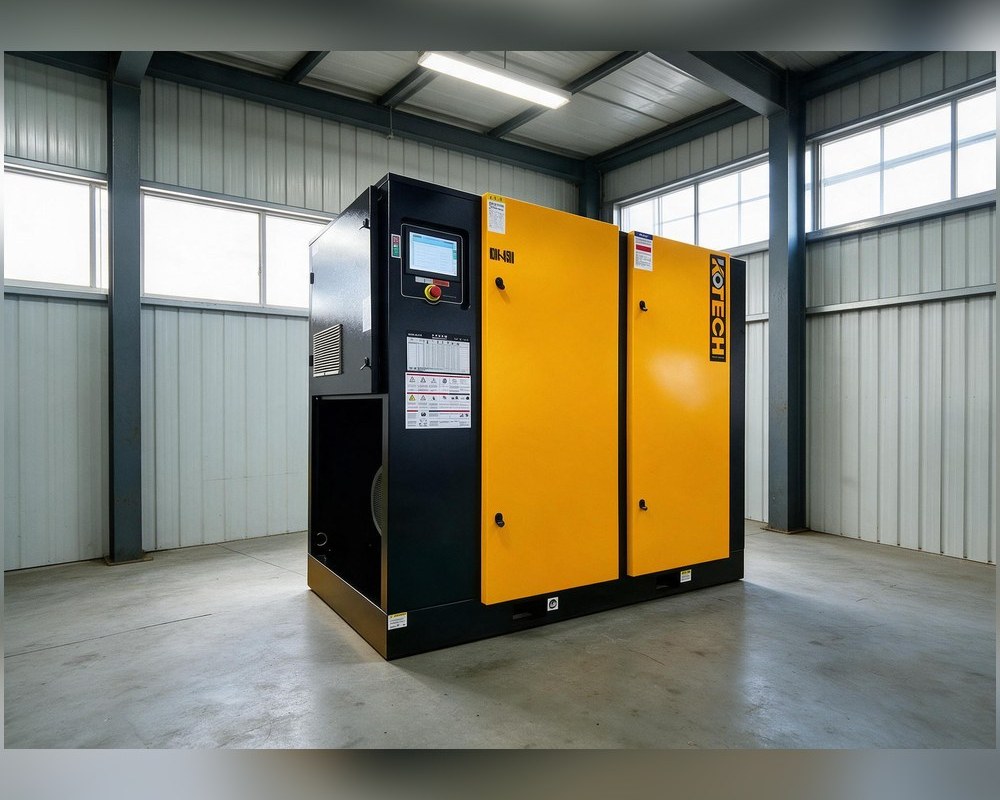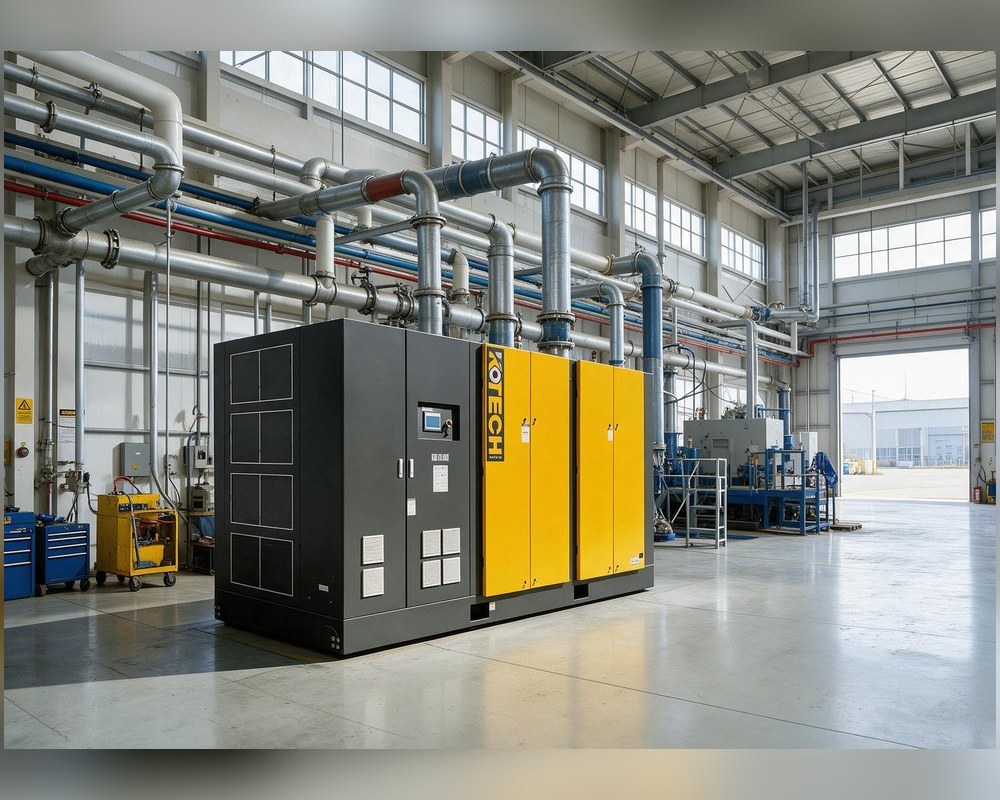




Froth flotation runs on air. Every gram of recovery in a concentrator depends on a steady supply of low-pressure bubbles distributed evenly through the cells, and the compressor house behind that supply is one of the plant’s largest continuous electricity loads. A surprising number of operations still produce that air with standard 7 to 8 bar compressors regulated down to cell pressure — throwing away the energy spent compressing to a pressure the process never uses. Modern low-pressure screw compressors, purpose-built for the 1.5 to 3 bar range, deliver the same airflow at materially lower kilowatts. This guide explains how flotation aeration air should be sized and where KOTECH KEL low-pressure screw frames fit a concentrator.
How flotation uses compressed air
In a mechanical flotation cell, air is introduced into the agitated slurry where the rotor-stator mechanism shears it into bubbles; hydrophobic mineral particles attach to those bubbles and rise into the froth for recovery. Air also supports pneumatic flotation columns, where spargers generate fine bubbles, and ancillary duties such as air-assisted dart valves, sampler operation and filter blowing. The process itself needs surprisingly modest pressure at the cell — commonly enough to overcome the slurry head, the air-distribution piping and the sparger or stator restriction, which typically falls between roughly 0.5 and 1.5 bar overpressure at the cell, rising toward 2 to 3 bar where the compressor house is distant or columns run deep.
What the process needs in volume, however, is large and continuous. Aeration rate is a direct operating variable metallurgists tune alongside reagent dosage, rotor speed and pulp level, so the compressed-air station must hold stable header pressure while total airflow follows the number of cells in service, ore type and grade. Pressure fluctuation starves some cells while over-aerating others, which shows up directly in grade and recovery variability. The right station is therefore sized on volumetric airflow first, with pressure set by the real hydraulic resistance rather than by catalog habit.
- Cell aeration: high volume, low pressure, continuous 24/7 duty across the flotation bank.
- Columns and deep cells: higher pressure to overcome sparger and slurry-head losses.
- Stable header pressure protects recovery; airflow must track the cells in service.
- Ancillary users (valves, samplers, filters) can be fed from a separate small higher-pressure unit.
Why not just regulate an 8 bar compressor down?
Regulating a general-purpose compressor to a lower discharge pressure recovers some energy, but not the structural inefficiency built into the machine. A standard screw airend is designed with an internal compression ratio matched to 7 to 8 bar: the air is squeezed to that ratio inside the element on every rotation regardless of the network setting, and the excess is lost when it discharges into a low-pressure header. Motors, coolers, piping and valves are likewise sized for the higher duty. In a plant that runs continuously, the cumulative kilowatt-hours wasted across years of operation are large enough to dwarf the purchase price of the correct machine.
A purpose-built low-pressure screw airend uses a longer, larger-displacement rotor profile with a lower built-in compression ratio, moving more air per kilowatt in the 1.5 to 3 bar window. Independent audits of minerals plants converting aeration duty from general-purpose compressors to low-pressure or blower technology regularly report double-digit percentage energy reductions on that airstream. Because flotation aeration competes with grinding and pumping for the plant’s power budget, that saving drops straight to site operating cost — and reduces the load on constrained power supplies common at remote mines.
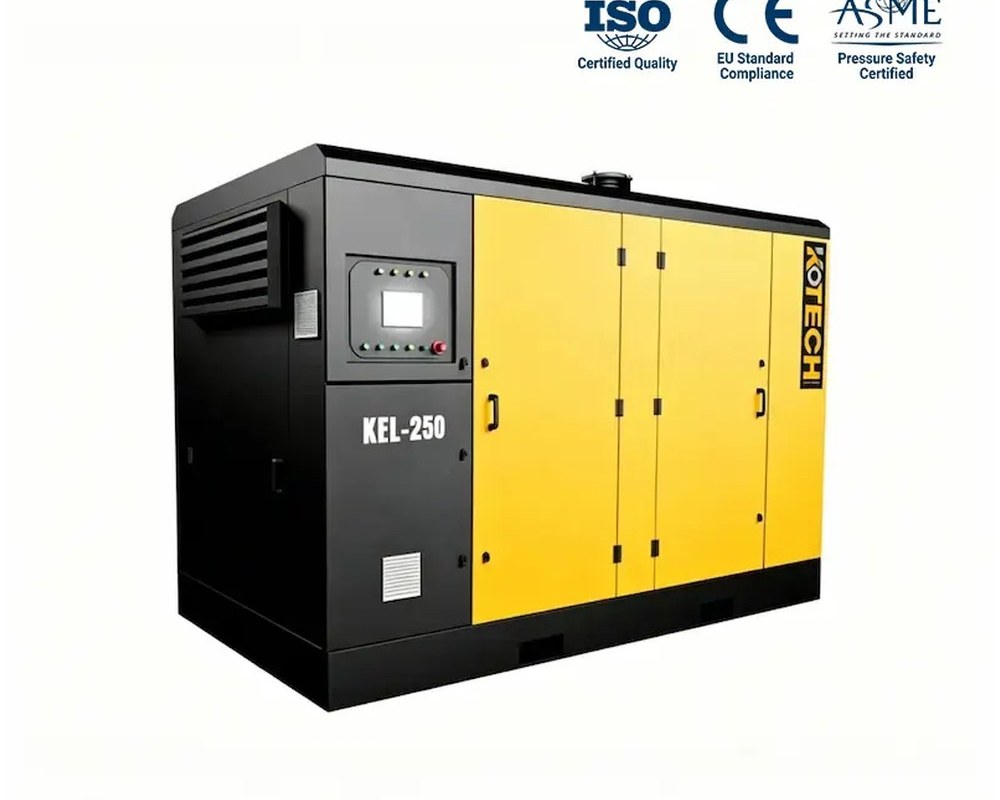
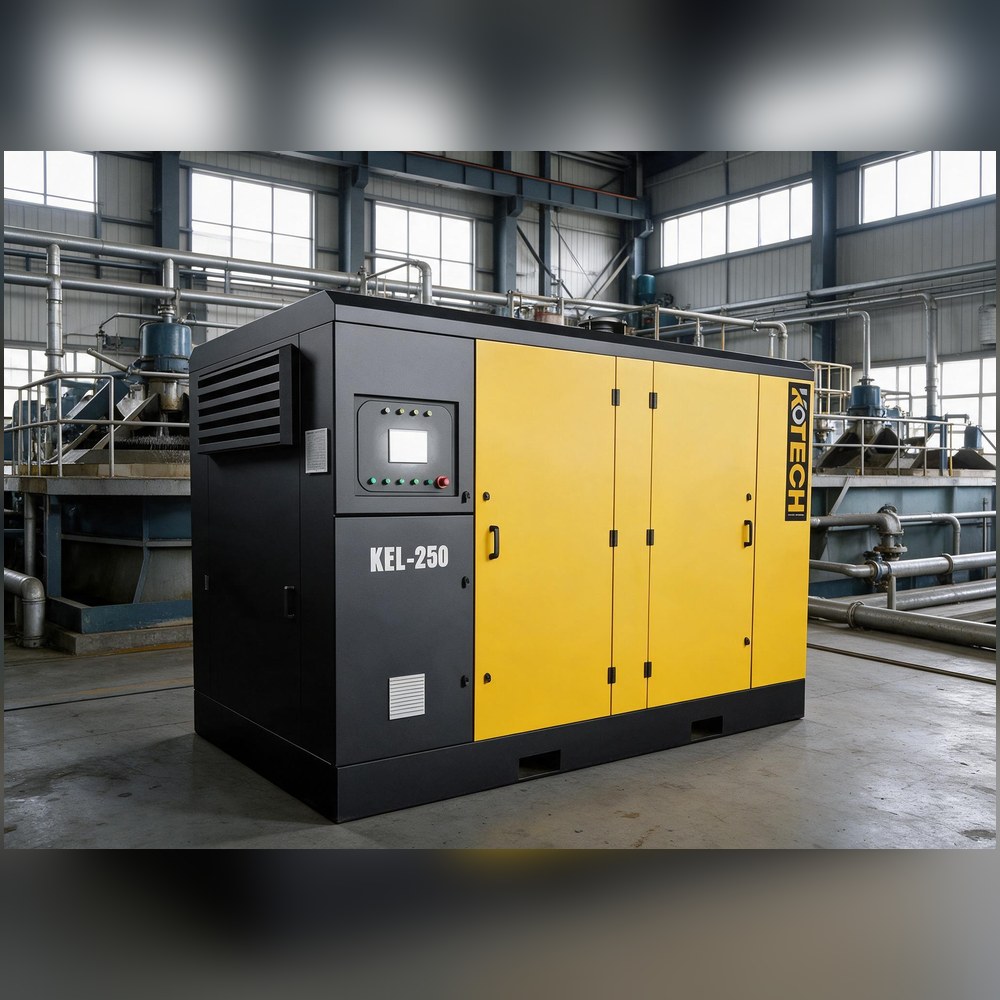
Real KOTECH KEL low-pressure specifications
Current factory figures at 1.5 bar from the KOTECH product page; VSD and higher-pressure variants extend the line.
KEL flow is rated at the low working pressure; the same frames are published at higher pressure points where the circuit needs them. Size from the aeration demand of the actual cells, and confirm header losses from real pipe routing rather than assuming 1.5 bar at the compressor equals 1.5 bar at the sparger.
Sizing the aeration station
Start from metallurgy rather than the compressor catalog. Determine the design airflow per cubic metre of cell volume from the cell or column manufacturer’s aeration range, multiply by the active cell volume and the number of cells that will run together, then add distribution losses, leakage and a growth margin for future bank expansion. Pressure is calculated bottom-up: sparger or stator resistance plus slurry and froth depth head plus friction through the air mains, filters and valves from the compressor house. A site survey with pressure loggers on the furthest cell often reveals that the header set-point has crept upward over the years; resetting it to measured need is usually the first, free energy saving.
Station control should combine one variable-speed trim machine with base-load fixed-speed units, a receiver sized to smooth the switching of banks, and automation linked to header pressure so the trains start and stop against the flotation schedule. Intake air in a concentrator carries dust and reagent aerosols, so heavy-duty filtration and clean intake location protect the airends, and dry-collection or water-separation design depends on whether the cells require conditioned air. Heat rejection from the compressor house should be ducted or ventilated for the site climate; in cold climates the rejected heat can be redirected to workshops in winter.
Reliability and life-cycle cost
A flotation compressor runs more hours per year than almost any other equipment in the plant, so availability and service access are part of the specification rather than extras. Low-pressure screw frames with few wearing components, generous cooling and remote monitoring match the duty better than repurposed high-pressure machines working off their design point. Maintenance should be planned around scheduled shutdowns, with air/oil separation, intake filters and oil analysis on the standard cycle; a well-installed KEL station should run for years between major airend work.
When evaluating offers, compare the total cost of compressed air over a realistic horizon — typically seven to ten years of near-continuous running — rather than the equipment price alone. Energy will account for the large majority of that total, which is why the low-pressure airend efficiency advantage, plus correct header pressure and trim control, usually decides the business case. A short air-demand study and a handful of pressure loggers will normally show whether an existing plant is genuinely well served or simply running oversized 8 bar machines against a low-pressure process.
Buying tips
- Size on flotation aeration volume first; calculate pressure from sparger, slurry head and piping losses.
- Use purpose-built low-pressure screw machines rather than throttling 8 bar compressors.
- Configure N+1 redundancy with one VSD trim unit and fixed-speed base-load frames.
- Measure real header pressure at the furthest cell before accepting an inherited set-point.
- Evaluate on 7 to 10 years of near-continuous energy cost, not purchase price.
Frequently asked questions
What air pressure do flotation cells need?
Can I use a normal 8 bar screw compressor for flotation aeration?
How much air does a flotation plant use?
Why does stable air pressure affect mineral recovery?
Should the flotation air station include redundancy?
Do flotation compressors need special intake treatment?
Share your flotation circuit layout — cell volumes, active banks, measured header pressure and piping distances — and our engineers will size a KOTECH KEL low-pressure aeration station with redundancy and trim control.