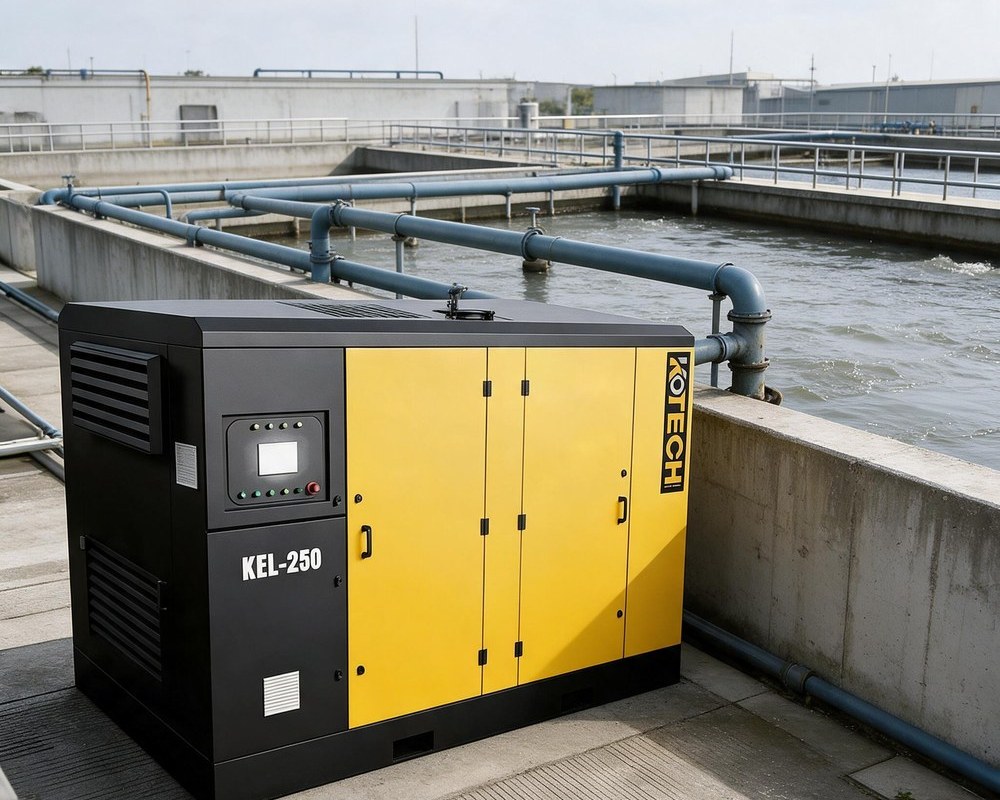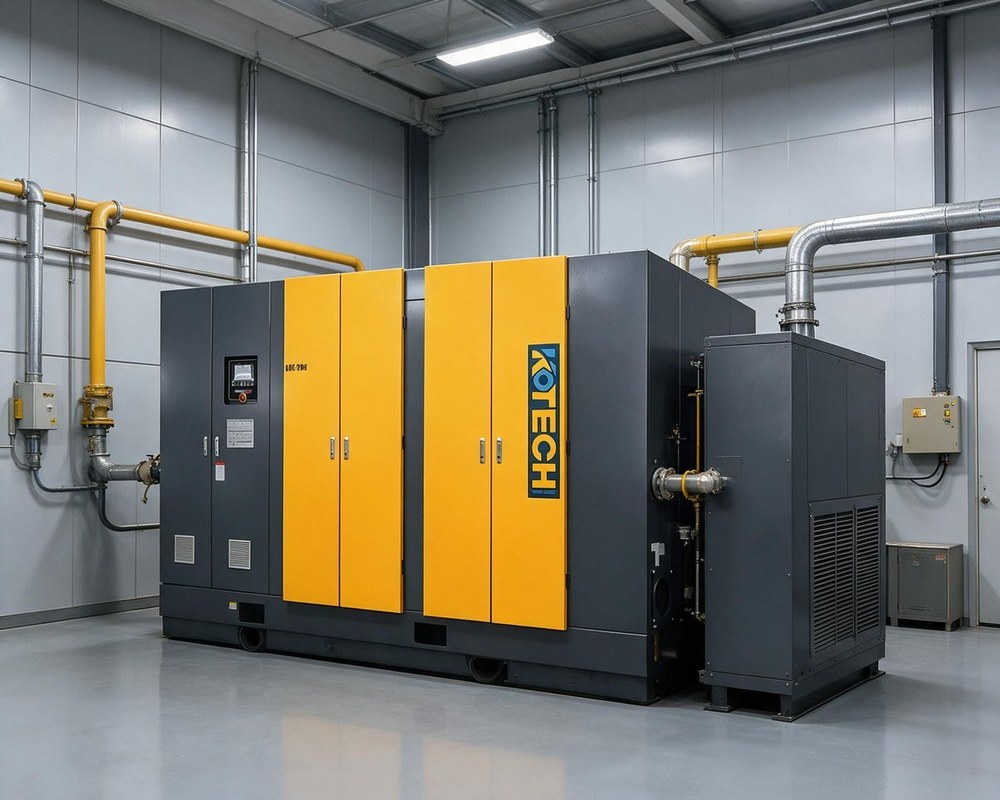




Every coal-fired power plant has to move fly ash from the dust collectors to storage, and most systems do it with compressed air. The catch is that fly ash conveying rarely needs a standard 7 to 10 bar compressor; it is fundamentally a low-pressure duty. Running a high-pressure machine to supply a low-pressure conveying line wastes energy and often produces more air than the process needs. A dedicated low-pressure screw compressor, built to deliver high flow at roughly 2 to 5 bar, matches the duty far better. This guide explains the conveying air requirement and how to specify a machine using real KOTECH KEL data.
How fly ash conveying uses compressed air
In a typical plant, fly ash is collected in the hoppers beneath the electrostatic precipitator or baghouse, then transported through a pipeline to a silo using air as the conveying medium. A conveying vessel is charged with ash, air is admitted to fluidise and move it, and the mixture travels the pipeline to storage before the vent air is filtered. The compressor’s job is to supply that conveying and fluidising air continuously or in a repeating cycle.
The pressure required is set by the load, the pipeline length, the vertical lift to the silo, and the number of bends rather than by a fixed high value. Many conveying systems operate effectively within a low-pressure band. Supplying that duty from a compressor designed for much higher pressure means carrying compression stages and energy use the process never calls for.
- Air fluidises ash and carries it from collector hoppers to the storage silo
- Pressure depends on load, pipe length, lift, and bends rather than a fixed high value
- Most conveying duties sit within a low-pressure band
- High-pressure machines add stages and energy the process does not need
Why a dedicated low-pressure air end is more efficient
A low-pressure screw compressor is built around a different operating point: a larger-volume air end optimised to move a lot of air at modest pressure. Running that machine at 2 to 5 bar keeps it inside the range where it is efficient. A general 7 to 10 bar compressor forced to feed the same line is over-compressing air that only needs low pressure, which is wasted work on every cycle.
Because power stations run conveying systems for long hours, even a moderate efficiency difference accumulates into a substantial annual energy figure. The air demand is also steady and predictable compared with many factory processes, which makes a correctly sized fixed-speed low-pressure unit a clean match rather than requiring complex variable control.
- High-volume air end is optimised for large flow at low pressure
- Avoids over-compressing air that only needs 2 to 5 bar
- Long conveying running hours magnify the efficiency gain
- Steady predictable demand suits a correctly sized fixed-speed unit
Sizing from the conveying system, not the silo
The compressor should be sized from the air demand of the conveying vessels and their cycle, not from the size of the ash silo. Key inputs are the ash rate in tonnes per hour, the conveying distance and vertical lift, the pipeline diameter, the number and radius of bends, and whether vessels operate one at a time or overlap. Those values define both the flow in cubic metres per minute and the pressure the line will see.
Under-sizing causes the conveying vessel to stall or leave ash in the line, while gross over-sizing wastes energy and can wear the piping through higher velocities. The correct approach is to match the low-pressure machine to the calculated conveying demand and to confirm whether a duty and standby arrangement is needed for continuous ash removal.
- Start from ash rate, distance, lift, pipe size, and bends
- Account for vessels operating at the same time rather than one at a time
- Match flow and pressure to avoid line stalling or pipe wear
- Plan a duty and standby pair where ash removal cannot stop
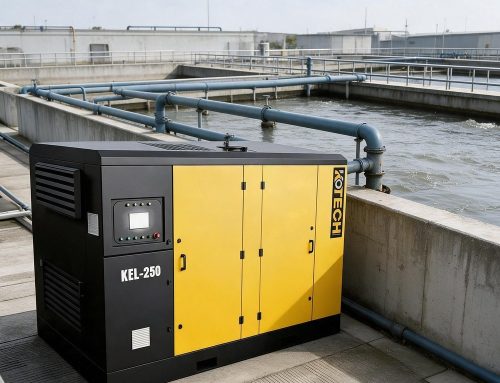
Real KOTECH KEL low-pressure screw compressors
Current factory specifications for fixed-speed KEL low-pressure units used in fly ash and other low-pressure conveying duties.
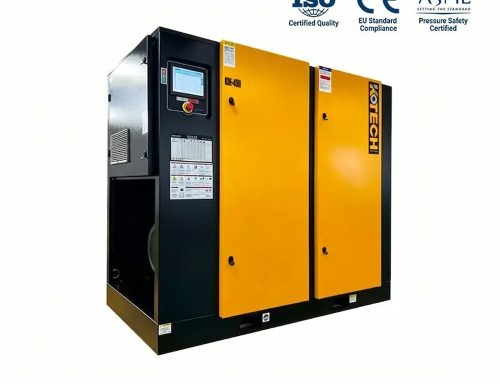
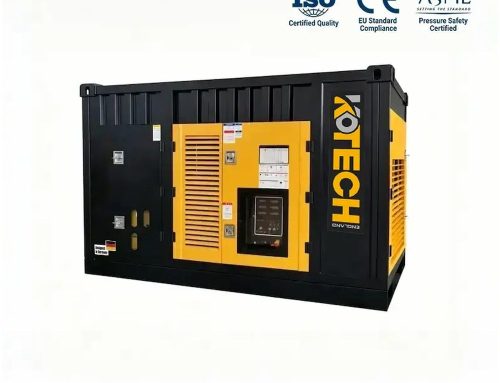
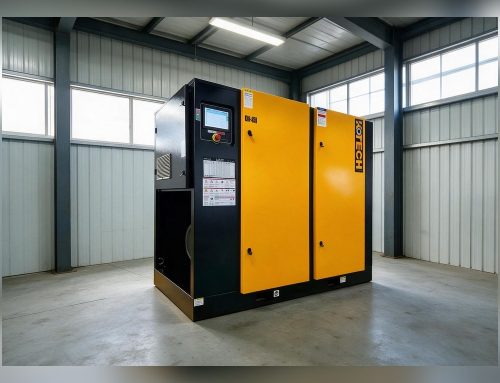
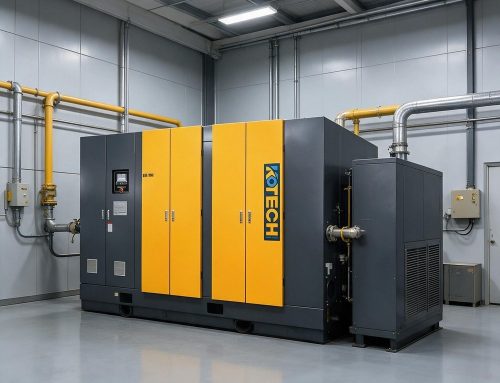
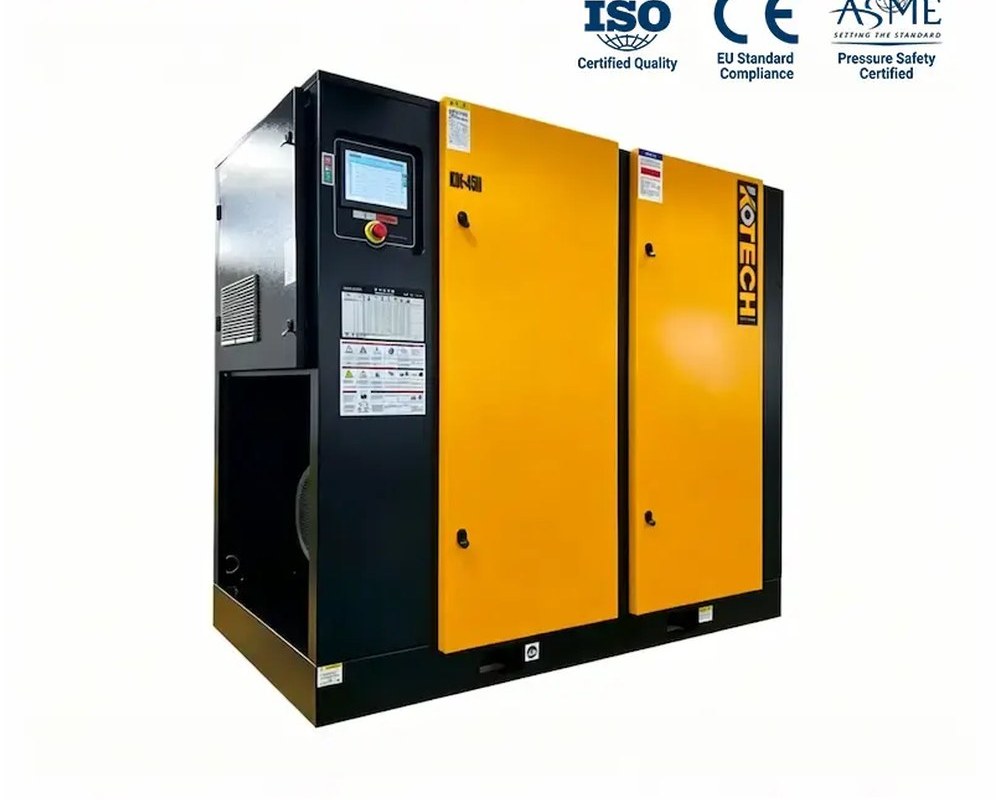
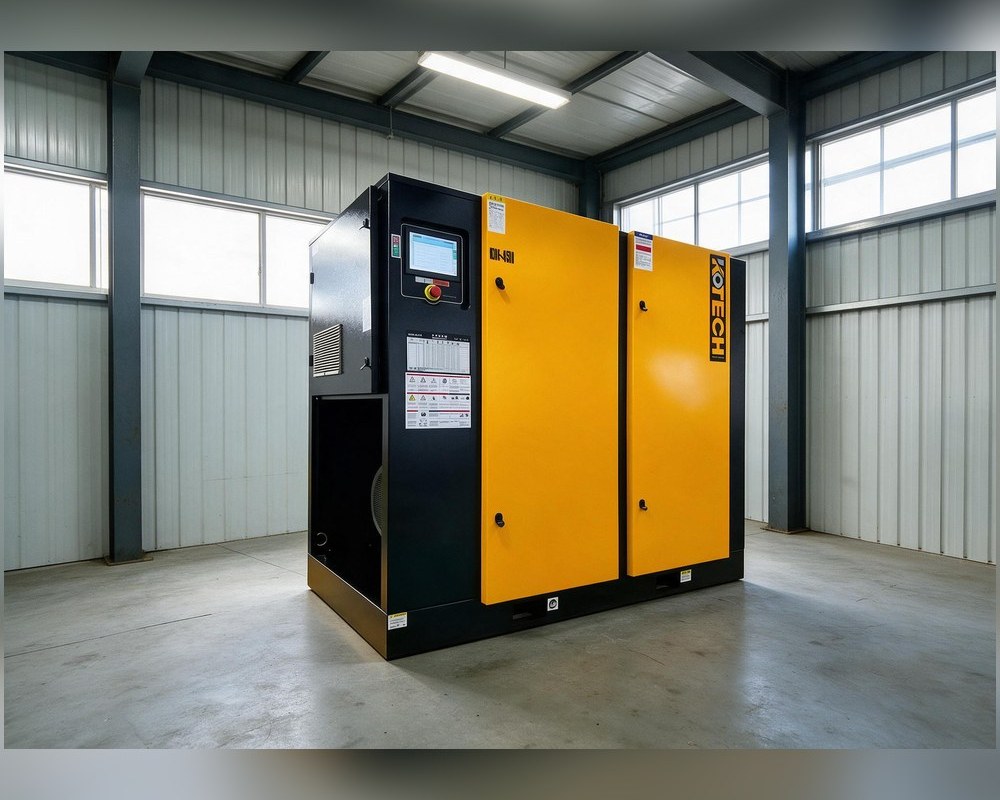
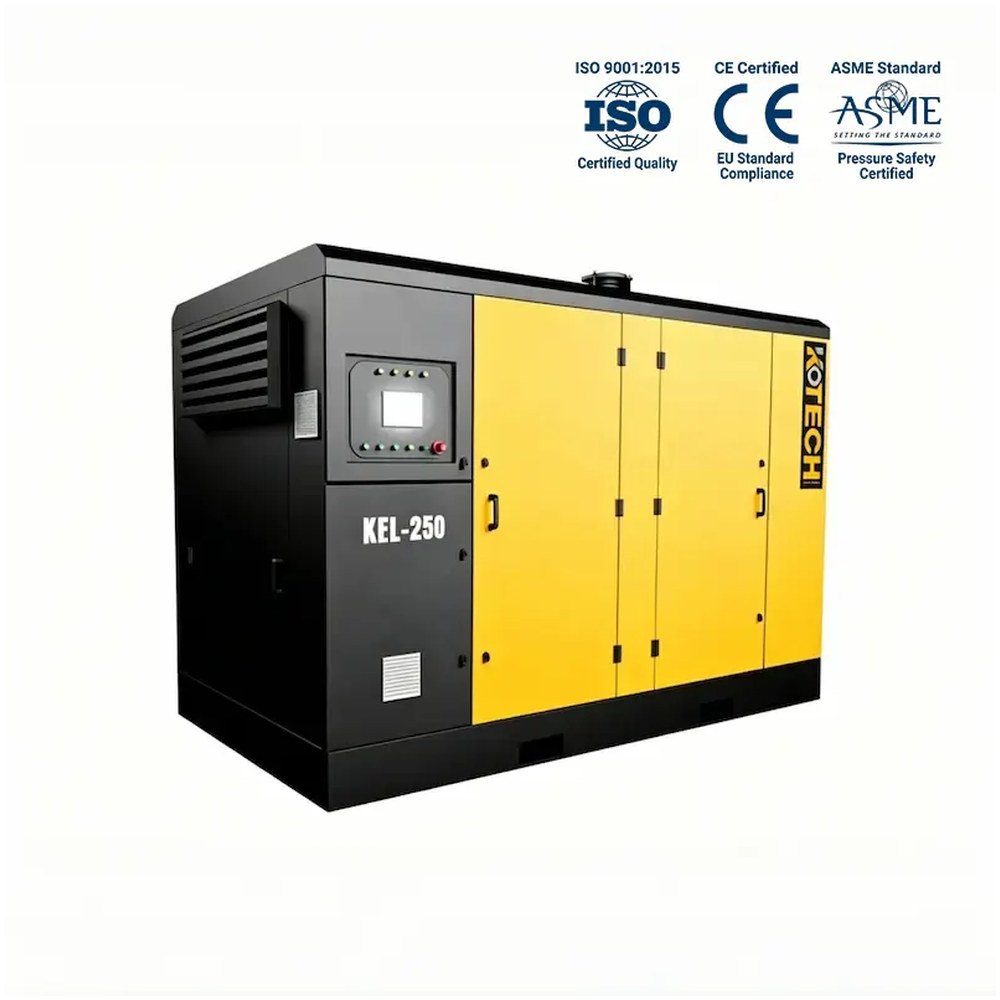
The table lists current fixed-speed KEL low-pressure models with air delivery, working pressure, motor power, and weight as shown on the KOTECH product page. The family spans a wide flow range: the KEL-37 provides 8.8 m³/min for smaller conveying duties, while the KEL-110 delivers 24 m³/min for large plants with several vessels. Because all of these machines are rated at 5 bar, the choice is driven by the cubic metres per minute the conveying system consumes rather than by high pressure.
Installation and protection in a dusty plant
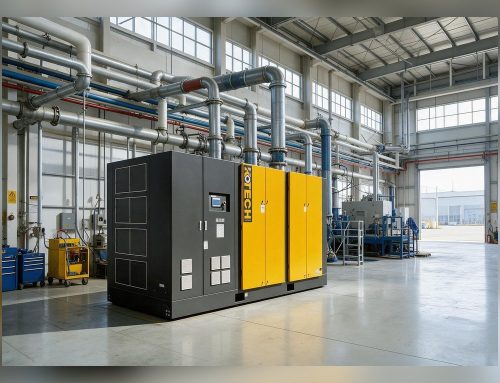
Fly ash areas are dusty, so the compressor intake and filtration need protection even though the machine may sit in a dedicated room. A clean intake, adequate cooling, and separation from the dustiest points keep the air end and cooler from fouling. In plants with multiple collection points, a central low-pressure station feeding several conveying vessels is often easier to maintain than a compressor at every hopper.
Controls can interlock the compressor with the conveying sequence so air is produced when a vessel is cycling rather than continuously at full output. Where several feed points operate in rotation, that sequencing prevents the machine from idling under load between cycles and keeps the conveying system supplied on demand.
- Protect the intake and cooler from fly ash dust
- A central low-pressure station is easier to maintain than units at every hopper
- Interlock the compressor with the conveying cycle to avoid waste
- Sequence rotating feed points to keep supply matched to demand
Buying tips
- Confirm the conveying pressure band before specifying a compressor
- Size from ash rate, distance, lift, pipe diameter, and overlapping vessels
- Use a high-volume low-pressure air end instead of a standard high-pressure unit
- Plan duty and standby machines where ash removal must not stop
- Protect the intake and cooler from dust and interlock with the conveying cycle
Frequently asked questions
Can I use an ordinary 8 bar screw compressor to convey fly ash?
What pressure does fly ash pneumatic conveying actually require?
How is the correct low-pressure compressor size calculated?
Why does an undersized compressor leave ash in the pipeline?
Should each ash hopper have its own compressor?
Do I need a standby compressor for fly ash conveying?
If your power plant is selecting air equipment for fly ash conveying, send us the ash rate, distance, and pipeline details for a low-pressure sizing review.