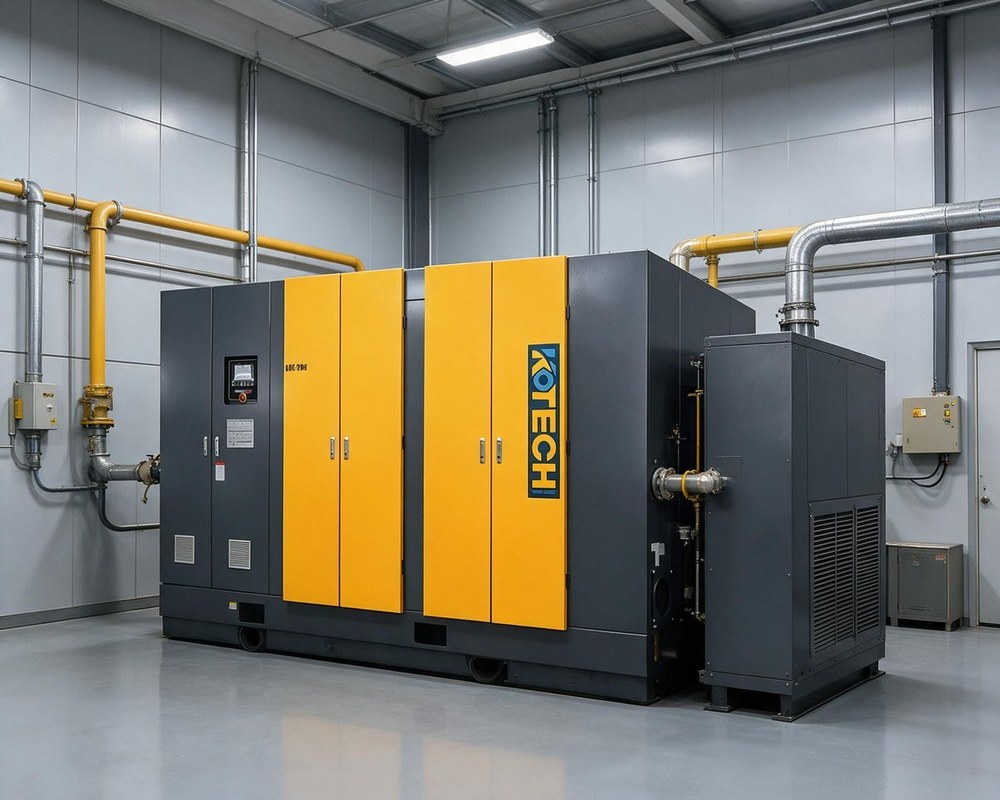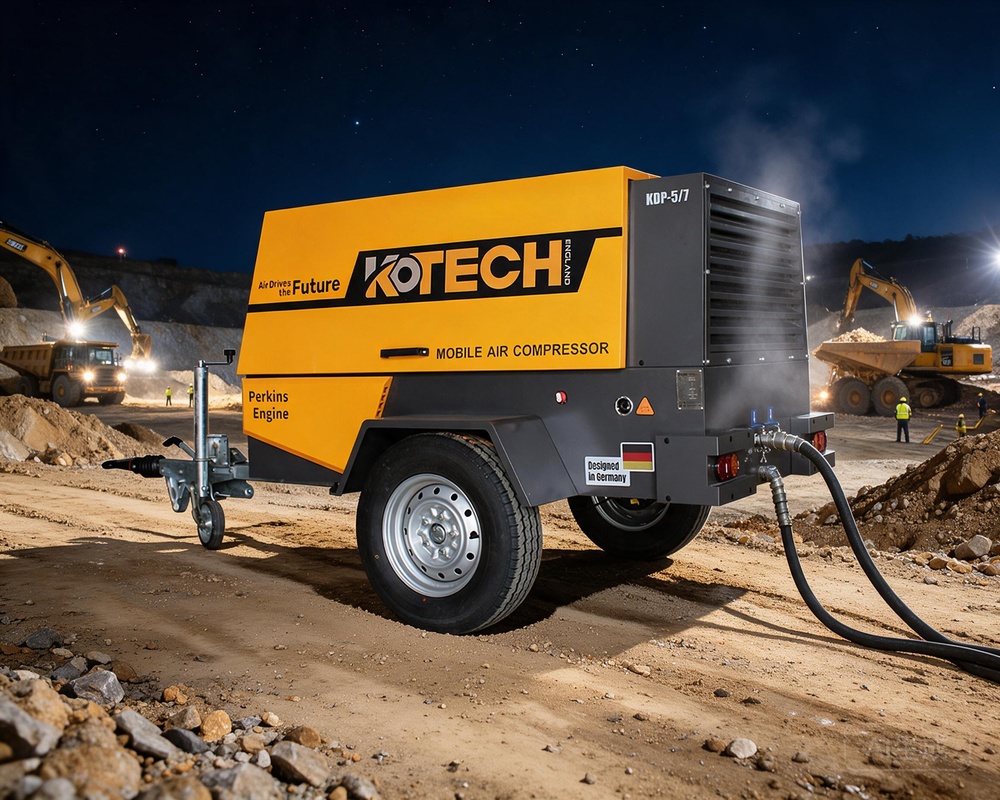




An auto parts plant rarely uses the same amount of compressed air all day. Stamping and machining lines start and stop, paint and finishing sections follow their own cycles, and the night shift runs a fraction of the day load. A fixed-speed compressor handles that uneven demand by loading and unloading, which wastes energy at part load. A PM VSD screw compressor changes its speed to track demand instead, which is why component plants are moving to permanent-magnet variable-speed machines. This guide explains when the upgrade pays and how to size one using real KOTECH KOE specifications.
Why auto parts demand is so uneven
Component plants combine several different processes in one facility. Pneumatic cylinders and tools on assembly and machining lines cycle on and off, stamping operations use air in bursts, and paint shops or parts cleaning areas run to separate schedules. The result is a load profile that moves between a high daytime peak and a much lower level during breaks, changeovers, and night work.
A fixed-speed compressor is built to deliver a fixed output and then unload when the system reaches its pressure set point. At part load it spends time running unloaded, still consuming energy without producing useful air. Where a large share of operating hours fall well below full capacity, that wasted unloaded running becomes a major part of the electricity bill.
- Stamping and machining use air in bursts rather than a steady flow
- Paint, cleaning, and assembly sections follow different cycles
- Night and break-period demand is far below the daytime peak
- Fixed-speed machines run unloaded at part load and waste energy
How PM VSD drive tracks the load
A PM VSD screw compressor changes motor and air-end speed with a variable-speed drive, so output rises and falls with demand instead of cycling between full flow and unloaded running. A permanent-magnet motor retains good efficiency across that speed range, which matters because the machine spends much of its life away from full speed. The plant therefore holds a stable pressure while drawing only the power the current load needs.
The savings are largest where demand spends long periods in the middle and lower part of the range. If a plant ran at a constant 100 percent load every hour, the variable-speed advantage would shrink, but that profile is rare in parts manufacturing, where the defining feature is precisely the variation between processes and shifts.
- Speed and air output track real demand instead of load/unload cycling
- Permanent-magnet motor stays efficient across the speed range
- System pressure remains stable as lines start and stop
- Biggest savings appear at sustained part-load operation
Fixed and variable machines working together
In a larger plant, one variable unit is often paired with fixed-speed base machines. The fixed compressors handle the steady base load efficiently, while the PM VSD unit trims the variable portion on top. This avoids running an oversized variable machine for the whole demand and combines the strengths of both technologies.
Sizing therefore starts from the real load profile rather than the nameplate total. Logging demand over a representative period shows where the base ends and the variable band begins, which is the correct basis for choosing how many fixed machines and what size VSD unit the plant actually needs.
- Fixed-speed units cover the steady base load
- The VSD machine trims the variable portion on top
- Logging demand defines where the base and variable bands sit
- Avoids buying one oversized variable compressor for the entire plant
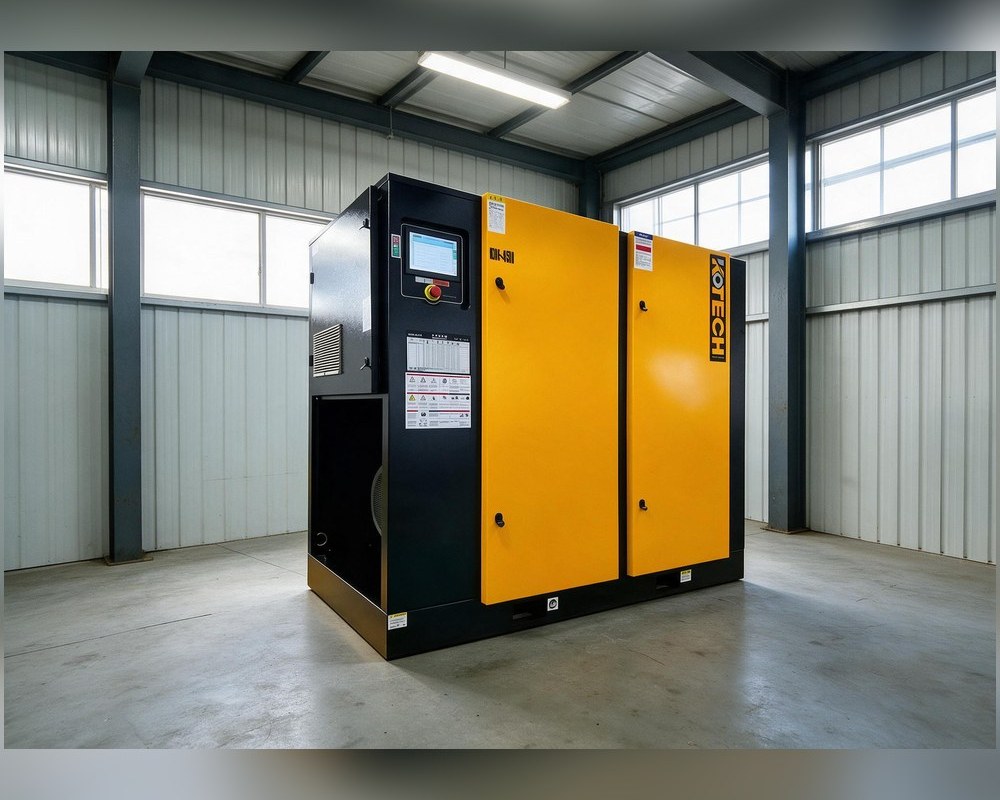
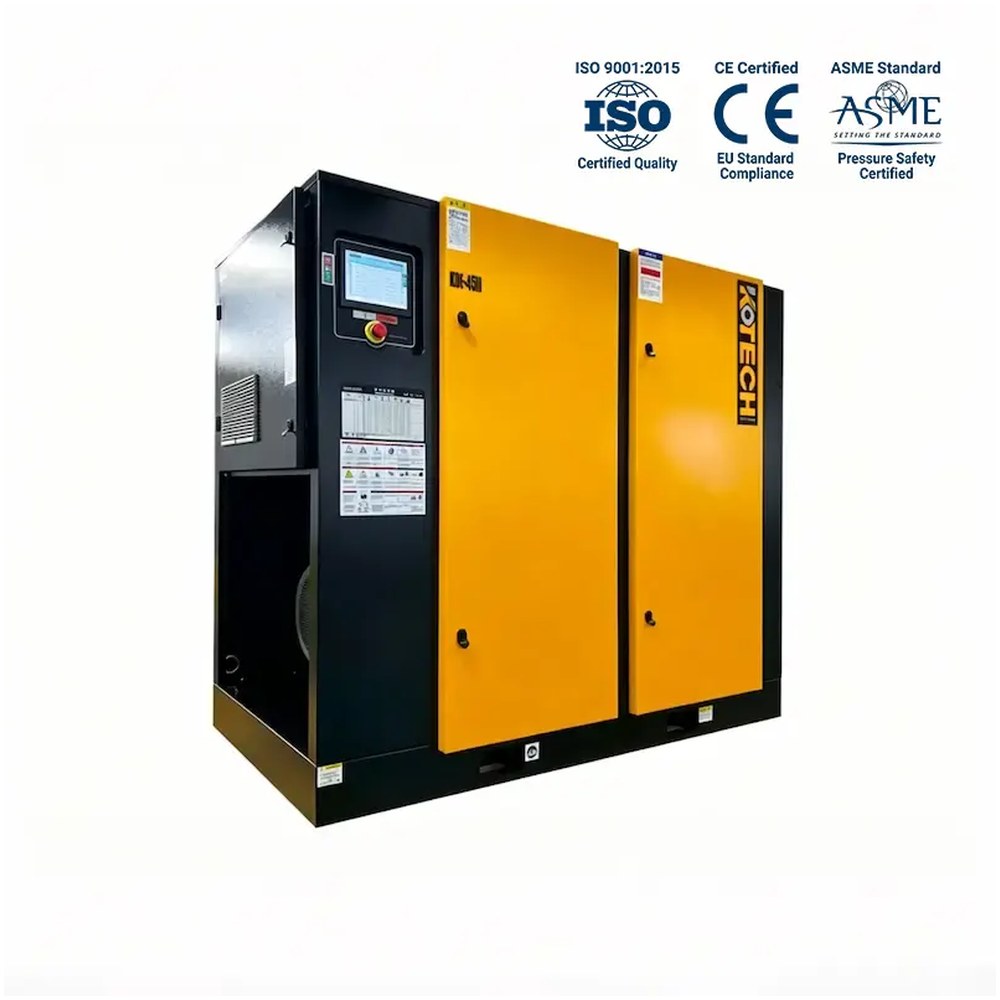
Real KOTECH KOE PM VSD screw compressors
Current factory specifications for the KOE permanent-magnet VSD family; the FAD figures are each machine’s variable output range.
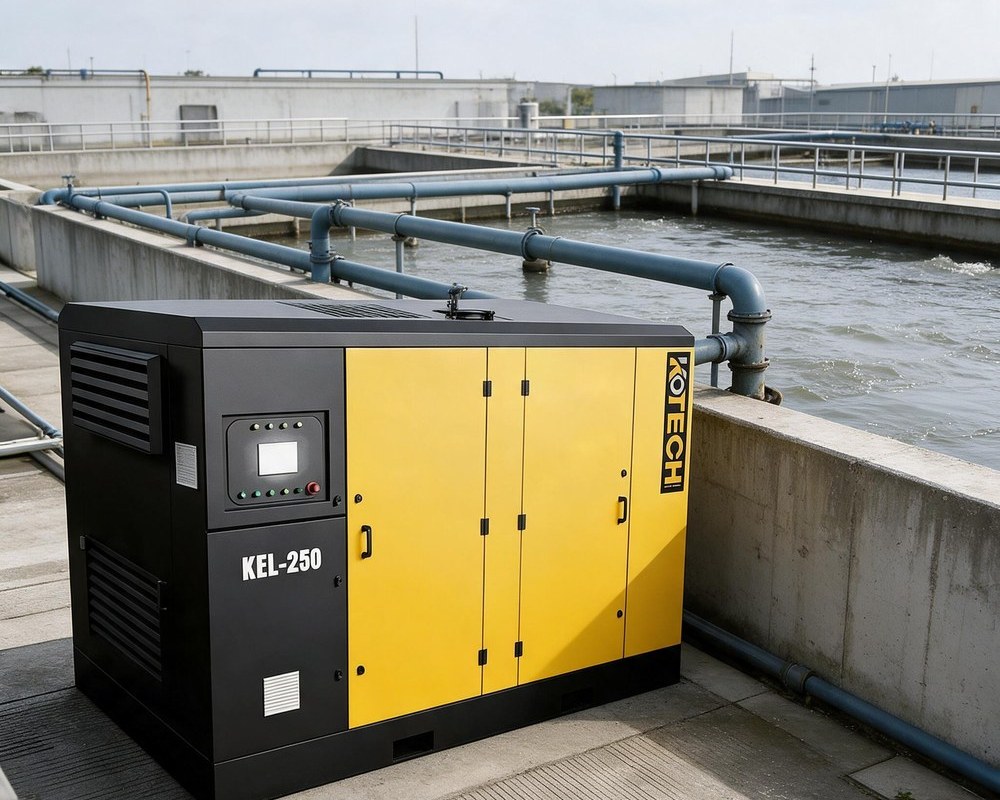
The table lists current KOE VSD models with their free air delivery ranges at 7.5 and 10 bar, noise, and weight as published on the KOTECH product page. The range values are the key detail for a variable-speed machine: each unit spans a minimum to maximum output as speed changes. The compact KOE-22VSD handles light trim duty, while machines such as the KOE-75VSD and KOE-110VSD cover the larger variable band of a full parts plant.
Heat recovery and the wider energy case
Compressors convert most of their electrical input into heat, and plants that need hot water for cleaning or process use can recover part of that heat. Combining a PM VSD compressor with heat recovery strengthens the business case, especially where the paint shop or cleaning line already consumes heated water.
The energy assessment should still begin with the easier measures: fixing air leaks, matching pressure to what the tools need, and eliminating unloaded running. A variable-speed machine is a strong investment, but it should not be used to mask waste elsewhere in the compressed air system.
- Recovered heat can supply cleaning or process hot water
- Heat recovery strengthens the case where heated water is already used
- Fix leaks and reduce pressure before or alongside the VSD upgrade
- Do not let a new variable machine mask waste elsewhere
Buying tips
- Log demand across shifts before choosing fixed versus variable capacity
- Use fixed machines for the base load and a VSD unit to trim the variable band
- Size from FAD at the pressure the plant actually runs
- Check heat-recovery potential where cleaning or process hot water is needed
- Fix leaks and reduce pressure before relying on the VSD savings
Frequently asked questions
How much energy does a PM VSD screw compressor save in an auto parts plant?
Is a variable-speed compressor worth it if the plant runs near full load most of the time?
Should I replace all fixed compressors with VSD units?
Why choose a permanent-magnet motor rather than a standard VSD motor?
Can a PM VSD compressor also supply heat recovery?
What pressure should an auto parts plant run at?
If your component plant’s air demand varies across shifts, send us your load profile for a fixed-plus-VSD sizing and energy review.