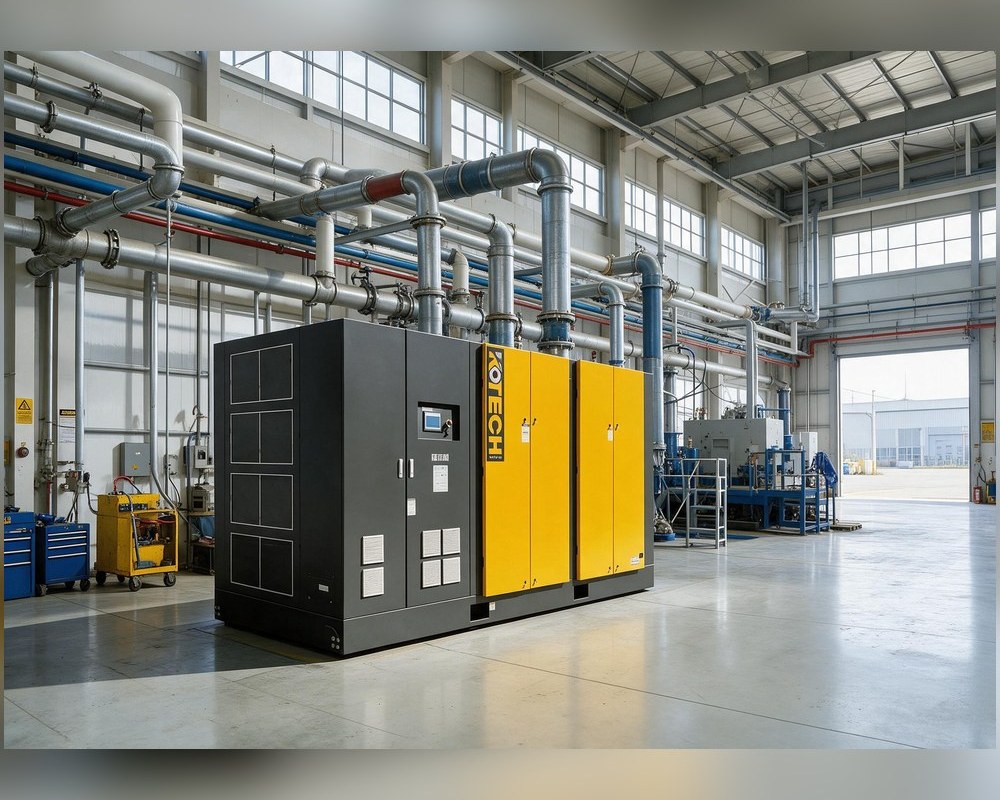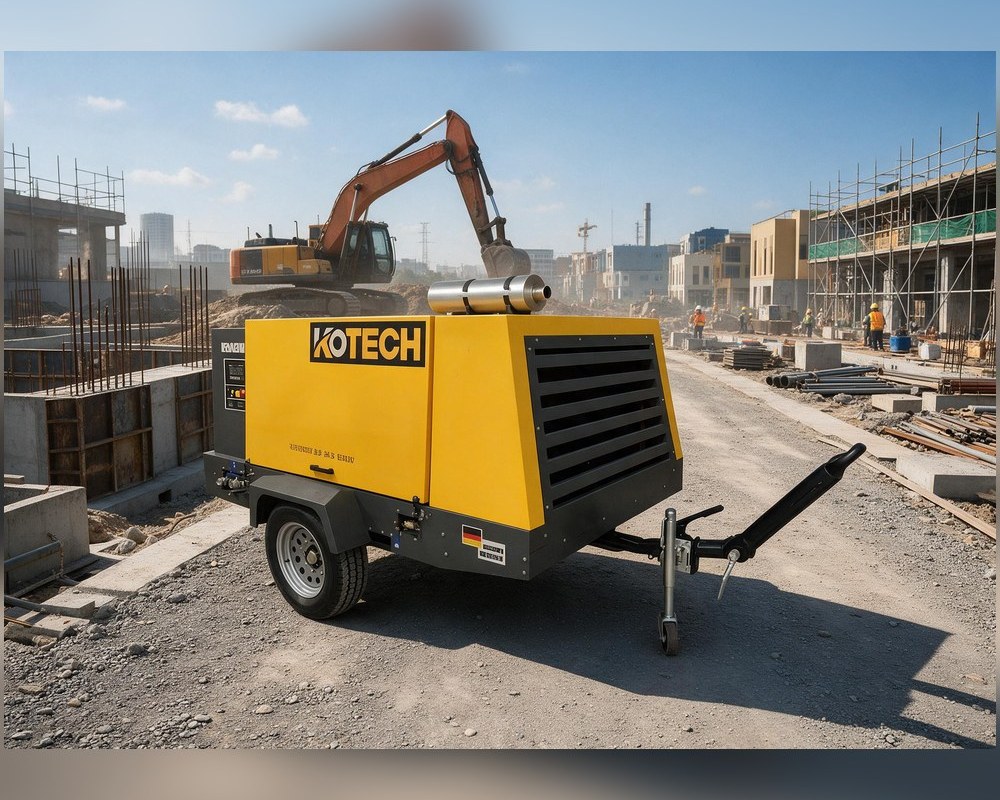




Most of the electricity a screw air compressor draws does not leave as compressed air. It ends up as heat that, in an unoptimized plant, gets thrown straight outside. Capturing that waste heat is one of the few efficiency upgrades that pays for itself without touching production. Air compressor heat recovery turns a running cost into hot water and warm air you are already paying to generate elsewhere.
Where the energy actually goes
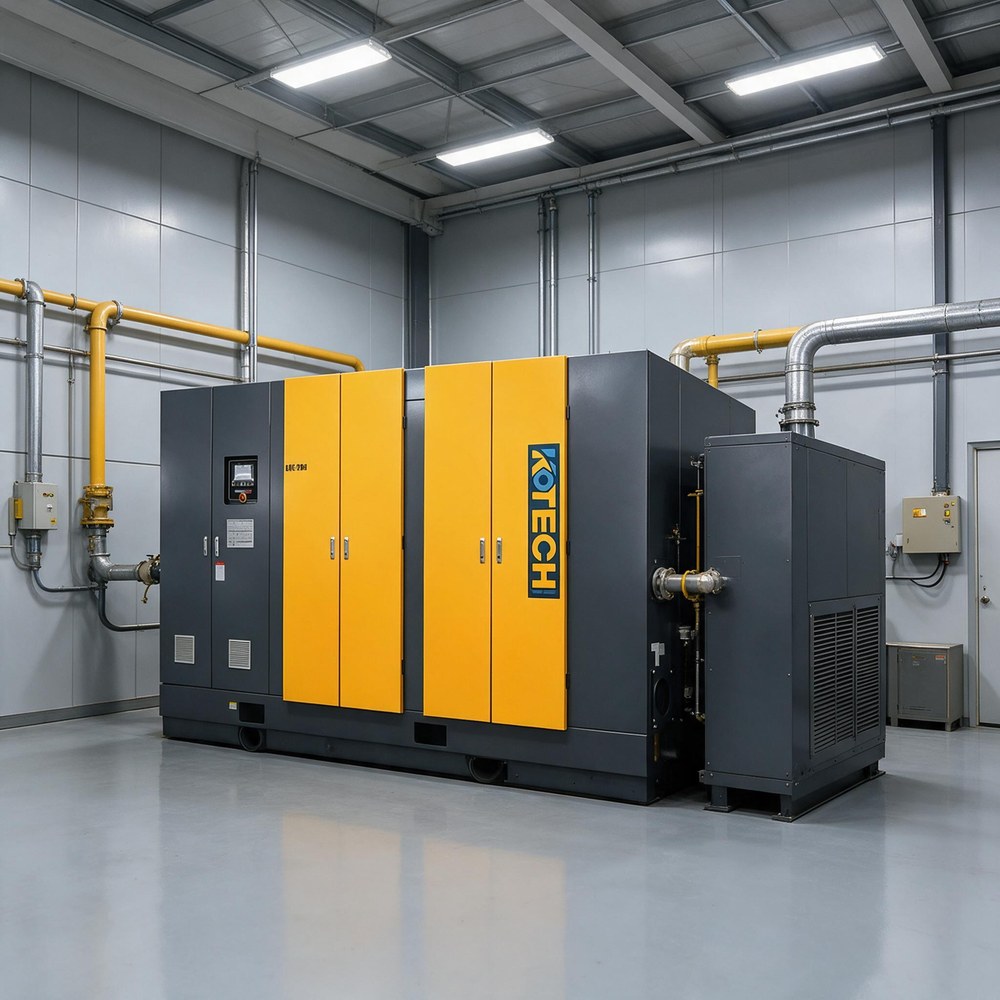
A rotary screw compressor is, thermodynamically, closer to a heater that also makes compressed air. Of the electrical energy going into the machine, only a small fraction is stored in the compressed air itself. The overwhelming majority is converted to heat — through compression, friction in the air end, the oil circuit and the cooler.
On a standard machine without recovery, that heat is rejected by the cooling system into the ambient air and lost. With a heat-recovery system, the same energy is intercepted in the oil or compressed-air circuit and diverted to a useful load before it is wasted. The compressor behaves identically; you are simply collecting heat that was already being produced.
What heat recovery actually is
Heat recovery (sometimes called energy or heat reclaim) adds a heat exchanger to the compressor’s oil or air circuit. The hot oil or compressed air transfers its energy to a water or air circuit feeding a real demand — process hot water, washdown, space heating or boiler pre-heat.
The key engineering point is that recovery does not change how the compressor produces air. A thermostatically controlled circuit only harvests heat when there is somewhere for it to go, and falls back to the standard cooler when there is not, so the machine is never allowed to overheat.
- Oil-to-water recovery: the highest-yield option, producing hot water from the compressor’s oil circuit.
- Oil-to-air recovery: ducting the rejected heat for space heating in cooler months.
- Pre-heat loops: raising the inlet temperature to a boiler or process to cut fuel use.
- Control logic: priority to the recovery load, automatic bypass back to the standard cooler.
Where recovered heat is genuinely useful
The economics work when there is a steady demand that overlaps the compressor’s running hours. Industrial sites routinely use recovered heat for sanitation and CIP hot water, boiler make-up water pre-heating, space heating of workshops and warehouses, process water, and heating in staff facilities.
The mistake that kills a project is sizing recovery against an occasional load that is not there when the compressor runs. The heat has to be used in real time or buffered, so the demand profile — not just the compressor nameplate — sets the opportunity.
Real KOTECH stationary models suited to heat recovery
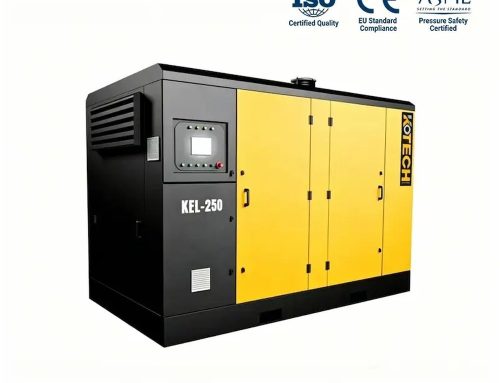
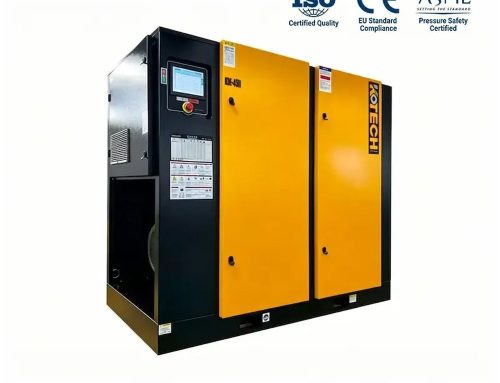
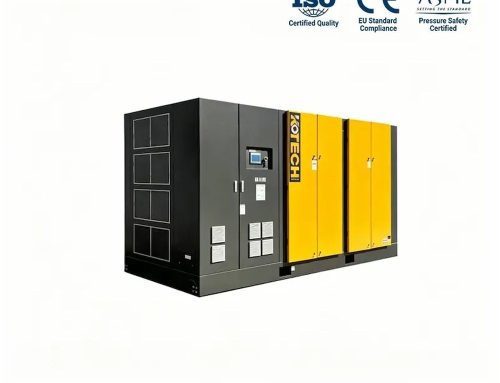
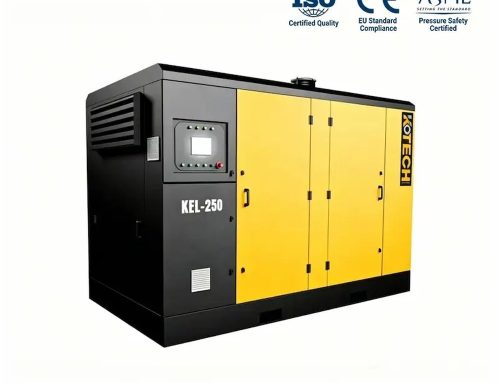
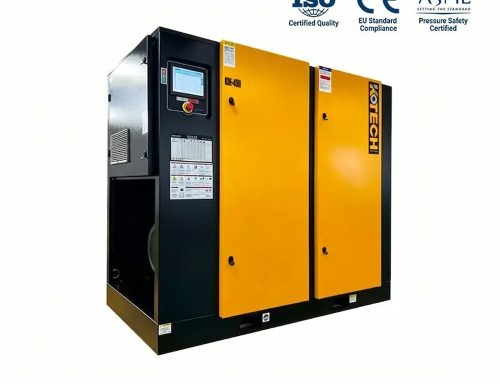
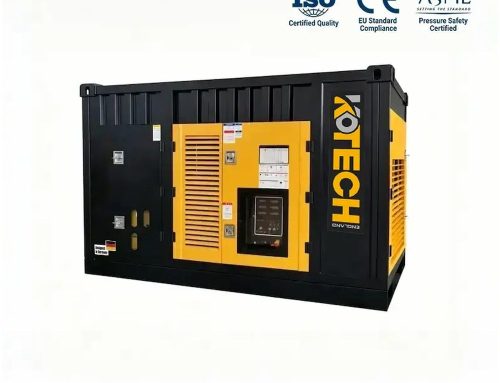
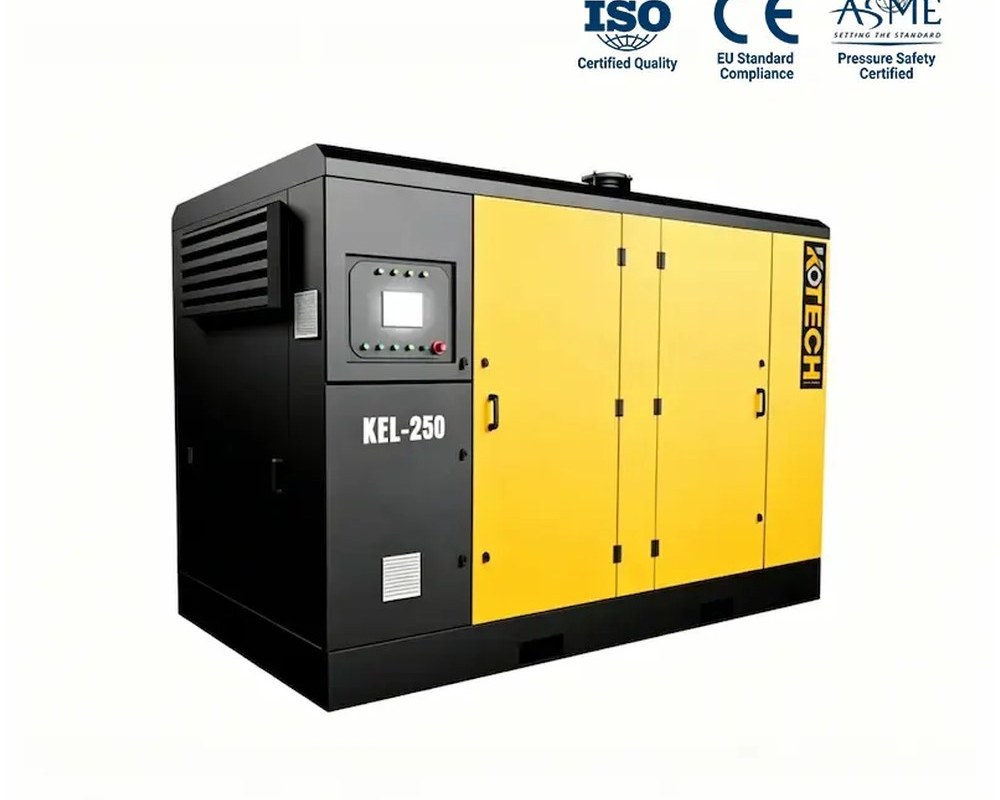
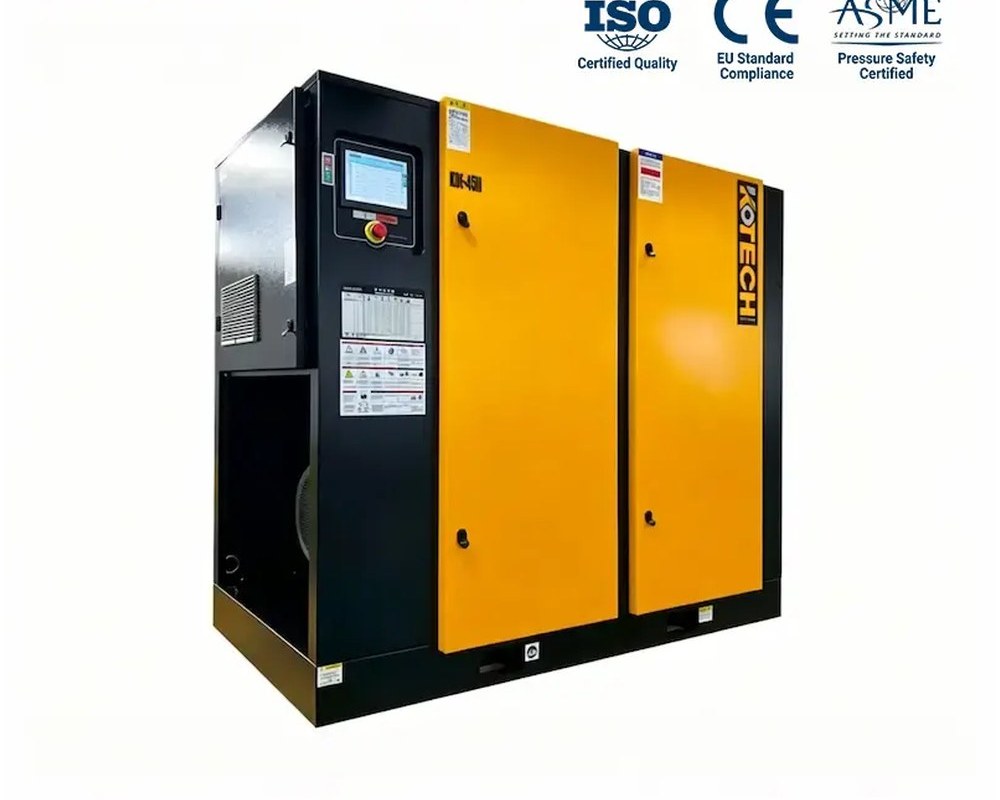
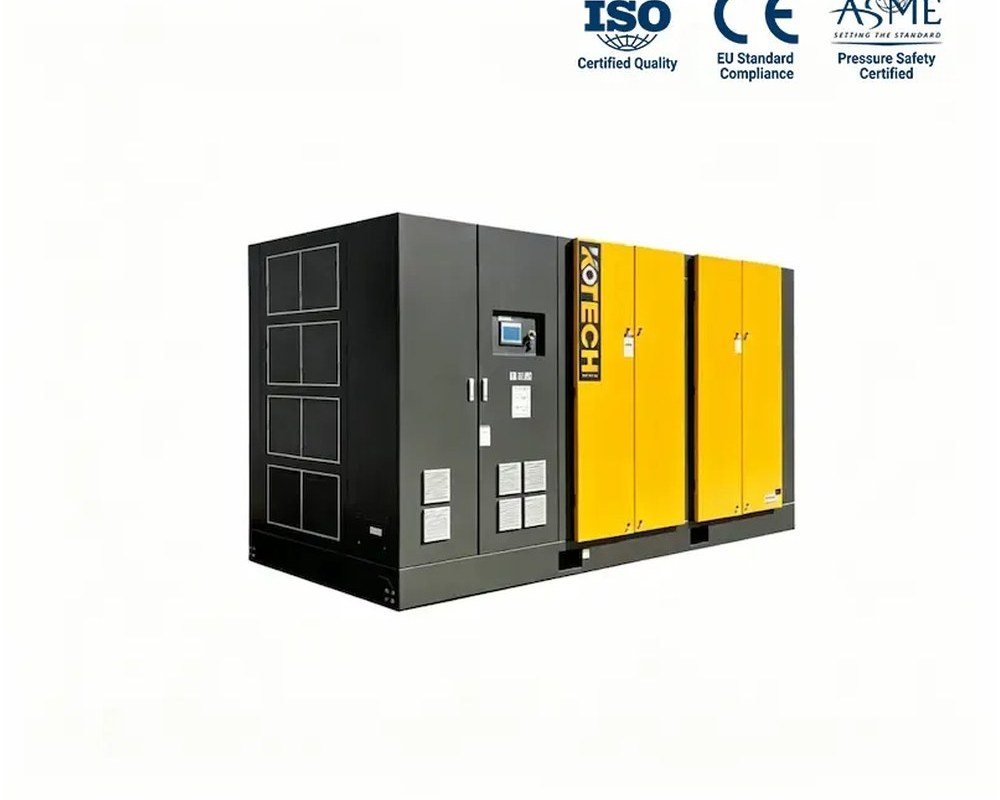
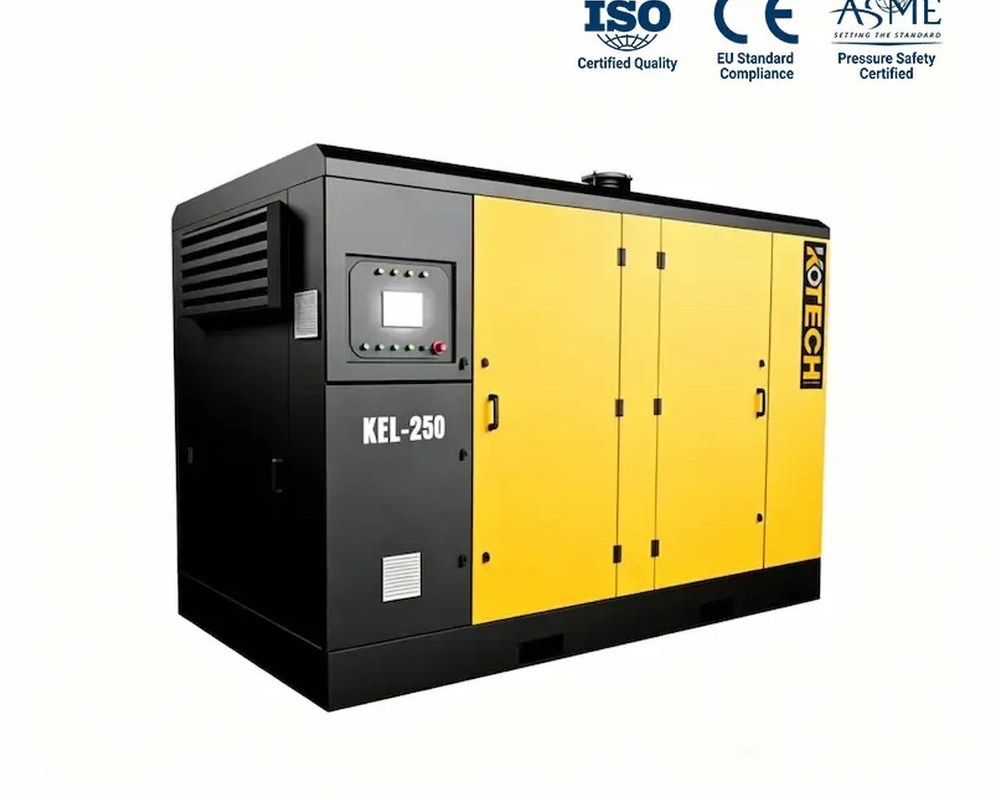
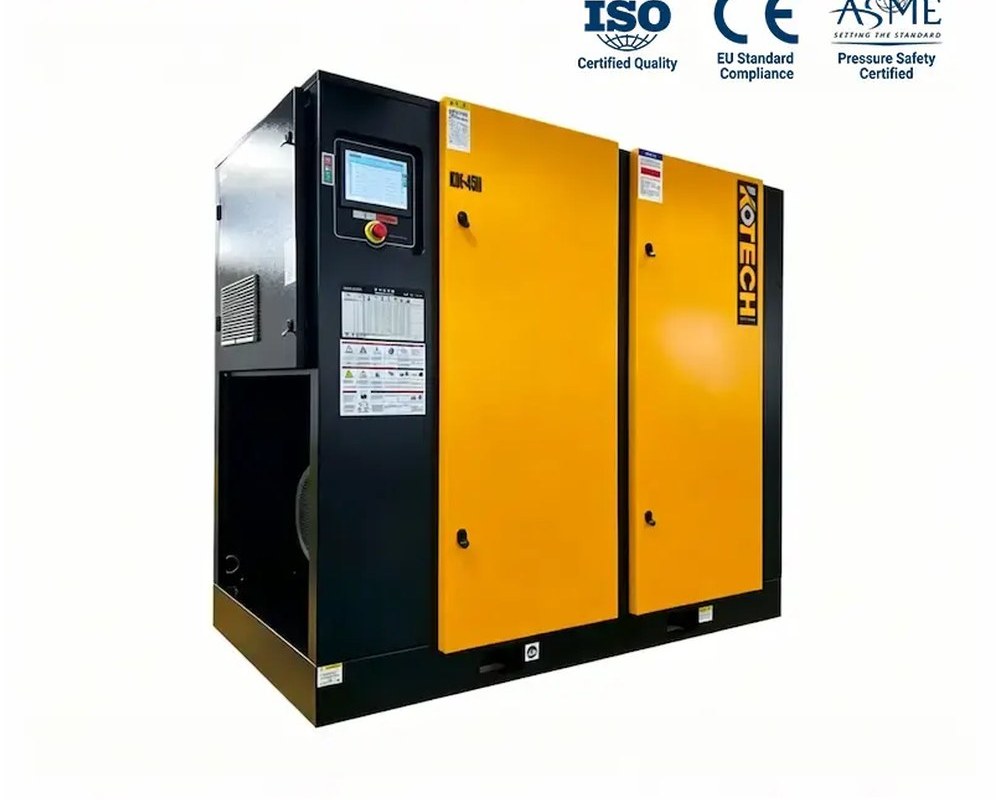
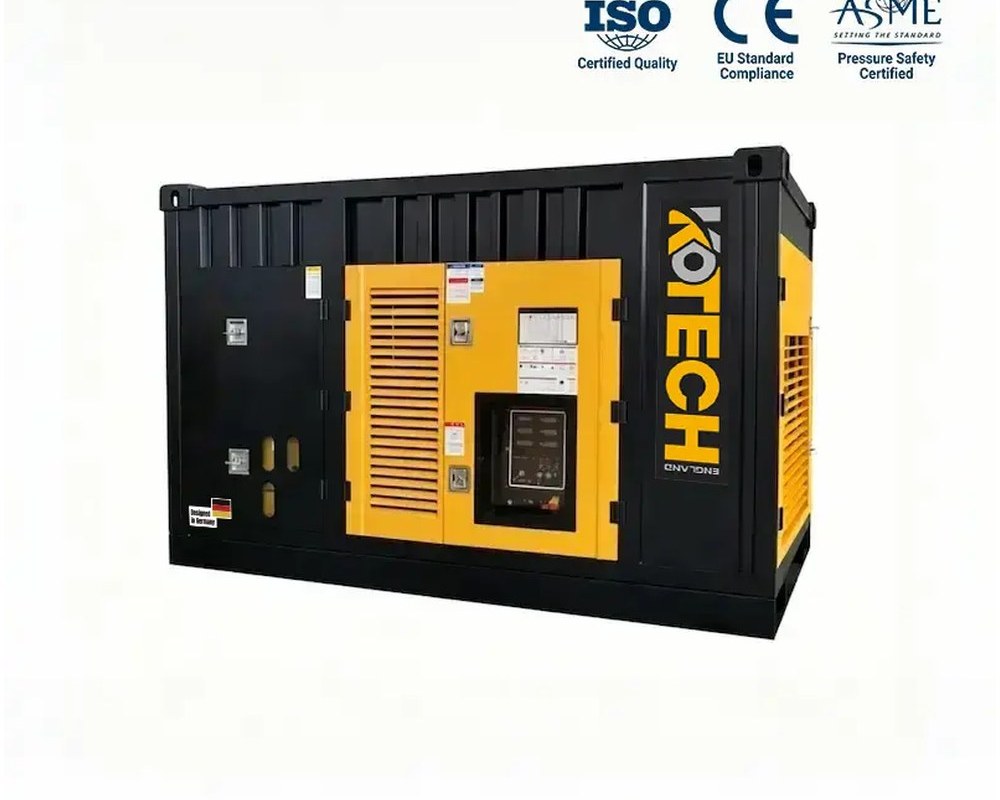
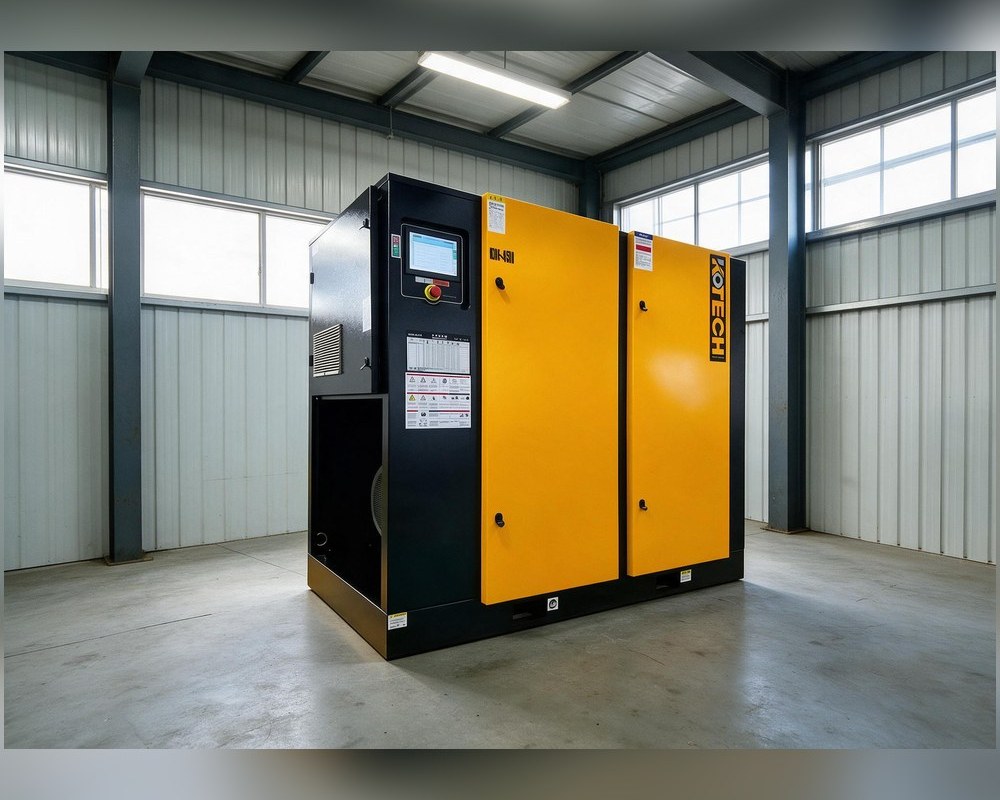
Factory models straight from the product specification. The model number reflects the motor power, which sets the scale of recoverable heat. Every unit is a stationary electric screw package.
Stationary KOTECH screw packages from 37 to 220 kW give a clear sense of scale: the larger and longer the machine runs, the more recoverable heat is available across a year. Select the compressor for the air demand first, then match the recovery exchanger to both the machine and the heating load.
Estimating savings and payback
The savings are the fuel or electricity you no longer buy to produce the same heat. In practice a well-applied system can recover a large share of the input energy when a matching load exists, which is why payback on plants with continuous hot-water demand is often measured in months rather than years.
- Base it on run hours: recoverable energy scales with loaded operating hours, not installed capacity alone.
- Count the displaced fuel: converting recovered heat into the gas or kWh you stop buying gives the real saving.
- Match the load: a steady baseload hot-water demand is more valuable than intermittent heating.
- Include the buffer: a storage tank lets you capture heat even when demand is not instantaneous.
- Don’t double-count: recovered heat replaces a heater; it does not reduce the compressed-air bill itself.
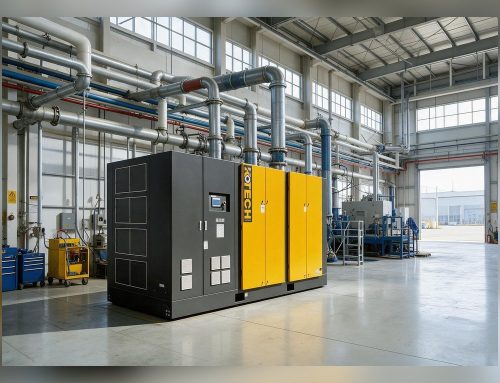
Making it work in a real plant
Recovery is a permanent installation, so it should be designed alongside the compressor rather than bolted on.
- Position the compressor and exchanger with room for the water circuit, ducting and service access.
- Use a thermostatic priority circuit and automatic bypass to protect the compressor from overheating.
- Pipe to a real or buffered load and insulate runs so captured heat is not lost on the way.
- Plan maintenance so the exchanger and thermostats are checked with the normal compressor service.
- In hot climates, ensure reclaim does not fight the cooling system when there is no heating load.
Buying tips
- Start from a real heating load. Audit hot water and space-heating demand and its timing before specifying recovery.
- Size to the compressor’s real run hours. A large machine on light duty recovers less than a smaller one that is loaded all shift.
- Buffer where you can. A hot-water tank captures heat that would otherwise be wasted between demands.
- Protect production first. Recovery must bypass to the standard cooler so air supply and machine safety are never compromised.
- Calculate payback on displaced fuel. The project value is the heating energy you stop buying, not a theoretical percentage.
Frequently asked questions
How much energy can you really recover from an air compressor?
Does heat recovery make the compressor use less electricity for making air?
Is water or air heat recovery better?
Will a heat-recovery system make the compressor overheat?
How long does heat recovery take to pay back?
Tell us your compressor model, loaded run hours and hot-water or heating demand. We will design a heat-recovery loop matched to the actual recoverable load and payback, not an oversized kit.