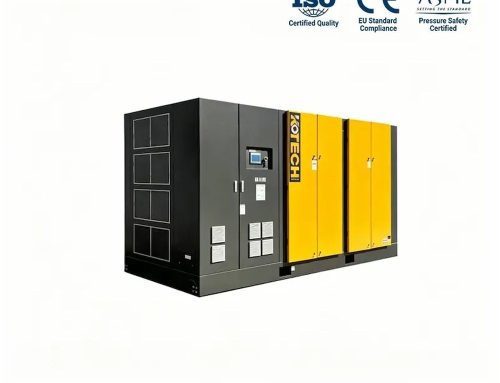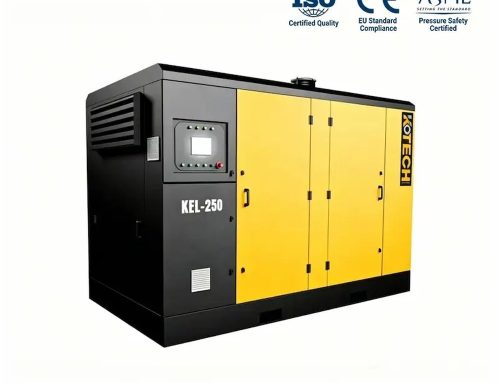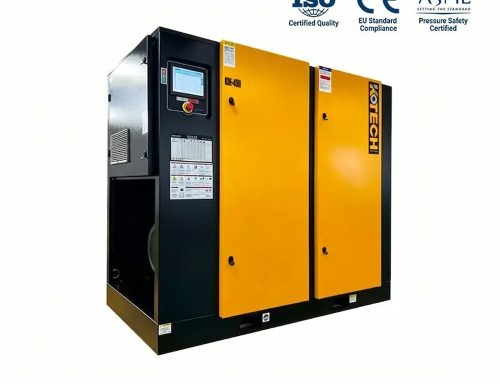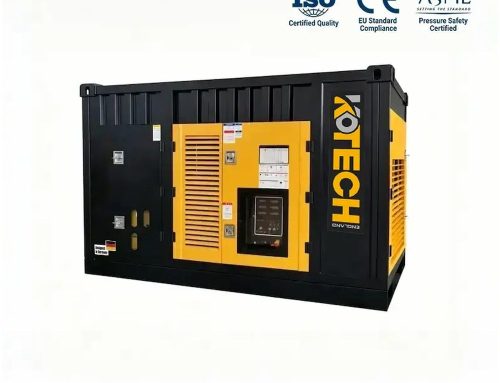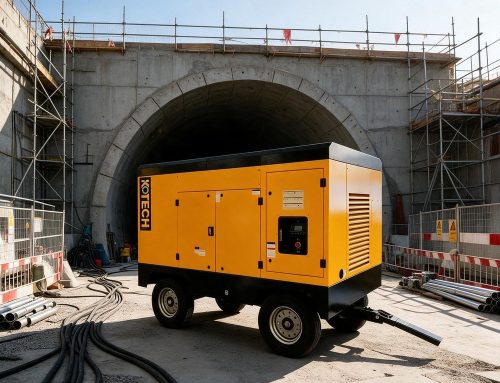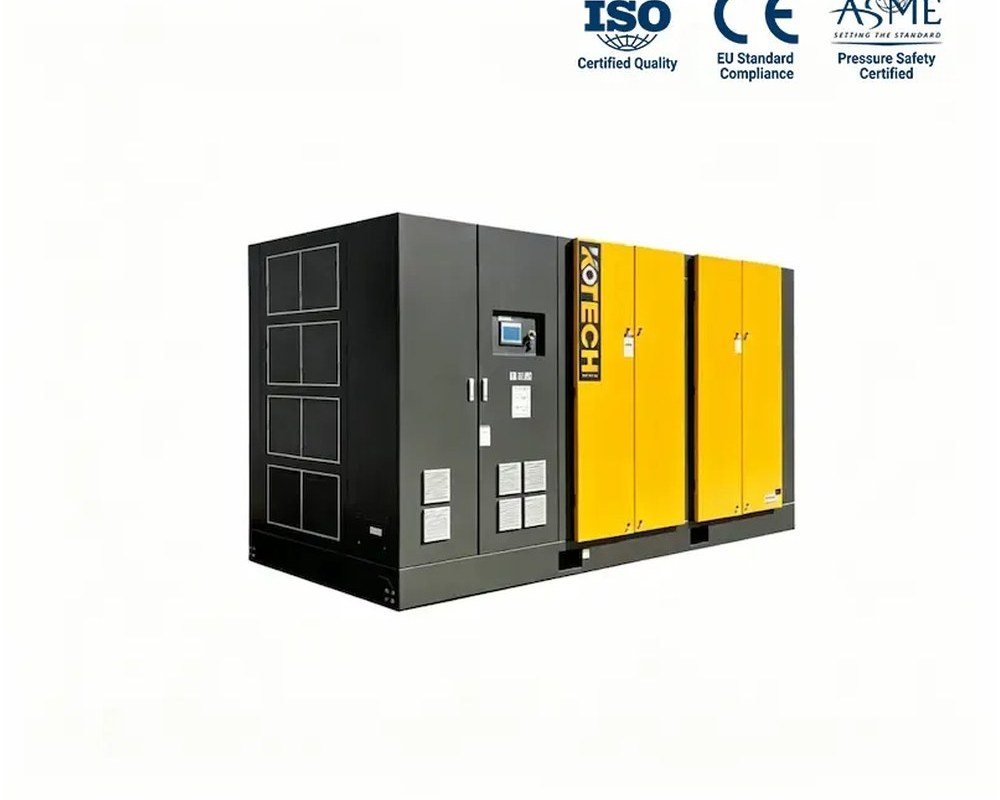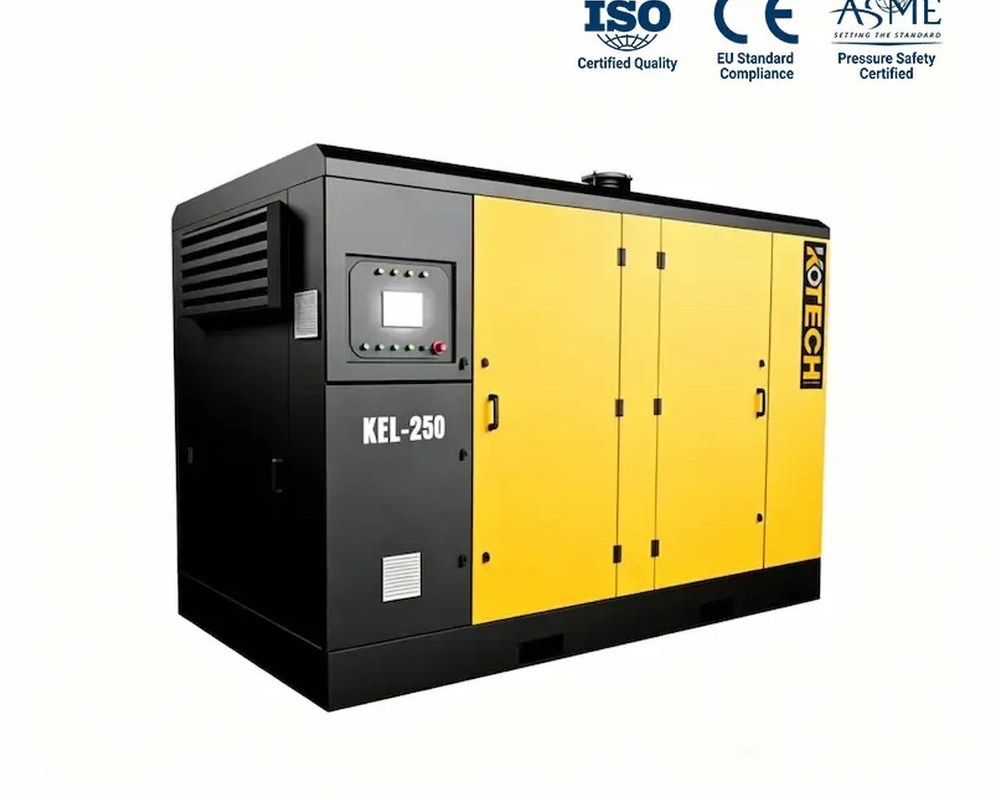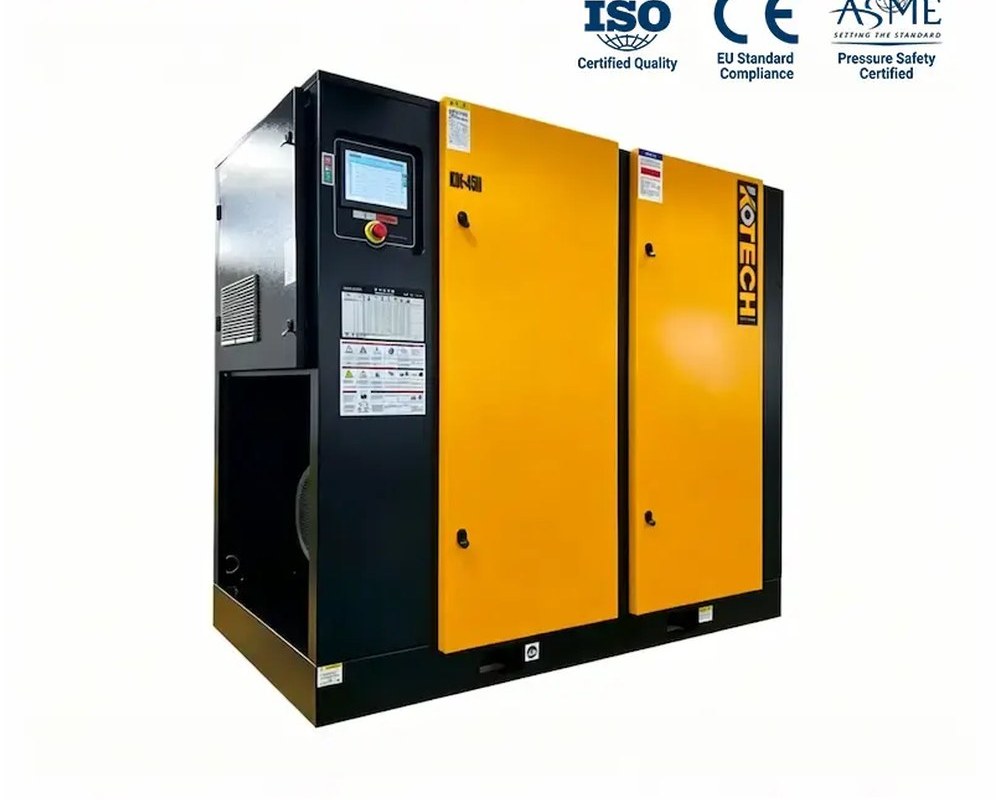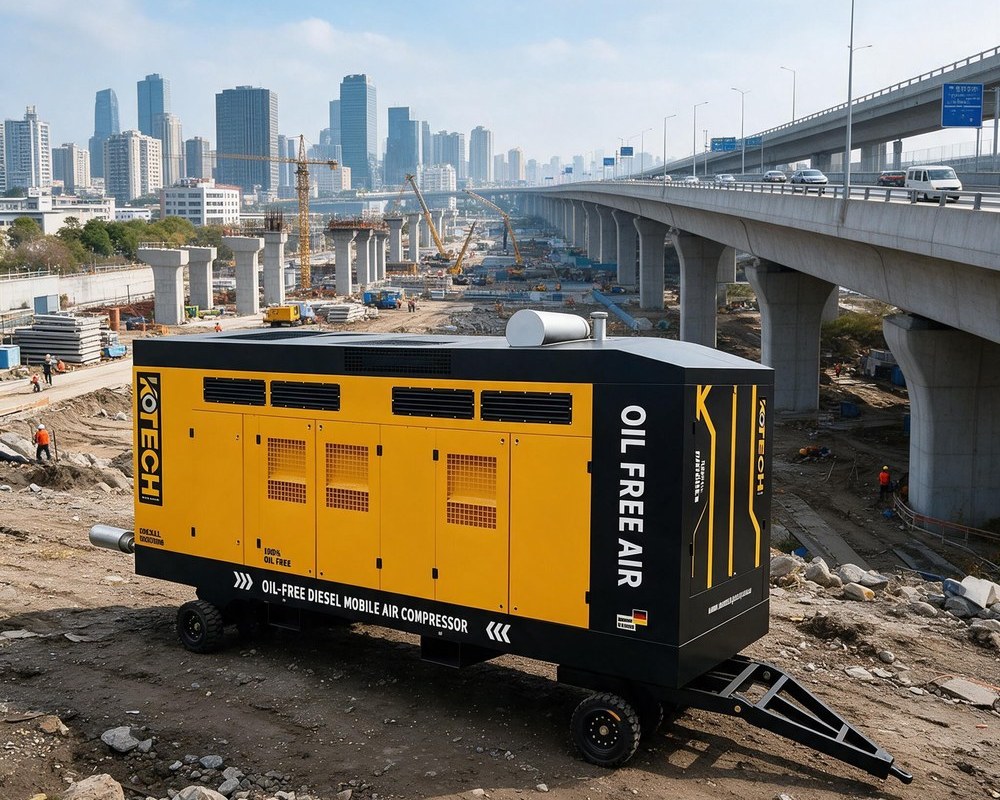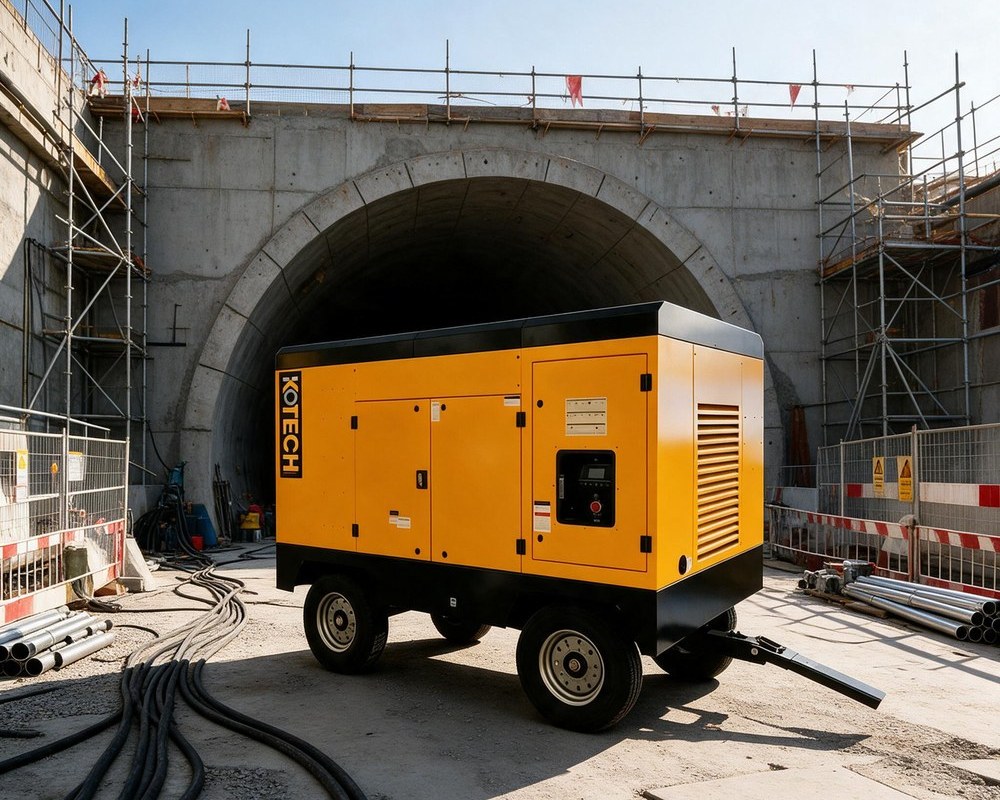




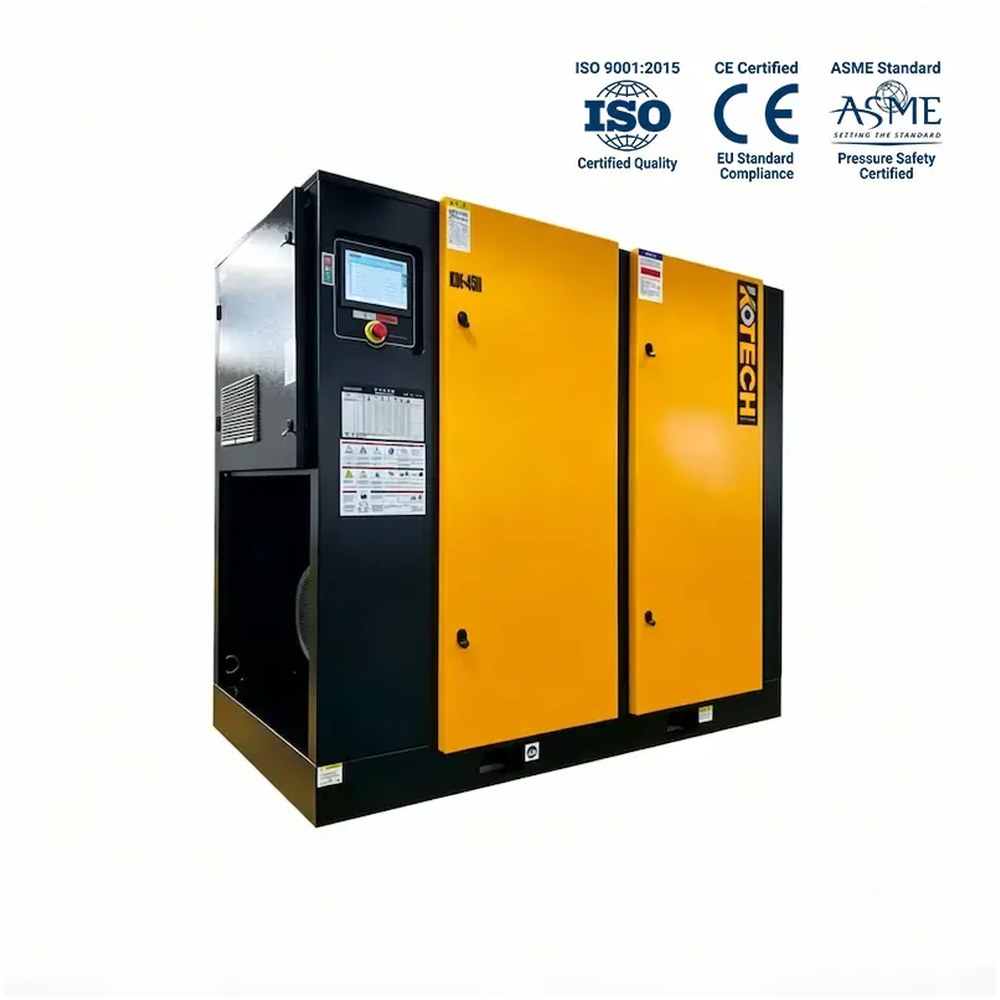
A food and beverage plant sits on two energy loads that rarely line up: a compressed-air demand that swings with batch production, packaging and cleaning cycles, and a steady appetite for hot water for clean-in-place (CIP) washing, sanitation and staff facilities. A permanent-magnet variable-speed screw compressor solves the first by producing only the air actually needed, and when fitted with heat recovery it turns the energy that would otherwise be thrown off as waste heat into a useful contribution to the second. This guide explains how to size a PM VSD screw compressor with heat recovery for food-plant CIP duty, with real KOTECH KOE figures.
Why food-plant air demand is variable
Few industries swing as hard as food processing. A packaging line may run at full air demand for a shift, then stop during changeover while mixing, filling and cleaning equipment cycles on a different schedule elsewhere in the plant. Pneumatic actuators, fillers, labellers and conveying all draw air, but rarely at a constant total. A fixed-speed compressor responding to that profile spends much of its time idling, loading and unloading, or venting air it has already compressed, which wastes the energy used to make it.
A permanent-magnet variable-speed drive changes motor and air-end speed to track demand, so delivery closely matches what the plant is pulling. Because the compressor no longer over-produces during the troughs, the kilowatt-hours per unit of delivered air fall, and starting and stopping are gentler on the machine. In a plant whose production follows batches and shifts rather than a flat 24-hour line, that match is exactly where the savings are.
Turning waste heat into CIP pre-heating
Compressing air produces heat, and in a conventional installation that heat leaves through the oil cooler and after-cooler into the atmosphere. Heat-recovery packages intercept it instead, usually through a heat-exchange circuit on the oil system, and use it to raise the temperature of water. The recovered water is not hot enough to replace a boiler at the highest CIP temperatures on its own, but it is well suited to pre-heating the cold feed, which means the boiler or steam system has far less work to do.
For a food plant this is a rare alignment: the same cleaning cycles that lower air demand often create the hot-water demand, and CIP systems consume large volumes of water at controlled temperatures several times a day. Pre-heating that water with compressor heat reduces fuel or steam use while cutting the heat rejected into the plant room, which can also reduce cooling and ventilation loads in summer.
- Variable-speed output matches the swings of batch processing, packaging and changeover periods.
- Recovered oil heat pre-heats CIP and sanitation water, reducing boiler or steam energy.
- Lower heat rejection into the plant room eases ventilation and cooling loads.
- Pair the compressor with food-grade dryers and filtration where air contacts product or packaging.
Real KOTECH KOE PM VSD specifications
Current factory figures from the KOTECH product page. Free-air delivery is a variable-speed range that changes with pressure; values shown are at 10 bar.
The flow figures are ranges because a VSD machine turns down as demand falls. Read the 10 bar band as the operating envelope; a correctly sized compressor should run comfortably inside it at average demand, with headroom for peaks, rather than sitting at maximum speed all day.
Sizing the compressor and the heat-recovery loop
Size the compressor from a measured demand profile if possible. Log airflow or current over at least a week that includes production, changeover and cleaning shifts, then select a VSD frame whose mid-range output sits near the average and whose maximum clears the peaks. Avoid the common mistake of sizing only for the largest instantaneous load, which leaves a VSD machine running at very low speed for long periods and weakens the efficiency case. Where demand is very wide, a small VSD trim machine alongside a base unit tracks the swing better than one oversized compressor.
The heat-recovery side is sized from the water circuit, not the compressor alone. Establish the CIP tank volumes, target pre-heat temperature, fill frequency and the cold-water temperature, then match an exchanger and storage buffer so recovered heat is stored when the compressor runs and drawn when cleaning begins. A buffer tank matters because compressor running and CIP fills do not always coincide; storing the heat captures energy that would otherwise be lost in the gap.
Air quality and integration in a food facility
Where compressed air contacts product, packaging or surfaces that touch food, air treatment is part of the specification rather than an accessory. Appropriate drying and filtration keep moisture and particulates out of fillers and packaging equipment, and an oil-free or suitably treated supply may be required for direct-contact lines. The compressor room should also allow clean intake air and good service access, which protects both air quality and the heat-recovery exchanger.
Integration is straightforward where the plant already runs hot-water circuits. The recovery loop ties in as a pre-heat stage ahead of the existing heater, so it never compromises CIP temperature control: if recovered heat is insufficient, the boiler tops up automatically. Controls can log recovered energy, giving the site a measurable figure for the fuel and emissions saved.
Buying tips
- Log a full week of air demand covering production, changeover and CIP shifts before choosing the VSD frame.
- Size near average demand with peak headroom; avoid one compressor that runs at minimum speed for long periods.
- Add a buffer hot-water tank so recovered heat is stored between compressor running and CIP fill times.
- Specify the heat exchanger from CIP volume, target pre-heat and cold-water temperature, not from compressor size alone.
- Include drying and filtration appropriate to any air that contacts food, packaging or contact surfaces.
Frequently asked questions
How does a PM VSD compressor save energy in a food plant?
Can compressor heat really heat CIP water?
What if CIP runs when the compressor is idle?
Which KOE model fits a medium food plant with packaging and CIP?
Is heat recovery worth it on a small compressor?
Does food production require special compressed-air treatment?
Tell KOTECH your food plant’s air-demand pattern, CIP water volumes and target temperatures, and we will size a KOE PM VSD compressor with a matched heat-recovery loop.