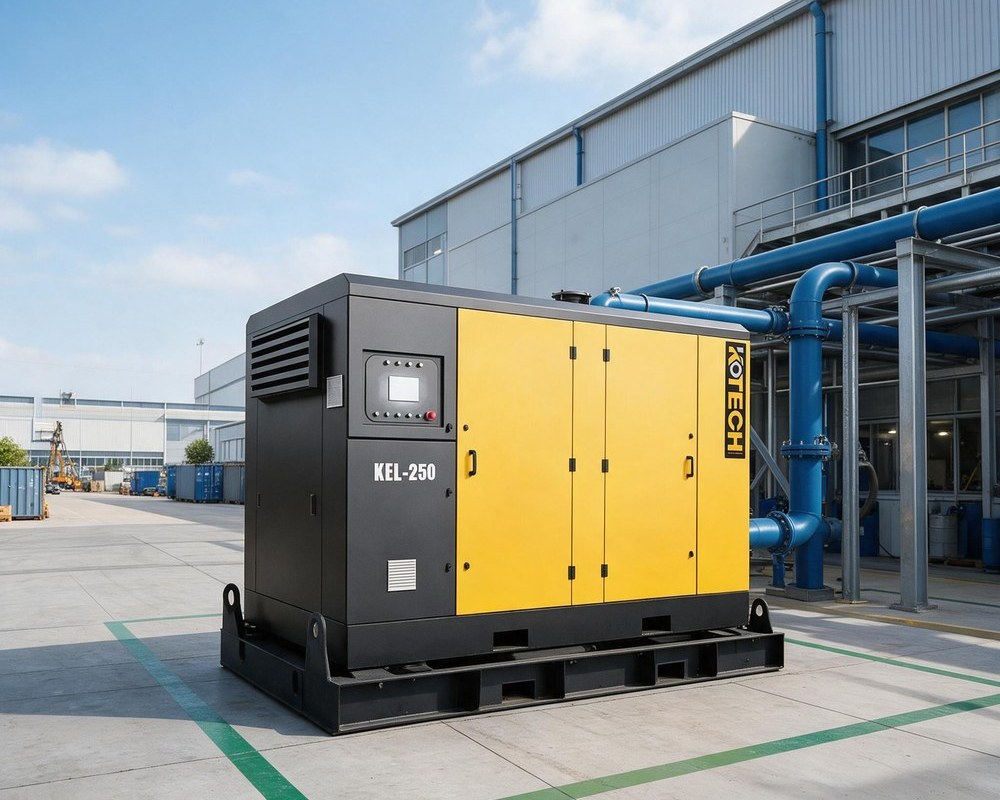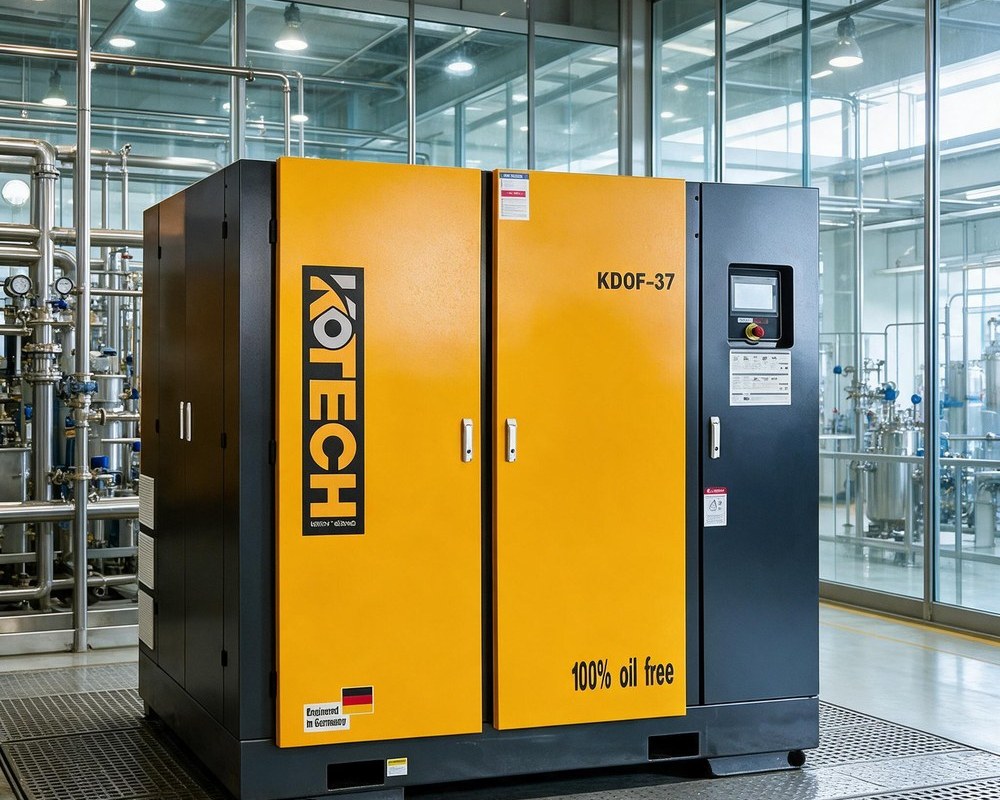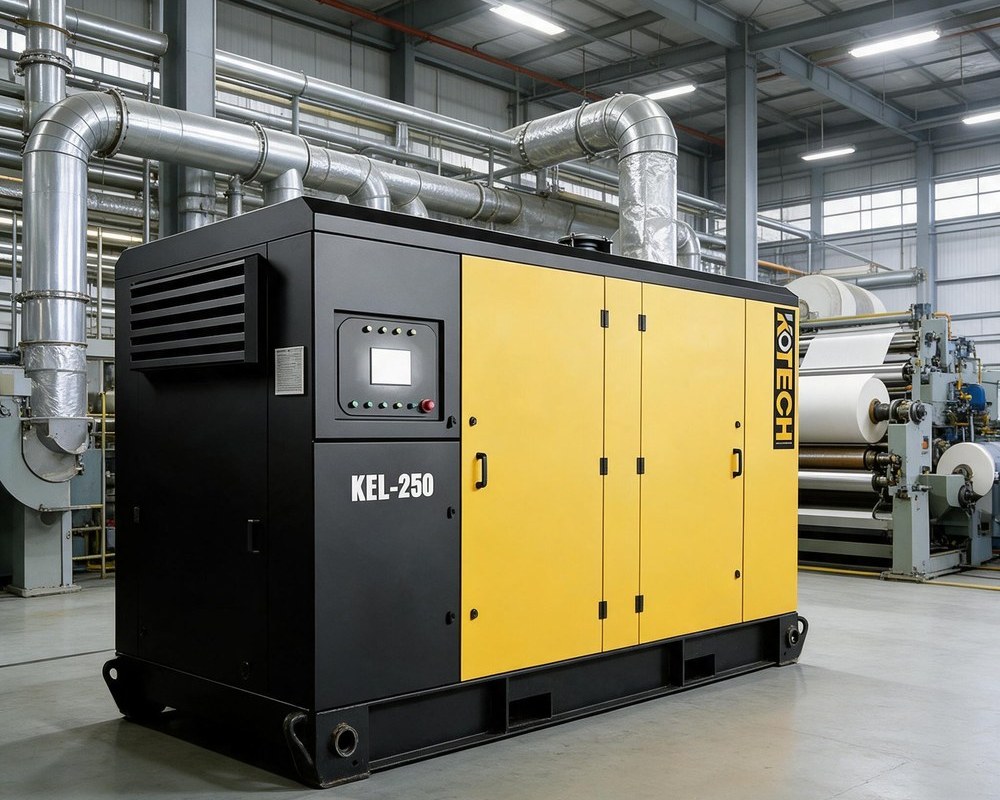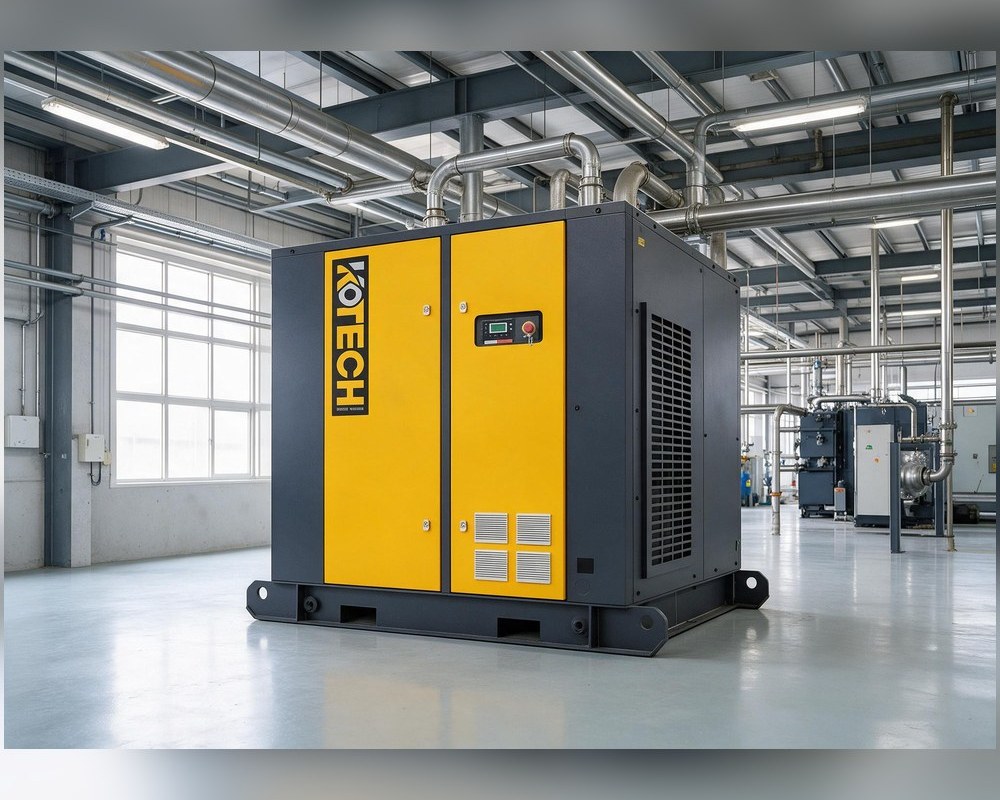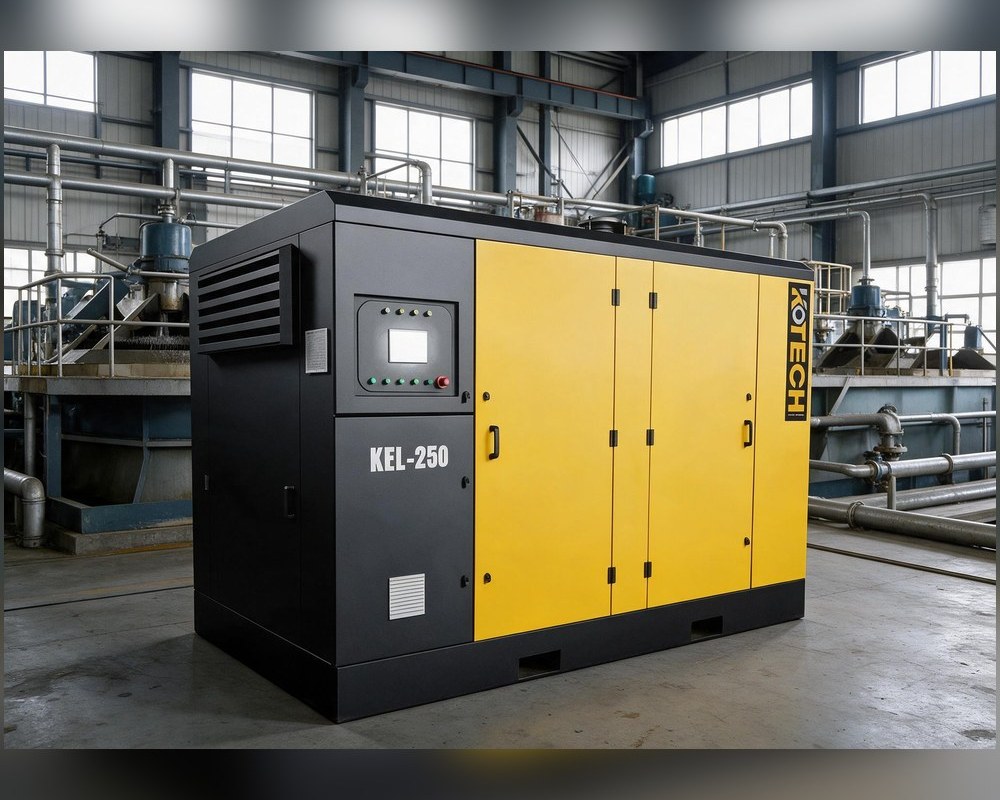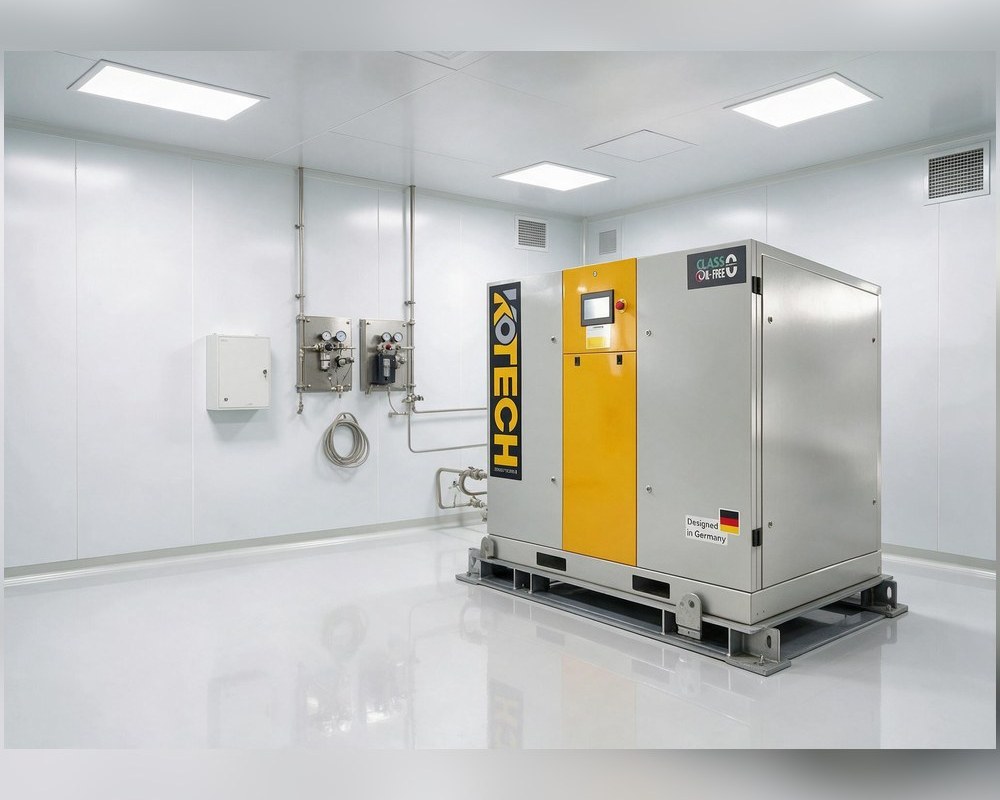




Dilute-phase pneumatic conveying of plastic pellets and regrind is one of the most common compressed-air loads in an extrusion or injection-moulding plant, and also one of the most often over-pressurized. The conveying lines, receivers and vacuum or pressure loaders rarely need more than 3 to 5 bar, but many facilities feed them from an 8 bar general-purpose compressor and throw away the extra pressure as heat and throttle loss. A dedicated low pressure screw compressor, ideally with variable-speed drive to follow the intermittent refill rhythm, cuts that waste at the source while protecting the consistent material flow that quality moulding depends on.

Why resin conveying does not need plant-wide pressure
Pneumatic conveying moves material by maintaining a controlled air velocity in the line, not by maximising pressure. In a typical dilute-phase system the compressor overcomes the resistance of the piping, bends, filters and the material itself, which for short to medium conveying distances lands in the 3 to 5 bar range for pressure systems and well below that for vacuum pickup. Running this load from the main 8 bar header means the compressor works to build pressure the process immediately discards through regulation.
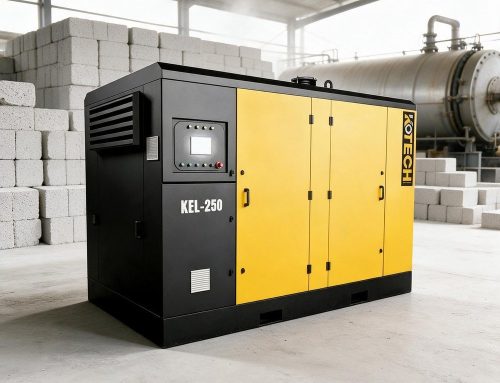
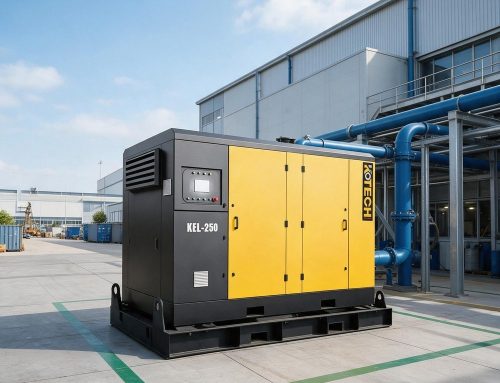
Energy in a screw compressor scales closely with discharge pressure, so every unnecessary bar carries a measurable electricity cost across thousands of operating hours. Separating the conveying load onto a low-pressure machine lets the high-pressure compressor serve the genuinely demanding users, such as moulding machine actuators and high-force cylinders, while the conveying air is produced at the pressure it actually needs. The KEL low-pressure range is purpose-built for this 1.5 to 5.5 bar window rather than being a standard machine deliberately throttled down.
- Conveying depends on air velocity and line resistance, not maximum pressure
- Most dilute-phase resin systems run within a 3 to 5 bar envelope
- Every extra bar of discharge pressure adds avoidable energy cost
- Separating loads lets each compressor run near its efficient design point
Sizing the compressor to the conveying network
Correct sizing begins with the conveying line chart rather than the compressor catalogue. Establish the target solids-to-air ratio, the bulk density of the resin, the horizontal and vertical conveying distance, the number of bends and flexible hoses, and the pick-up velocity required to keep pellets suspended without generating fines. These determine a volumetric air demand in cubic metres per minute and a pressure at the compressor outlet, which together define the machine.
The KEL low-pressure screw range spans the practical window for plastics conveying, with working pressures of 3, 4 and 5 bar across VSD frames from 37 to 75 kW and free-air delivery that modulates with speed, for example the KEL-37 frame covering roughly 5.5 to 11 m³/min at 3 bar and the larger KEL-75 frame reaching around 18 to 23 m³/min depending on pressure. Because conveying is intermittent, the variable-speed drive is especially valuable: it turns output down between refill cycles instead of loading and unloading, and a receiver smooths the short peaks when several receivers fill in sequence so the air end is not upsized purely for transient demand.
- Calculate volumetric demand from line layout, distance, bends and material density
- Match outlet pressure to the real 3 to 5 bar requirement, not the plant header
- Use VSD turndown and a receiver to handle intermittent refill cycles without upsizing
- Leave modest headroom but avoid gross oversizing that lowers efficiency
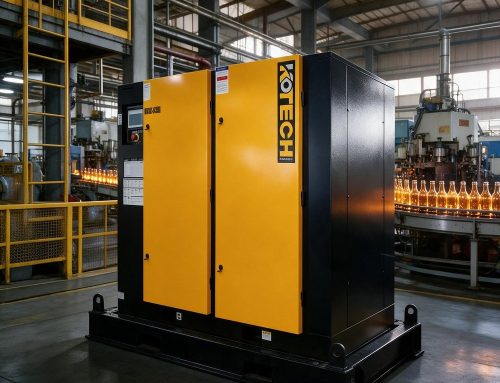
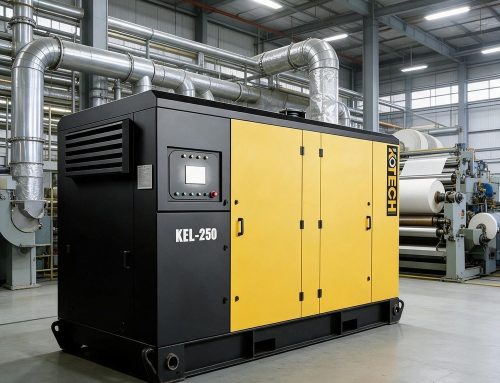
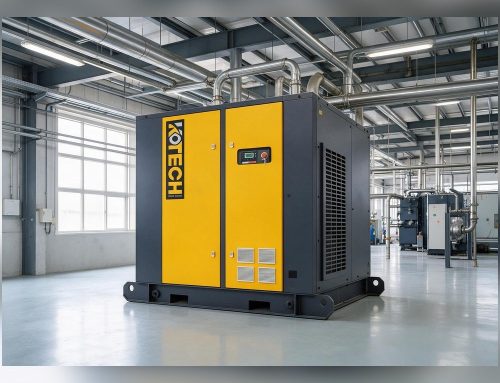
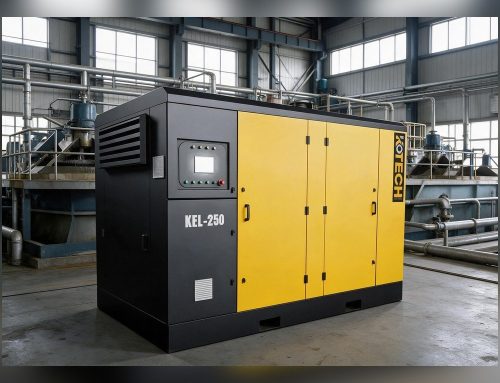
Real KOTECH KEL low-pressure VSD screw compressor models
Live product-page data for the 3 to 5 bar low-pressure VSD range used in conveying duties.
The KEL figures below are taken from the current product-page table, with the variable-speed free-air-delivery range shown for each pressure rating. The three pressure points within the range let the same machine family be matched precisely to the conveying pressure, which is the core of the energy saving.
Energy and material-quality benefits
The direct benefit is lower specific energy. Producing air at 4 bar instead of 8 bar for a conveying duty removes the compression work associated with the unused pressure band, and because conveying often runs for long shifts in a plastics plant the annual saving accumulates quickly. A variable-speed low-pressure machine further trims use during the gaps between refill cycles, when a fixed-speed unit would still consume a large share of full-load power while unloaded.
There is also a quality argument. Overly high conveying velocity, often the result of excess pressure, generates streamers, fines and angel hair that contaminate pellets, block filters and degrade the finished moulding. A correctly sized low-pressure compressor with smooth speed control keeps velocity inside the gentle window that protects both the material and the pipeline, reducing waste and the housekeeping burden on receivers and dust collectors.
- Lower discharge pressure cuts the specific energy of a long-running load
- VSD control removes unloaded-running waste during intermittent conveying
- Controlled velocity reduces fines, streamers and angel hair in the resin
- The high-pressure compressor is freed for genuinely demanding users
Integration and control considerations
Installing a dedicated low-pressure machine is straightforward when the conveying network is treated as its own circuit. Pipe the compressor through its own receiver, dryer and filtration to a low-pressure header that feeds the loaders and receivers, and keep it physically and logically separate from the high-pressure plant air. Interlocks and pressure sensors should hold the low-pressure header at its set point and alarm before a blocked filter or line pushes the machine out of its efficient range.
Because resin conveying is sensitive to moisture, dry and filtered air matters as much as pressure; damp air can cause pellets to bridge and block the line, especially with hygroscopic engineering polymers. Routine maintenance should prioritize the intake filter in dusty regrind areas, the separator and the dryer. Monitoring pressure differential across the conveying filter gives early warning of blockage before it disrupts material supply to the moulding machines, and linking the VSD controller to the conveying automation lets air output track production demand automatically.
- Build a dedicated low-pressure header separate from the 8 bar plant air
- Include a receiver, dryer and filtration sized for the conveying duty
- Use pressure sensors and alarms to keep the circuit in its efficient band
- Watch filter differential pressure to catch blockages before they stop feed
Buying tips
- Define the conveying pressure from the line layout and material, not from the existing plant header.
- Calculate volumetric demand from pick-up velocity, distance, bends and resin bulk density.
- Prefer a VSD low-pressure frame with a receiver to handle intermittent refill cycles without oversizing.
- Keep the low-pressure circuit separate, with its own drying and filtration for moisture control.
- Verify the selected frame’s pressure rating matches the 3, 4 or 5 bar duty rather than defaulting to 8 bar.
Frequently asked questions
What pressure is needed for pneumatic resin conveying?
Can I run resin conveying from my existing 8 bar compressor?
Why choose a variable-speed low-pressure compressor for conveying?
How do I calculate the air demand for a conveying system?
Does lower conveying pressure affect material quality?
If your plastics plant runs resin conveying from an 8 bar header, share your line layout and conveying pressure so a dedicated KEL low-pressure VSD solution and its projected energy saving can be sized for you.