



In a city, the hardest limit on a compressor is often not power, it is noise. Work beside a hospital, school, office block or residential street and local hours, permit conditions and nearby residents decide when the machine may run and how loud it may be. A low-noise portable diesel compressor that still delivers clean, reliable air lets an urban crew keep working through restricted hours. This guide explains what low noise really means and how the KOTECH KDP PACE line fits city sites.
Why noise, not just power, controls an urban job
Urban construction sites sit close to people who did not choose the work. Municipal rules commonly set permitted hours, a maximum sound level at the boundary, and sometimes an even lower level near schools and hospitals. Breaching those limits can bring complaints, stopped work and permit problems that cost far more than the compressor.
Sound is measured on a decibel scale, and distance and barriers reduce it, but a loud source dominates a tight site. On a small urban lot there is little room to move the compressor away from the boundary, so the machine’s own noise level matters more than it would on an open rural job. Two compressors producing the same air can differ noticeably in sound because of the canopy, cooling fan, exhaust and vibration isolation.
A genuinely low-noise package is therefore a productivity tool. It widens the hours a crew can legally run, reduces friction with neighbours, and makes the site a safer, less fatiguing place to work.
What makes a portable compressor low-noise
Noise on a diesel portable comes from three main sources: the engine and its exhaust, the cooling fan, and the compressor element and air intake. A low-noise canopy addresses all of them together rather than adding a single muffler.
An enclosed, acoustically lined cabinet, a well-silenced exhaust, a properly sized and shrouded fan, an isolated air intake and anti-vibration mounts between the package and its frame combine to keep sound in. The doors must seal well and the ventilation path is designed so cooling air can flow without offering noise a straight path out.
Because of this, comparing machines by a single casual impression is unreliable; ask for the rated sound level in dB(A) and the conditions under which it was measured, and keep doors and panels maintained and closed during running.
Matching a KDP PACE compressor to a city site
Urban tools are usually moderate-load and intermittent: breakers, chipping hammers, light drilling, saws and cleaning duties. The package needs to cover the peak when several tools run together while staying compact enough for a constrained yard and quiet enough for permitted hours.
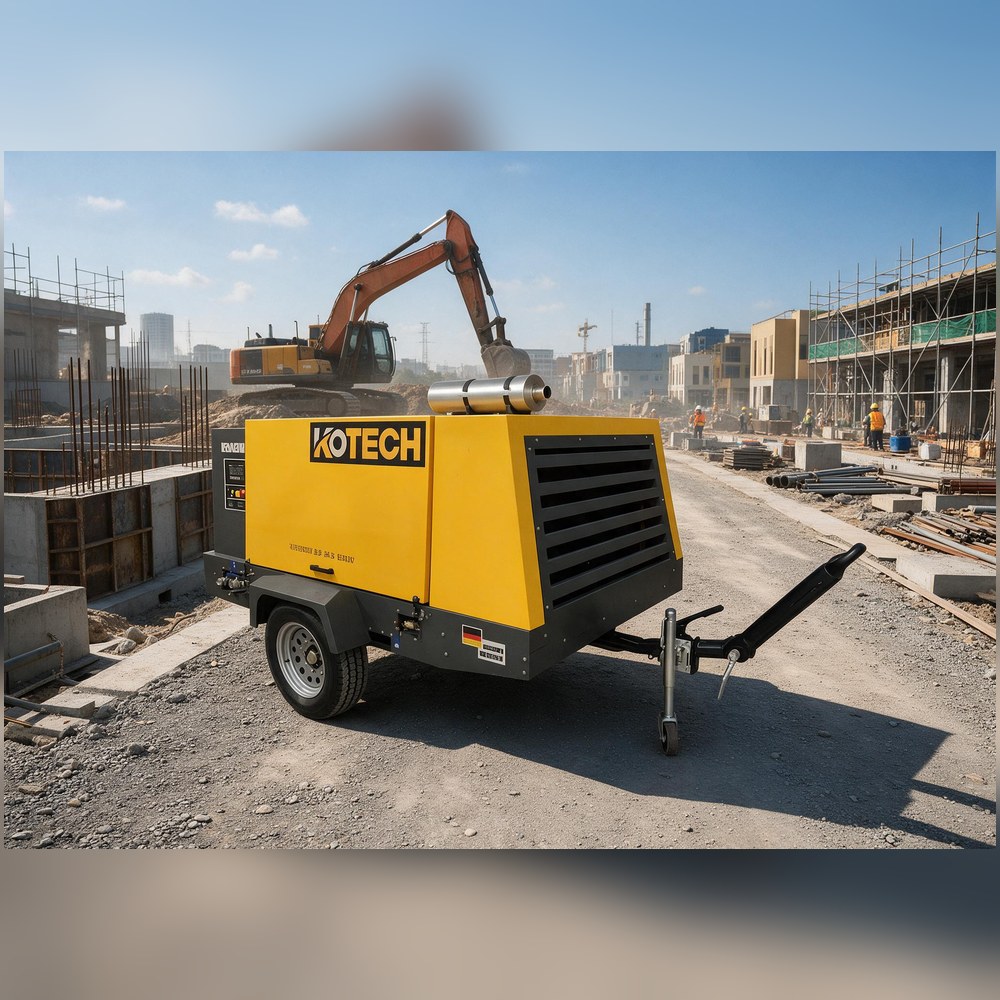
KOTECH KDP PACE compressors are built around this balance. The smaller KDP 70 PACE delivers about 70 CFM at 7 bar with a rated noise level around 66 dB, while the KDP 100 PACE reaches about 88 CFM at 10 bar at roughly 69 dB. For more tools, the KDP 155 PACE and KDP 185 PACE deliver around 102 and 110 CFM at 12 bar with noise about 69 to 75 dB, and the larger KDP 388 PACE extends to roughly 310 CFM for bigger simultaneous loads.
Choose using the combined air demand of the tools realistically run together, then verify the noise level meets the boundary condition at the actual distance and, if needed, add a temporary acoustic screen rather than buying a larger machine than the tools require.
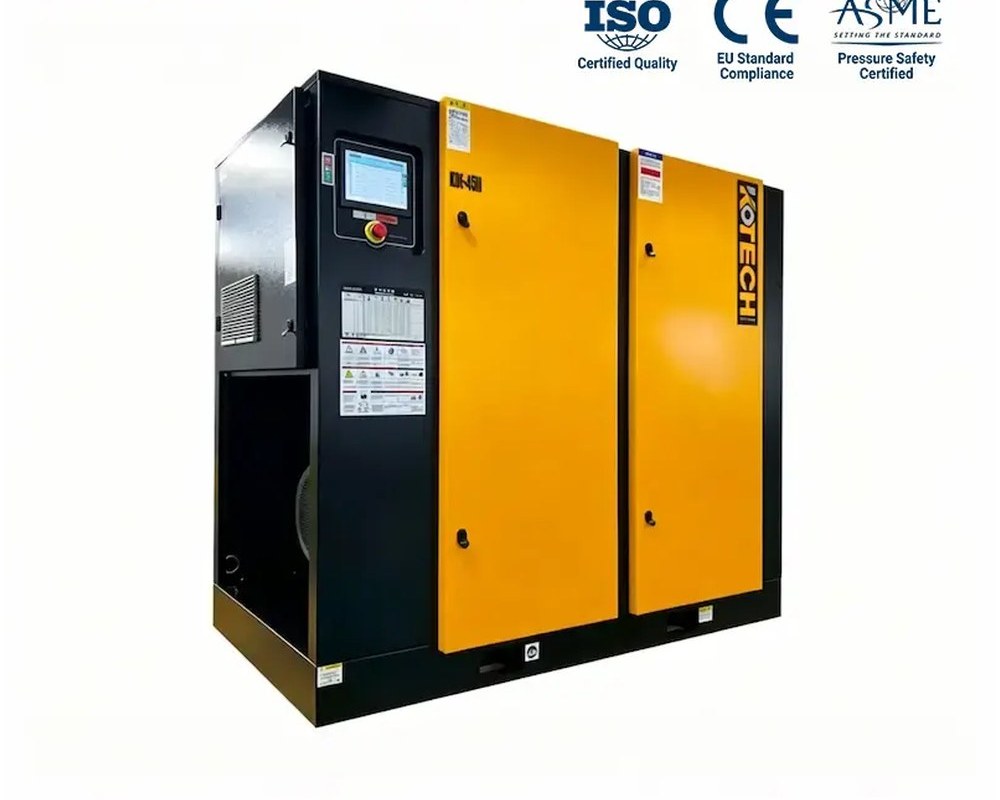
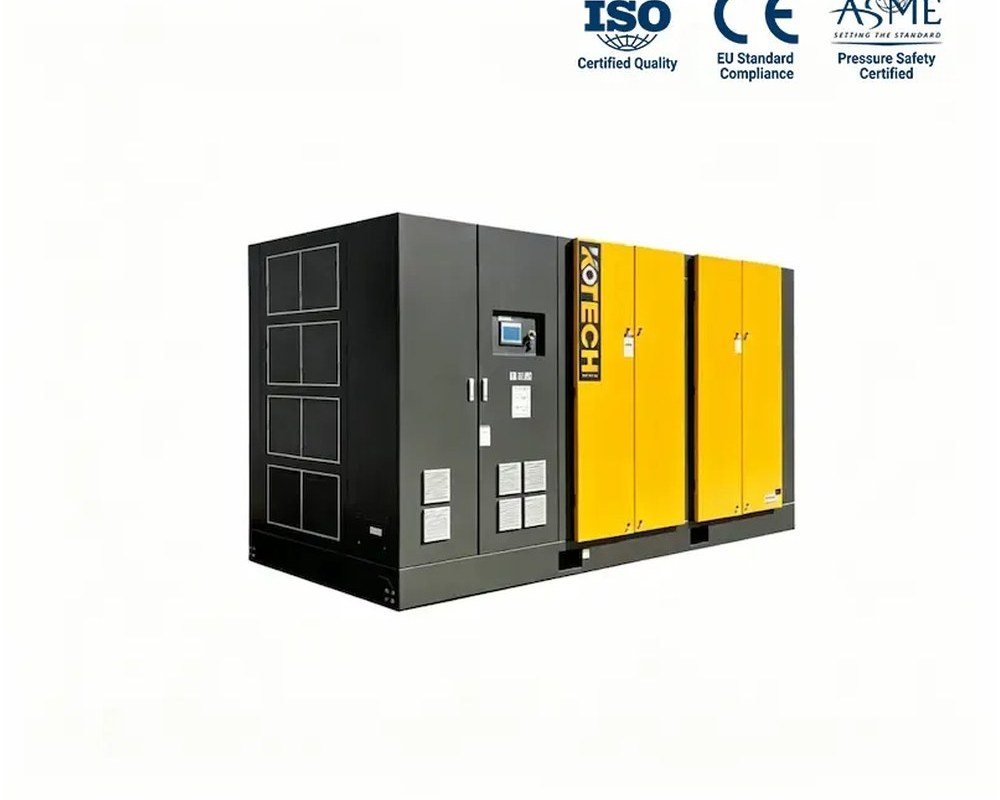
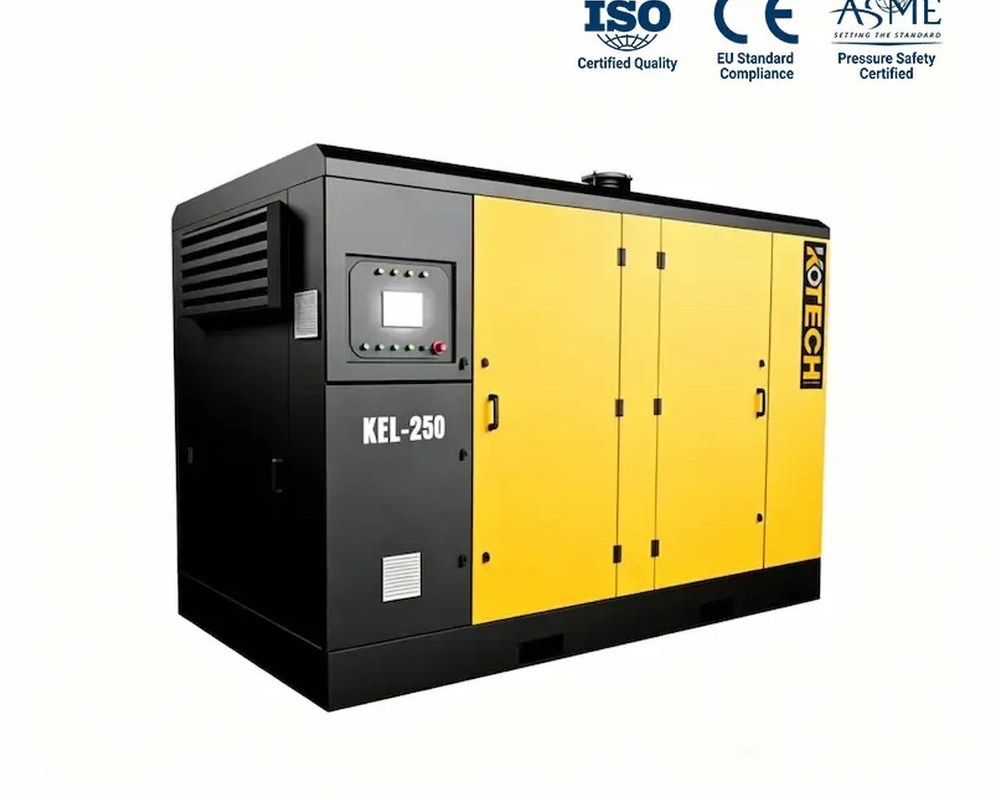
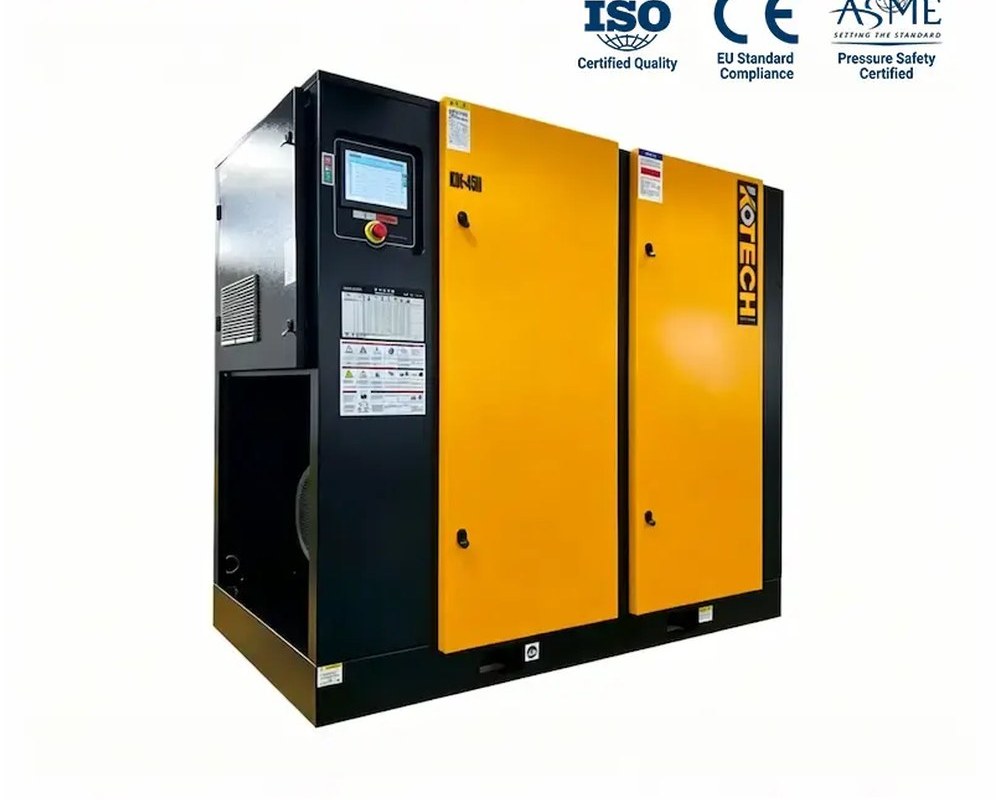
Real KOTECH KDP PACE low-noise compressors
Selected KOTECH KDP PACE portable diesel compressors, with free air delivery, pressure, engine and rated noise level from the current product data.
The noise column is a rated sound level and is the key figure for an urban permit, while CFM and pressure set the tools the machine can support. Notice that the quietest models sit at the lower flow end, which is why matching the package to the real tool list matters; over-sizing brings more noise than the job needs.
Read across each row and balance three numbers together: enough CFM for simultaneous tools, the pressure they require, and a dB level that clears the site boundary at its true distance from neighbours.
Buying tips
- Get the permit’s boundary noise limit and hours in writing before choosing a model.
- Add the air demand of tools realistically run together, not every tool at once.
- Use the rated dB(A) figure and the real distance to the nearest sensitive building.
- Plan a position that keeps the compressor away from openings and reflective walls.
- Keep acoustic doors and seals maintained; an open panel removes much of the benefit.
- Add a temporary acoustic screen if a slightly larger machine is only marginally over the limit.
Frequently asked questions
How quiet does a compressor need to be on an urban construction site?
What makes a portable diesel compressor low-noise?
Can a low-noise compressor still run several air tools at once?
Does buying a larger compressor help or hurt on a city site?
What time restrictions apply to noisy work in cities?
How can I reduce compressor noise without changing the machine?
If your next project sits inside a city, KOTECH will help you match a KDP PACE low-noise portable compressor to both your tool list and your boundary noise limit, so you can keep working within permitted hours. Tell KOTECH your site rules and tools and the team will recommend the right package.