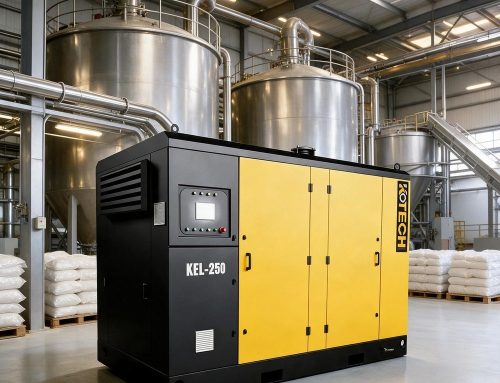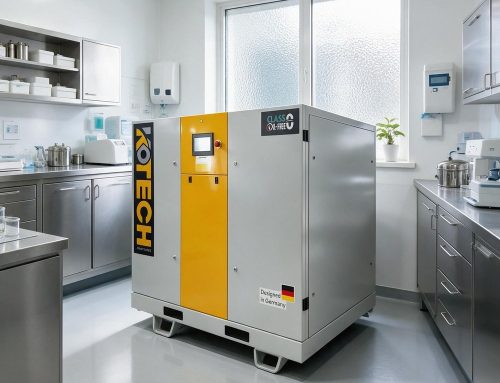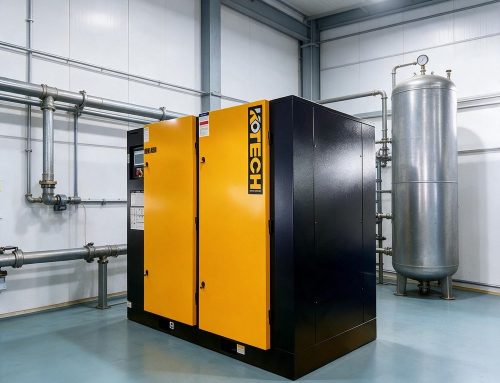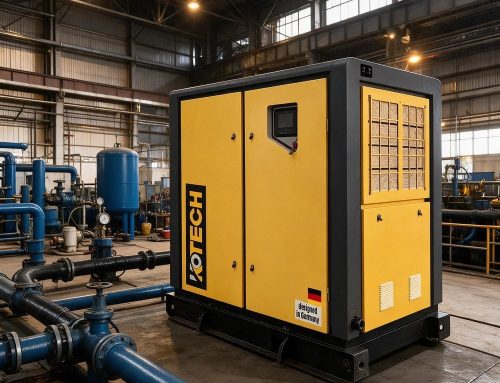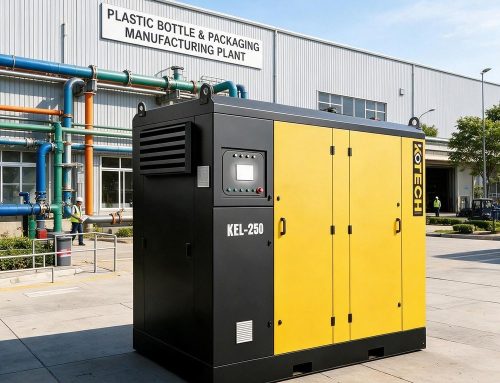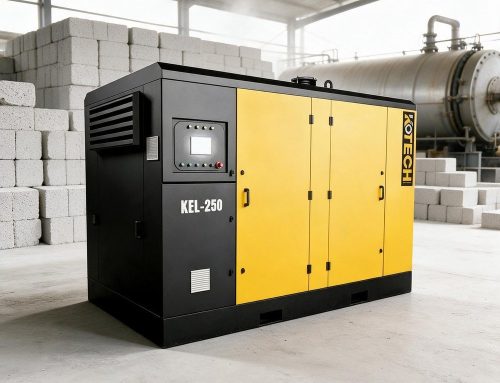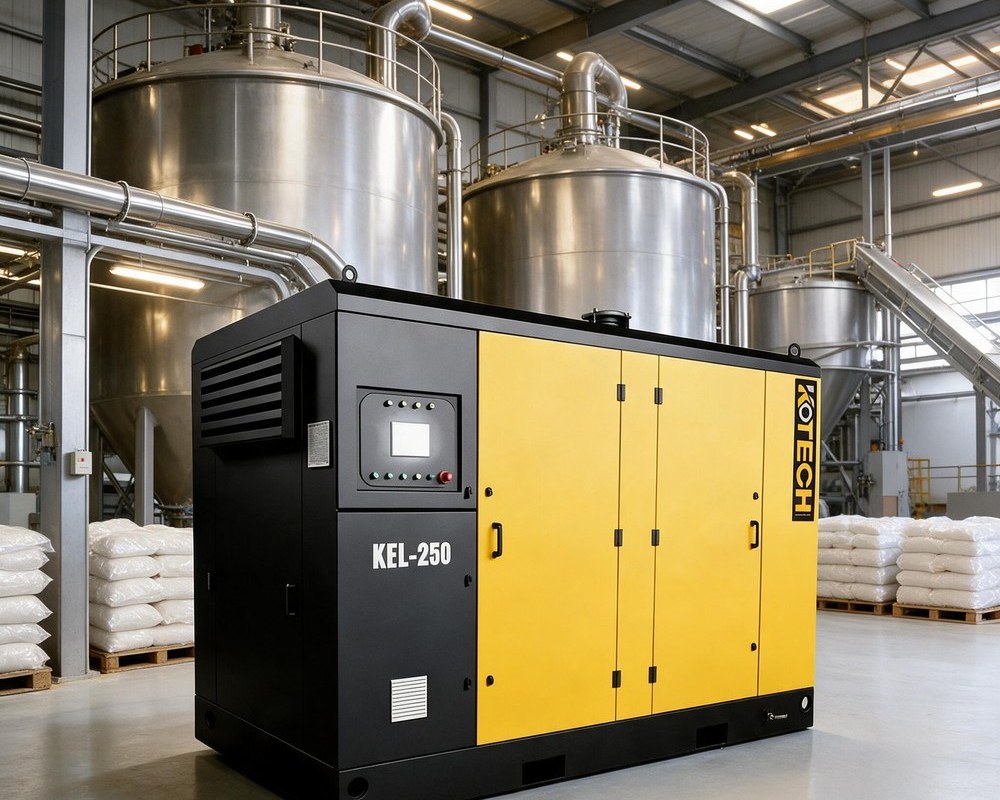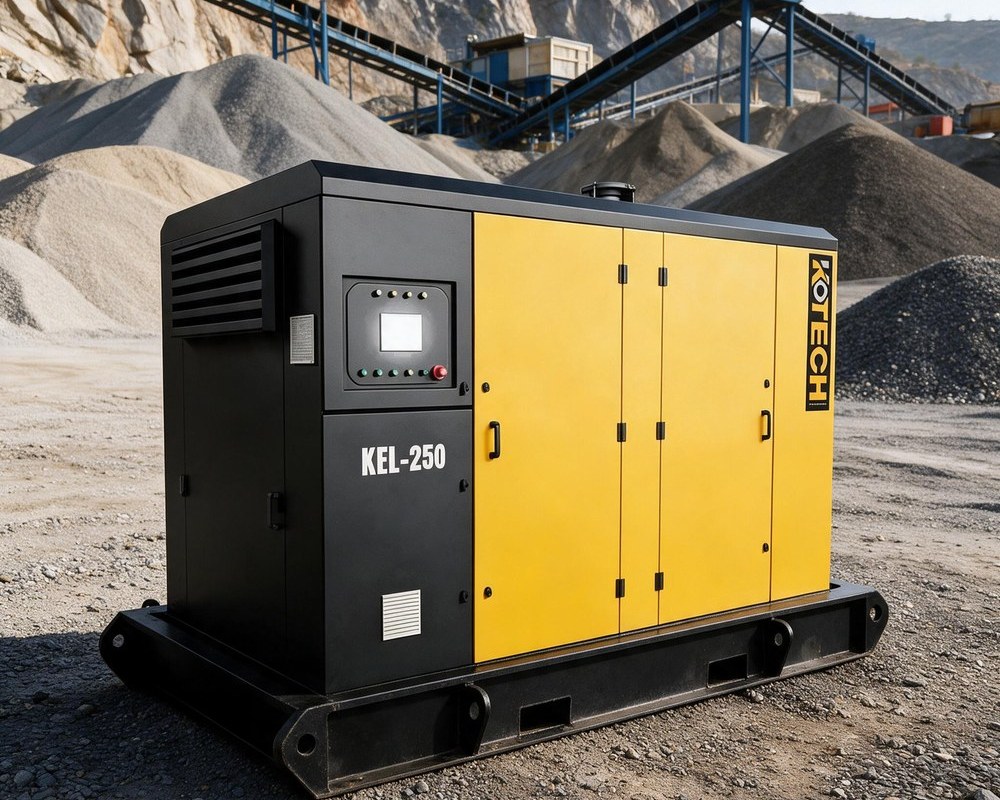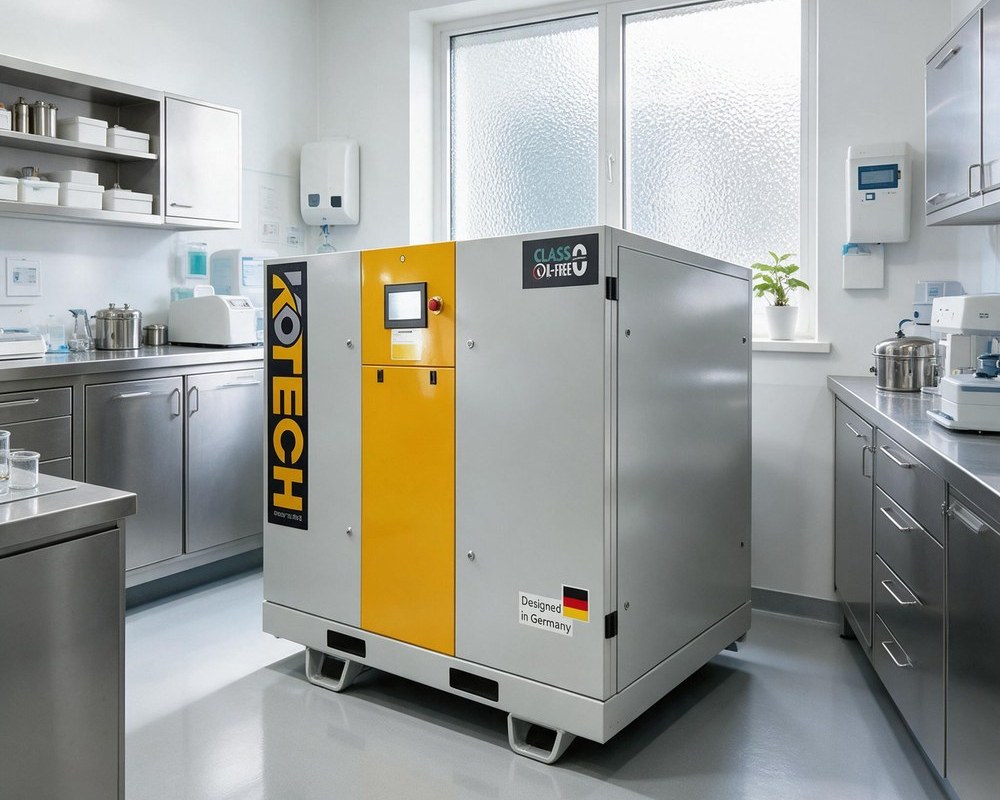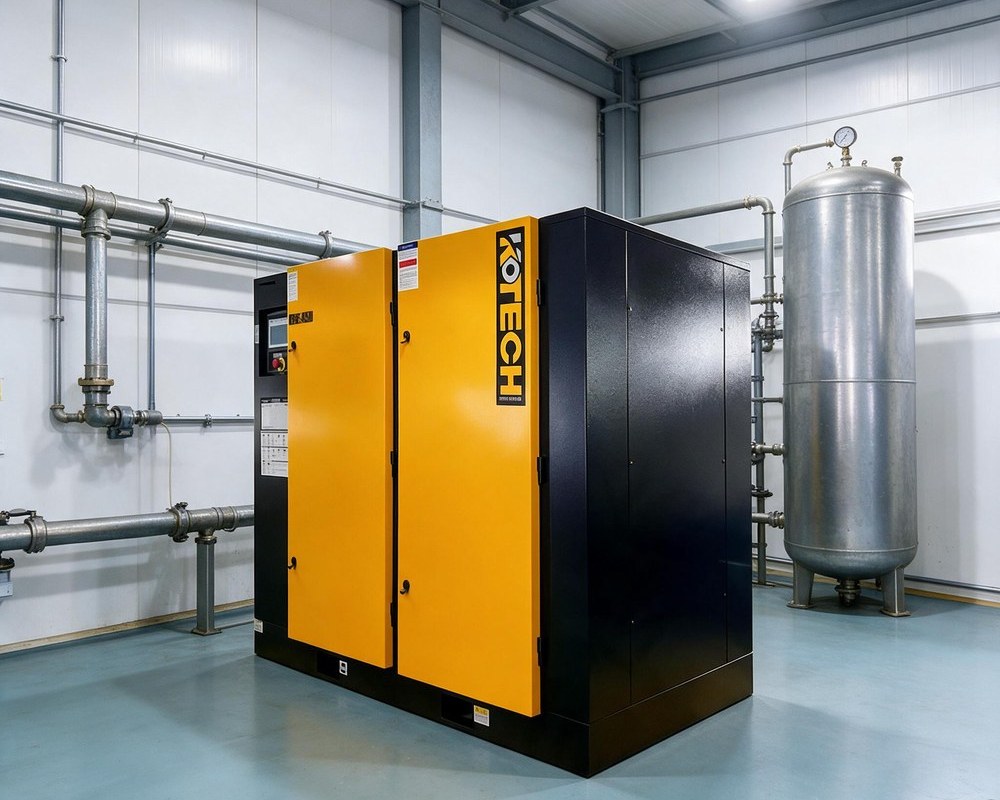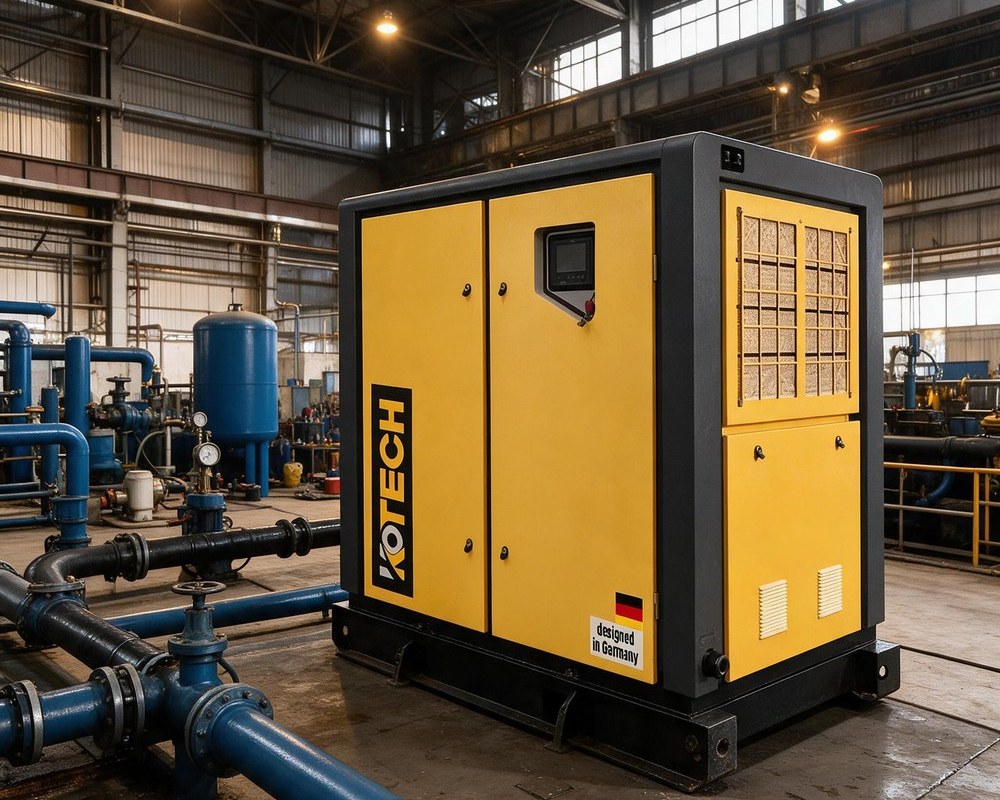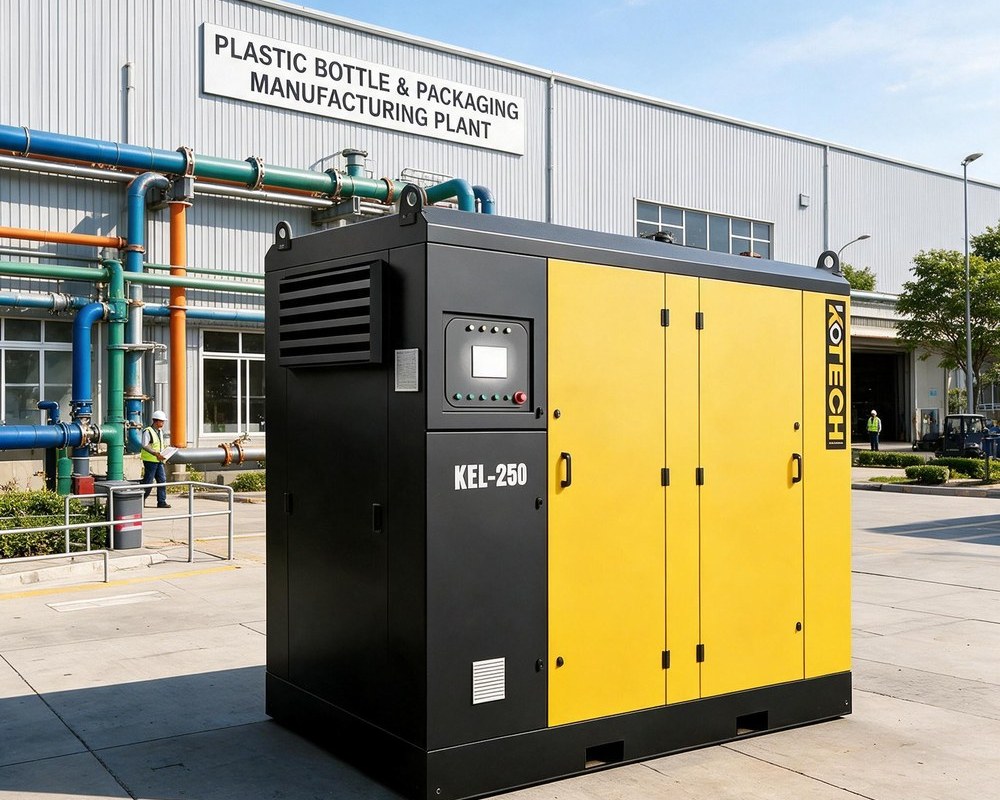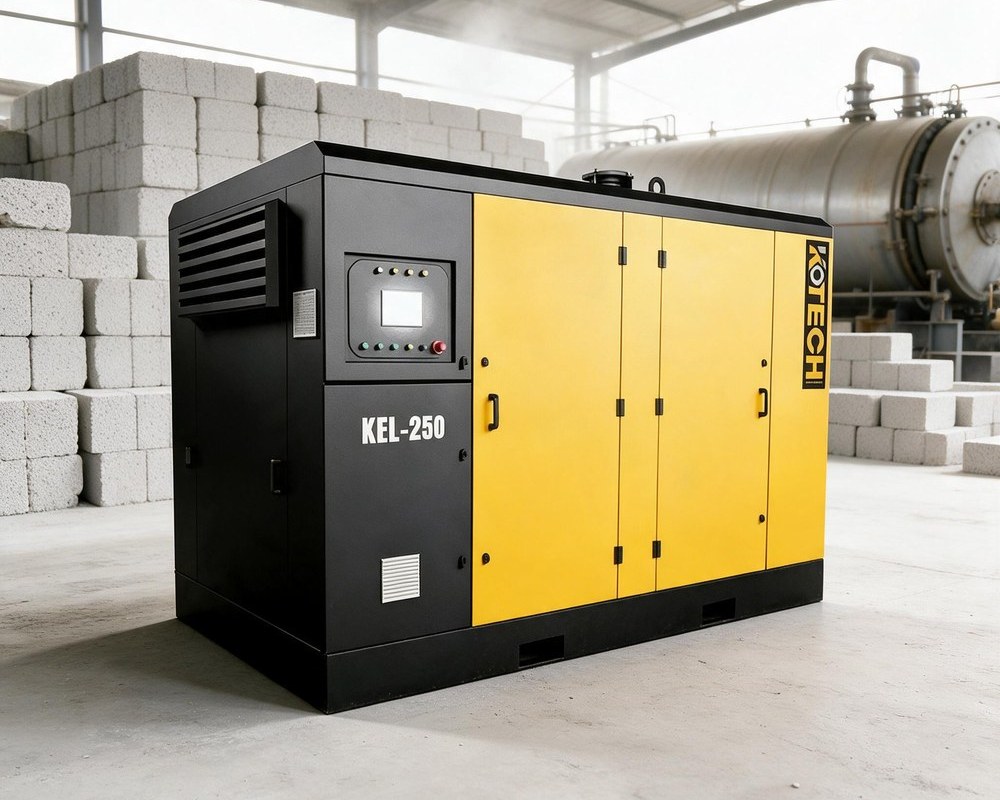




Edible oil refining, bottling and filling handle a food product that is exceptionally sensitive to contamination, and compressed air touches the process directly: it actuates filling valves, conveys bottles and caps, dries containers with air knives, operates packaging actuators and can come into contact with the oil itself. Any oil carry-over from a lubricated compressor risks tainting flavour, fouling packaging and failing food-safety audits. A water-lubricated oil-free screw compressor such as the KOTECH KWI series delivers ISO Class 0 air without any oil in the compression chamber, using water for sealing, lubrication and cooling, which makes it a natural fit for edible oil plants that cannot compromise on air purity.

Why Oil-Free Air Is Non-Negotiable in Edible Oil Production
Food-grade compressed air is classified by the maximum remaining oil content, and the highest practical grade, ISO 8573-1 Class 0, means no oil contamination is detectable under the most stringent test conditions. In an edible oil plant this matters because compressed air is rarely fully isolated from the product. Filling and capping actuators exhaust near open containers, air knives dry bottles just before filling, and conveying and labelling systems run continuously alongside exposed oil and packaging.
An oil-lubricated compressor can reduce carry-over with filters and coalescing elements, but it still contains oil in the air-end and depends on filtration and maintenance never failing. A water-lubricated oil-free design removes the oil from the compression chamber altogether, so there is no lubricant to carry over even if downstream treatment degrades. For a plant audited against food-safety standards, that structural separation is easier to validate and defend than a filtration-based assurance on an oil-injected machine.
- No oil in the compression chamber means no lubricant can carry into product-contact air.
- Delivers ISO Class 0 air, the strongest basis for food-safety and audit compliance.
- Water lubrication also cools the compression process, keeping discharge temperatures low.
- Removes reliance on oil filters never failing to protect edible product quality.
How Water Lubrication Works and Where It Helps
In a water-lubricated single-screw compressor, purified water performs the three jobs that oil normally does: it seals the clearances between the screw and gate rotors, lubricates the contact surfaces and removes the heat of compression. Because water has a strong cooling effect, the compression runs close to isothermal, which improves efficiency and keeps discharge air cool, reducing the load on downstream dryers. The water circuit is continuously filtered and separated, with makeup water managed automatically.
This architecture suits the steady, high-utilisation duty of a refining and filling plant that runs long production shifts. The absence of oil also simplifies the treatment train: there is no need for oil-coalescing filters that add pressure drop and require periodic replacement, although particulate filtration and drying remain necessary to meet the plant’s dew-point specification. The result is clean, cool, stable process air with fewer consumable elements and a simpler compliance story for the quality team.
Sizing the KWI Compressor for Refining and Filling Demand
Sizing follows the same disciplined approach as any food plant, but with purity built in. List all air consumers across refining, bottling, conveying, air knives, actuators and packaging, identify which could contact product directly, and total the simultaneous demand with a realistic diversity factor and a growth margin. Filling lines tend to create clustered, pulsating demand as valves cycle together, so a correctly sized receiver smooths the peaks and protects the stable pressure that accurate filling depends on.
Choose the KWI frame from its published free air delivery at the working pressure the line requires, and confirm the motor rating against the plant’s electrical supply. The KWI range spans small machines for a single filling line up to larger frames for a full refining and packaging hall, with air or water cooling options to match the available services and ambient conditions. The specification table lists real models with working pressure, free air delivery, motor power and weight to support frame selection.
Real KOTECH KWI Water-Lubricated Oil-Free Compressor Models
Published specifications from the KOTECH KWI product page. Free air delivery is shown across the model’s working pressure points.
The KWI line covers a wide motor and flow band, so a small dedicated unit can serve a single bottling line while larger frames feed a complete packaging hall. Because published flow changes with working pressure, read the free air delivery at the pressure your filling and conveying equipment actually uses, and confirm the cooling option against plant water availability and ambient temperature before finalising the installation.
Water Quality, Cooling and Food-Grade Maintenance
Water-lubricated machines depend on good water quality, so the feed water must meet the manufacturer’s specification for hardness and purity to prevent scale, corrosion and biological growth in the circuit. Plants typically use treated or softened water with routine monitoring, and the internal water filter and separator become key maintenance items. Keeping the water circuit clean protects both efficiency and the Class 0 air quality the plant relies on.
Cooling choice depends on site conditions: water-cooled units integrate well where chilled or cooling water already exists and deliver stable temperatures in hot plants, while air-cooled versions suit locations without a cooling-water circuit. Downstream, specify a dryer that meets the required pressure dew point so moisture never reaches filling valves or causes packaging issues, along with food-grade particulate filtration. A documented maintenance regime covering water quality, filters, dryer drains and air-quality testing gives auditors a continuous record rather than a one-time assurance.
- Use treated or softened feed water meeting the manufacturer’s purity specification.
- Treat the water filter and separator as critical maintenance items for Class 0 integrity.
- Choose air or water cooling based on existing plant services and ambient heat.
- Dry to the required pressure dew point and add food-grade particulate filtration.
- Keep air-quality test records and maintenance logs ready for food-safety audits.
Buying tips
- Map every air consumer and flag any that can directly contact the edible oil, bottles or caps.
- Specify ISO Class 0 and prefer water-lubricated oil-free technology where product contact is possible.
- Size from simultaneous filling, conveying and air-knife demand with a receiver to buffer valve cycling.
- Plan for treated feed water and treat the internal water filter as a critical maintenance item.
- Select air or water cooling against available plant services and the local ambient temperature.
- Dry to the required pressure dew point and keep food-grade filtration and air-quality test records for audits.
Frequently asked questions
Why does an edible oil plant need an oil-free rather than an oil-lubricated compressor?
What does water lubrication actually do inside the compressor?
Is ISO Class 0 air really achievable with a water-lubricated machine?
What water quality does a water-lubricated compressor need?
How do I size a KWI compressor for a filling line?
Air-cooled or water-cooled: which is better for an edible oil plant?
Tell KOTECH about your refining and filling air demand, working pressure and available cooling. We will size a KWI water-lubricated oil-free compressor and Class 0 treatment package for your edible oil plant and prepare a proposal.