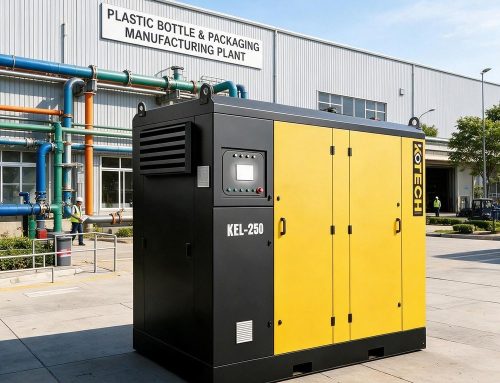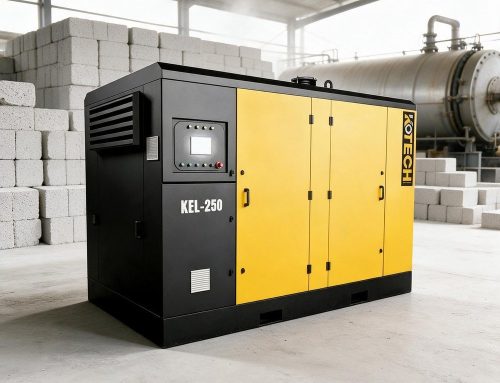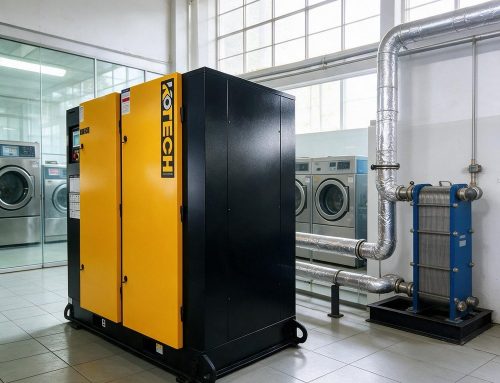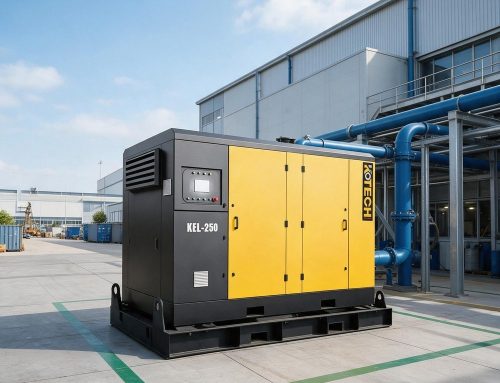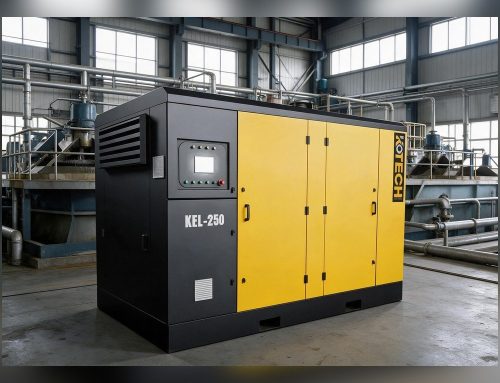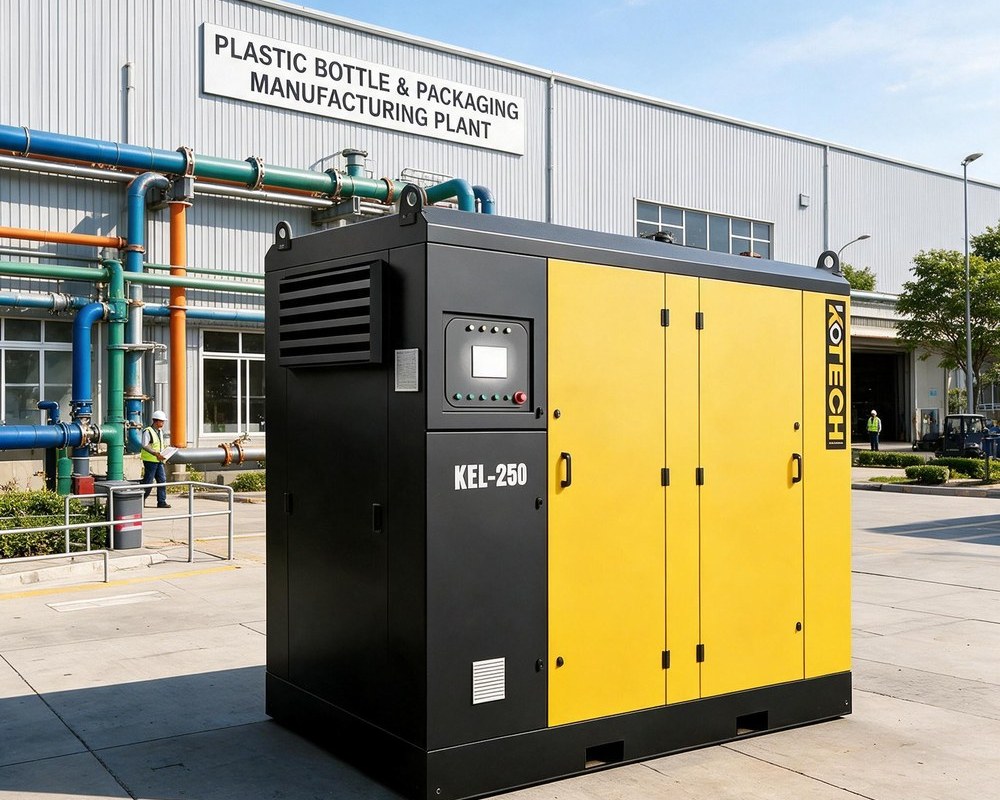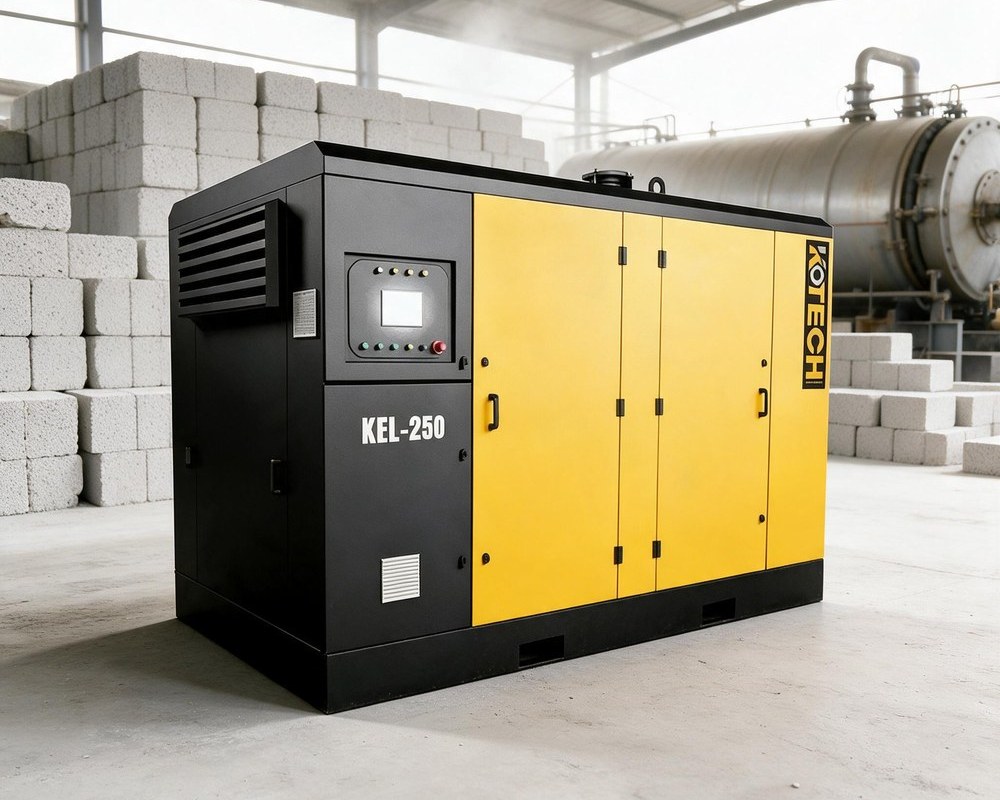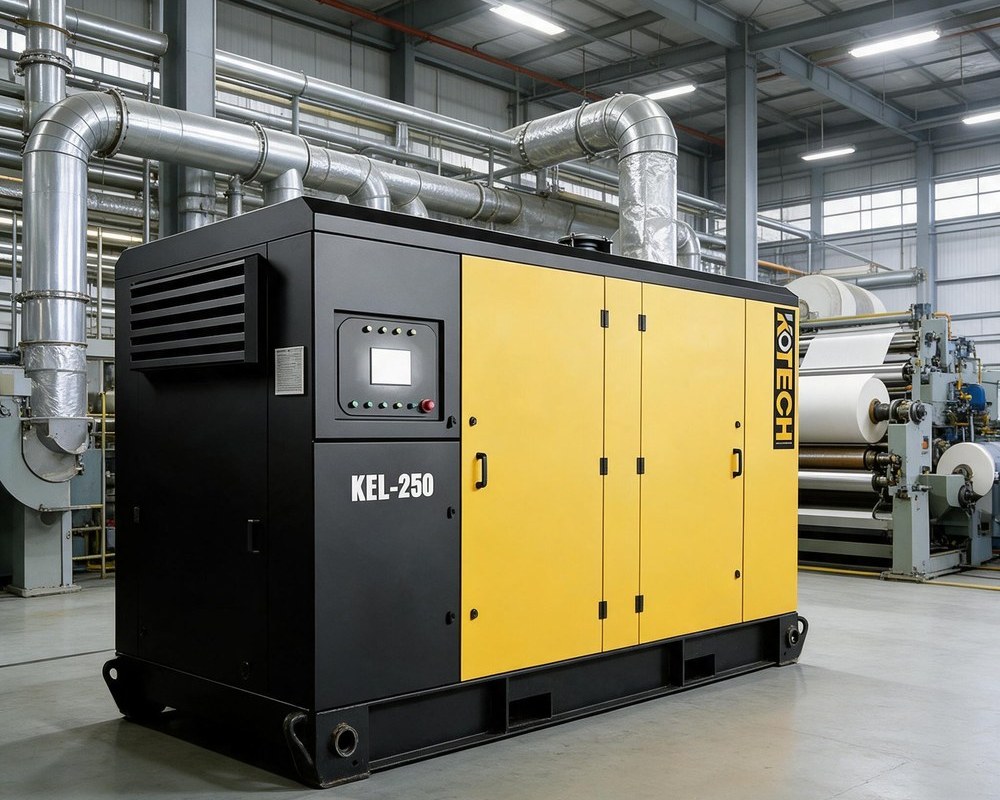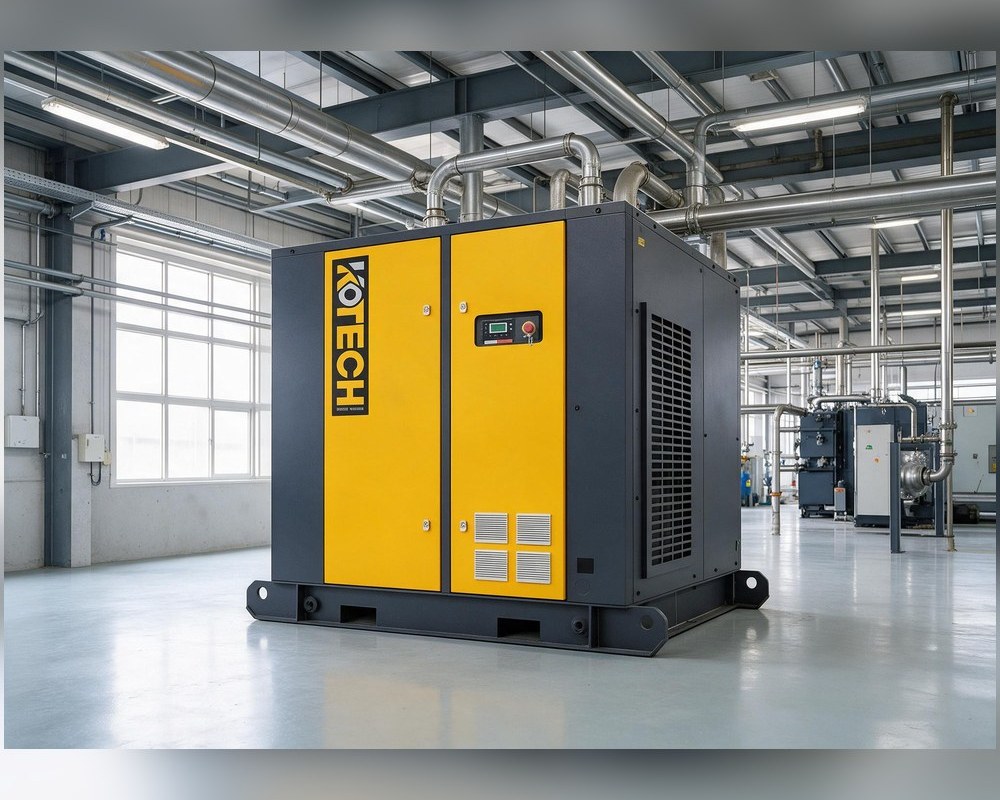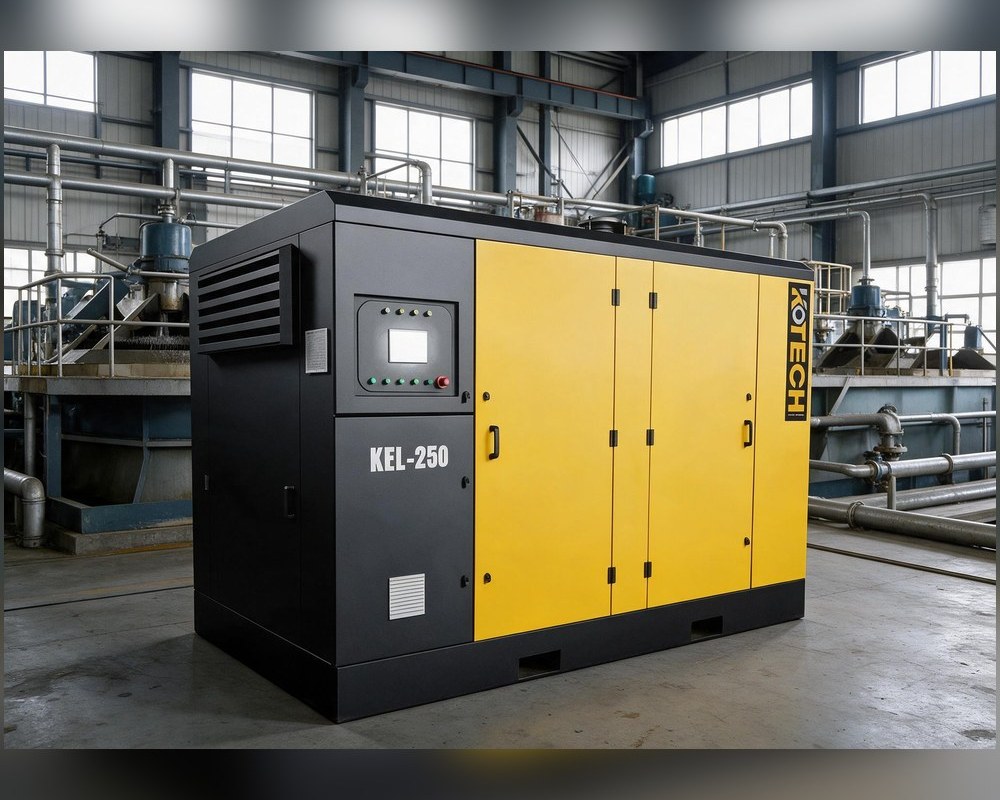




Compressed air in a steel mill, foundry or metal-fabrication plant supports burners, pneumatic conveying, descaling, instrumentation and dense clusters of actuators, all inside an ambient environment that is already hot, dusty and radiant. Air-cooled compressors rely on that same hot air to reject their heat, so their cooling margin shrinks precisely when demand is highest. A water cooled screw compressor removes the dependency on ambient temperature, holding a stable discharge temperature and full rated flow through the hottest shifts. For plants in Gulf, African and South-Asian climates, this is often the difference between reliable plant air and repeated high-temperature trips.

Why ambient heat defeats air-cooled machines
Every compressor converts part of its electrical input into heat that must be rejected. An air-cooled unit draws in surrounding air across an oil cooler and aftercooler, so its ability to cool is bounded by the ambient temperature and the cleanliness of the cooler. In a metal plant the intake air is frequently 40 to 45 °C or higher, laden with mill scale dust, and recirculated heat from furnaces raises the local temperature further. Under these conditions the cooler approaches its limit, discharge temperature climbs, and the controller either derates the machine or trips on high temperature to protect the oil and air end.
The hidden cost is capacity loss as well as downtime. Hot intake air is less dense, so the compressor delivers fewer actual cubic metres per minute than its nameplate suggests, and the machine runs longer to fill the same demand. Fouled coolers, common in dusty mills, compound the effect within weeks of cleaning. Water cooling breaks this loop by transferring the heat to a process-water circuit instead of the ambient air, making performance largely independent of the surrounding temperature.
- Air-cooled capacity and reliability fall as ambient temperature rises
- Hot, less-dense intake air reduces delivered volume at the same power
- Dust and mill scale foul air coolers and shorten the cleaning interval
- Water-cooled rejection keeps discharge temperature stable regardless of room heat
Where water cooling fits the steel and metal process
Steel and metal plants are unusually well suited to water-cooled compressors because most already operate cooling-water infrastructure for furnaces, moulds and hydraulic systems. Tapping into an existing cooling tower, chiller or recycled process-water loop means the marginal cost of supplying the compressor is low, and the heat removed can sometimes be recovered into low-grade warm-water systems. The compressor room can also be more compact, since water-cooled units do not need the large ventilation openings and airflow volume that air-cooled machines demand.
Typical applications include instrument and control air for continuous casting and rolling lines, pneumatic conveying of additives and desulphurization reagents, packaging and bundling stations, and general plant air across large multi-bay facilities. Because these loads run long hours at high utilization, the stable efficiency of water cooling translates into a measurable energy and availability advantage over the year rather than a purely theoretical benefit.
- Plants often already have cooling towers or process water to connect to
- Smaller compressor-room ventilation requirement than air-cooled layouts
- Suits continuous casting, rolling, conveying, instruments and packaging air
- High utilization makes the stable-efficiency gain financially significant
Real KOTECH KWI screw compressor frames (W = water-cooled)
Live product-page data; W variants are the water-cooled configurations specified for hot-climate steel and metal plants.
The table lists current product-page data for representative KWI frames; the suffix A denotes an standard air-cooled configuration and W the water-cooled configuration, with both sharing the same screw air end and pressure range. Hot-climate steel installations specify the W variants and connect them to the plant cooling-water circuit.
Water quality, flow and integration requirements
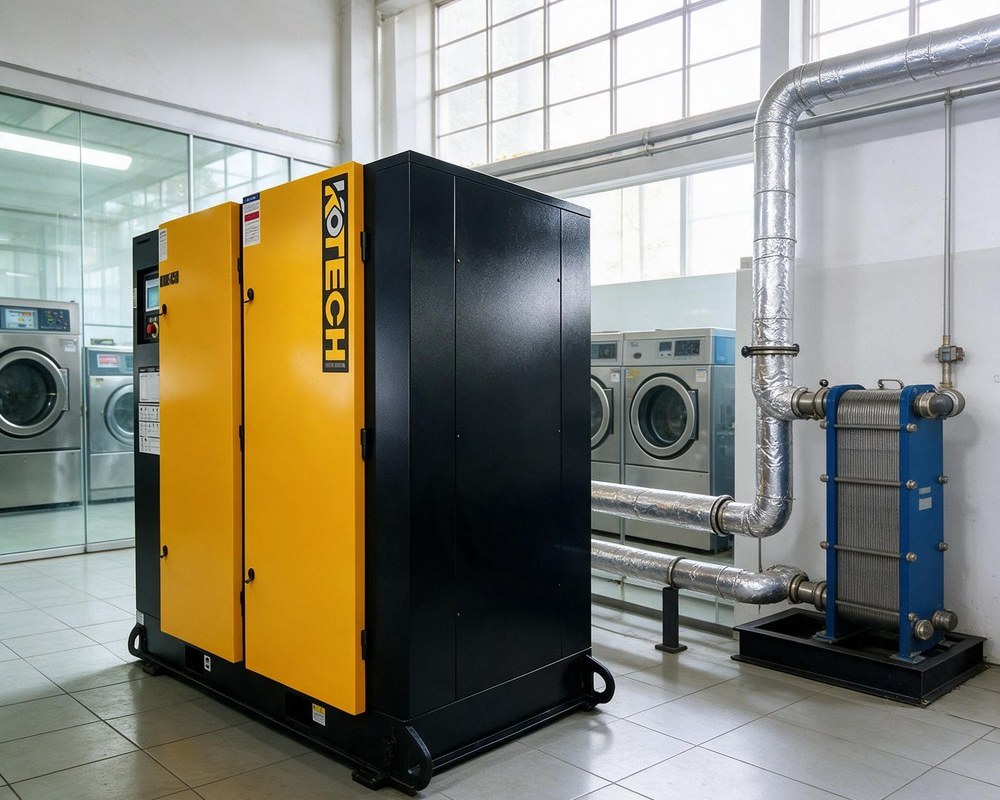
Water cooling is reliable only when the cooling water itself is controlled. The circuit must deliver the flow and inlet temperature specified for the frame, with controlled hardness, pH and suspended solids to prevent scaling, corrosion and biological fouling inside the heat exchanger. Closed-loop systems with a plate heat exchanger and treated circulating water are preferred over once-through raw water, because they isolate the compressor from dirty or aggressive sources and keep the cooler clean for long intervals.
Integration should include isolation valves, strainers, flow monitoring and temperature sensors on both the water and air sides so that a blocked or low-flow condition raises an alarm before the machine overheats. In regions where water is scarce, a closed loop with an evaporative tower or, where justified, a chilled-water circuit keeps makeup consumption low. Planning the compressor room around accessible coolers also makes the periodic cleaning and inspection practical without shutting the whole plant-air system.
- Control hardness, pH and suspended solids to avoid scaling and corrosion
- Prefer a closed treated loop with a plate heat exchanger over raw once-through water
- Fit strainers, flow switches and temperature alarms for early fault warning
- Design for accessible coolers and low makeup-water consumption
Operating and maintenance advantages in continuous duty
Beyond temperature stability, water-cooled screw compressors tend to run at lower and more uniform oil temperatures, which slows thermal degradation of the lubricant and extends oil and separator life. A steadier thermal cycle also reduces stress on seals, hoses and the air end, supporting the long service intervals that continuous-duty metal plants require. Because the compressor no longer fights its environment, the controller spends more time in its efficient modulation or variable-speed range rather than cycling on high-temperature protection.
Maintenance planning should still treat the water side as a first-class system: monitor heat-exchanger approach temperature, log water flow and inlet conditions, and schedule cooler inspection based on actual fouling rather than a fixed guess. Combined with standard air-end servicing, this keeps the unit delivering nameplate flow through the hottest months and avoids the production losses that an unplanned compressor stop imposes on a rolling mill or casting line that cannot easily idle.
- Lower, steadier oil temperature extends lubricant and separator life
- Reduced thermal stress on seals, hoses and the screw air end
- Track cooler approach temperature to schedule cleaning before efficiency fades
- Stable operation protects continuous casting and rolling from air-supply stops
Buying tips
- Confirm the compressor-room ambient temperature and dust load before choosing between air and water cooling.
- Verify an adequate cooling-water source, including flow, inlet temperature and achievable treatment quality.
- Specify the water-cooled W variants and a closed treated loop rather than raw once-through water.
- Size the frame for actual delivered flow at the real hot intake condition, not only the nameplate CFM.
- Include flow monitoring, strainers and cooler-access space in the room layout from the start.
Frequently asked questions
Why use a water cooled screw compressor instead of an air-cooled one?
Does water cooling save energy in a hot climate?
What water quality does a water-cooled compressor need?
Can a water-cooled compressor reuse existing plant cooling water?
What maintenance does the water side require?
If your steel or metal plant struggles with high-temperature compressor trips in the hot season, share your ambient conditions and available cooling water so a water-cooled KWI configuration can be matched to your plant-air demand.