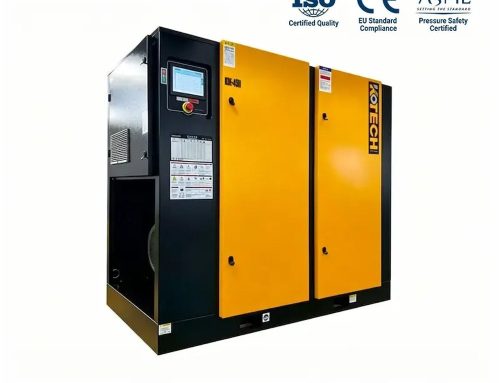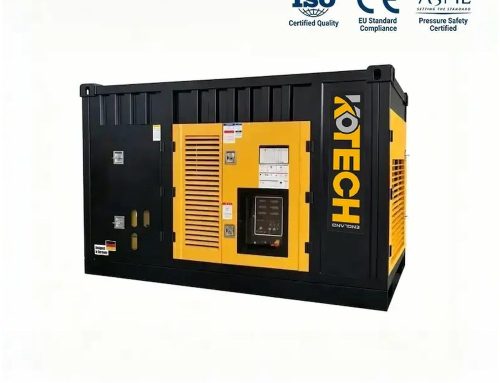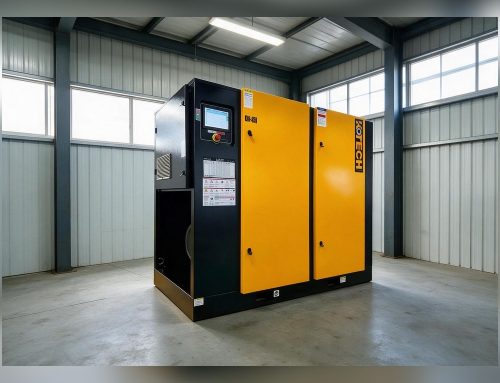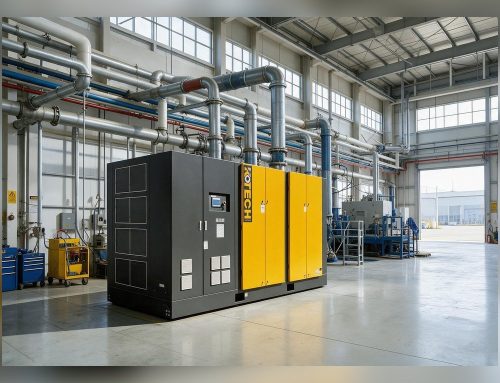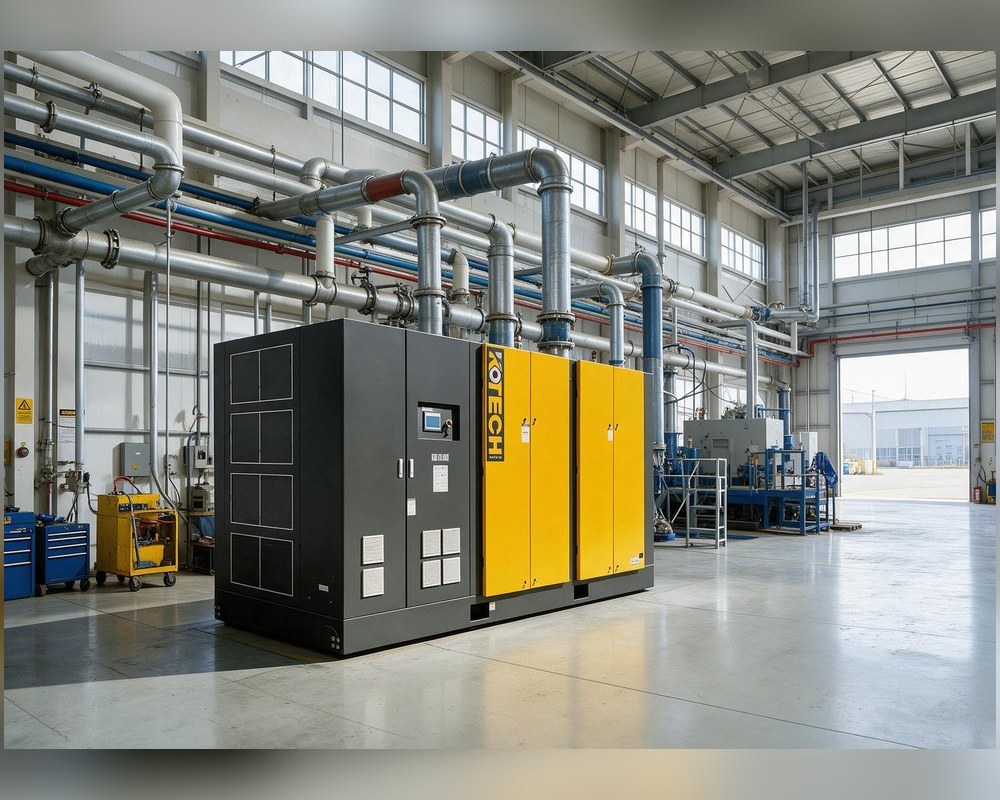




Electronics manufacturing and laboratory work ask compressed air to satisfy three demands at once: it must contain no oil that could contaminate optics, wafers or assemblies; it must run quietly enough to share space with technicians and precision instruments; and it must be small enough to install beside the line rather than in a distant plant room. A silent oil-free scroll compressor answers all three with a simple principle — two interleaving scroll elements compress air without oil, without contacting metal parts and without the noise of a screw or piston. This guide explains where scroll machines fit an electronics facility and how to size them using real KOTECH KUW figures.
Where oil-free air touches electronics production
Compressed air in an electronics plant is rarely a single load. Surface-mount technology lines use it for pick-and-place pneumatic actuators, board handling and nitrogen-generation pre-treatment. Test benches and burn-in racks use it for actuation and connector seating. Optical and lens assembly, display lamination, sensor calibration and medical-electronics packaging all expose product or product-contact tooling to the airstream. In each of these applications an oil aerosol from an oil-injected compressor can plate out on lenses, contaminate bonding surfaces or clog precision valves and nozzles, causing intermittent defects that are difficult to trace back to the air supply.
Filtration can reduce oil carryover, but it cannot remove the failure mode itself: every filter element is a maintenance item that can saturate, bypass or be installed incorrectly. Oil-free scroll compression removes oil from the compression chamber by design, producing ISO 8573-1 Class 0 air at source. Downstream drying and particulate filtration remain necessary for moisture and dust control, but the hydrocarbon hazard is engineered out — the defensible position for a quality system in precision manufacturing.
- SMT actuation and board handling: clean, dry air keeps valves and nozzles reliable.
- Optics, lens and display assembly: no oil aerosol to plate onto sensitive surfaces.
- Test benches and calibration: stable pressure without contamination of fixtures.
- Nitrogen generation pre-treatment and instrument air in laboratory areas.
Why scroll is the quiet oil-free choice
A scroll element compresses by orbiting one spiral inside another, drawing in pockets of air and shrinking them continuously toward the centre. There are no reciprocating pistons, no inlet and exhaust valvetrain and no metal-to-metal contact inside the airend, so the dominant noise and vibration sources of a piston machine simply do not exist. KOTECH KUW frames run at roughly 51 to 62 dB(A) depending on size, which is comparable to normal office speech and low enough for the machine to live in or adjacent to occupied laboratory and cleanroom support areas.
The trade-off versus screw technology is scale: scroll machines are built for small and medium flows, typically below a few cubic metres per minute, and very large plants still centralise on dry screw or centrifugal oil-free stations. Within their range, however, scroll offers the lowest vibration, the simplest maintenance (no oil changes at all in the compression path) and easy modularity — several small scroll heads can be staged on and off, so a multi-head unit matches variable lab demand while keeping only the airend actually needed in operation.
Real KOTECH KUW silent scroll specifications
Current factory figures from the KOTECH product page; all frames produce oil-free Class 0 air at 8 bar with automatic control.
Scroll output is rated at 8 bar; where a tool genuinely needs only 5 to 6 bar, regulating lower reduces stress and noise. For widely fluctuating demand, prefer a multi-head or tank configuration so the compressor is not cycling frequently.
Cleanroom integration and air treatment
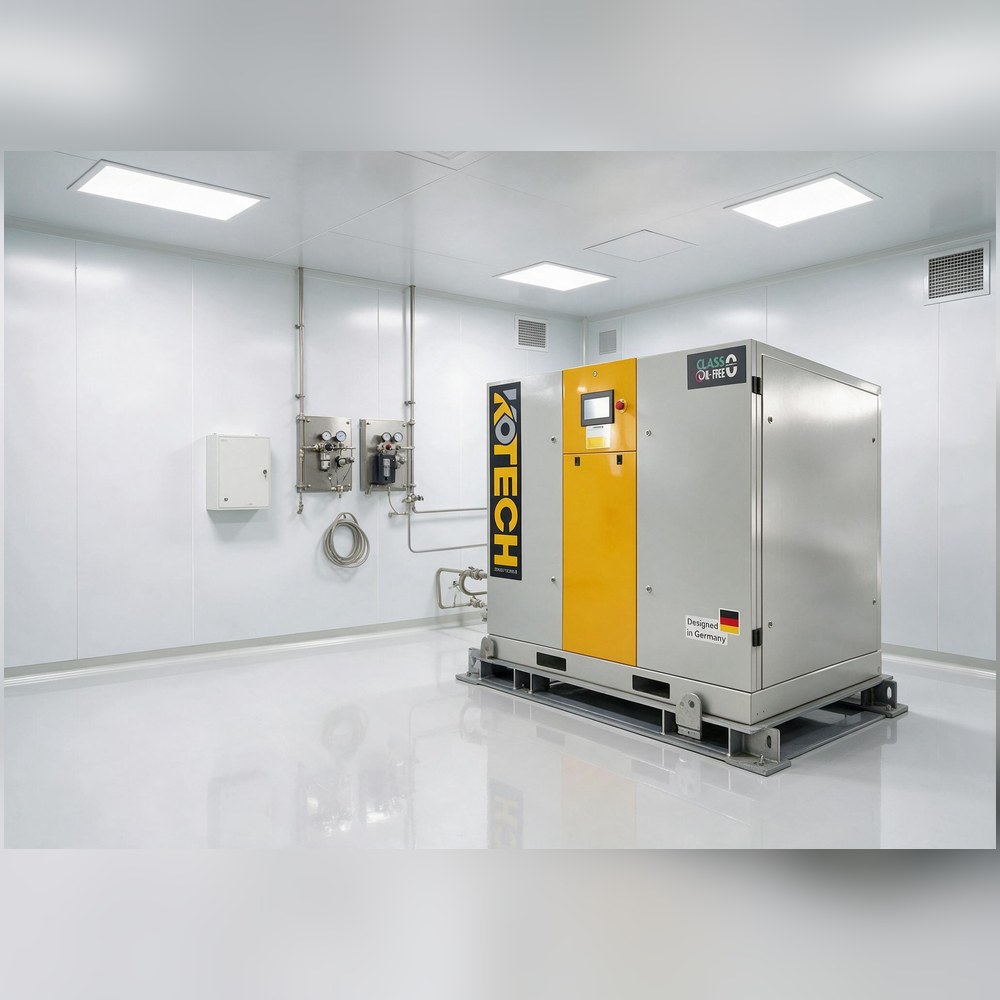
The compressor should sit outside the classified cleanroom proper, typically in a clean utility corridor or small equipment room with ducted intake and exhaust, while the treated air is piped in. This keeps heat and maintenance activity out of the controlled space even though the machine itself is quiet enough for adjacent occupancy. Intake air quality deserves real attention: a scroll removes oil from compression but cannot clean a contaminated intake, so locate the inlet away from loading bays, solvents and exhaust, and provide pre-filtration.
The treatment train after the compressor should match the application risk: a refrigeration or desiccant dryer for the required pressure dew point, particulate filtration, and where the air directly contacts product — for example lamination or cleaning — add the purification stages specified by the site quality engineer. Use stainless or aluminium piping with compatible fittings to prevent corrosion particles, and instrument pressure and dew point so the supply to critical tools is continuously visible. Routine care is then limited to air-filter replacement, condensate management and the scroll manufacturer’s service interval, with no oil changes in the compression path.
Scroll vs a central oil-free screw station
The choice is about scale and distribution. A large fab or a plant with one dominant, steady load is normally served by a central dry screw oil-free station with redundancy, which is the most efficient way to produce large volumes. Scroll becomes attractive in the opposite conditions: small total demand, multiple distributed users, laboratories added inside an existing building where running long air mains is impractical, shifts that want local control, and second-source or backup duty behind a central station. Because KUW frames need no special foundation and little floor space, they can be deployed close to the point of use, cutting pressure drop and piping cost. Many electronics sites end up with both: a central station for the factory and dedicated KUW scroll units for the laboratory, cleanroom support and sensitive island cells where local, guaranteed Class 0 air is worth owning independently.
Buying tips
- Specify Class 0 at the compression principle rather than relying on filtration of an oil-injected machine.
- Size from simultaneous bench and tool demand; add a small tank or multi-head unit for peaky loads.
- Place the unit in a clean utility area with ducted intake air, outside the classified room itself.
- Match dryer dew point and filtration to whether the air directly contacts product.
- Prefer scroll for small distributed laboratory loads; reserve central dry screw for large steady factory demand.
Frequently asked questions
What is a silent oil-free scroll compressor?
Is scroll air genuinely oil-free?
How quiet is a scroll compressor in practice?
What size scroll compressor does an electronics lab need?
Can a scroll compressor be installed inside a cleanroom?
Should a large electronics factory use scroll or screw oil-free compressors?
Send us your laboratory or cleanroom air demand — connected tools, simultaneous use, required dew point and available space — and our engineers will size the right KOTECH KUW silent scroll configuration.