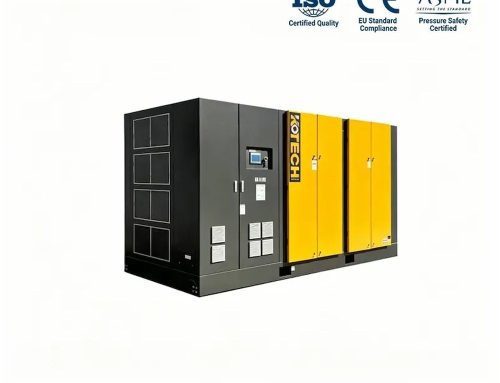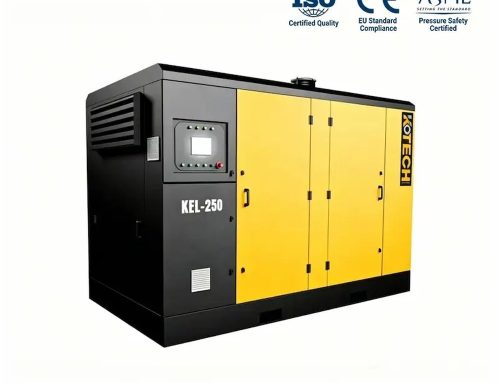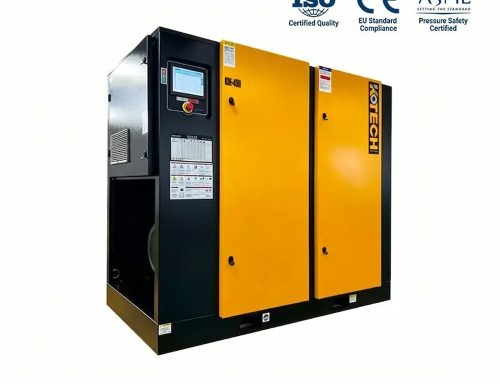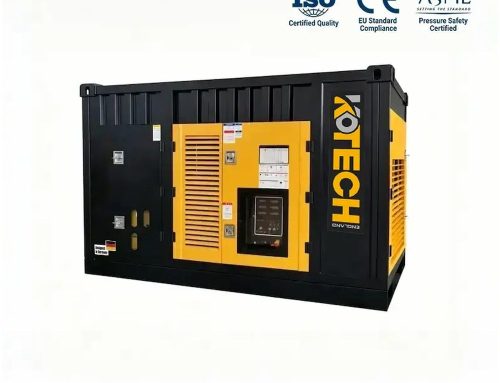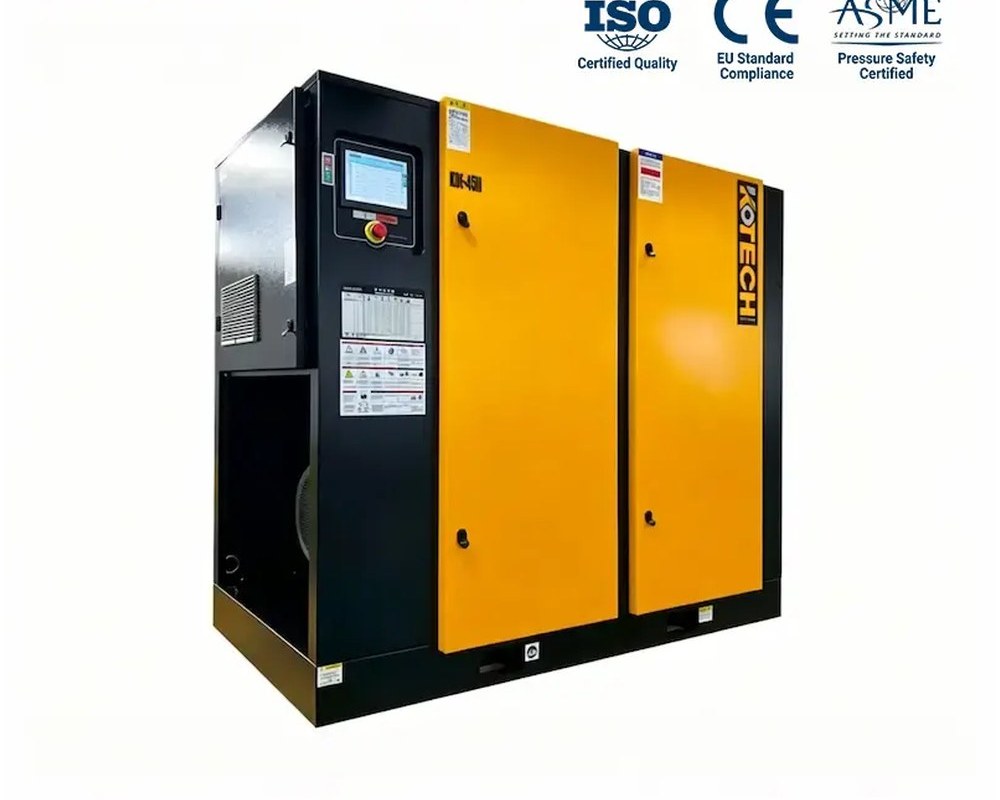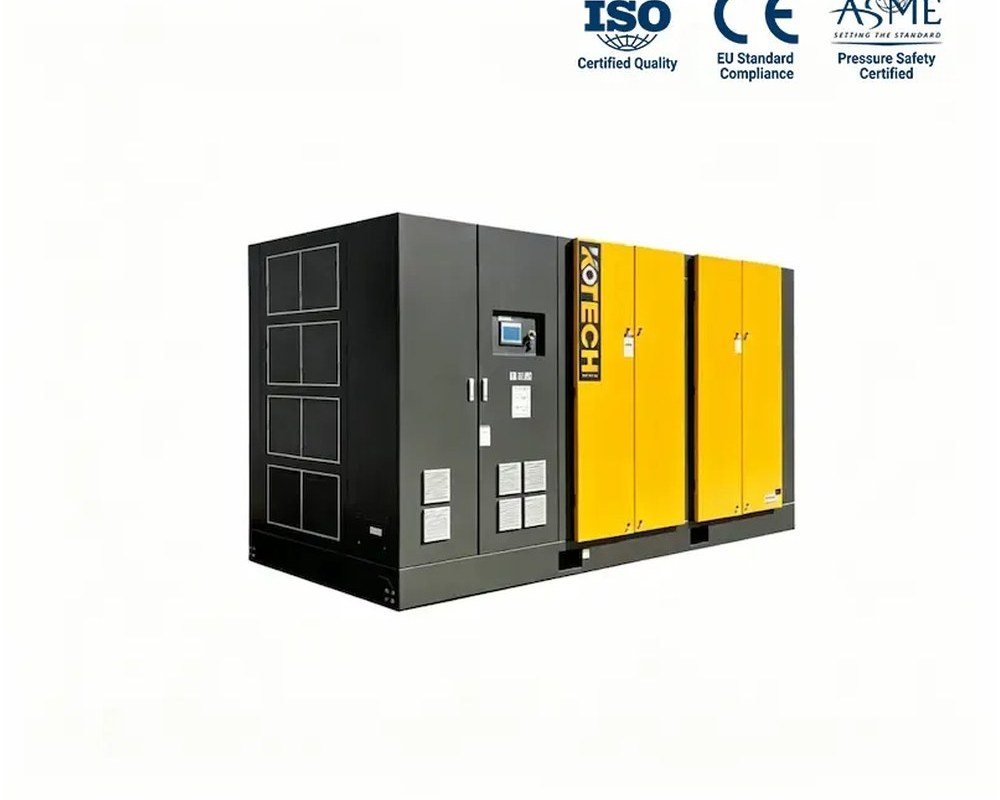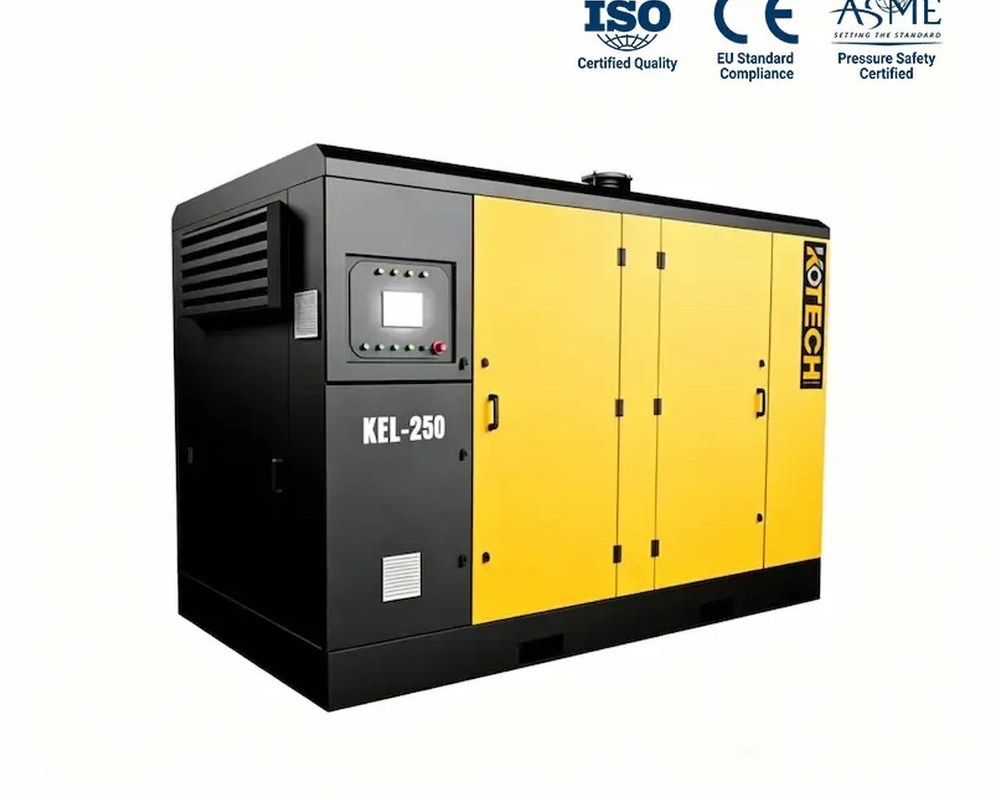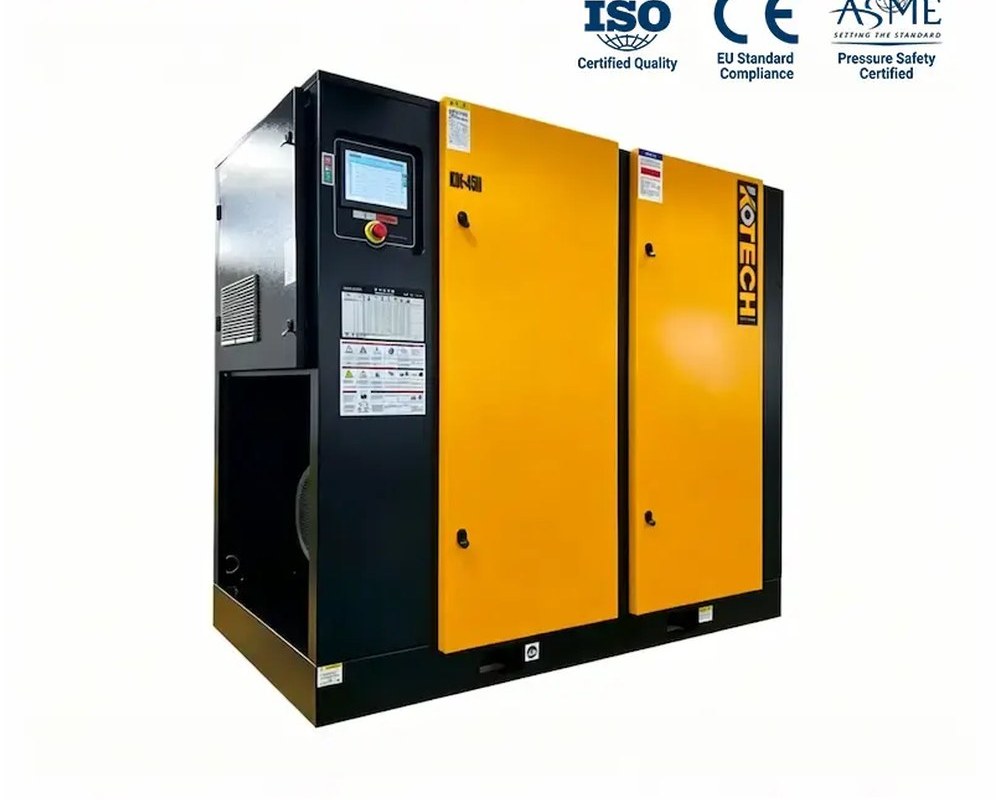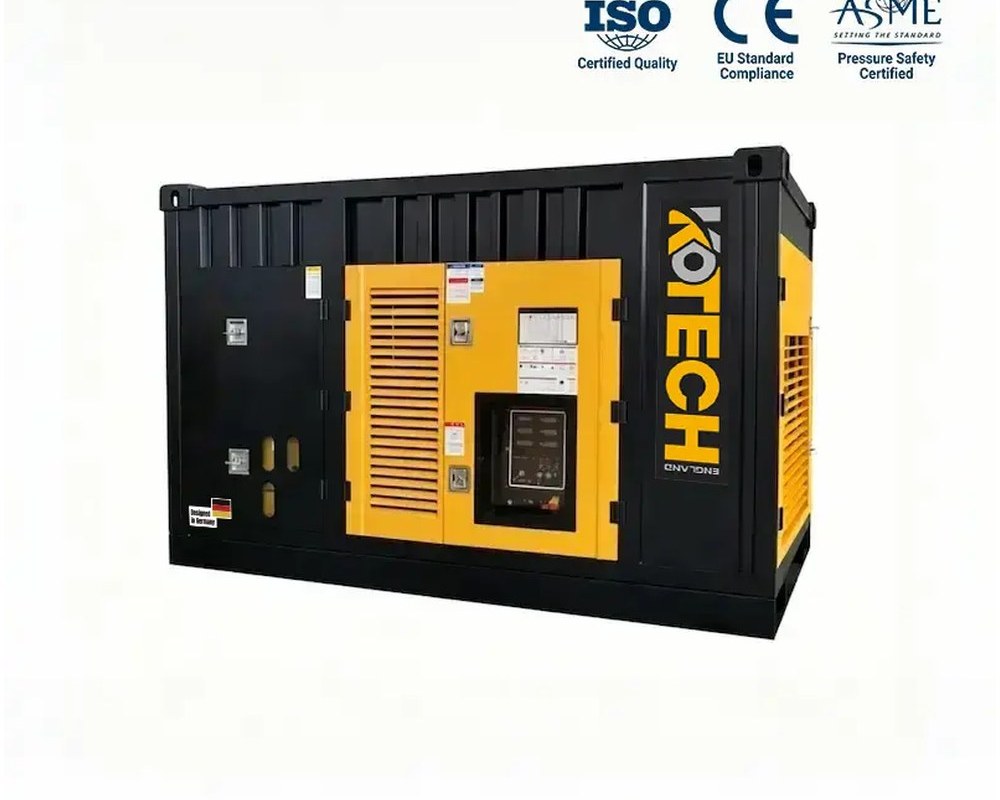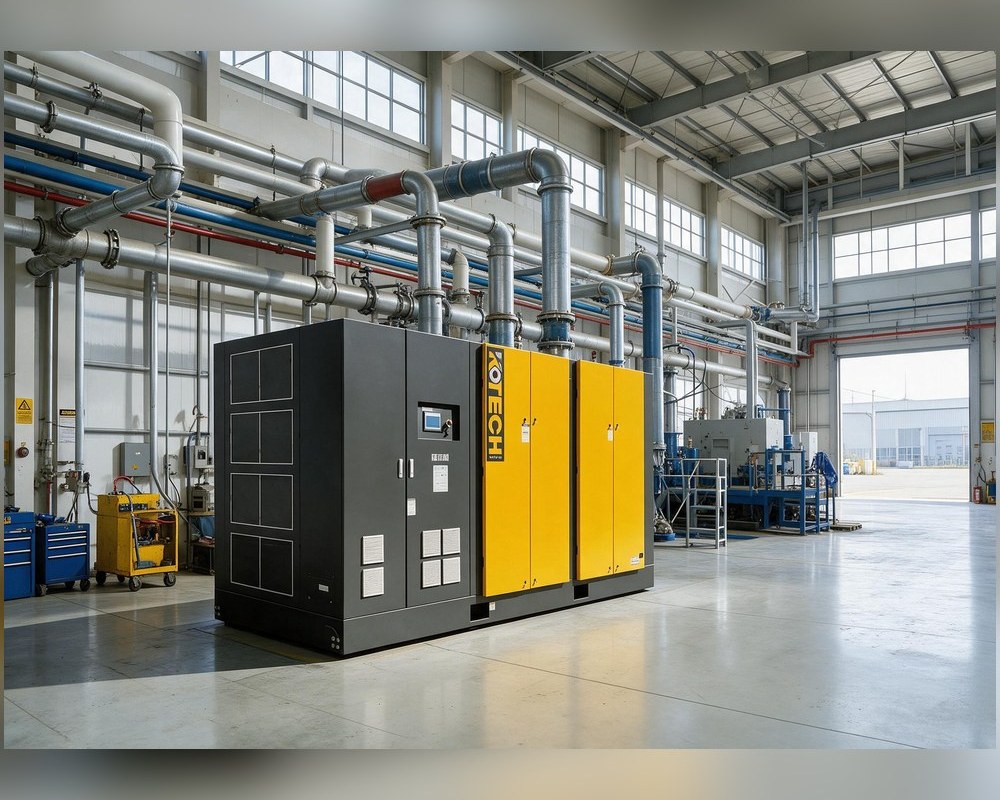




The most expensive mistake in buying a small-plant compressor is choosing one too big for the job. An over-sized machine costs more to buy, runs hot and unloaded, and wastes electricity for years, yet many buyers add a large safety margin just to feel safe. Right-sizing means measuring the real demand and selecting the compressor that covers it with only sensible margin, turning that discipline into dependable energy savings. This guide walks through that process using real KOTECH KOE figures so the choice saves energy without starving the plant.
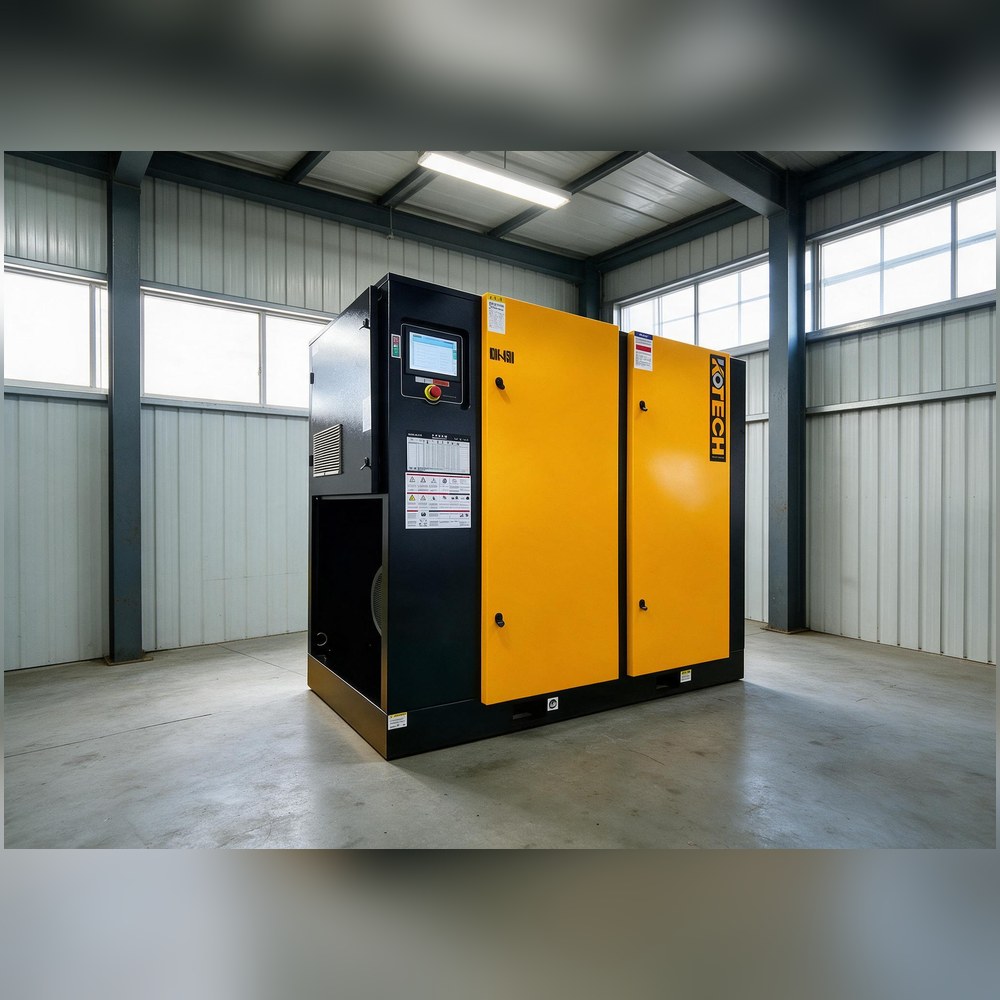
Why an over-sized compressor wastes money for years
It feels safe to buy a compressor larger than today’s needs, in case the plant grows or every tool runs at once. But compressed air is energy converted into pressure, and a machine that produces more air than the demand must constantly load and unload or sit running unloaded.
An over-sized fixed-speed compressor spends much of its time in unloaded running, where it draws power without delivering useful air, and it cycles more often in short bursts. Frequent cycling raises temperatures, stresses components and can shorten the life of oil and separators. The larger motor also carries a higher no-load and part-load energy penalty, so the waste repeats every shift.
The result is the opposite of what the buyer wanted: a premium machine that runs inefficiently from day one. Growth should be planned for, but it should be handled in a way that does not tax current operation.
Measure demand before you choose a size
Right-sizing begins with data, not instinct. Log the air demand over at least a representative week, including the peak when the largest realistic set of tools runs together, the average across a shift, and the quiet periods during breaks and clean-up.
Repair air leaks before measuring, because leaks act as constant false demand and inflate the size required. Account for real pressure needs as well; asking for higher pressure than the tools actually need wastes energy and sometimes pushes you toward a larger compressor. Then apply a sensible, explicitly chosen margin rather than doubling the flow to be safe.
A common, defensible approach is to cover the realistic peak with modest margin, handle occasional short spikes with air storage, and leave physical space, not wasted capacity, to add a machine if the plant genuinely expands. That keeps today’s compressor running loaded and efficient while preserving a growth path.
Using the KOTECH KOE range to pick the right step
The KOTECH KOE line of fixed screw compressors is offered in stepped motor sizes, with flow measured at chosen working pressures. Because a screw machine delivers less volume as pressure rises, each model is shown at the pressure it serves; comparing models at one consistent pressure is the honest way to size.
At the small end, the KOE-11 delivers roughly 1.7 m³/min at 8.5 bar and 1.52 m³/min at 10 bar, while the KOE-22 reaches about 3.7 m³/min at 8.5 bar and 3.2 m³/min at 10 bar. The KOE-37 covers around 6.3 m³/min at 8.5 bar, the KOE-55 about 10.1 m³/min, and the KOE-75 roughly 12.8 m³/min at 8.5 bar.
Match the model whose flow at the required pressure clears the measured peak with modest margin, then confirm the machine will spend most of its time loaded. If the gap between average and peak is large, a smaller compressor plus a receiver tank, or a variable-speed model, often beats buying one large fixed-speed unit.
Real KOTECH KOE screw compressors at two pressures
Selected KOTECH KOE fixed screw compressors, with free air delivery at 8.5 and 10 bar and noise level from the current product-page data. Size at the pressure the plant actually uses.
The two flow columns below show the same machines at two different pressures; flow falls as pressure rises, which is why you must size at the pressure the plant actually uses rather than the largest number on the page. Noise is included because a right-sized machine running steadily is usually quieter and calmer than an over-sized one cycling.
Choose the row that covers your measured peak at the correct pressure with modest margin, then check average demand. If that model would run mostly unloaded, step down and add storage or choose a variable-speed unit so the compressor operates in its efficient loaded region.
Buying tips
- Log demand for a representative week: real peak, shift average and quiet periods.
- Fix leaks first so they do not inflate the required compressor size.
- Specify the lowest pressure the tools genuinely need; higher pressure wastes energy.
- Cover the realistic peak with modest margin, not a doubled safety factor.
- Use a receiver tank for short spikes instead of buying a larger compressor.
- Leave space to add a machine for real growth rather than over-sizing now.
Frequently asked questions
Is it better to over-size a compressor to be safe?
How do I work out the right compressor size for my plant?
Why does the same compressor show different CFM at different pressures?
What is unloaded running and why does it waste energy?
Should I fix air leaks before buying a new compressor?
How do I plan for future growth without wasting energy now?
If you are replacing or adding a compressor, KOTECH can help you measure the real load and select a KOE package sized to it, with storage or variable speed where the demand profile calls for it. Send KOTECH your tools, pressure and running pattern for a right-sized, energy-saving proposal.