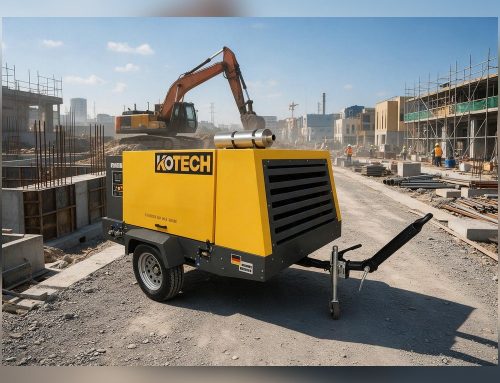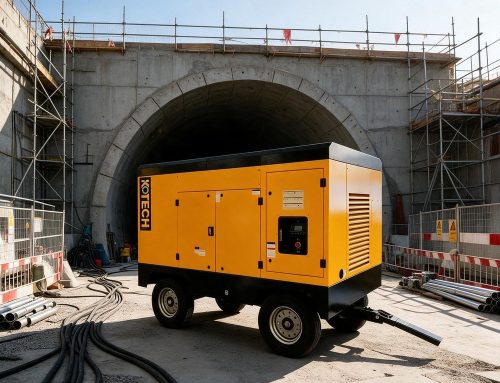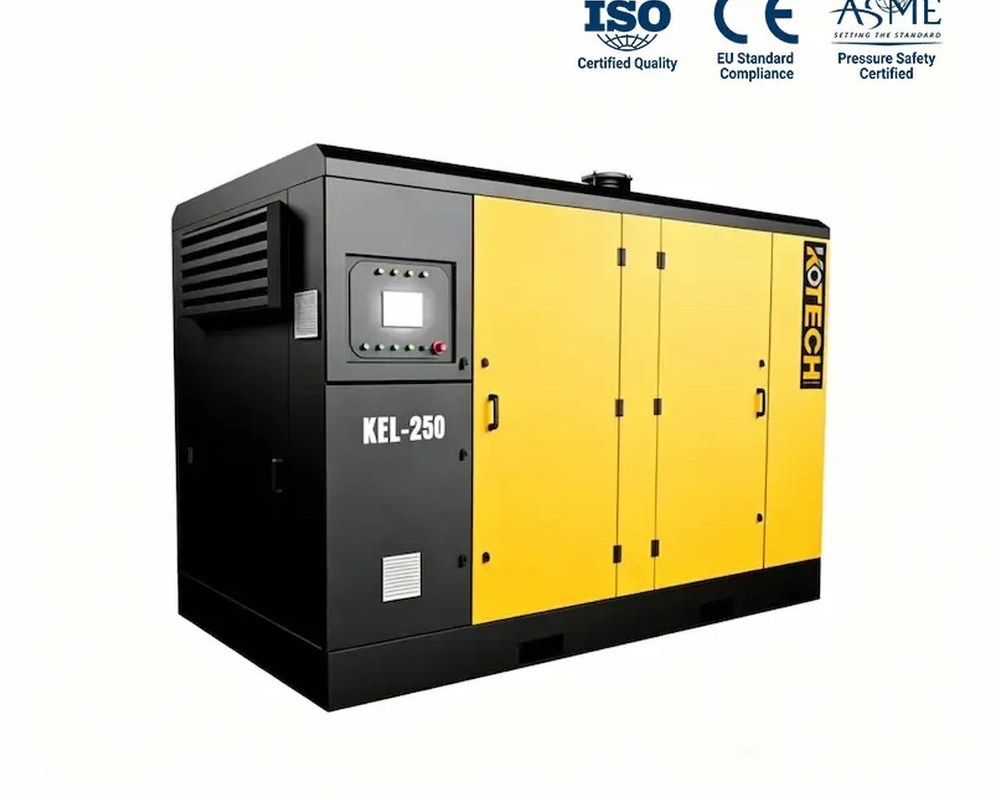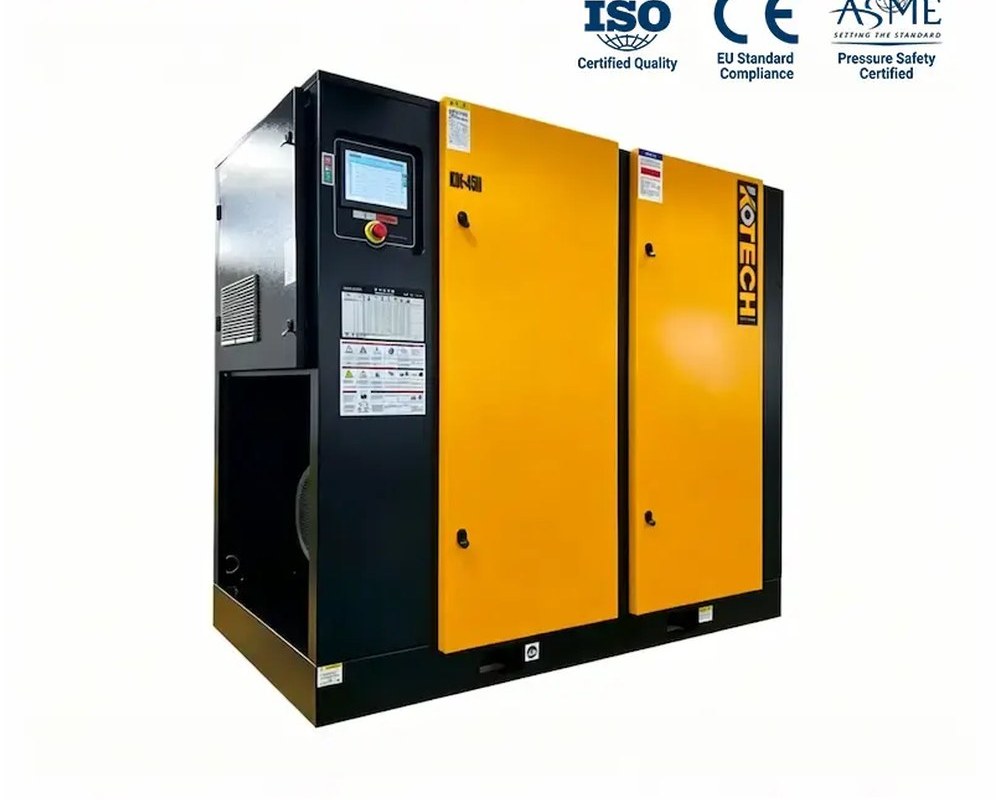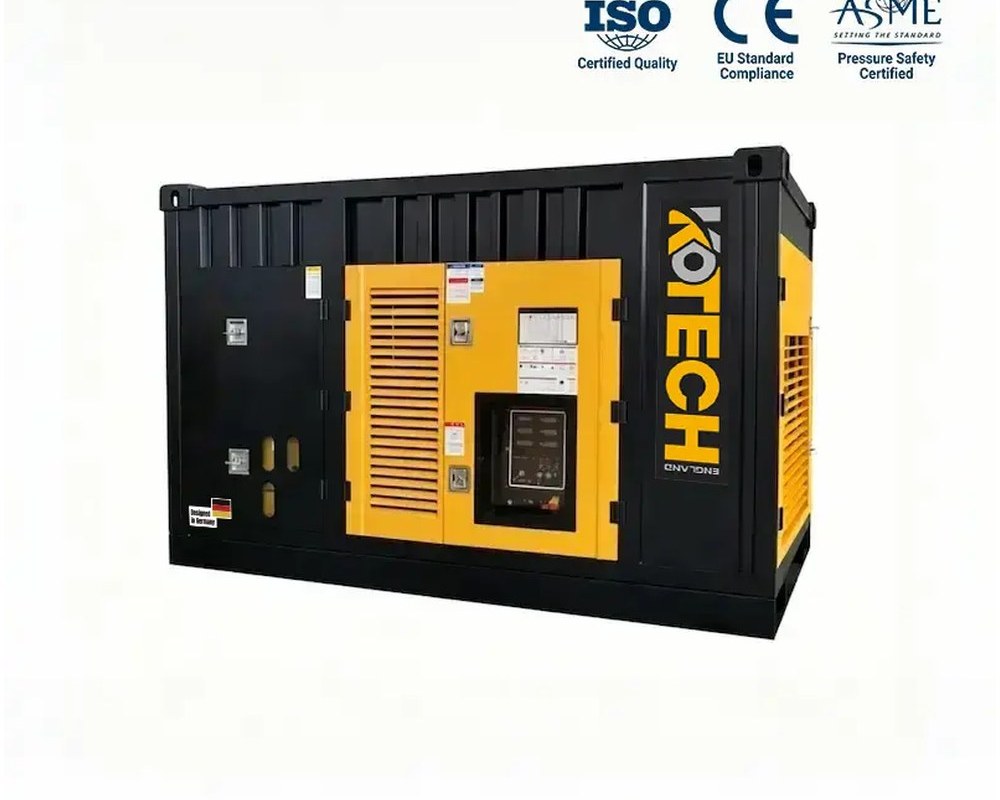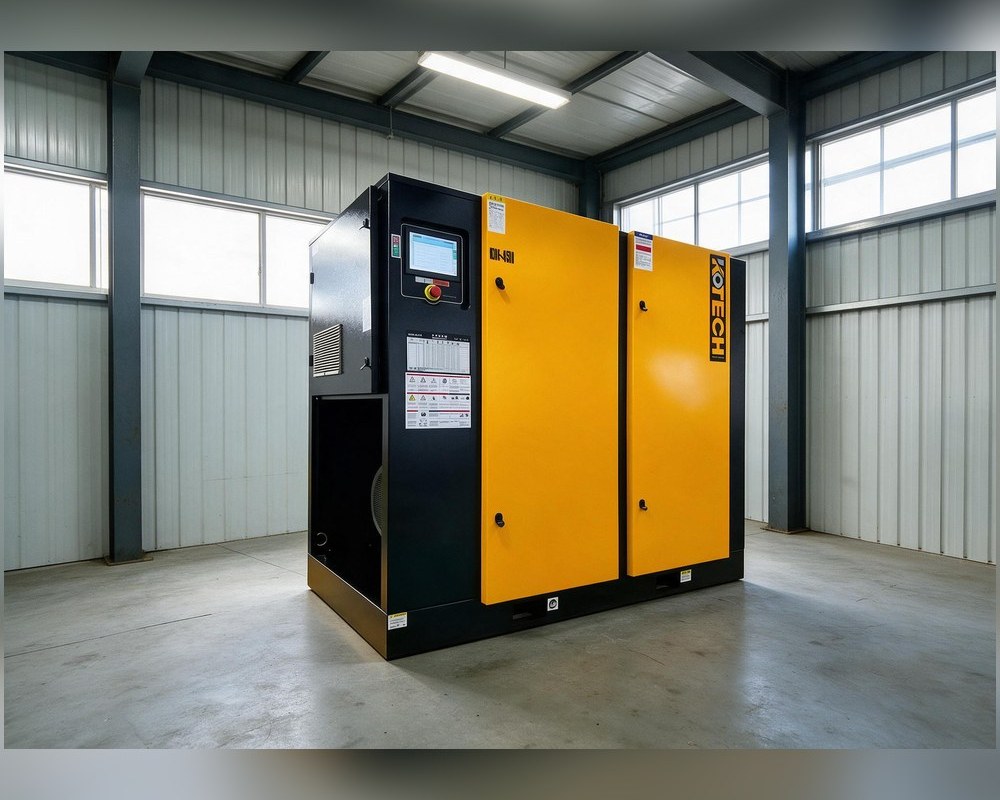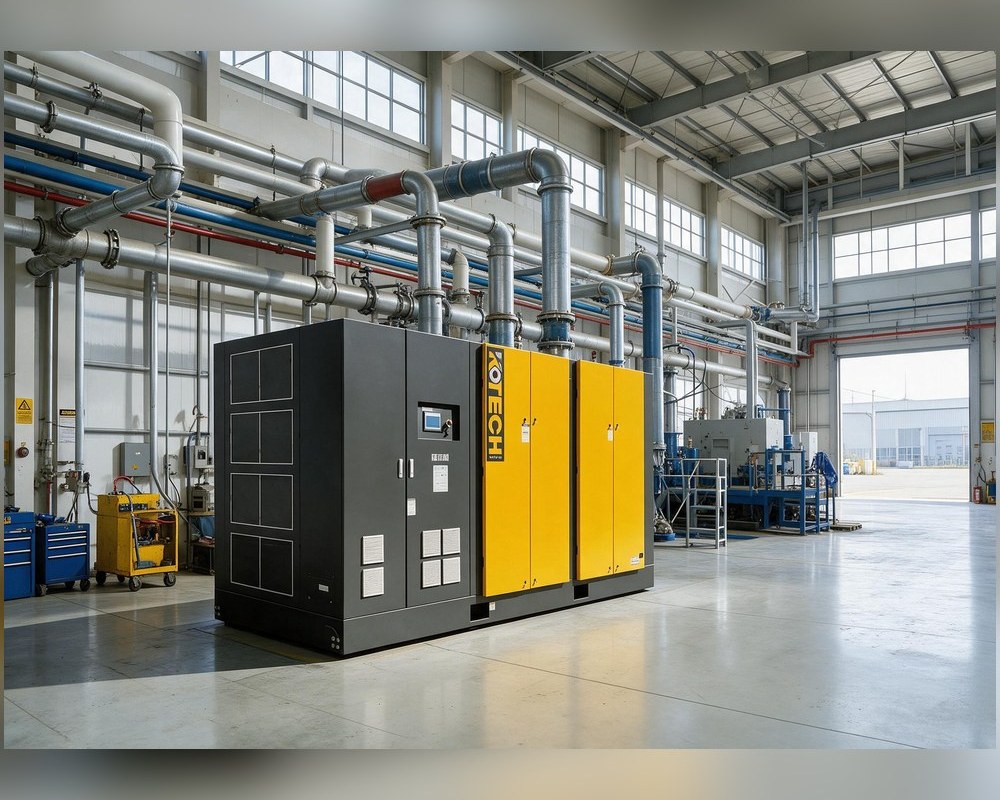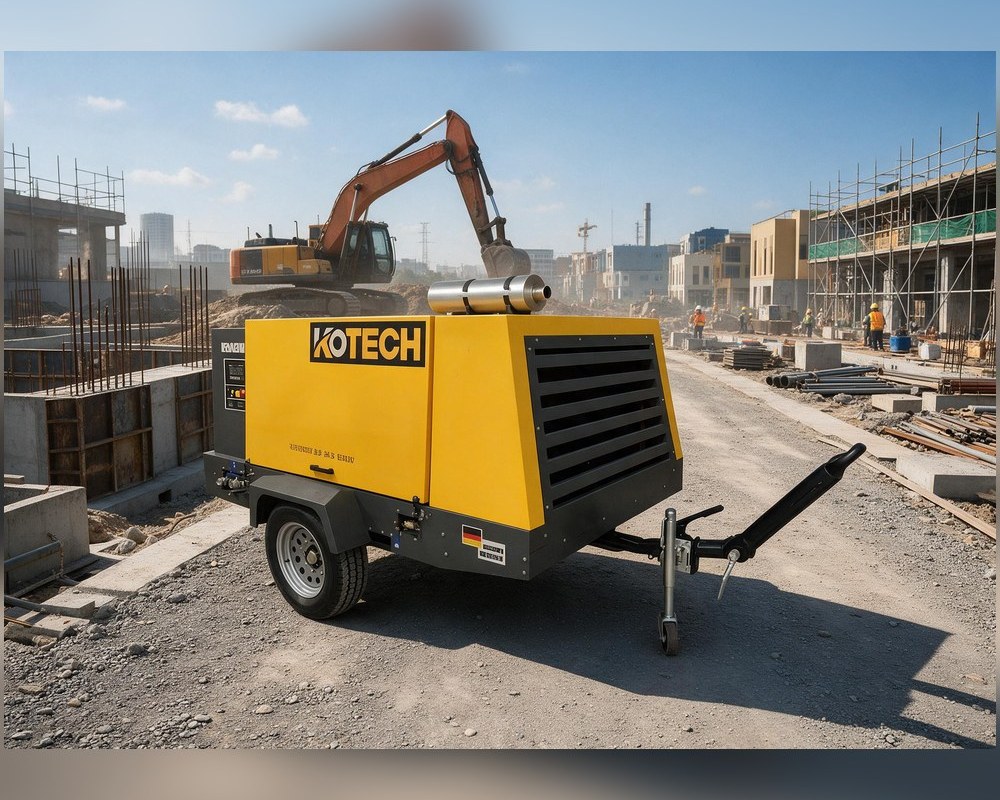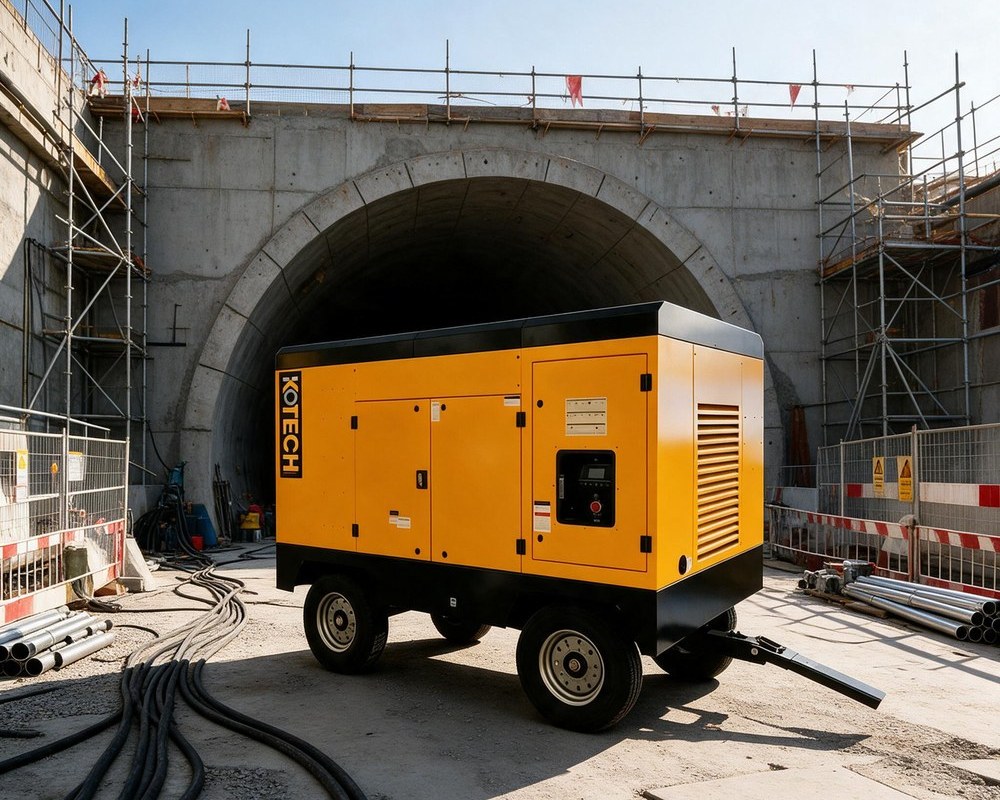




City construction sites sit in tight, regulated spaces: streets are narrow, neighbours are occupied buildings, and the compressor may have to be towed in and out every day. A portable oil-free air compressor matches that environment. It is compact and road-towable for easy movement around urban sites, and because compression happens without lubricant in the compression chamber, it reduces the risk of oil carryover into the air used for painting, finishing, instrumentation, and other work that needs clean air near people and finished surfaces.
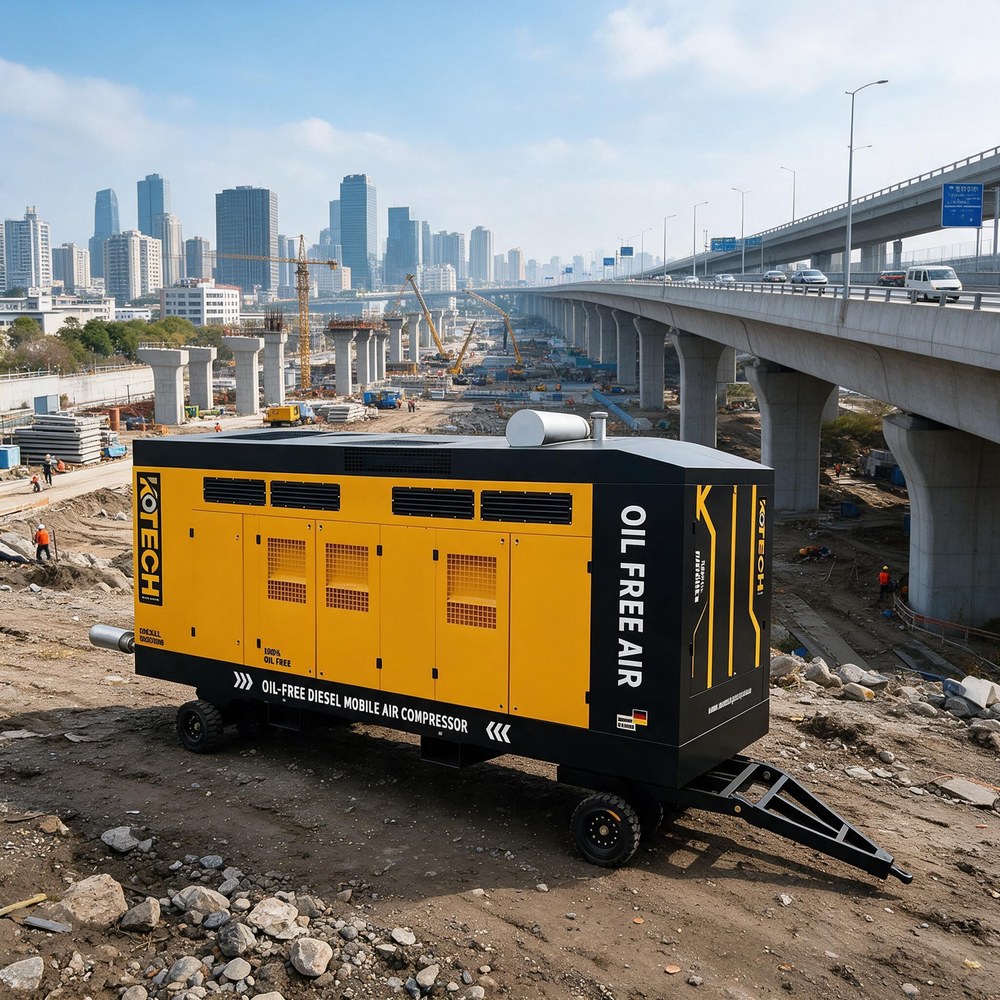
What oil-free means on a construction site
An oil-free compressor produces compressed air without injecting lubricant into the compression chamber. The rotors or compression elements are coated or run dry, so there is no oil in the compression process to carry over into the discharge air. On site, this matters whenever air is used for work that must stay clean: surface preparation and painting, finishing, pneumatic instruments, and applications near sensitive or occupied areas.
Oil-free does not mean maintenance-free. These machines still require correct operation, cooling, and scheduled service, and the air treatment at the point of use should match the application. The benefit is that the compression process itself does not introduce oil into the airstream.
Why portability matters in the city
Urban sites have little room for a stationary plant, and the work point changes as a project moves through phases. A towable compressor can be transported on public roads, positioned close to the current task, and removed at the end of the shift, which limits long hoses across footpaths and keeps the site footprint small.
Compact size also helps in street works, renovation projects, and sites behind existing buildings where larger equipment cannot easily access. Keeping the compressor near the task reduces pressure loss, and a unit that is easy to move is more likely to be repositioned correctly rather than left running wastefully at a distance.
- Road-towable and compact for tight urban access.
- Repositionable as the work moves through construction phases.
- Removable from the site when street space must be cleared.
- Shorter hose runs reduce pressure loss and trip hazards.
Typical applications on urban projects
City construction combines many different air uses on one site. Compressed air drives hand-held breakers and tools in renovation and demolition, supports surface preparation before coating, operates pneumatic equipment in installation work, and supplies instruments or finishing tasks where oil contamination would spoil the result.
- Demolition and renovation with pneumatic hand tools.
- Surface preparation and painting that needs clean air.
- Pneumatic installation and utility work.
- Instrument and finishing duties sensitive to oil carryover.
Real KOTECH portable oil-free compressor models
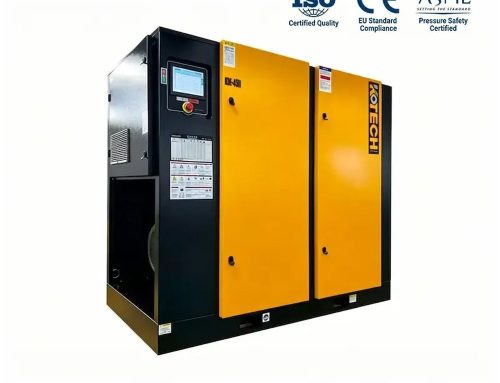
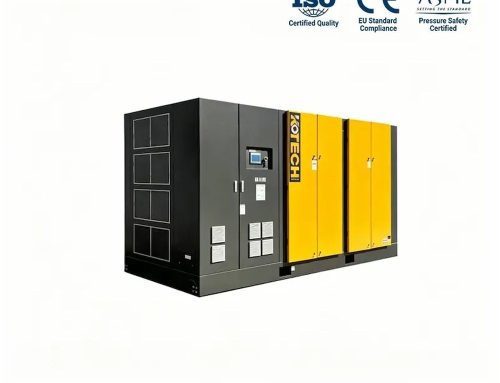
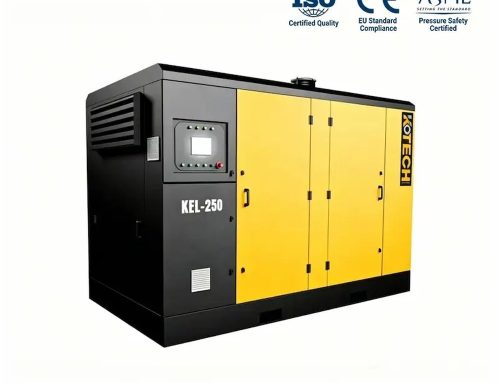
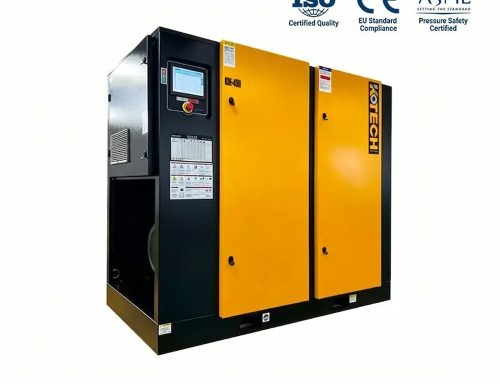
Current KOTECH portable oil-free models with free air delivery, working pressure, engine, and power from the product page specifications.
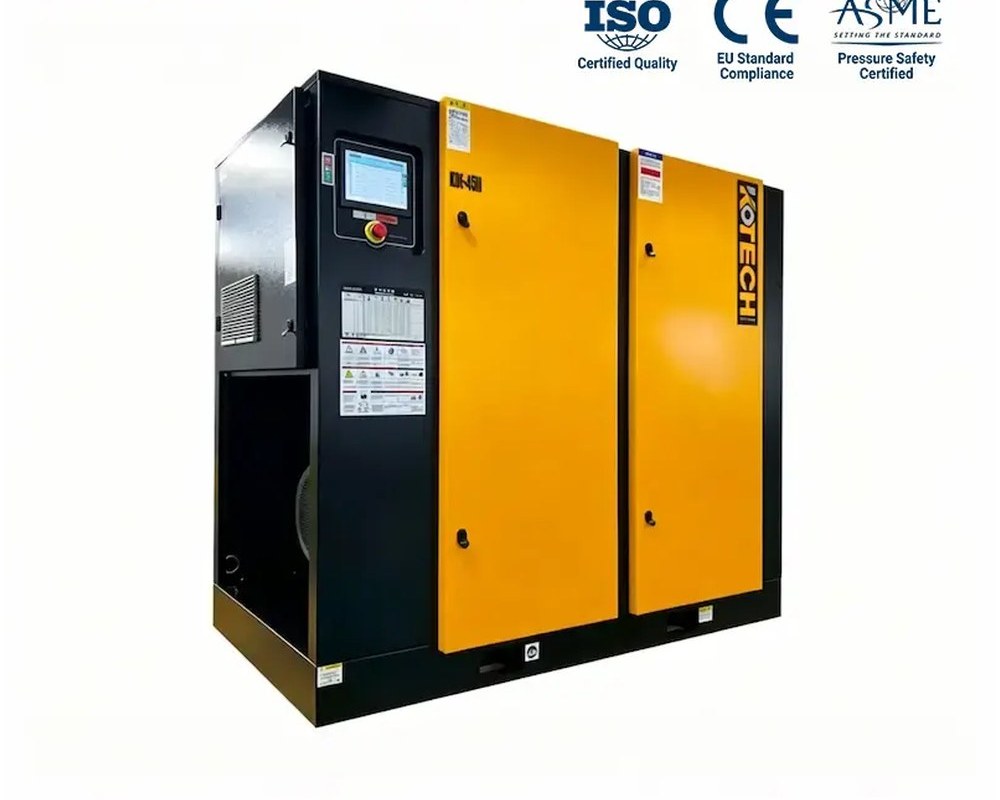
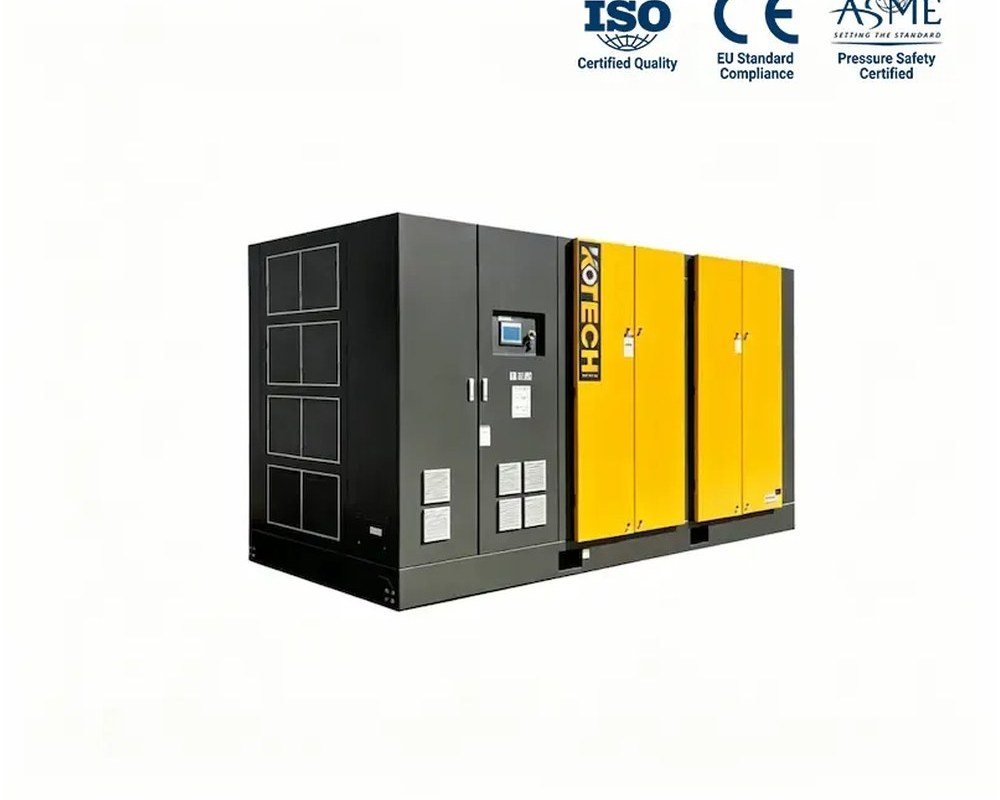
The table lists real KOTECH portable oil-free models with free air delivery, working pressure, engine, and power. The range covers small renovation units up to larger machines for demanding urban sites, allowing the compressor to be matched to the tools and towed between locations.
Emissions, noise, and site regulations
Urban projects operate under stricter rules on noise, hours of work, and engine emissions than remote sites, because the work is close to residents and traffic. Equipment choice is therefore part of compliance, not just productivity. A well-silenced machine, appropriate engine or drive specification, and disciplined placement help meet local limits.
- Check local noise limits and permitted working hours.
- Specify the correct engine emissions standard for the region.
- Position the compressor to limit noise toward occupied buildings.
- Plan movement and parking for machines using public roads.
Maintenance and reliability
On a busy city site, reliability protects the schedule, because an idle compressor stops every tool downstream. Oil-free machines should be operated within their design conditions, kept cool and clean, and serviced on schedule, paying attention to the compression elements, cooling, filtration, and belts or drive components.
- Keep intake air clean on dusty demolition sites.
- Monitor temperature and pressure for early warning of problems.
- Service compression elements and cooling on the prescribed schedule.
- Inspect hoses and couplings to avoid leaks and pressure loss.
- Keep the machine accessible for daily checks in a tight site.
What to check for an urban compressor
- Confirm the air quality required by the cleanest task on site.
- Check towing dimensions and access to the specific streets involved.
- Match flow to the tools used at the same time.
- Verify local emissions, noise, and working-hour regulations.
- Plan where the machine will be parked and refueled.
- Include scheduled servicing suited to oil-free compression.
Frequently asked questions
What is an oil-free portable compressor?
When do construction sites need oil-free air?
Are oil-free compressors harder to maintain?
Why is a towable compressor preferred in the city?
What regulations apply to compressors on urban sites?
What pressure do portable construction compressors provide?
If you need clean, towable compressed air for a city project, KOTECH can match a portable oil-free compressor to the tools, site access, and local regulations.