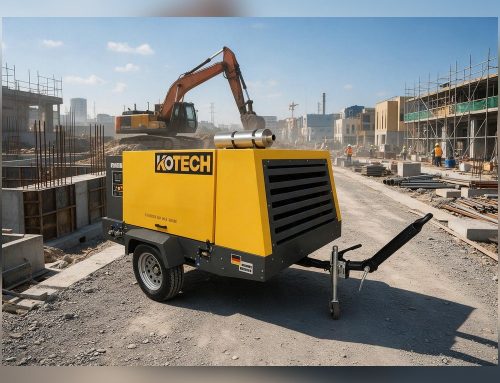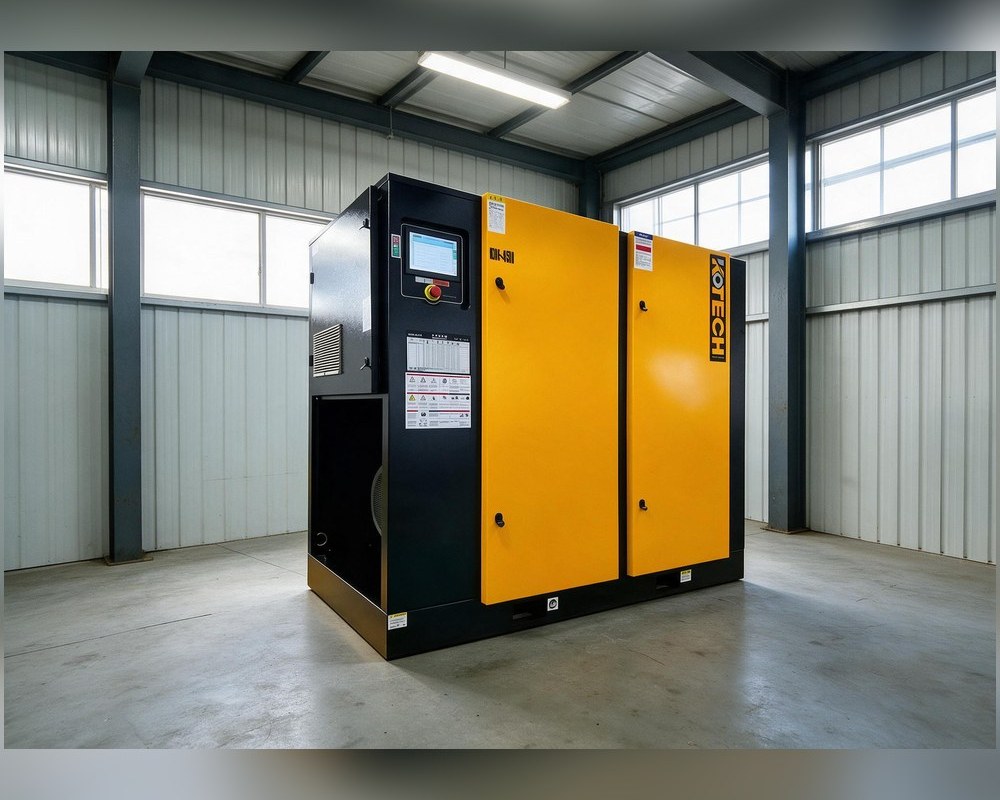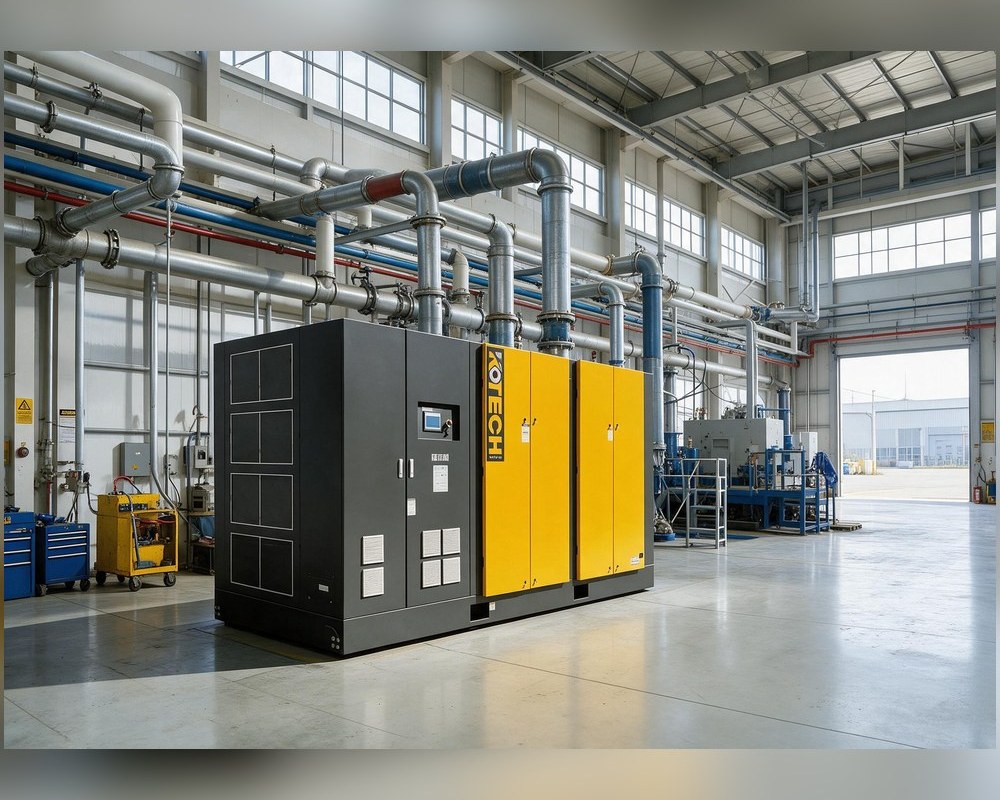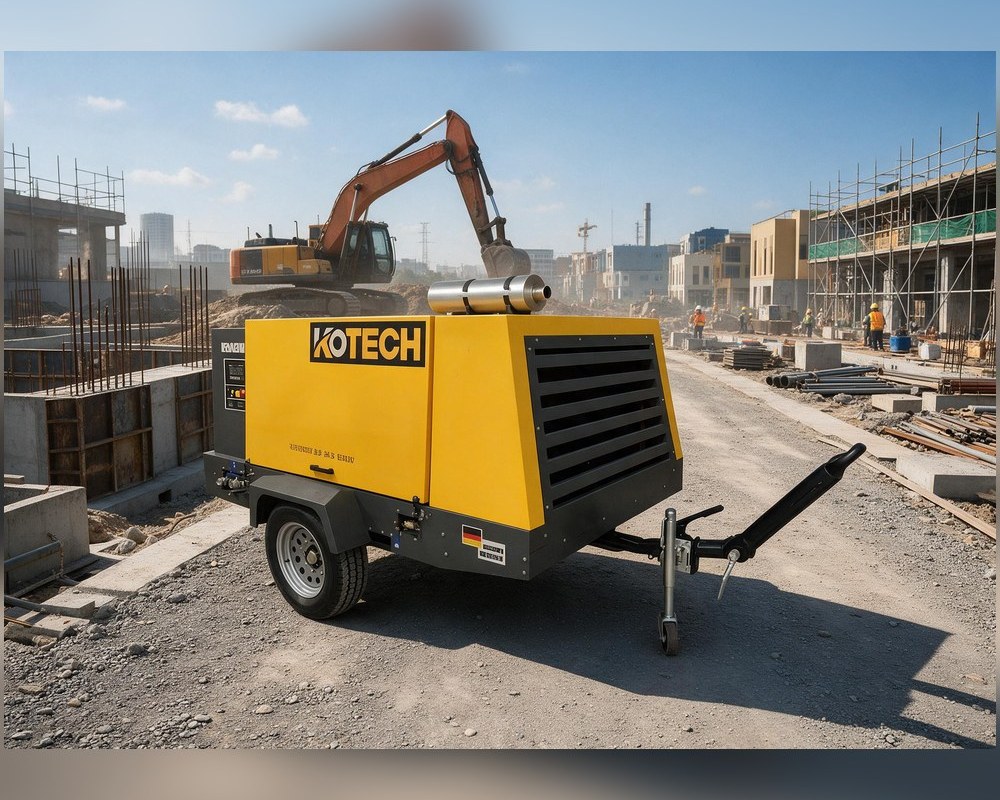




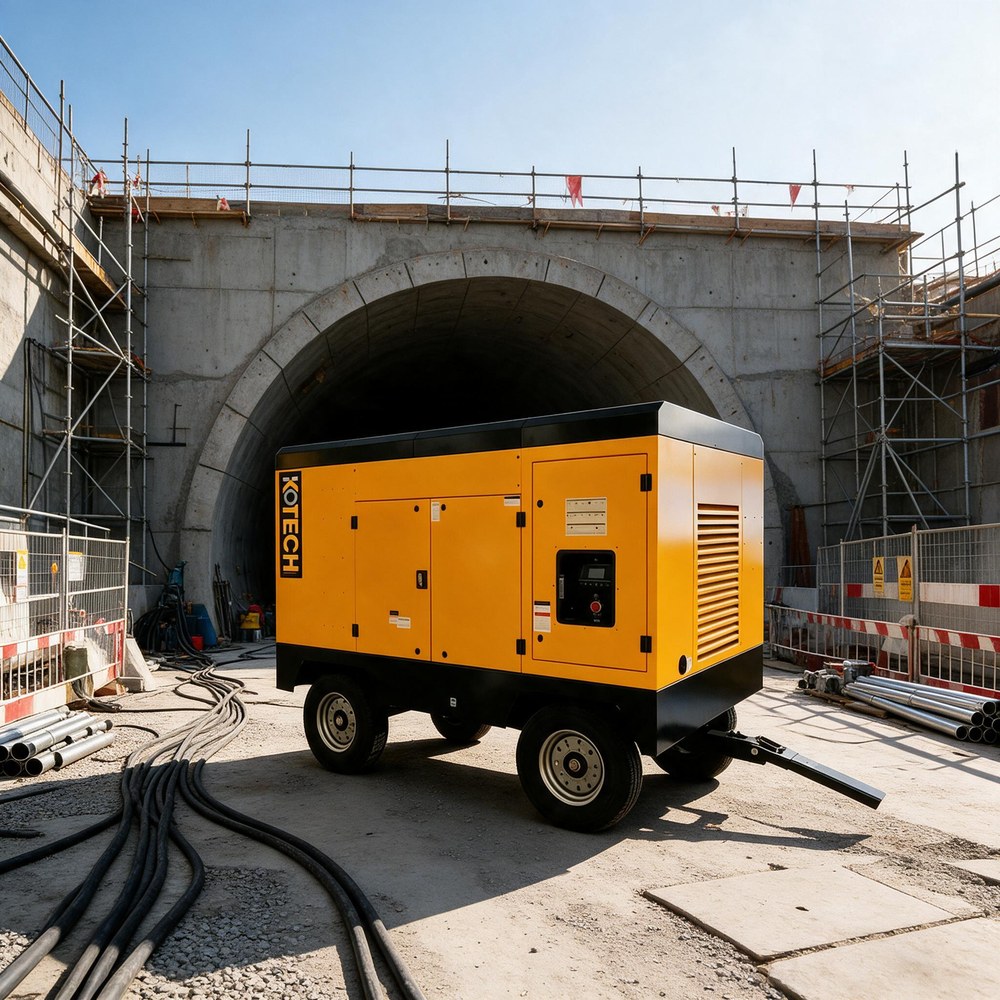
Tunneling is compressed-air intensive work. Rock drilling, shotcrete, pneumatic tools, and ventilation support all demand large volumes of air in a confined, moving work area, and underground a diesel engine introduces exhaust that the limited ventilation must then deal with. A mobile electric air compressor fits this situation well: it is built on a road-towable trailer so it can be repositioned as the tunnel advances, but it is driven by an electric motor, so it runs on site power without adding engine fumes to the tunnel atmosphere.
Where compressed air is used in tunneling
Across a subway project, compressed air supports several tasks at once. It powers pneumatic drills and hand tools, supports the spraying of shotcrete against the tunnel lining, operates equipment in grouting and utility work, and feeds process needs near the tunnel boring or excavation face.
The working point is not fixed. As excavation advances, the equipment that needs air moves deeper into the tunnel and the distance from a stationary plant grows. That is why mobility matters: a towable machine can be kept close to the current face, limiting long air lines, pressure loss, and the energy wasted pushing air through extended hoses.
Why electric drive suits underground work
A diesel compressor is convenient where no power supply exists, but in an enclosed tunnel its exhaust, heat, and noise must all be managed by the ventilation system, and emissions rules around workers can make long diesel operation impractical near the face.
An electric motor produces no exhaust at the point of use, runs more quietly, and is simpler to operate and maintain on a project that already has temporary electrical supply. Keeping the compressor outside or at the portal, or at ventilated staging points, combines clean electric operation with short, manageable air lines into the tunnel.
- No engine exhaust added to the confined tunnel air.
- Lower noise and heat around workers and equipment.
- Simple operation where temporary site power is available.
- Towable mobility keeps the machine near the advancing face.
Matching a compressor to the tunnel load
Sizing should consider the tools working together rather than each one separately. During peak periods a drill, shotcrete operation, and hand tools may all run at once, so total flow is the combined demand of the equipment actually used simultaneously, with an allowance for pressure drop through hoses and couplings.
- Add the air demand of tools that run at the same time.
- Allow for pressure loss across hoses and couplings.
- Confirm the electrical supply can start and run the motor.
- Keep hose runs short by moving the machine as work advances.
- Plan backup capacity so a single fault does not halt the face.
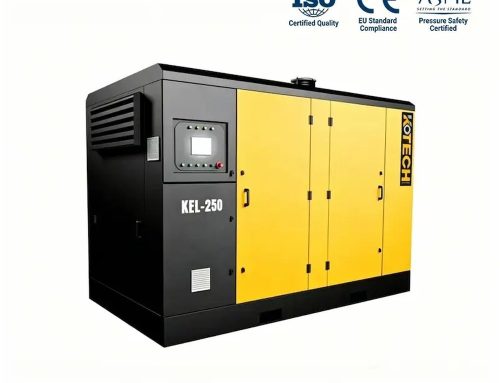
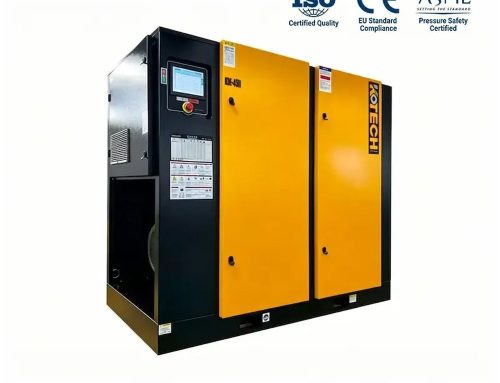
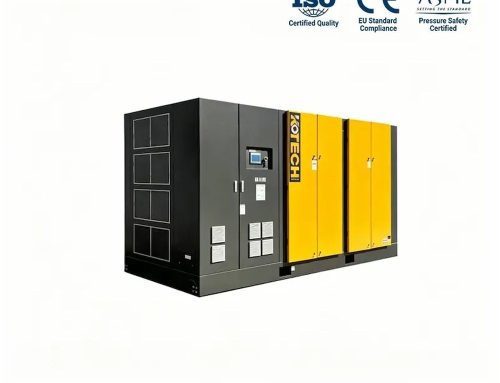
Real KOTECH mobile electric compressor models
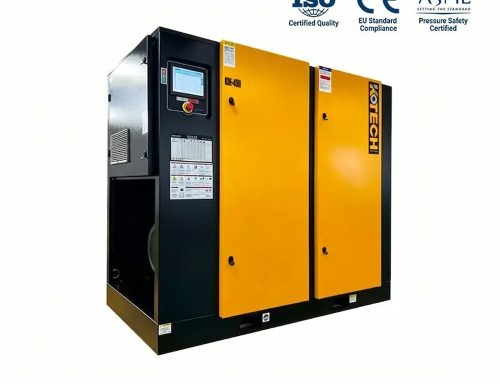
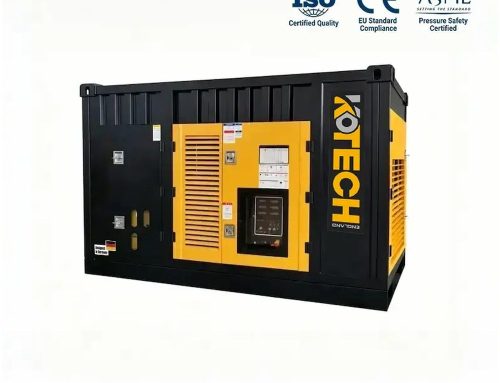
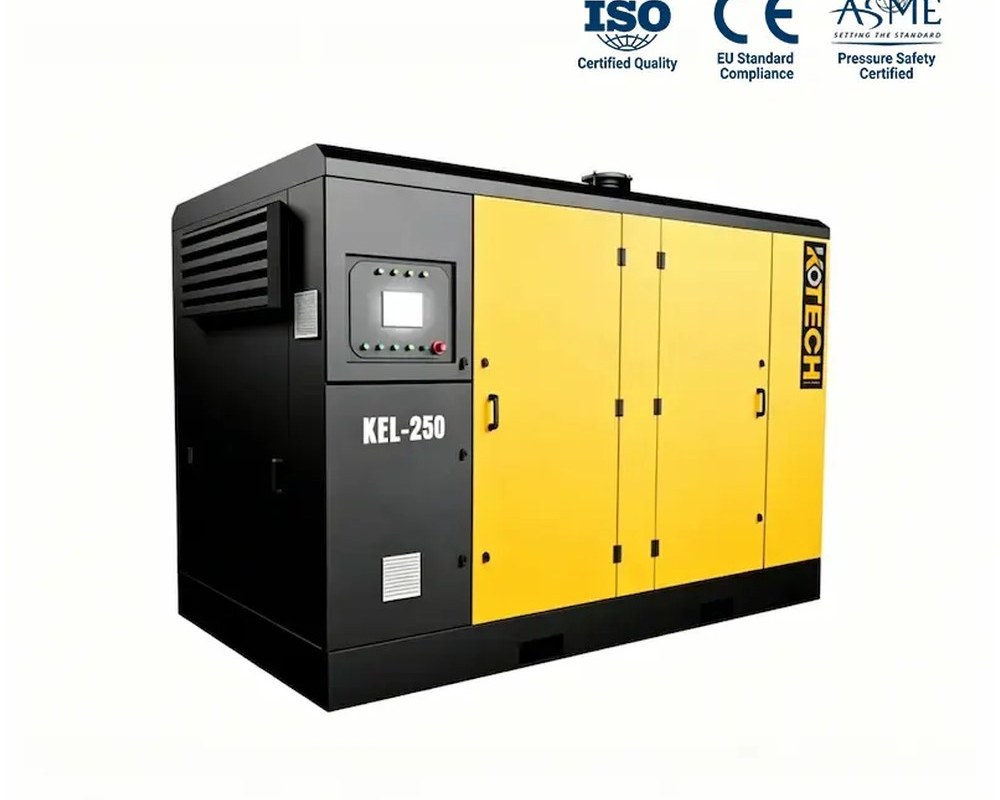
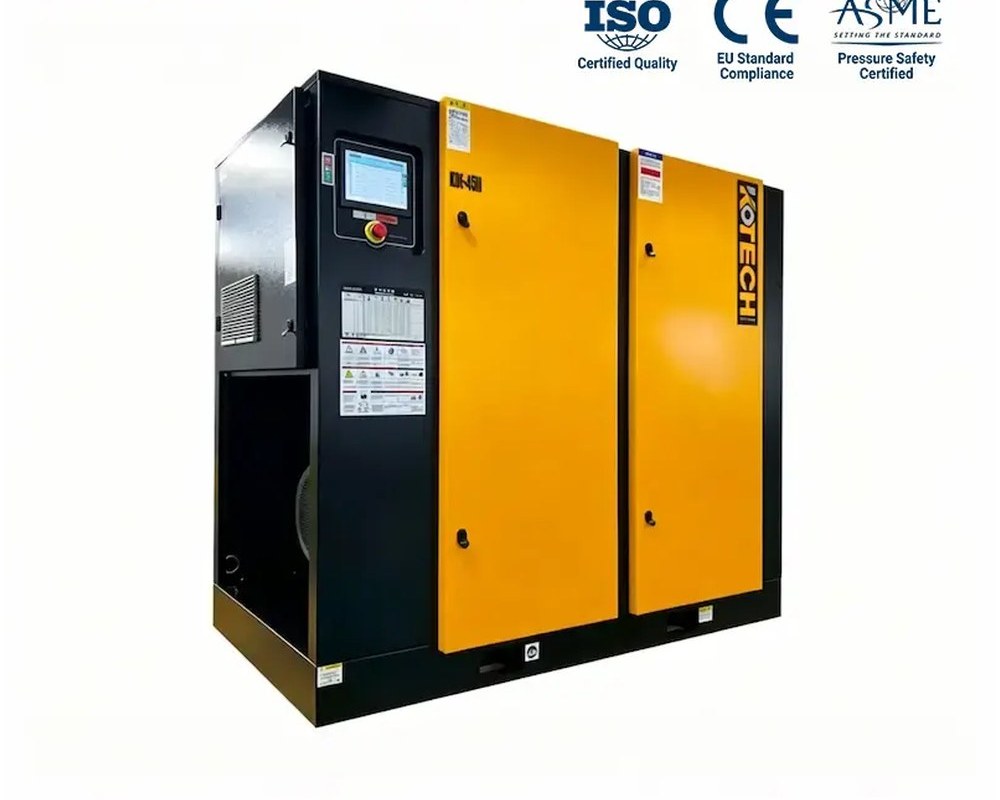
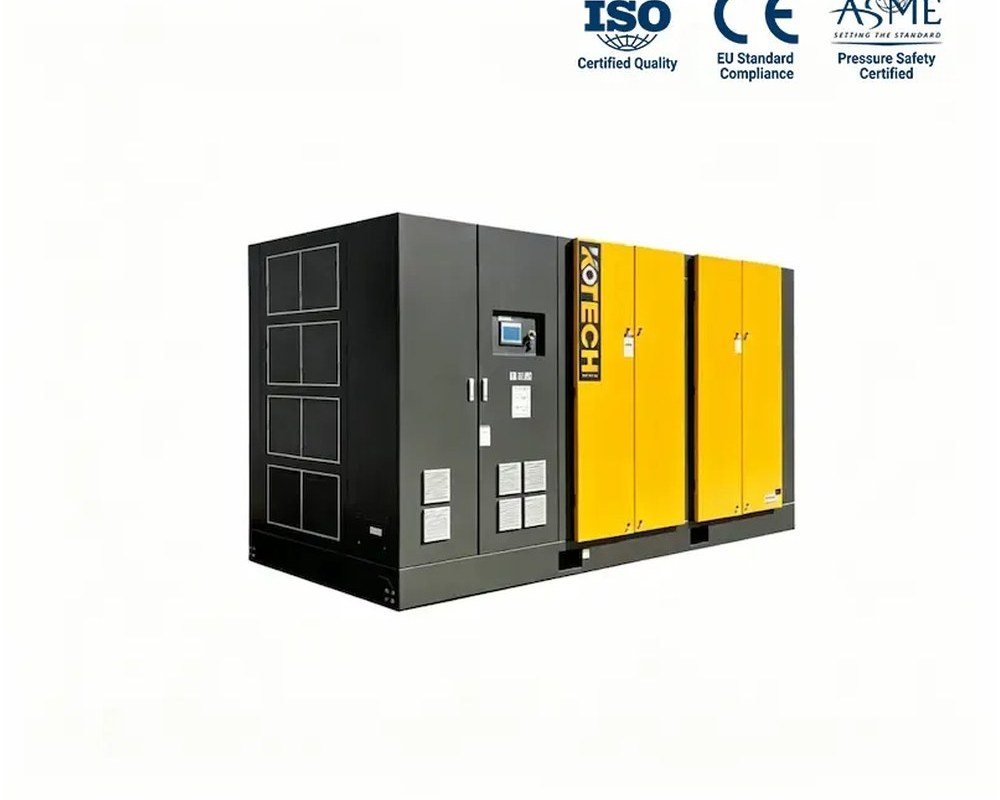
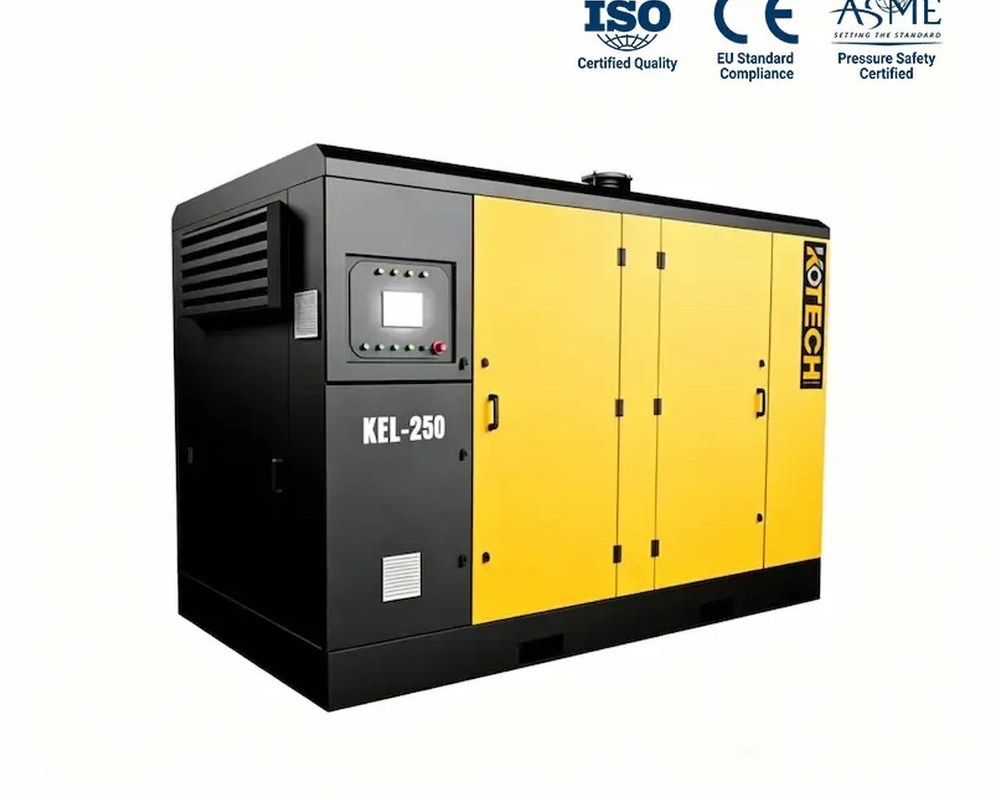
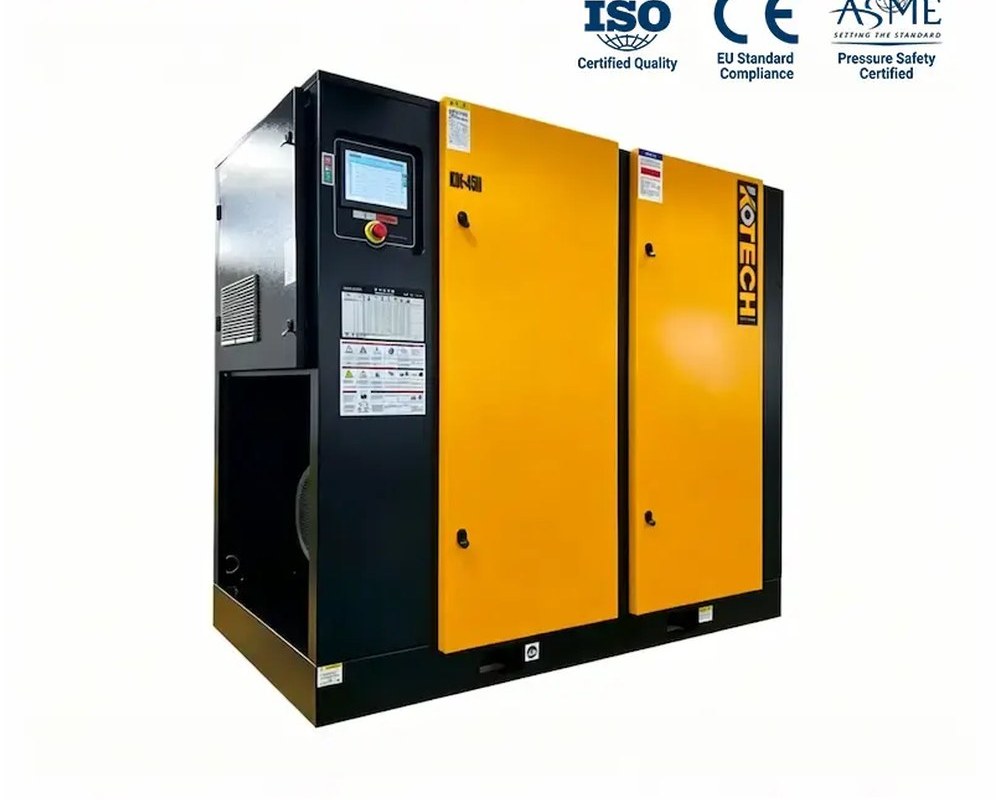
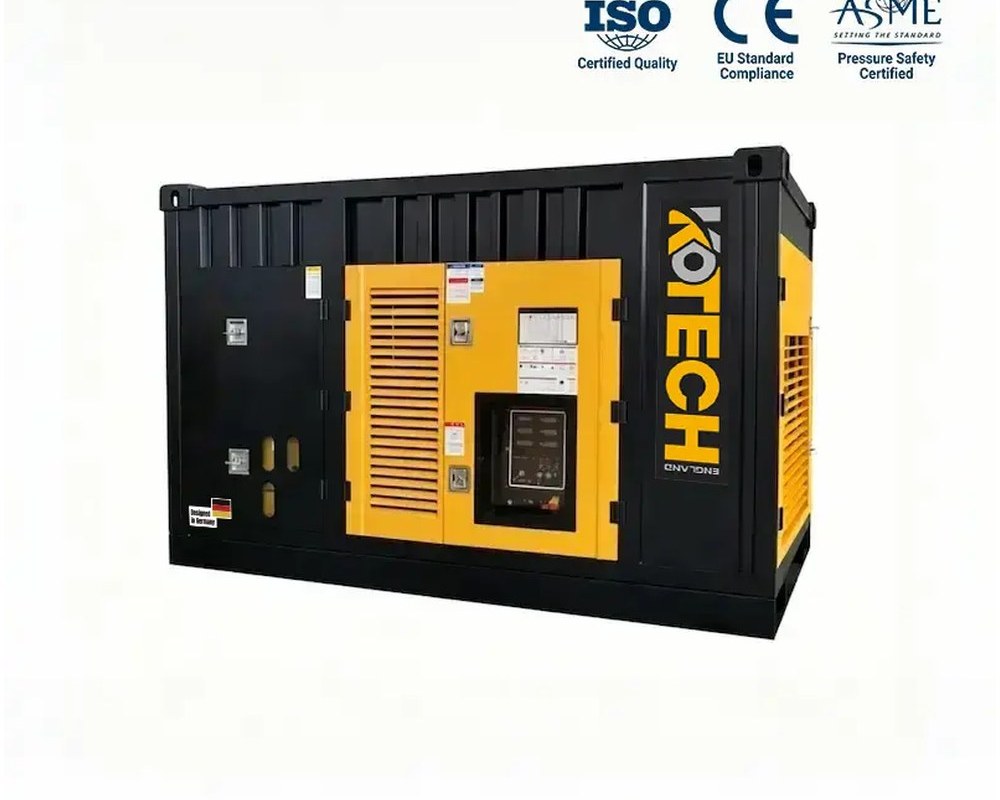
Current KOTECH mobile electric models with free air delivery, working pressure, motor power, and weight from the product page specifications.
The table lists real KOTECH mobile electric models with free air delivery, working pressure, motor power, and weight. The pressure and flow range allows a unit to be matched to the combined tunnel tools and the vehicle to be towed between work areas on site.
Power supply and site operation
Electric operation depends on a supply sized for the compressor, including its starting current and cable runs. Voltage drop over long temporary cables can affect motor performance, so the electrical layout and cable sizing should be planned together with the machine location rather than treated as an afterthought.
Operationally, electric compressors are well suited to long shifts because they start cleanly, require no refueling, and remove the logistics of moving and storing diesel underground. Monitoring pressure, temperature, and run status helps the site keep air available as the tunnel progresses and plan servicing around the construction schedule.
Reliability and maintenance on a construction project
Tunneling sites are dusty, humid, and hard on equipment, so intake protection, filtration, and a serviceable layout are important. A clean intake protects the airend and keeps delivery efficient, while a robust trailer and good access for maintenance keep the machine available through demanding shifts.
- Protect the intake from tunnel dust and moisture.
- Use quality filtration to protect the airend and downstream tools.
- Service the machine around the construction program, not after a failure.
- Maintain couplings and hoses to limit pressure loss and leaks.
- Keep redundancy or backup for critical-face work.
What to check for a tunnel compressor
- Calculate simultaneous demand from the tools used at the face.
- Verify the temporary power supply, starting current, and cable sizing.
- Choose a towable machine and relocate it to keep hoses short.
- Prefer electric drive where exhaust in the tunnel is a concern.
- Protect the machine from dust and moisture with good filtration.
- Provide backup capacity for work that cannot tolerate an air stop.
Frequently asked questions
Why use an electric rather than diesel compressor in a tunnel?
Can a mobile electric compressor be moved as the tunnel advances?
What size compressor does a tunnel project need?
Does an electric compressor need special power on site?
How is compressed air used in subway construction?
How do you maintain a compressor in a dusty tunnel environment?
If you are planning a subway or tunnel project and need fume-free, mobile compressed air matched to your tools and power supply, KOTECH can specify the right electric unit.