



Key Insights
-
Standard portable compressors are designed for 38°C ambient conditions — but Middle East summers regularly hit above 45°C, pushing generic units well past their operating limits.
-
Heat isn’t the only problem. The real issue is the combination of high ambient temperatures, direct solar load, and fine desert sand attacking the machine all at once.
-
Cooling system failure is the number one complaint from the field, with sand-plugged coolers and heat-stressed fans causing progressive performance loss.
-
Lubricant breaks down 2 to 3 times faster under sustained high heat, leading to carbon buildup, plugged filters, and much shorter service intervals.
-
Electrical components are under constant thermal stress — control panels and sensors inside sun-baked enclosures fail intermittently, even when the mechanical side is fine.
-
KOTECH didn’t just throw bigger parts at the problem. We systematically re-engineered the unit to handle these failure modes, with design validation in real 50°C+ Middle East field conditions.
Introduction: The Billion-Dollar Mistake
After more than a decade in industrial screw compressor R&D, with regular site visits across Middle East oilfield projects, I have watched the same costly mistake repeat itself year after year.
Procurement teams shop for mobile diesel compressors like they buy any other equipment: compare CFM, pressure, engine brand, and price. Quick decision. Ship to site.
Then summer hits.
The machine that performed perfectly in factory testing — conducted at 25°C in a controlled lab — starts shutting down at 1 PM when the ambient temperature hits 48°C and the desert sand clogs every cooling surface.
This isn’t a quality defect. It’s a design-environment mismatch. And it’s costing Middle East contractors millions in lost productivity, emergency maintenance, and premature equipment replacement.
But does it have to be this way? KOTECH asked the same question — and spent years engineering answers to each failure mode described below.
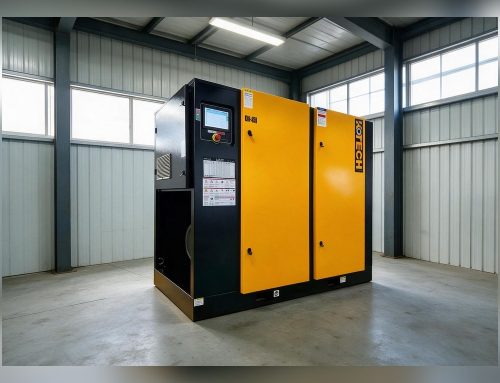
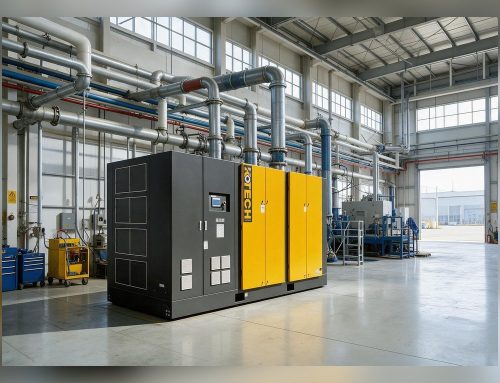
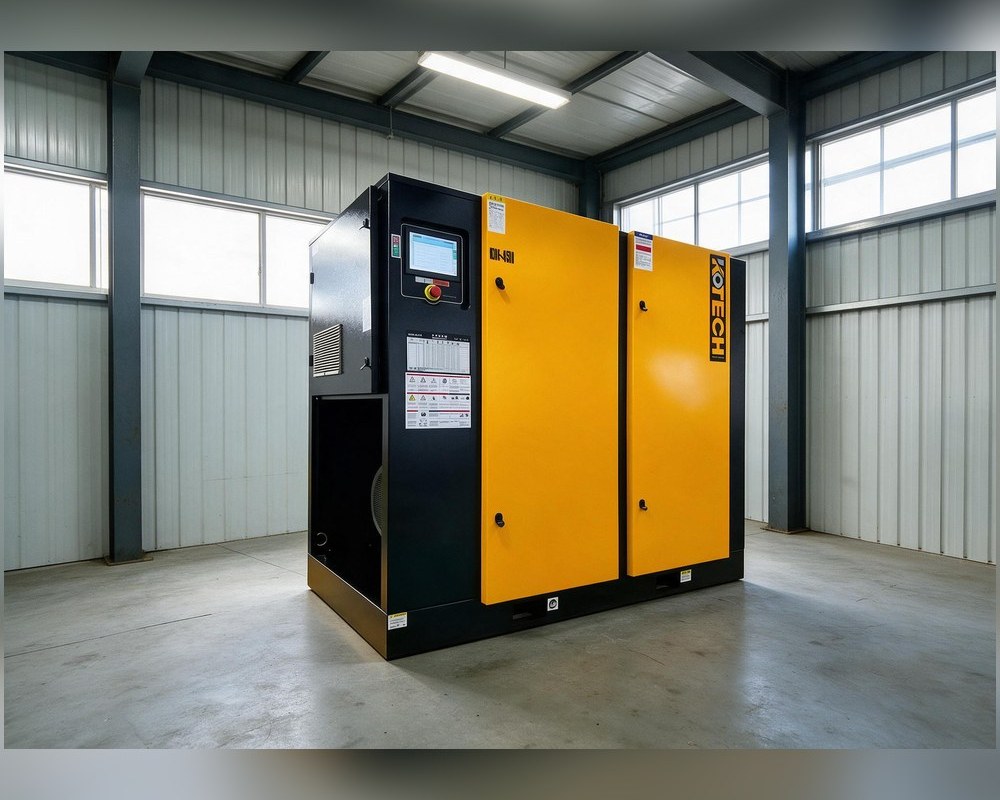
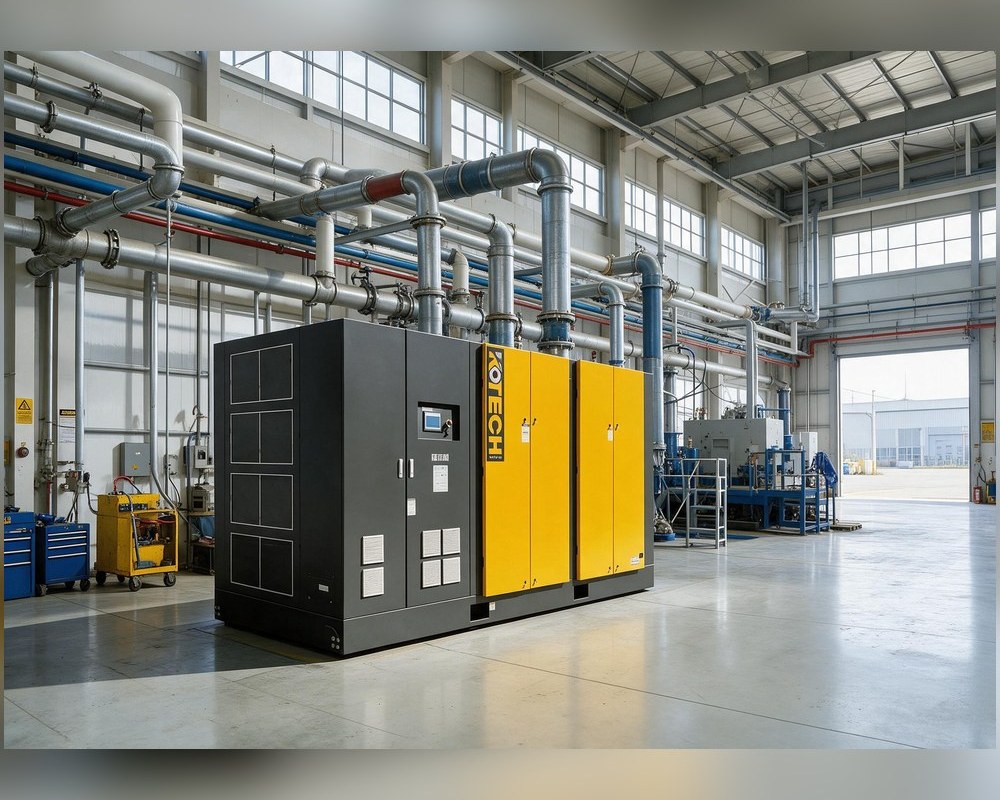
KDP Series Portable Diesel Air Compressor- Kotech Group | Leading Industrial Air Compressor Manufacturer | Oil-Free & VSD
The Real Problem: It’s Not Just “Heat”
Most buyers assume that if a compressor has a “high-temperature” option — usually just a larger radiator — it will work in the Middle East. This is dangerously wrong.
The Real-World Environmental Stressors
The Middle East summer is not a single environmental challenge. It is a multi-front assault on equipment integrity:
| Stressor | What It Does |
|---|---|
| 45-50°C ambient air | Shrinks the cooling delta-T, forcing the machine to run at a much higher baseline temperature from the start. |
| Direct solar radiation | The steel enclosure acts like a greenhouse, pushing internal cabinet temperatures 10-15°C above outside air. |
| Fine desert sand | Blankets cooling fins, chokes air intakes, and acts as heavy abrasive on moving parts. |
| Heat recirculation | On stationary sites with no natural breeze, exhaust air gets pulled right back into the intake loop. |
As one field engineer put it: “The problem isn’t the heat. It’s the heat and the sand and the sun and the fact that the machine sits in one spot for six months with no breeze.”
The On-Site Chain Reaction
When these stressors combine, the failure cascade begins:
-
High ambient temperatures and solar load reduce cooling efficiency.
-
Sand packs into the cooling fins, cutting off what heat exchange is left.
-
Operating temperatures spike, causing compressor oil to oxidize rapidly.
-
Carbon deposits form, clogging filters and choking oil flow.
-
The machine hits its thermal ceiling and triggers a hard shutdown.
KOTECH’s response: Instead of treating each stressor in isolation, KOTECH engineers redesigned the entire thermal management system — from enclosure materials to airflow routing to component selection — to withstand the full environment, not just the heat.
Why Generic Compressors Fail: A Technical Breakdown
1. Cooling Systems Designed for Temperate Climates
Standard portable compressors have their cooling systems calculated for a maximum 38°C ambient temperature. The heat exchanger area, fan capacity, and airflow routing all assume this baseline.
In a 45-50°C Saudi summer, the delta-T (temperature difference between ambient air and compressed air) shrinks dramatically. The cooling system simply cannot reject enough heat.
The generic misconception: “Just add a bigger radiator.”
The reality: A larger radiator without redesigned airflow routing, fan positioning, and enclosure ventilation just adds weight, not cooling capacity.
How KOTECH solves it: True high-temperature cooling requires system-level redesign — not a single larger component. KOTECH’s KDP series features:
-
Optimized airflow routing designed for static outdoor operation (not relying on vehicle-motion ventilation)
-
Heat-isolated enclosures treated with solar-reflective coatings
-
Variable-speed hydraulic fans sized specifically for worst-case static pressure conditions
-
Oversized cooling margins to handle sustained peak loads without de-rating
Field result: KOTECH units maintain full load operation at 50°C ambient while generic units with “upgraded radiators” overheat and shut down.
2. Lubricant Failure in Sustained Heat
Compressor oil is engineered to maintain stable viscosity within a specific temperature range. When ambient heat raises the machine’s baseline operating temperature by 10-15°C:
-
Viscosity drops → film strength weakens
-
Oxidation accelerates → oil darkens, acids form
-
Carbon deposits accumulate → oil circuits clog
-
Additives deplete → protection is lost
The generic reality: Generic units in Middle East service require oil changes 2 to 3 times more frequently than their rated intervals. On remote sites, this means unscheduled supply runs and higher labor costs.
How KOTECH solves it: KOTECH selects and validates lubricants specifically for sustained high-temperature operation:
-
Viscosity grade specifically selected for a 45-50°C ambient baseline
-
High-performance synthetic formulation that slows thermal breakdown by 2-3x
-
Oil circuit routing designed to avoid internal heat accumulation zones
-
500-hour change intervals fully validated under continuous 45°C+ operation
Field result: KOTECH units achieve full 500-hour oil change intervals in Middle East summer — half the maintenance frequency of generic units.
3. Dust: The Hidden Accelerant
High temperatures increase the permeability of enclosure seals. Fine desert sand — measured in microns — finds its way inside. Once inside:
-
Dust mixes with oil → abrasive slurry
-
Dust accumulates on coolers → insulation layer
-
Dust blocks air filters → reduced intake
-
Dust on electrical components → heat retention
The vicious cycle: Heat → seals expand → dust ingress → insulation → more heat → more seal expansion → more dust.
How KOTECH solves it: KOTECH’s dust protection is integrated at the system level, not added as an afterthought:
-
An integrated cyclonic pre-cleaning stage pulls out 95%+ of heavy dust before it ever hits the main filter
-
Nanofiber coalescing filters achieve a verified 99.97% efficiency at 5 microns
-
A positive-pressure enclosure design paired with labyrinth seals keeps sand from creeping through panel gaps
-
A completely sealed electrical compartment runs on its own separate, clean cooling path
Field result: In Libya desert drilling operations, KOTECH KDP series units maintained 96.2% availability over a 6-month summer project — with maintenance intervals extended from 250 to 500 hours.
4. Electrical System Vulnerability
Control panels, sensors, PLCs — all have rated maximum ambient temperatures. Inside a sun-heated compressor enclosure, these limits are routinely exceeded.
Documented generic failures:
-
Intermittent or dropped sensor signals
-
Nuisance, unexpected auto-shutdowns
-
Display screen blackouts or distortion
-
Relay contact welding
These aren’t mechanical failures, but they stop production just as effectively.
How KOTECH solves it: KOTECH treats electrical system thermal protection as a first-order design requirement:
-
Industrial-grade components rated for continuous 70°C+ cabinet internal temperatures
-
A sealed electrical compartment completely isolated from the main engine enclosure
-
An independent cooling airflow path dedicated solely to the electrical bay
-
Heavy-duty, heat-reflective insulated barriers between the hot mechanical zone and the electronics
Field result: KOTECH control systems keep working when mechanical systems are under peak load — no “mystery” electrical failures in summer.
5. Thermal Deformation of Rotor Components
Different metals expand at different rates. In a generic compressor assembled in a temperate factory, the clearances between rotors, bearings, and housings are set for moderate temperatures.
When that same machine operates at 50°C ambient (65°C+ internal), thermal expansion changes those clearances. The result:
-
Increased internal friction
-
Reduced volumetric efficiency (less air output)
-
Progressive, permanent performance loss
-
Premature bearing wear and eventual lockup
How KOTECH solves it: KOTECH’s component selection accounts for the full operating temperature range:
-
Housing alloys selected for highly stable thermal expansion properties
-
Assembly tolerances precision-calibrated to leave exact clearance for thermal growth
-
High-temperature sealing materials that won’t degrade or lose elasticity under continuous heat
-
Heavy-duty bearing configurations rated for non-stop, high-heat rotation
Field result: KOTECH units maintain efficiency and reliability through years of Middle East summer operation, while generic units show progressive performance degradation from year one.
The “Bigger Radiator” Fallacy — And KOTECH’s System-Level Alternative
I have discussed this with countless project managers. The conversation goes like this:
“Does your compressor handle high temperature?”
“Yes, we offer a high-temp package with an upgraded radiator.”
This is not a solution. It is a band-aid.
Here is exactly what a larger radiator alone does not address:
| Unaddressed Issue | Consequence |
|---|---|
| Solar heat absorption into enclosure | Internal ambient still exceeds limits |
| Sand accumulation on cooler fins | Upgraded cooler clogs just as fast |
| Lubricant thermal stability | Oil still oxidizes at the same rate |
| Material thermal expansion tolerances | Clearances still change with temperature |
| Electrical compartment heat isolation | Components still overheat |
| Airflow routing for static operation | No improvement for stationary sites |
What KOTECH Does Instead
| Design Requirement | KOTECH Implementation |
|---|---|
| System-level cooling layout | Not just bigger components — redesigned airflow, fan positioning, and enclosure ventilation |
| High-temperature compatible lubricants | Validated 500-hour intervals at 45°C+ |
| Material selection with matched thermal expansion | Stable clearances across full temperature range |
| Desert-grade enclosure sealing | Positive-pressure + labyrinth seals + cyclonic pre-filtration |
| Electrical compartment isolation and ventilation | Sealed bay with dedicated cooling path |
Cost Comparison: Generic “Cheap” vs. KOTECH Purpose-Built
| Cost Factor | Generic Unit | KOTECH Unit |
|---|---|---|
| Upfront price | Lower by 15-25% | Higher |
| Annual downtime hours(Middle East summer) | 100-200 hours (2-4% of runtime) | 20-40 hours (0.5-1%) |
| Oil change frequency at 45°C+ | Every 250 hours (2-3x standard) | Every 500+ hours (validated) |
| Summer shutdowns | Frequent (weekly) | Rare |
| Component life in Middle East | 2-3 years | 5-8 years |
| 5-year TCO | Significantly higher | Lower |
The TCO reality: For a drilling contractor operating 2,000 hours annually, a generic unit that loses 150 hours to heat-related downtime over 5 years costs **$480,000 in lost production** (at $3,200/hour site rate) — far more than any upfront price difference.
What Purpose-Built Compressors Do Differently — The KOTECH Difference
Instead of addressing failures one by one, KOTECH engineered a complete solution:
System-Level Cooling Architecture
-
Optimized airflow routing for static outdoor operation
-
Heat-isolated enclosures with solar-reflective coating
-
Variable-speed fans sized for worst-case static conditions
-
Oversized cooling margins for sustained peak loads
High-Temperature Lubricant Matching
-
Viscosity grade selected for high ambient
-
Oxidation-resistant formulations to slow thermal breakdown
-
Oil routing avoiding heat accumulation zones
-
500-hour service intervals validated at 45°C+
Material Thermal Stability
-
Housing alloys with stable expansion properties
-
Assembly tolerances that reserve clearance for thermal growth
-
High-temperature sealing materials
-
Bearings rated for continuous high-heat operation
Desert-Grade Dust Protection
-
Enhanced inlet pre-cleaning (cyclonic separation)
-
Multi-stage filtration (99.97% efficiency at 5 microns)
-
Positive-pressure enclosures
-
Sealed electrical compartments with separate cooling paths
Procurement Checklist: What to Ask — And What KOTECH Answers
Before purchasing mobile compressors for Middle East deployment:
| Question to Supplier | Generic Response | KOTECH Response |
|---|---|---|
| “What is your maximum continuous ambient temperature for full load operation?” | “38°C standard, 45°C with upgraded radiator” | “50°C+, system-validated in Middle East field conditions” |
| “Is this a system-level thermal design or just a larger radiator?” | Avoidance or vague answer | “System-level — cooling layout, enclosure, fan sizing, and airflow routing” |
| “What is your dust filtration efficiency at 5 microns?” | Not specified | “99.97% with dual-stage + cyclonic pre-filter” |
| “What oil change interval do you guarantee at 45°C+?” | “500 hours… but field results may vary” | “500 hours, validated in Middle East summer field tests” |
| “Is your electrical compartment isolated and cooled?” | “No, it’s inside the main enclosure” | “Yes, sealed compartment with dedicated cooling” |
| “Do you have Middle East field references from summer operation?” | Limited or none | “Yes — Libya, Saudi Arabia, UAE, Oman” |
Case Study: What Field Experience Teaches
Source: Multiple Middle East oilfield site visits and KOTECH field validation
The Typical Generic Failure Pattern
Year 1, Summer: Generic compressor installed in spring. Works fine during cooler months. First 45°C day triggers an overheat shutdown. Site loses half a shift.
Year 2: After repeated overheating, the oil has carbonized and filters plug constantly. Cooling fins are sand-packed, reducing surface area. Repair costs mount.
Year 3: Major failure. Severe rotor wear from lubricant breakdown. Constant electrical gremlins from heat-stressed components. Replacement recommended.
The KOTECH Alternative — Documented Performance
In Libya desert drilling operations (6-month summer project, 50°C+ ambient):
-
96.2% equipment availability with zero heat-related shutdowns
-
32% fuel reduction through intelligent load-sensing technology
-
18% increase in drilling penetration rates due to sustained, steady pressure
-
Maintenance intervals doubled from 250 to 500 hours
The verdict from site managers who have used both:
“I would never go back to generic units. The upfront savings are nothing compared to the headache. KOTECH proved you can engineer for the desert — most just won’t.”
Conclusion: Generic Fails. KOTECH Engineered the Solution.
Generic mobile compressors fail in the Middle East because they were never designed for the Middle East. They are temperate-climate machines deployed in a desert environment — and the mismatch is catastrophic.
The failure is not random. It is predictable, preventable, and expensive.
The generic “solution” — a larger radiator — is not a solution. It treats one symptom while ignoring the full combination of heat, sun, sand, and static operation.
KOTECH asked a different question: What would a mobile compressor look like if it were designed from the ground up for 50°C+ desert operation?
The answer is the KDP series: system-level thermal management, desert-grade dust protection, high-temperature lubricants validated to 500 hours, isolated electrical compartments, and thermal-stable component selection — all proven in Middle East field conditions.
Contractors who continue buying generic units for Middle East projects are not saving money. They are financing their own downtime.
The math is simple: Purpose-built high-temperature compressors cost more upfront but deliver far lower total cost of ownership over the equipment’s life.
For procurement teams: stop asking for the lowest price. Start asking for the ambient temperature rating, the dust protection specifications, and the field references from Saudi summer operations. Your project schedule — and your budget — will thank you.