



Key Insights
Most oilfield contractors pick standard mobile compressors based only on price and basic airflow specs, ignoring Middle East summer extreme heat and desert sand combined working conditions.
Generic temperate-climate compressors cannot sustain long-duration outdoor operation above 45°C, leading to hidden downtime, frequent maintenance and shortened service life on oil drilling and well service projects.
High-temperature reliability is not just a bigger radiator upgrade, it requires systematic optimization on cooling layout, material thermal stability, lubricant matching and desert dust protection.
Years of Middle East site visits prove heat alone is not the main issue; the real pain comes from high temperature + direct solar radiation + fine desert sand working together to accelerate component failure.
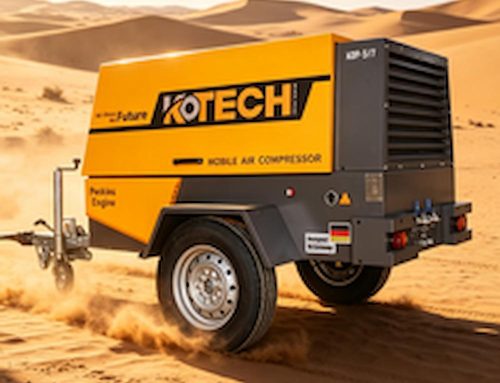
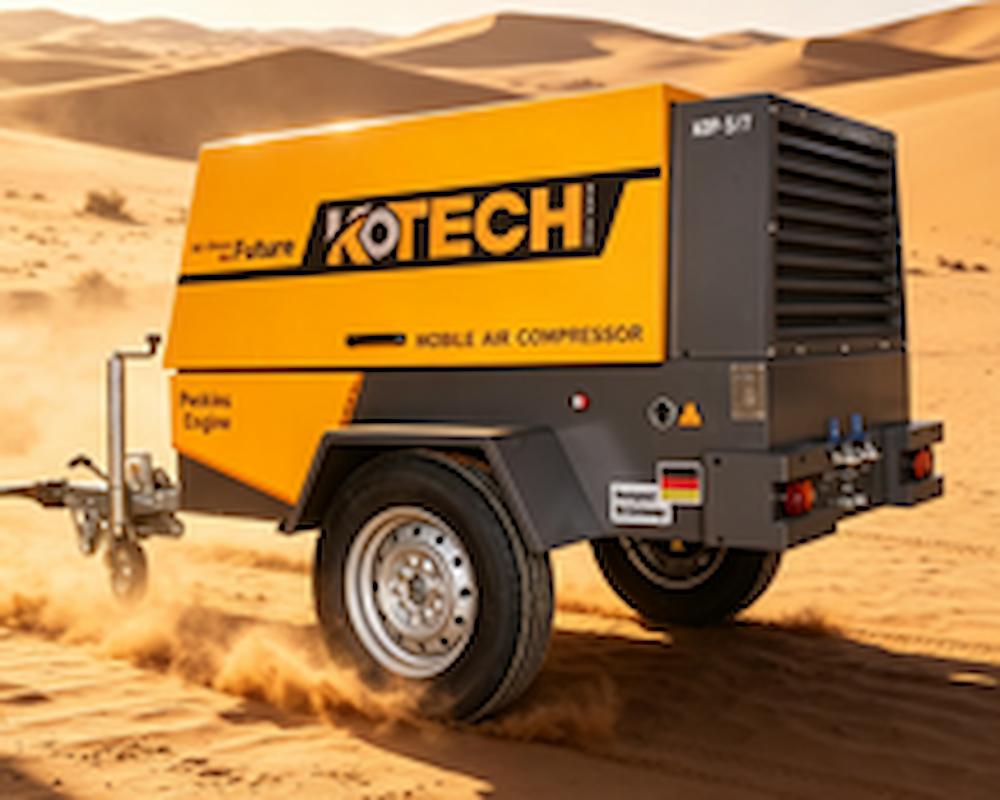
Kotech’s mobile oilfield compressor design is built around real desert site pain points, not lab test parameters, making it a practical fit for year-round outdoor oil and gas operations across the Middle East.
Having spent over a decade working in industrial screw compressor R&D, and traveling through oilfield project sites across the Middle East regularly, I’ve seen one costly mistake repeat itself over and over again.
Contractors and project procurement teams often shop for mobile diesel air compressors the same way they buy standard industrial equipment. They compare airflow pressure, engine brand, and upfront cost, then make a quick decision. What they overlook completely is how drastically Middle East summer outdoor conditions differ from the temperate climates most standard compressors are originally designed for.
That narrow buying choice doesn’t show its downside on day one. It creeps in slowly: more frequent overheating stops, faster oil degradation, clogged cooling systems, random electrical protection trips, and maintenance bills that keep climbing month after month. As an engineer who has reviewed countless field failure reports and optimized compressor designs for extreme environments, I want to break down this real-world problem from a practical perspective, not just theoretical engineering textbooks.
The Hidden Reality of Middle East Summer Outdoor Oilfield Operations
Anyone who has stayed on an open-air oil drilling site in the Middle East summer knows the environment is unforgiving.
Ambient air temperature stays elevated for months. Open job sites have no natural shade. Equipment sits under direct sun from sunrise to sunset, absorbing constant solar heat gain. Inside the compressor enclosure, the actual operating temperature climbs far higher than the measured ambient air temperature alone.
What most procurement teams miss is this: standard mobile compressors are engineered for average global climate conditions. They are validated in controlled lab environments and temperate region field tests, not for long-run 45°C+ outdoor exposure combined with fine floating desert sand.
The moment you place a generic unit on a remote Middle East oilfield site, you’re pushing it far beyond its original design margin — and the consequences show up in every part of daily operation.
Why Regular Mobile Compressors Keep Struggling On-Site
First, the cooling system hits its limit fast.
Standard cooling layouts are calculated for normal ambient ranges. When summer heat lingers nonstop and fine sand sticks to cooling fins, heat exchange efficiency drops noticeably. It doesn’t take extreme weather to push these units into frequent overheating protection mode. Midday work gets interrupted, drilling and well servicing schedules get delayed, and crews end up waiting for the compressor to cool down before resuming work.
Second, lubricant breaks down much faster in constant high heat.
Compressor oil is meant to maintain steady viscosity under designed working temperatures. In prolonged sun-baked outdoor conditions, conventional lubricants lose stability quicker. The result is darker oil, early carbon buildup inside oil circuits, more frequent filter blockage, and shorter service intervals. For remote oilfield sites, frequent oil and filter changes mean extra logistics cost and unnecessary manpower downtime.
Third, electrical and control systems face constant thermal stress.
Sensors, control panels and onboard PLC units all have safe ambient working limits. Locked inside a sun-heated enclosure, electronic components work under persistent thermal pressure. Field failures I’ve documented often come down to intermittent signal errors and unexpected automatic shutdowns — not mechanical breakdowns at all.
Fourth, thermal deformation slowly wears down core screw components.
Different metals expand at different rates under wide temperature swings. Daytime extreme heat and nighttime cooling create constant thermal cycling. For generic units without precise material selection and assembly tolerance reserved for high heat, this gradual deformation slowly shifts internal rotor clearances, bringing extra friction and long-term performance decay.
The Misconception That “A Bigger Radiator Fixes All Heat Problems”
In my years of talking with project managers and equipment dealers, I run into one common wrong belief all the time. Many think solving high-temperature issues is as simple as installing a larger cooling radiator.
From an R&D engineer’s perspective, that approach is surface-level and incomplete.
Upgrading only the radiator does not address:
Solar heat absorption into the entire unit enclosure
Fine desert sand blocking cooling surfaces over time
Lubricant formula not matched for sustained high-temperature operation
Material thermal expansion gaps not reserved for extreme climate cycling
Electrical compartment heat isolation and dust protection
True high-temperature reliability is a system-level design, not a single-part upgrade. Any compressor brand that only advertises a bigger cooler without optimizing the whole machine will still run into the same hidden failures on Middle East oilfield sites.
Kotech’s Field-Driven Design for Middle East Oilfield High-Temperature Needs
Kotech’s mobile oilfield compressor lineup didn’t start from lab parameter targets. It evolved from years of collecting real failure feedback, site operation data, and pain points shared directly by Middle East oil and gas contractors. Every optimization is made to solve actual on-site problems, not just fill marketing specification sheets.
Revised System-Level Cooling Layout
Instead of simply enlarging one single cooler component, Kotech reworked the entire internal airflow route and heat exchange layout. The design leaves enough heat dissipation margin for sustained high ambient temperature, while taking into account that units often stay stationary in open-air sites for months, without natural wind or shade assistance.
The fan configuration and wind direction are tuned for static outdoor operation, not only vehicle moving ventilation. This small but critical engineering difference makes steady long-run operation far more reliable under desert summer conditions.
Lubricant Matching & Oil Circuit Optimization
Kotech specifies dedicated high-temperature compatible lubricant grades for regions like the Middle East. The formula is chosen to keep stable viscosity under prolonged heat, slow down oxidation aging, and reduce carbon deposit formation inside the compression chamber.
Meanwhile, the oil pipeline routing avoids local heat accumulation dead zones, helping keep overall oil temperature balanced throughout midday peak heat hours. This reduces unnecessary maintenance frequency without sacrificing load performance.
Material Selection & Thermal Tolerance Control
Key housing and screw rotor components adopt carefully selected alloy and cast iron materials with stable thermal expansion properties. Assembly precision is completed under standard reference temperature, reserving proper clearance tolerance to cope with daily temperature cycling and long-term high-heat exposure.
This engineering detail prevents the slow performance drift and internal friction wear that plague many generic compressors after one or two years of Middle East field use.
Desert-Grade Enclosure & Heat Isolation Protection
The outer enclosure design adds dual considerations: heat isolation and dust protection.
Structural shielding reduces direct solar heat transfer into the cabin, while maintaining natural convection airflow for passive cooling. Electrical control compartments follow upgraded ingress protection standards, keeping fine desert sand and humid heat away from sensitive electronic parts.
This integrated design handles high temperature, solar radiation and sand dust all at once — exactly the triple challenge real Middle East oilfield sites face every summer.
What Middle East Oilfield Contractors Should Prioritize When Choosing Compressors
From my decade of R&D and site experience, I always advise procurement teams to change their evaluation logic.
Stop choosing mobile oilfield compressors only by upfront price and basic airflow numbers. Start checking whether the unit is purpose-built for long-duration 45°C+ outdoor operation, optimized for desert sand adaptation, and backed by design iterations proven in local field projects.
Cheap generic units save cost at purchase time but cost far more in delayed projects, repeated maintenance, early component replacement and unplanned downtime over just a few years. Purpose-built high-temperature mobile compressors carry a slight initial premium, but they deliver stable runtime, fewer service interruptions, and lower long-term operational expenses. That is the real cost-performance calculation every oilfield project should follow.
Final Thoughts
Middle East summer oilfield conditions are far more demanding than most equipment buyers realize. Generic mobile compressors designed for temperate climates will always struggle with heat-induced performance decay, overheating shutdowns and accelerated wear.
Fixing these issues cannot rely on simple part upgrades. It requires system-level engineering in cooling layout, lubricant matching, material thermal stability, and desert-grade enclosure protection.
Kotech’s mobile compressor optimization comes from years of real site observation and extreme environment R&D iteration. For oil drilling, well servicing and outdoor engineering teams across the Middle East, choosing a compressor built for actual desert summer conditions is not a luxury — it is the most practical way to keep projects on schedule and control long-term operating costs.