



Turbo blowers, traditional centrifugal blowers, magnetic bearing blowers and air bearing blowers all rely on impellers. Still, their performance and applications differ in meaningful ways. This article explains those differences in a practical, engineering-focused way and highlights where the turbo blower fits in the overall landscape.
How air blower technologies evolved
You might know What is Air Blower and How Does It Work yet still feel confused about these four types of air blower. Even though all these air blowers use impellers to move air, three technical factors shaped their evolution into distinct categories: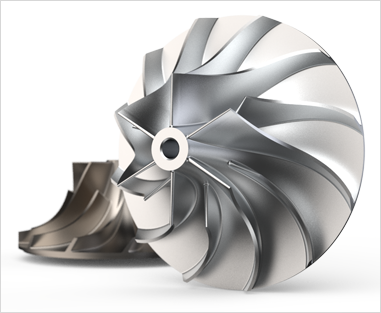
Rotational speed – from a few thousand rpm to more than fifty thousand
Bearing structure – mechanical, magnetic or air film
System architecture – whether a blower needs gearboxes, lubrication systems or an integrated high speed motor
These three elements define the limits of pressure, flow rate, efficiency and maintenance requirements.
Traditional centrifugal blower overview
Traditional centrifugal blowers rely on several impellers arranged in series. They run at low to medium rotational speed and depend on oil-lubricated bearings and gearboxes.
Centrifugal blowers’ greatest advantage is simple endurance. A large industrial plant can operate these machines continuously for years with minimal interruption.
Typical characteristics:
Flow range from 50 to more than 600 m³/min
Pressure usually below 1 bar
Power demand from 75 kW up to several megawatts
Large footprint and heavy structure
Centrifugal blowers remain the top choice for steelworks, petrochemical plants and other high capacity industrial environments.
Turbo blower overview
A turbo blower uses a high speed motor that drives a single impeller directly. Because the motor can reach 20,000 to 60,000 rpm, the machine does not need a gearbox.
This design provides high efficiency, compact size and clean air delivery without oil contamination.
Key characteristics of a turbo blower:
- Flow rate from 5 to 200 m³/min
- Pressure typically between 0.3 and 1.0 bar
- No lubricating oil
- Light weight and small footprint
- Low vibration
- High energy efficiency
These advantages explain why turbo blower systems have become a common upgrade for wastewater treatment plants, food production facilities and other applications that value reliability and low operating cost.
Magnetic bearing blower overview
A magnetic bearing blower(AKA Maglev blower) is technically one type of turbo blower, but it uses active magnetic bearings to suspend the shaft without physical contact.
Sensors and controllers constantly adjust the magnetic field to keep the rotor floating and stable.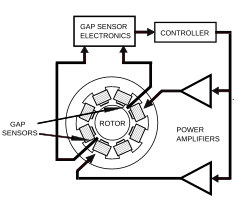
Typical characteristics:
- High efficiency
- No mechanical wear
- Very low noise
- Flow potential often reaching 350 to 400 m³/min
- Power rating up to about 500 kW
This technology suits medium and large wastewater treatment plants and energy saving retrofit projects.
Air bearing blower overview
An air bearing blower uses a thin air film inside the bearing structure to support the rotor at high speed.
Air bearing blower does not require electronic control like magnetic bearings and therefore has a simpler design and lower cost.
Typical characteristics:
Flow rate from 5 to roughly 150 m³/min
Pressure typically below 0.8 bar
Excellent efficiency for small and medium sized loads
Lower cost compared with magnetic bearing blowers
This technology is popular in small and mid-size municipal wastewater facilities, food factories and other clean air applications.
Performance comparison of pressure/flow rate/power capabilities
| Blower Type | Typical Pressure | Common Flow Range | Maximum Capability | Typical Power | Maximum Capability |
|---|---|---|---|---|---|
| Centrifugal blower | 0.1 – 1.2 bar | 50 – 600 m³/min | Over 1000 m³/min | 75 – 1000 kW | Above 3 MW |
| Turbo blower | 0.3 – 1.2 bar | 5 – 200 m³/min | About 250 m³/min | 15 – 300 kW | About 350 kW |
| Maglev blower | 0.3 – 1.2 bar | 20 – 350 m³/min | Around 400 m³/min | 30 – 400 kW | Around 500 kW |
| Air bearing blower | 0.2 – 0.8 bar | 5 – 150 m³/min | Around 180 m³/min | 7.5 – 200 kW | Around 250 kW |
| Centrifugal compressor | 3 – 10 bar or higher | 20 – 500 m³/min | Over 600 m³/min | 75 – 1000 kW | Above 3 MW |
A key observation is that traditional centrifugal blowers can reach the same scale as centrifugal compressors, at least in flow rate.
Turbo blower machines and bearing-based designs remain in the medium capacity segment because high speed motors and bearing structures have practical size limitations.
Heavy duty industrial air blowers are still dominated by traditional centrifugal blowers, while turbo blower models occupy the middle ground of efficiency and compactness.
Where each air blower type works best
Centrifugal blower applications
Steel mills
Petrochemical facilities
Large power stations
Any site demanding extremely high flow and long duty cycles
Turbo blower applications
Municipal wastewater aeration
MBR and SBR systems
Food and beverage production
Chemical and pharmaceutical processes
Any plant requiring clean air and reliable energy saving operation
Magnetic bearing blower applications
Large municipal wastewater plants
Industrial wastewater facilities
High efficiency retrofit projects with strict long term operating cost targets
Air bearing blower applications
Small and medium size wastewater plants
Light industrial processes
Cost-sensitive projects that still require efficiency and clean air
Final thoughts
Although all these machines rely on impellers, their internal engineering is very different.
Understanding the real distinctions in speed, bearings and structural design helps engineers and plant operators choose the best option for their project.
In many modern installations, the turbo blower sits at the balance point of efficiency, compact footprint and low maintenance.
Traditional centrifugal blowers cover the extremely high flow segment, and magnetic or air bearing blowers offer specialized benefits where energy savings and ultra-low maintenance are the priority.

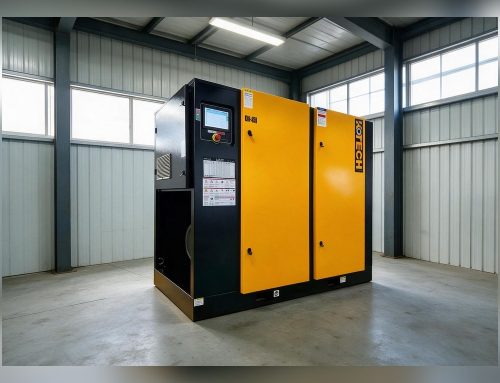
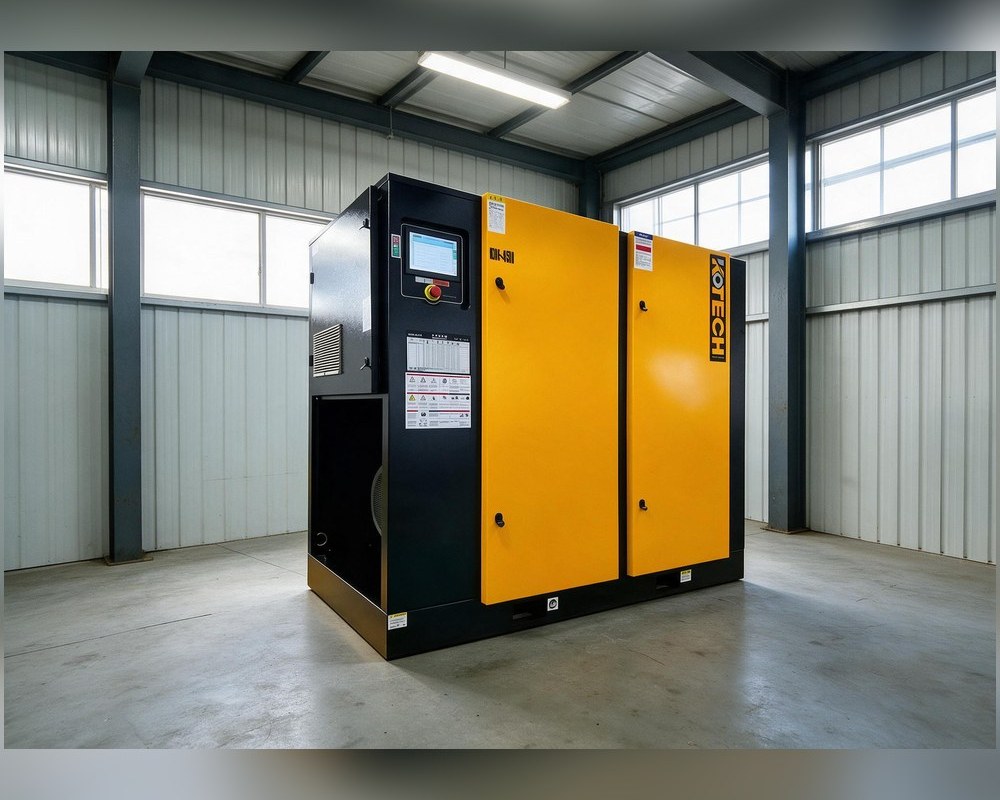
(KSB Series Low Pressure Oil Free Screw Air Blower)
Kotech oil-free air blower delivers up to 1,600 m³/h airflow, 0.8 bar, low noise and compact cabinet — a high-efficiency, reliable air blower.