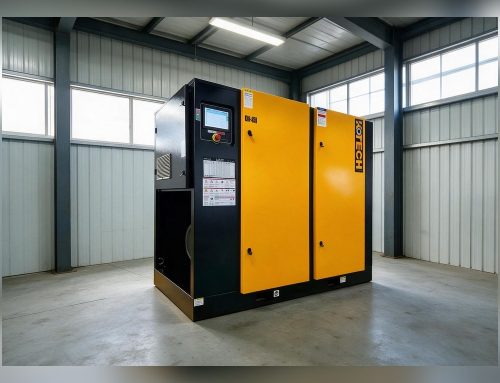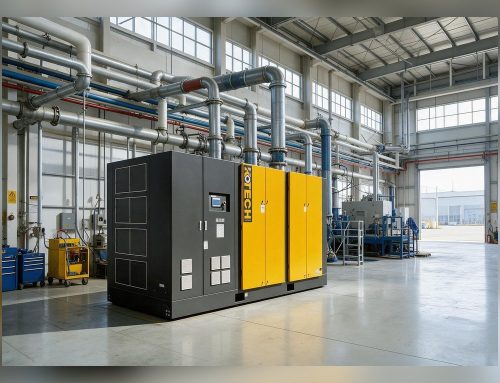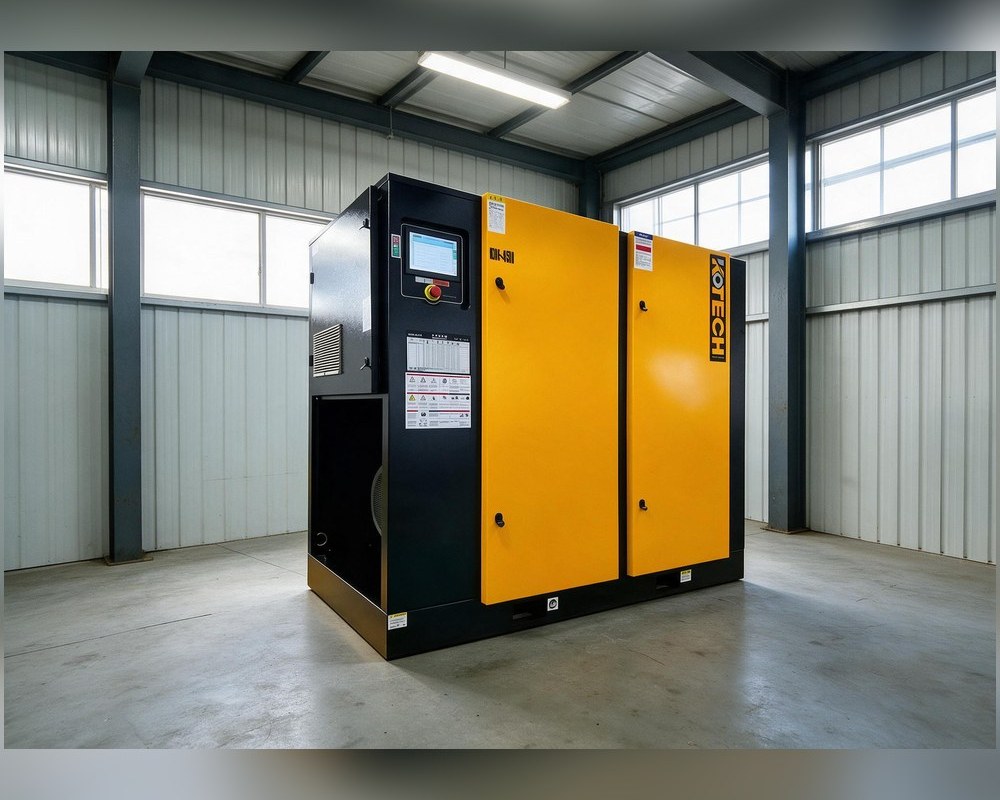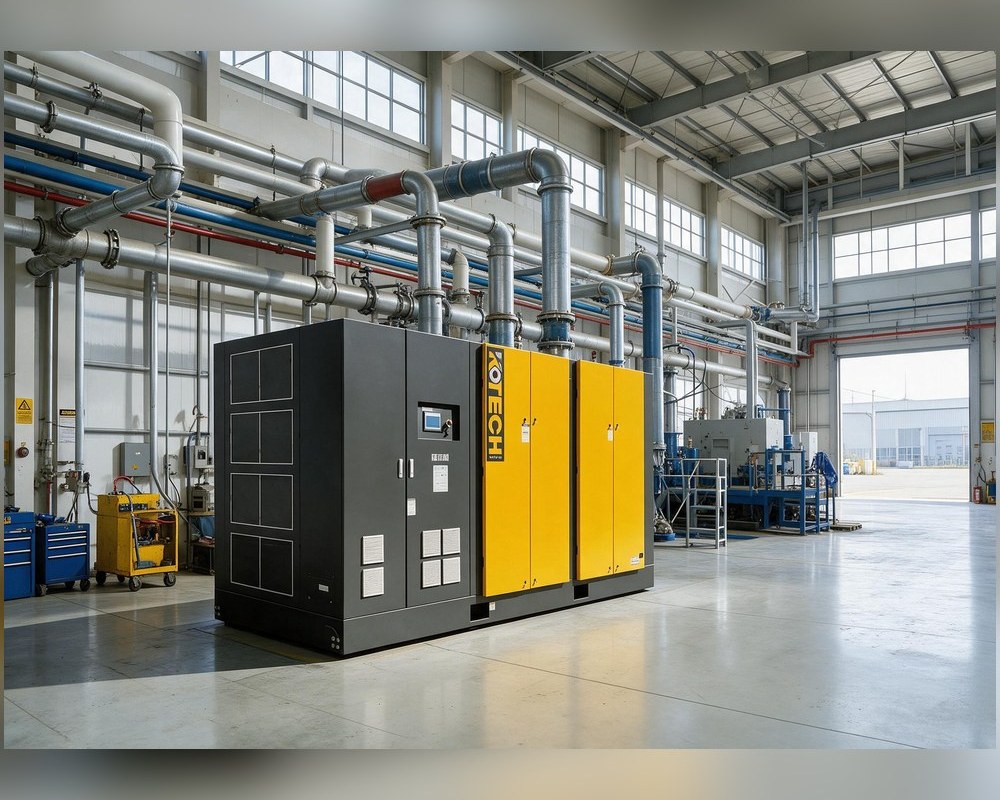




Do you also feel troubled by the air compressor noise in the factory workshop. It not only affects communication and reduces work efficiency but may also damage hearing health in the long term. Below Kotech will introduce the various sources of air compressor noise and how to take targeted measures to effectively silence air compressor noise problem.
Where the air compressor noise comes from?
Air compressor noise is the result of multiple factors working together which can be mainly divided into the following categories.
Mechanical operation noise
This is the inherent noise generated by internal moving parts. The electromagnetic vibration from the compressor motor operation produces a low-pitched buzzing sound. The higher the rotational speed the greater the vibration and noise usually are.
Components such as bearings crankshafts and connecting rods generate high-decibel clanking and snapping noises under high-speed friction and impact especially when lubrication is poor or parts are worn. For screw air compressors the high-precision meshing process of the male and female rotors also produces a unique high-frequency sound.
There is another type of air compressor noise that is very noisy — the noise from air compressor engine (particularly the noise generated by diesel air compressor diesel engine). This noise exhibits obvious pulsating characteristics drives the entire machine to start vibrating and has a certain penetrative quality. Compared to it gasoline air compressor noise is not so unbearable.
Intake and exhaust noise
During the intake process air is sucked into the compression chamber at high speed forming strong vortices and pressure pulsations thus generating low-frequency suction sounds. The noise from the air compressor exhaust is even more prominent. When the high-pressure compressed air is released instantaneously the airflow impact and turbulence form a sharp high-frequency noise which is particularly harsh and especially noticeable during unloading and blowdown.
System resonance
You might not know that compressed air does not flow smoothly in the delivery pipelines but has strong pressure pulsations. When the pulsation frequency matches the natural frequency of the pipeline itself it can cause pipeline resonance especially in long straight pipes or loosely installed pipes and mechanical resonance producing a loud buzzing or humming sound. This resonance not only amplifies noise but can also over time lead to loose air compressor pipeline connections bracket fatigue and even rupture.
Cooling fan noise
Air-cooled air compressors rely on high-power axial fans for heat dissipation. The high-speed rotation of the cooling fan blades cutting through the air produces continuous and high-frequency wind noise. At the same time airflow passing through dense cooling fins also generates turbulent noise. If the fan blade design is poor the dynamic balance is faulty or the wind shield structure is unreasonable the noise will be further exacerbated. This noise usually manifests as a continuous whooshing sound.
Secondary transmission of vibration
From high school physics teachers we know that sound can not only travel through air but also rely on solids and liquids. Various vibrations generated during air compressor operation (mechanical vibration, airflow pulsation) are transmitted to the entire machine shell causing the shell panels to vibrate and thereby radiating noise outwards.
Worse still vibration can be transmitted through the air compressor’s base to the floor and then conduct over long distances through the building structure (floors, walls) producing a low-frequency rumbling sensation in adjacent rooms. This structure-borne sound is difficult to block even with doors and windows closed.
Different types of air compressor noise level comparison
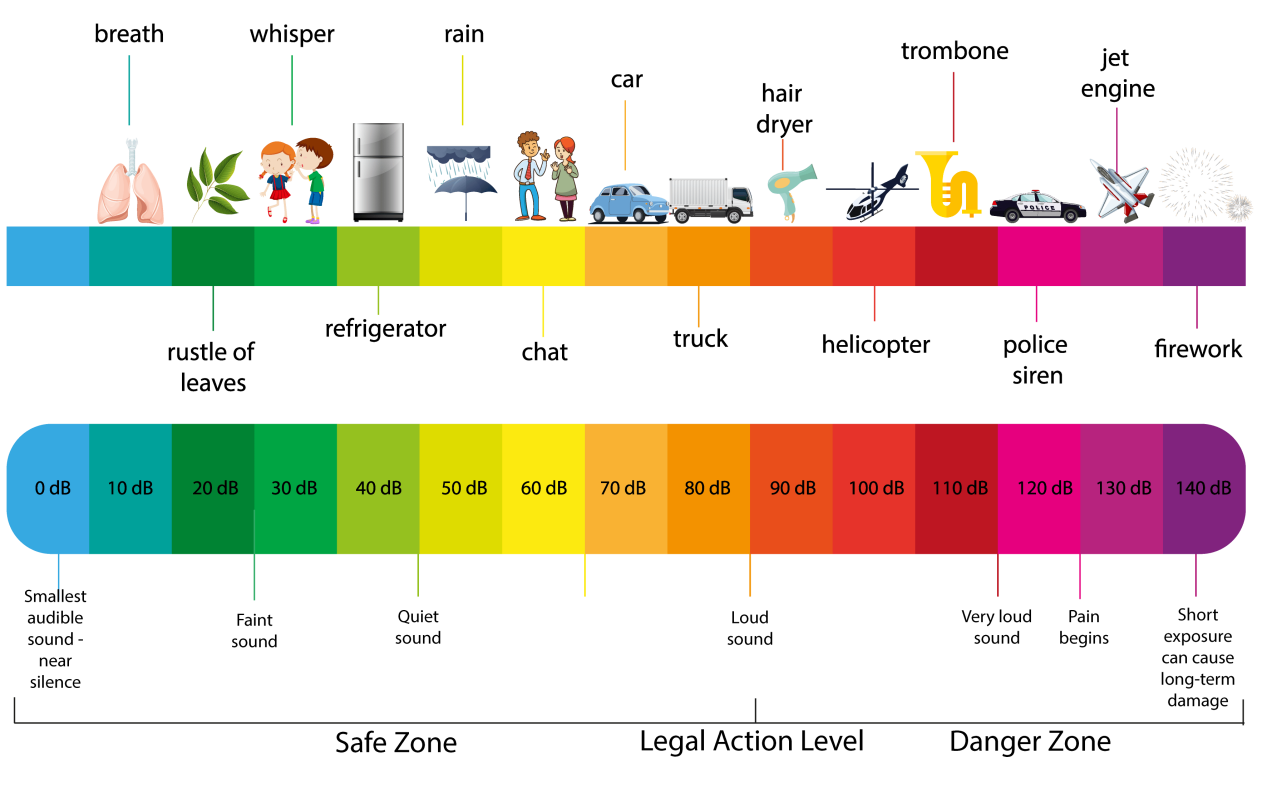
(What do different dB levels feel like)
The noise levels and characteristics of air compressors with different working principles and mechanical structures are completely different.
| Air compressor type | Typical noise level (dB) | Main noise sources | Characteristics and application scenarios |
|---|---|---|---|
| Piston compressor | 85–100+ | Mechanical friction, intake/exhaust pulsation. | Simple structure, low cost, but the highest noise and strong vibration. Usually used for intermittent duty cycles and situations insensitive to noise. |
| Screw compressor | 70–85 | Rotor meshing, exhaust pulsation fan. | Smooth operation; noise significantly lower than piston type and a mainstream choice for industrial and mining enterprises. Lower noise can be achieved through optimized design. |
| Centrifugal compressor | 75–90 | High-speed impeller airflow noise. | High power and large flow rate; noise is mainly high-frequency continuous sound. Mainly used in large-scale industrial processes. |
| Scroll compressor | 60–75 | Slight airflow and meshing noise. | Extremely smooth and quiet operation; ideal for places with strict requirements for quietness such as laboratories, hospitals, and offices. |
When selecting air compressor its noise index should be an important consideration.
4 systematic strategies for silencing air compressor noise
Silencing air compressor noise is a systematic project that requires starting from multiple links such as the source transmission path and receiving point and adopting a comprehensive management strategy.
Choosing a silent air compressor
If conditions allow, choose a silent air compressor to effectively reduce noise at its source. For example, scroll compressors, low-speed screw air compressors, and permanent magnet VFD air compressors are all quieter options. Variable frequency technology not only increases energy efficiency but also lets low noise compressors run at lower speeds under partial load, which can significantly reduce noise.
For air compressor manufacturers adopting superior air end profiles, higher precision rotors, higher quality bearings, and more efficient motors, as well as optimizing the chassis and air duct design from an acoustic perspective are ways to fundamentally engineer a silent air compressor.
Blocking the noise transmission path
This is the most commonly used and effective method in silencing air compressor.
Installing silencing equipment
Intake silencer: Installing a silencer made of reactive or porous sound-absorbing material at the air intake can effectively attenuate intake noise with minimal impact on airflow.
Exhaust silencer Pulsation damper: Installing a dedicated silencer at the exhaust port or air receiver inlet can smooth the pulsations of high-pressure airflow consume its sound energy and significantly reduce sharp exhaust noise.
Setting up an acoustic enclosure (acoustic room)
Acoustic enclosure: Customizing a sealed or semi-sealed enclosure for a single air compressor lined with sound-absorbing cotton such as glass wool rock wool and covered with metal panels. It can confine noise to a limited space with a noise reduction effect of 10-20dB(A). Attention must be paid to solving the ventilation and heat dissipation issues of the enclosure.
Soundproof air compressor room: This is the most thorough and ideal noise reduction solution. Install the air compressor in a separate room use sound-absorbing materials for the walls such as aerated concrete bricks and line them with soundproof panels use professional soundproof doors and double-glazed soundproof windows for doors and windows and install silencing louvres or silenced ducts in ventilation pipes. This method can easily reduce external noise to below 65dB(A).
Installing vibration damping devices
This is the most effective method to block structure-borne sound. Installing high-performance rubber vibration isolation pads spring vibration isolators or inertia blocks between the air compressor base and the foundation can absorb and isolate most mechanical vibrations preventing them from being transmitted to the building structure.
For pipeline vibration flexible connecting pipes such as rubber or stainless steel bellows can be used to replace some rigid pipe sections.
Operation and maintenance strategy
Even the best equipment cannot do without careful maintenance. A poorly maintained air compressor will see its noise level increase significantly over time.
Regular inspection and replacement
Strictly follow the maintenance manual to regularly replace lubricating oil and air filters. Dirty filter elements increase intake resistance thereby increasing intake noise. Deteriorated lubricating oil leads to increased wear of bearings and rotors causing mechanical noise to soar.
Tightening and alignment
Regularly check all fasteners to ensure the chassis motor pipeline brackets and other connections are secure avoiding additional vibration noise caused by looseness. For equipment connected by couplings ensure precise alignment.
Inspection and early warning
Operators should develop the habit of listening to the equipment’s operating sound. Once abnormal noise is detected such as metal friction sounds irregular impact sounds the machine should be stopped immediately for inspection as this is often a precursor to failure.
In the end
Silencing air compressor is a comprehensive task involving acoustics mechanics and management. By accurately identifying the main sound sources and following the systematic principles of source reduction path blocking and meticulous maintenance it is entirely possible to control the noise within an acceptable range.
This not only helps create a more comfortable and healthy working environment but is also a concrete reflection of the enterprise’s improved level of refined management.