



Why people end up connecting two air compressors
As an air compressor user, you might encounter a situation during operation: the air demand keeps growing, and one compressor is no longer enough. At this point, you’re faced with a choice: replace it with a larger air compressor, or connect two air compressors together to meet the higher CFM requirements.
In theory, compressor capacity is calculated in advance. In practice, projects change. Extra air tools are added, work hours get longer, or the job turns out to be more demanding than expected. Instead of stopping work to source a larger air compressor, teams often try to make use of what is already on site.
We see this most often on temporary construction projects, maintenance shutdowns, and remote sites where equipment options are limited. The motivation makes sense. The technical risks are often underestimated.
Can two air compressors be connected and run together
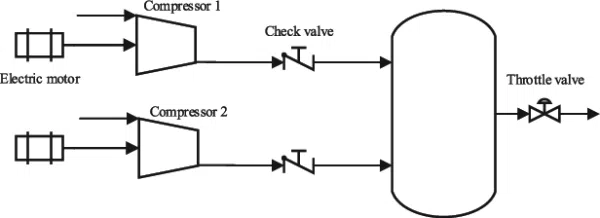
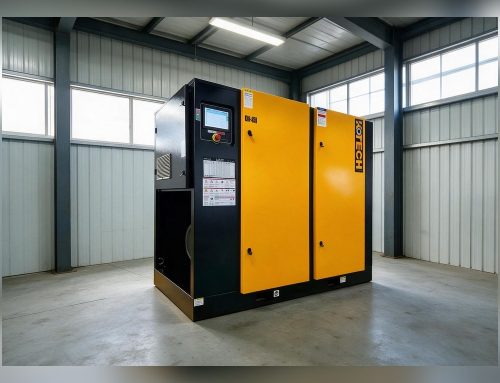
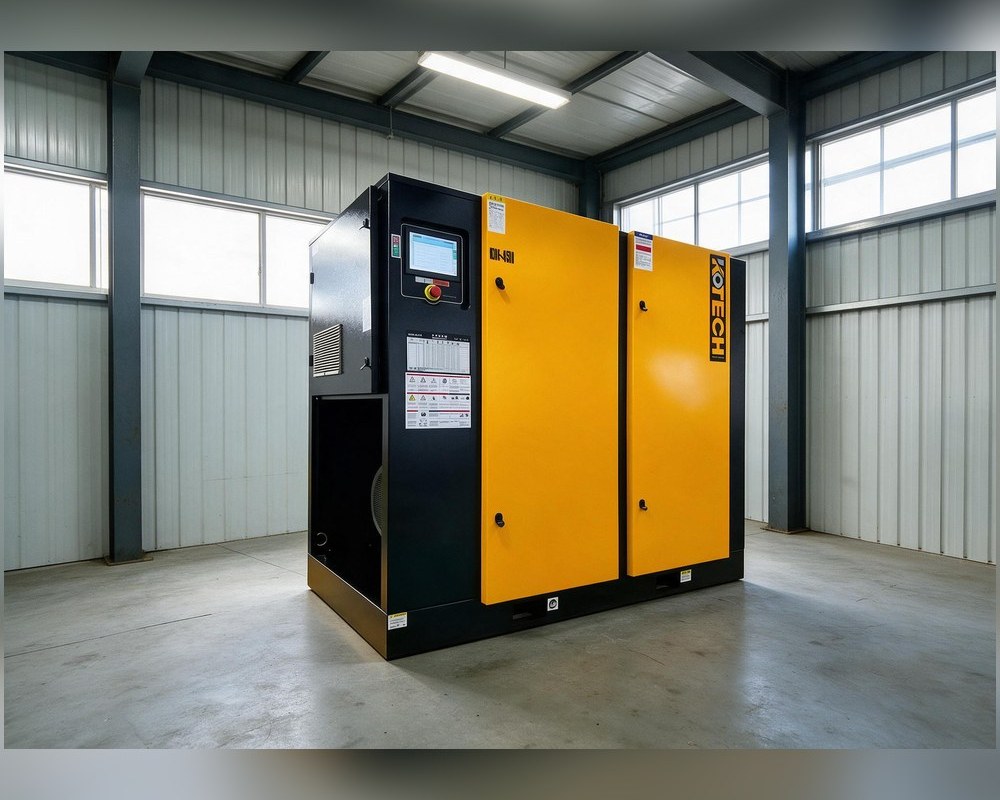
(Two air compressor system – KOTECH COMPRESSOR)
Yes, they can, but this is not a plug-and-play situation, only if the setup is done with a clear understanding of how air systems behave under load. Otherwise, minor issues: unstable pressure and overheating, major: compressor scrape and accidents.
Most failures we encounter are not dramatic at first. The system may seem to work for days or even weeks. Then one compressor starts running hotter than expected, pressure becomes unstable, or shutdowns happen more frequently.
In many cases, the root cause is simple: one compressor is doing most of the work, while the other is either underutilized or pushing air in the wrong direction.
Parallel vs series connection for air compressors
Parallel connection in real use
With a parallel connection, both compressors feed air into a shared line or receiver at the same pressure level.
From a practical standpoint, this is the setup used in most industrial environments. It increases total airflow without forcing either compressor to operate outside its normal pressure range. When adjusted correctly, load sharing is relatively stable.
For portable and industrial air compressors, parallel connection is almost always the preferred option. For sites that frequently run dual-compressor setups, a single properly sized portable diesel air compressor often delivers better pressure stability and lower maintenance than linking two mismatched units.
Series connection and why it usually fails
Series connection looks attractive on paper because it suggests higher pressure. In real-world installations, it often causes more harm than benefit.
Compressors that are not designed for multi-stage operation tend to overheat quickly in this configuration. Pressure limits are easy to exceed, and internal components suffer long-term damage.
Unless the system is specifically engineered by the manufacturer, series connection should be avoided for most industrial applications.
Components that actually matter in the field
The reliability of a dual-compressor system depends less on theory and more on execution.
- Check valves
Check valves are not optional. Without them, compressed air will flow backward into a stopped compressor. This is one of the most common causes of mechanical damage we see in connected systems.
- Isolation valves
Isolation valves allow one compressor to be shut down for service while the system keeps running. On busy sites, this small detail makes a big difference.
- Pressure monitoring and control
Pressure settings that look acceptable on paper often behave differently under load. Gauges and regulators help prevent one compressor from carrying the entire system.
- Manifold or common header
A poorly sized manifold restricts airflow and creates pressure drops that are difficult to diagnose. If the header is undersized, no amount of tuning will fix the problem.
- Flexible connections
Vibration is often underestimated. Flexible hoses or vibration-resistant piping reduce stress on fittings and extend service life.
Step by step guide to connecting two air compressors in parallel
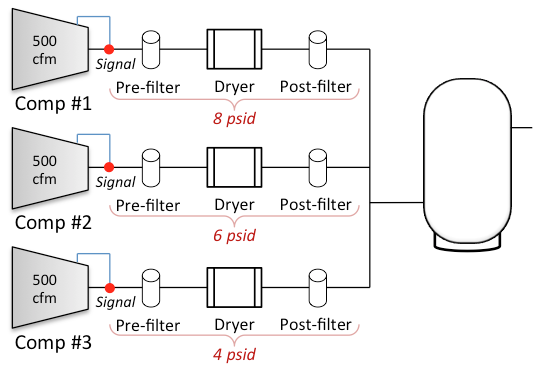
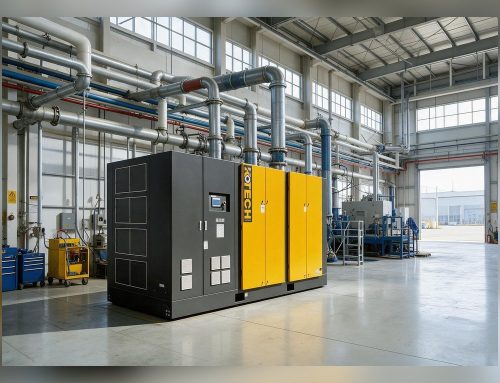
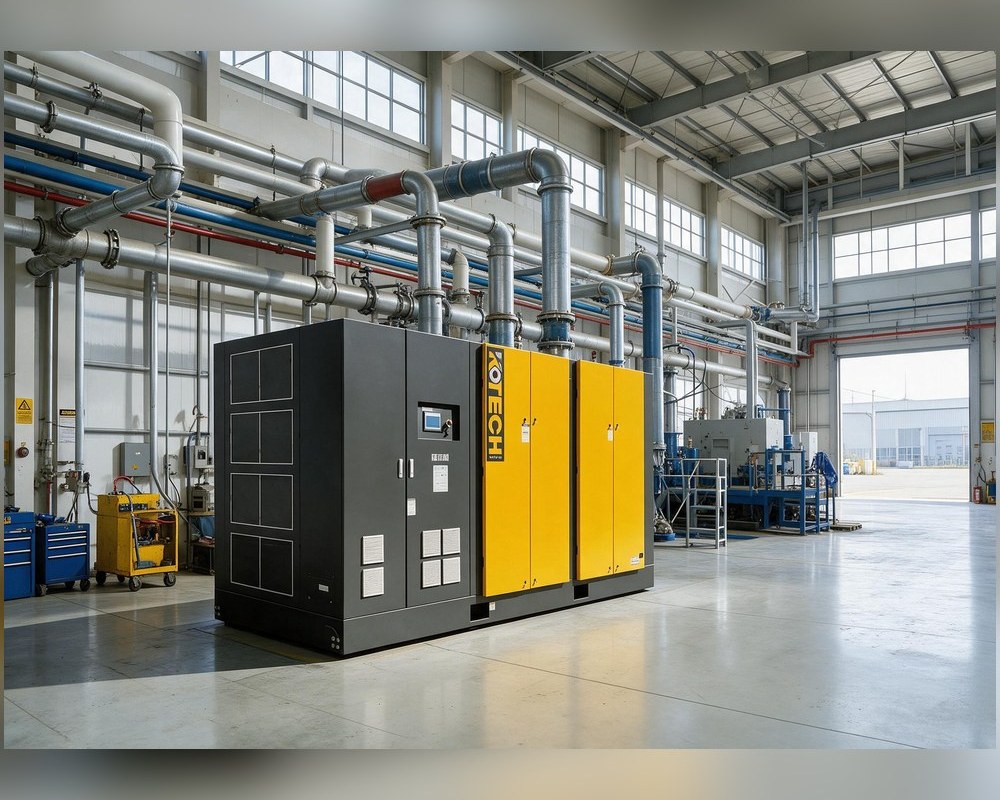
(Multiple air compressors in parallel)
This process assumes industrial-grade equipment and trained operators. Local safety regulations and manufacturer instructions should always come first.
Step 1: Check pressure compatibility
Both compressors should operate within a similar pressure range. Large differences usually lead to uneven loading.
Step 2: Install check valves at each outlet
Install one check valve per compressor, as close to the outlet as possible. Skipping this step is a common and costly mistake.
Step 3: Connect to a common manifold or receiver
Use properly sized hoses or pipes. Avoid sharp bends that restrict airflow, especially near the connection point.
Step 4: Align pressure settings
Set cut-in and cut-out pressures close to each other. If one compressor starts much earlier, it will wear out faster.
Step 5: Test under gradual load
Bring the system up to pressure slowly. Watch temperature, noise, and pressure stability before full operation.
Mistakes that usually show up later
Some issues do not appear immediately. Missing check valves, undersized piping, mismatched pressure ratings, and continuous operation at maximum load often lead to problems weeks or months down the line. By the time symptoms appear, internal wear has already started.
This delayed failure pattern is why connected systems sometimes get blamed unfairly, when the real issue is how they were set up. In practice, many instability issues come from pressure mismatch. Using a high-output industrial air compressor designed for continuous load can eliminate the need for complex parallel connections altogether.
When connecting two compressors is the wrong decision
There are clear situations where connecting two units should not be considered. If one compressor is already unreliable, if pressure ratings are far apart, or if there is no proper monitoring in place, combining the systems adds risk without real benefit. In those cases, downtime becomes a matter of when, not if.
Sometimes the simplest answer is not the cheapest-looking one. A larger portable air compressor often delivers better efficiency and stability. Adding an air receiver tank can smooth out short-term demand spikes. For long-term projects, redesigning the air system usually pays off in reduced maintenance and fewer interruptions.
Practical safety notes
Most incidents are preventable. Follow manufacturer guidelines, use pressure relief devices, monitor temperature and vibration, and make sure operators understand how the system behaves when demand changes. Ignoring early warning signs is where problems usually begin.
For long-term projects, choosing a jobsite-ready screw air compressor with sufficient airflow from the start is often safer and more efficient than expanding capacity later through system linking.