



Rising copper prices are influencing air compressor prices. Learn how motors, VSDs, and efficiency trends affect pricing decisions.
Where copper really shows up inside an air compressor?

If you follow industrial equipment markets closely, you have probably noticed one topic coming up again and again: copper prices. Over the past months, copper has moved to levels that are hard to ignore, and it is no longer just a concern for mining companies or cable manufacturers.
For air compressor manufacturers and buyers, copper is becoming a very practical question. Not because it suddenly dominates the bill of materials, but because it sits right at the heart of the electrical systems that modern compressors depend on.
The real question is not whether copper prices matter, but how much they actually influence air compressor pricing—and where that influence stops.
From the outside, an air compressor still looks like a mechanical machine. Inside, however, especially in newer designs, it behaves much more like an electrical system with moving parts attached.
The electric motor is the most obvious example. Motor windings are almost entirely copper, and as efficiency standards move higher, motors generally do not use less copper—they use better copper, packed more densely and manufactured with tighter tolerances. That shift alone has made motor costs more sensitive to copper price movement than they were a decade ago.
Variable speed compressors add another layer. Drives, reactors, bus bars, and internal power connections all rely on copper for reliability and thermal stability. In higher power ranges, these components are engineered conservatively for continuous operation, which limits how much material substitution is realistically possible.
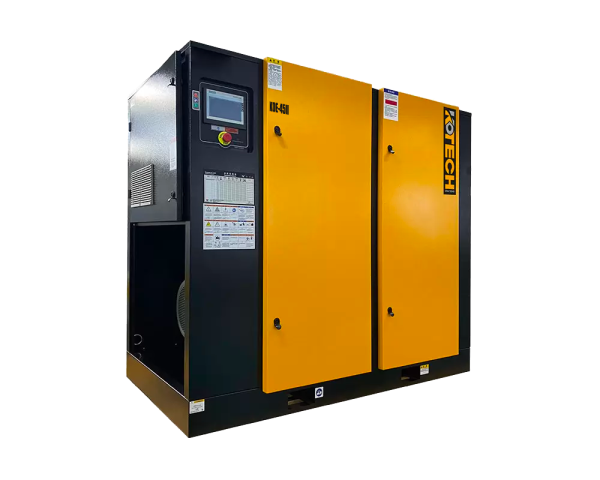
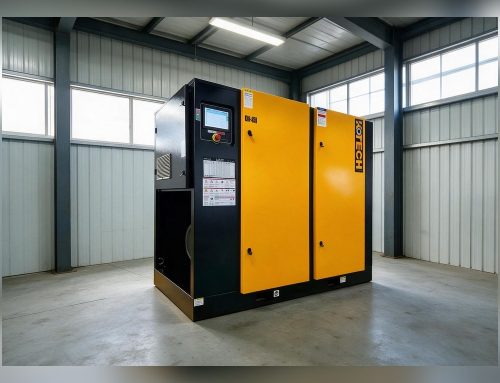
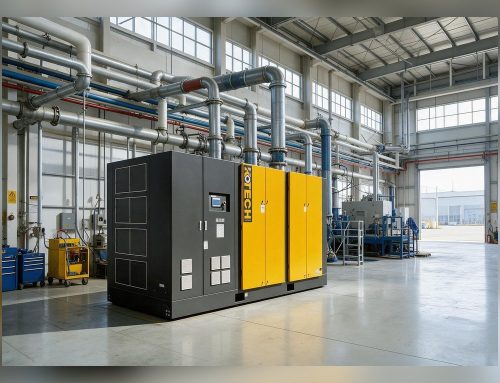
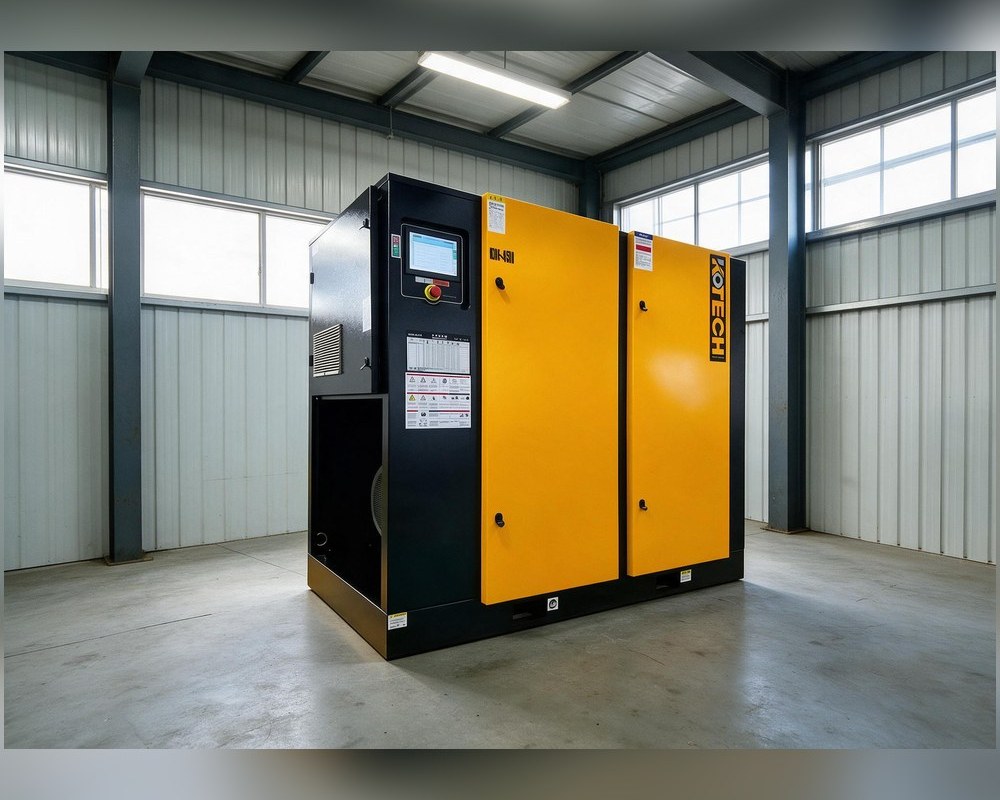
(Kotech KOE-45II Series)
None of this is new. What is new is the price environment in which these components are being sourced.
Does rising copper automatically mean higher compressor prices?

Not necessarily—and this is where the discussion often becomes oversimplified.
In practice, air compressor pricing rarely moves in a straight line with raw material costs. Air compressor manufacturers deal with copper exposure in very different ways depending on how their supply chain is structured, how much inventory they carry, and how much flexibility they have in product design.
What we are seeing now is not a universal air compressor price jump, but selective pressure. Compressor motors and electrical components are becoming more expensive, and that pressure shows up first in certain configurations rather than across entire product ranges.
Larger air compressors, variable speed compressors, and models built around high-efficiency compressor motors are naturally more exposed. Smaller, fixed-speed compressors with simpler electrical layouts are often less affected, at least in the short term.
This is why many compressor price adjustment notices reference “specific series” or “selected models” instead of full-line increases.
How air compressor manufacturers are absorbing the pressure
Most air compressor manufacturers are trying hard not to treat copper prices as a simple pass-through cost. In reality, very few customers are willing to accept air compressor price increases without context, especially in competitive markets.
Instead, engineering teams are quietly doing what they always do under cost pressure: revisiting designs, tightening tolerances, and looking for places where efficiency can be improved without compromising reliability. This does not mean removing copper where it is essential, but rather using it more effectively.
At the same time, pricing conversations are shifting. Energy efficiency, operating stability, and lifecycle cost are becoming more central to how air compressors are positioned. When electricity costs and material costs are both rising, a machine that runs more efficiently over ten years becomes easier to justify, even if its initial price is slightly higher.
What this means for air compressor buyers on the ground

For air compressor buyers, the temptation is to react quickly—to rush purchases or delay projects based purely on raw material headlines. In most cases, that is not the best approach.
Copper prices may influence compressor pricing at the margins, but they rarely change the fundamentals of a compressed air system. Load profile, operating hours, control strategy, and system design still matter far more than short-term material volatility.
In fact, periods like this often expose systems that were already inefficient. A higher air compressor price can push decision-makers to look more closely at energy consumption, sizing, and control logic—areas where real savings are often hiding.
What will happen if cooper price keep rising
Many in the industry no longer see rising copper prices as a temporary spike. Electrification, renewable energy projects, and infrastructure upgrades are creating long-term demand that is unlikely to disappear quickly.
For air compressors, this reinforces an ongoing trend rather than creating a new one. Electrical efficiency, system integration, and smarter control will continue to shape product development and pricing. Machines built around robust electrical design will remain more expensive to build—but also more resilient in operation.
Final thought
Copper prices alone will not dictate the future of air compressor pricing. But they are a reminder that modern compressors are no longer just mechanical assets—they are electrical systems operating in an increasingly resource-conscious world.
For manufacturers, the challenge is balancing cost, performance, and reliability. For buyers, the opportunity lies in looking beyond short-term price movement and focusing on long-term operating value.
That perspective tends to age much better than any copper price chart.