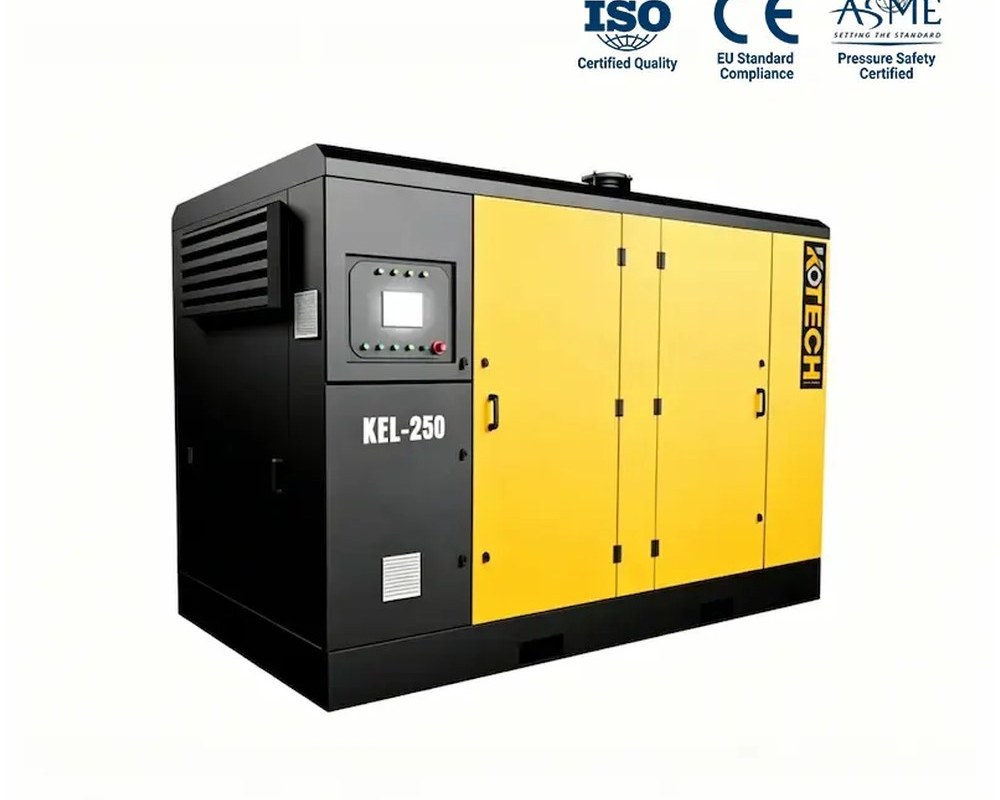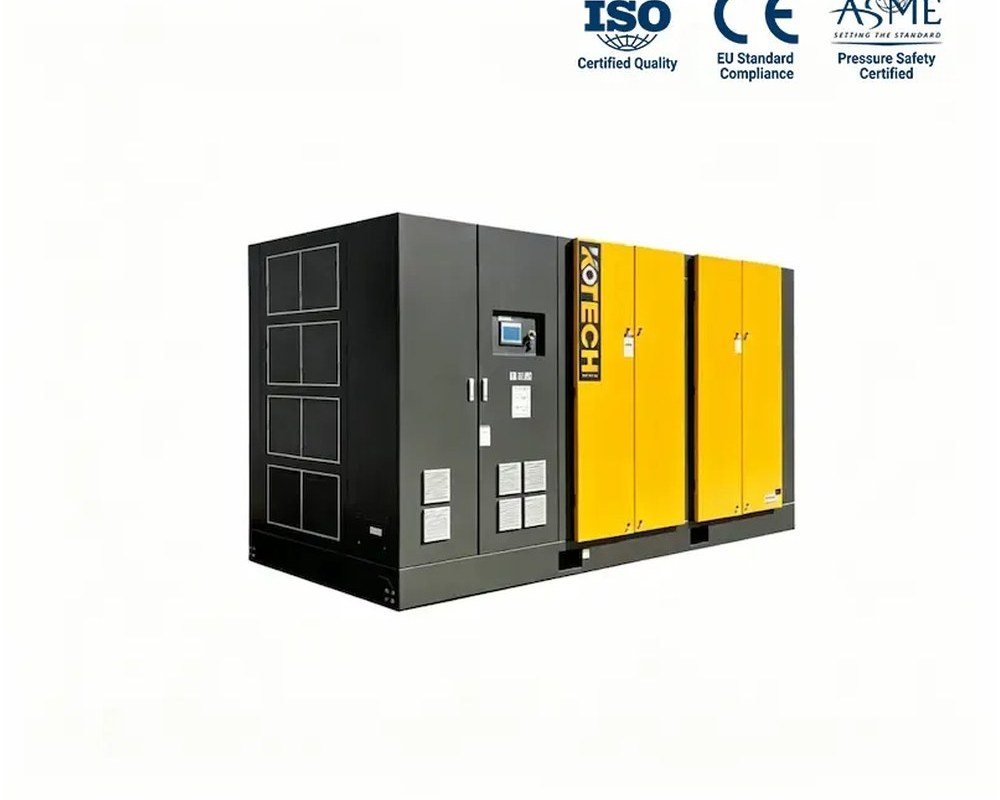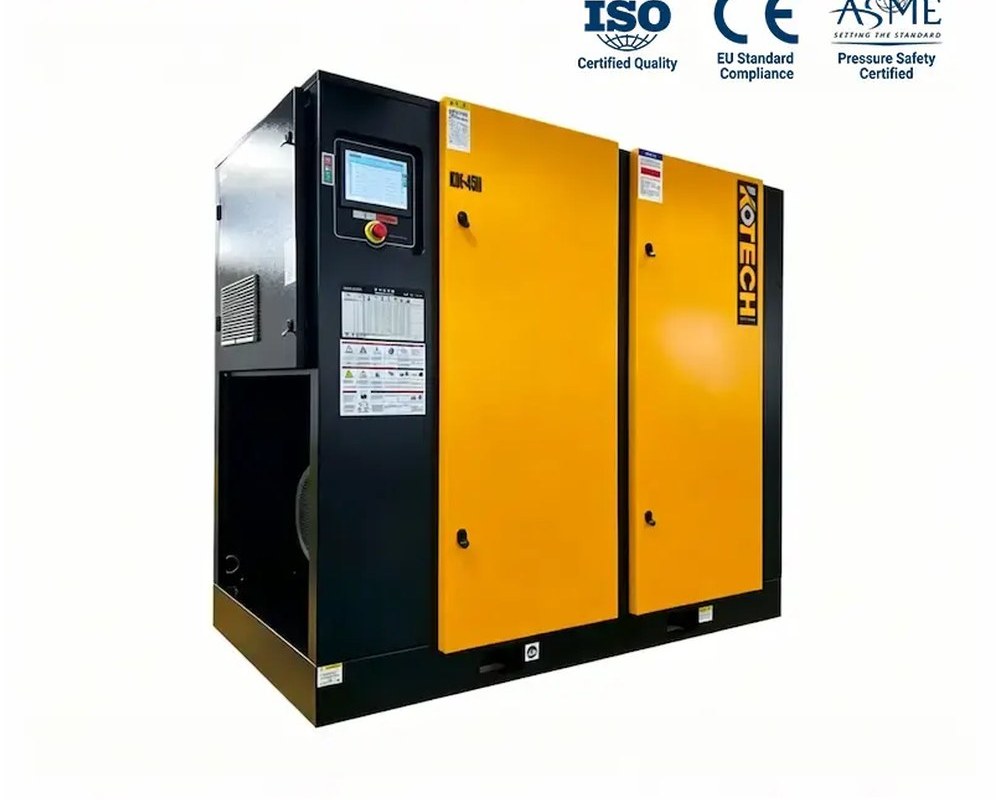




Explore how centrifugal compressors are applied across industries, from oil & gas to textiles and pharmaceuticals, highlighting flow, power, and process suitability.
Centrifugal compressors are rarely selected by default. In most industrial projects, they are chosen after other air compressor types have been evaluated and found less suitable for the operating conditions.
What drives that decision is not a single parameter, but a combination of flow demand, operating stability, and how tightly the compressor must integrate with the process itself. Across multiple industries, these factors tend to favor centrifugal machines in very specific scenarios.
Oil & gas and petrochemical industry
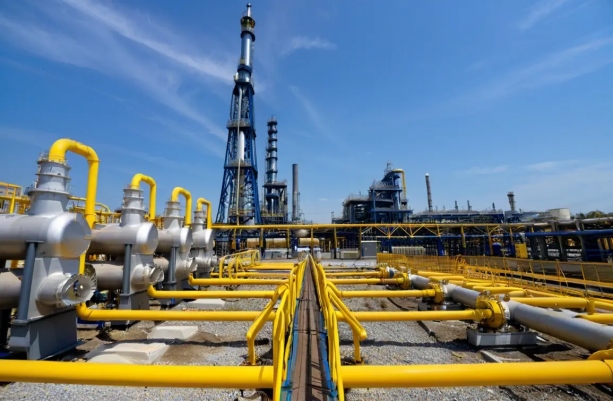
In oil and gas facilities, air compressors are expected to operate continuously, often under fixed process conditions and with limited tolerance for disruption. Air or process gas demand is typically high, stable, and closely tied to upstream and downstream units.
Under these conditions, centrifugal compressors offer a clear advantage. Their ability to deliver large flow rates with low mechanical stress makes them well suited for base-load operation. More importantly, once properly matched to the process, they can run for extended periods with minimal performance drift.
Alternative compressor types may offer greater flexibility, but that flexibility is rarely required in these systems. What matters more is long-term reliability, smooth operation, and predictable behavior under steady load — areas where centrifugal compressors consistently perform well.
Chemical processing industry
Chemical processing introduces constraints that go beyond airflow and pressure requirements. Once the compressed medium is no longer clean, dry air, compressor selection becomes closely tied to material compatibility and process stability.
Centrifugal compressors are often preferred in chemical plants because they can be engineered around specific gas compositions and operating windows. Material selection, sealing systems, and internal flow paths can be optimized for the process, reducing the risk of contamination, fouling, or gradual performance degradation.
In addition, many chemical processes operate within narrow pressure ranges. The interaction between compressor performance curves and process control systems becomes critical. A centrifugal compressor, when properly selected, integrates more predictably into these closed-loop systems, behaving as part of the process rather than as an isolated utility.
Power generation
In power plants, compressed air systems are typically designed around reliability rather than flexibility. Whether supplying instrument air, cooling air, or auxiliary systems, the demand profile tends to be stable and continuous.
Centrifugal compressors are well suited to this environment because they deliver consistent performance at steady load and impose relatively low vibration on surrounding equipment. Their long service life aligns with the operational philosophy of power generation facilities, where unplanned downtime carries a high penalty.
While other air compressor types can meet the same pressure requirements such as screw compressors, their advantages under variable load conditions are less relevant in this context. What matters most is dependable operation over long operating cycles.
Steel, cement, and heavy industry
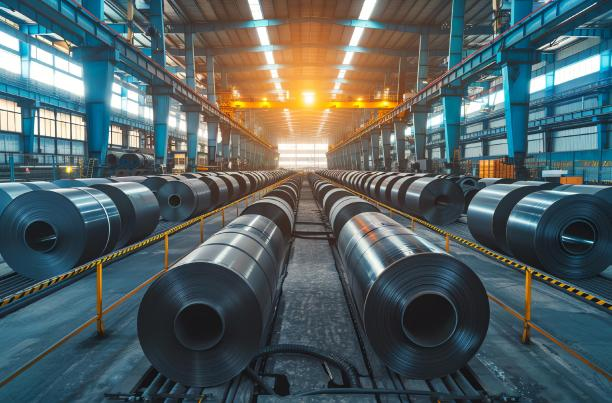
Heavy industrial plants typically rely on centralized compressed air systems serving multiple production units. Air demand is high, operating hours are long, and energy consumption represents a significant portion of operating cost.
In these environments, centrifugal compressors are often selected as base-load machines. Their efficiency at design conditions, combined with stable long-term operation, makes them well suited for continuous, high-volume air supply.
Flexibility is usually addressed at the system level rather than at the individual compressor level, with multiple machines or auxiliary compressors handling load variations. This allows centrifugal compressors to operate close to their optimal range for most of their service life.
Textile industry
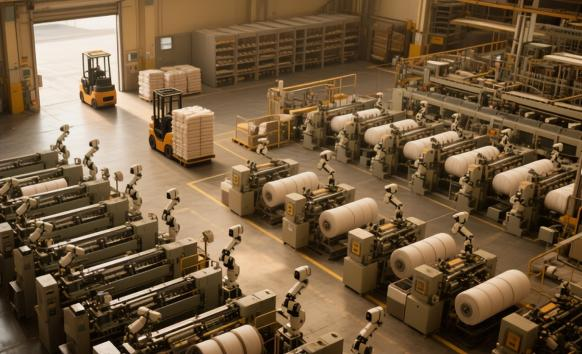
Textile plants often require large volumes of clean, dry air for spinning, weaving, and finishing processes. While the total flow may not reach petrochemical scales, the air must remain free of contamination and maintain relatively stable pressure throughout long production runs.
Centrifugal compressors are chosen here because they can deliver high volumes steadily and with low pulsation, reducing the need for extensive air treatment downstream. Other compressor types can provide similar pressures, but the combination of high flow, continuous operation, and low vibration makes centrifugal machines preferable for centralized compressed air systems in large textile mills.
Pharmaceutical industry
Pharmaceutical production places strict demands on air purity, pressure stability, and reliability. Compressed air is often used in tablet pressing, coating, packaging, and cleanroom ventilation. Contaminated or unstable air can compromise product quality and regulatory compliance.
Centrifugal compressors are advantageous in this context because they can be engineered with specialized materials and filtration integration to maintain both stable pressure and clean air output. Their predictable performance under continuous load ensures that critical processes run smoothly, minimizing the risk of contamination or production downtime.
Air separation units (ASU)
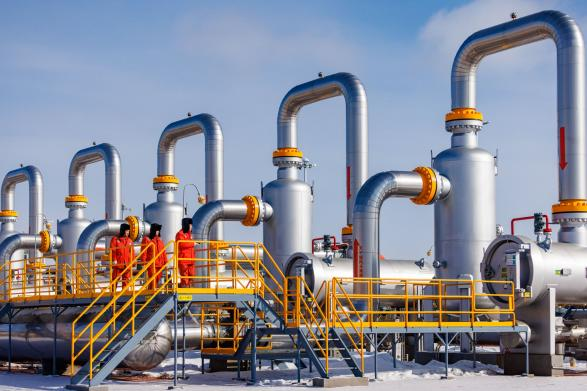
Air separation units represent one of the most demanding applications for centrifugal compressors. These systems require precise control, continuous operation, and minimal deviation from design conditions.
Centrifugal compressors are chosen not because they are versatile, but because they are predictable. Once commissioned, ASUs are expected to run under tightly controlled conditions for extended periods, making dynamic compressors a natural fit.
In this context, efficiency, surge margin, and long-term stability outweigh considerations such as load flexibility or rapid response to demand changes.
Where centrifugal compressors typically make sense (Quick reference)
| Parameter | Typical Range / Characteristics |
|---|---|
| Airflow capacity | ~5,000 to >200,000 m³/h |
| Typical motor power | ~500 kW to 30+ MW |
| Operating pressure (air) | ~2 to 10 bar(g) per machine |
| Pressure ratio per stage | ~1.2 to 1.8 |
| Best operating profile | Continuous, steady-state operation |
| Daily operating hours | 6,000 – 8,000+ hours/year |
| Load variation tolerance | Low to moderate |
| System configuration | Centralized, base-load systems |
| Common industries | Oil & gas, petrochemical, power, steel, etc. |
| Primary selection driver | Stable demand + lifecycle efficiency |
Closing perspective
Across industries, centrifugal compressors are selected not for their adaptability, but for their suitability to well-defined operating conditions. Where demand is large, stable, and closely integrated with the process, their advantages become structural rather than incremental.
Understanding why a centrifugal compressor works well in a given industry is less about comparing specifications and more about understanding how the process itself behaves. That alignment between machine and system is what ultimately determines long-term performance.